How To Become More Self-Sufficient Without Starting a Full-Blown Farm…
Want to start preserving your harvest, making your own soap, or building a backyard root cellar — but not sure where to begin? “Homesteading Advice” gives you instant lifetime access to 35+ practical homesteading books on food preservation, veggie gardening, DIY natural cleaning products (save over $250 per year with this skill alone), brewing, off-grid energy, and a whole lot more…
Click Here To Check It Out Now!
Is your backyard rabbitry a stinking chore or a high-precision nutrient factory? Most backyard farmers see rabbit waste as a mess to be hidden, but the pros see it as a precision fuel. By switching from a ‘pile and pray’ method to a structured worm-integrated system, you turn a daily headache into the most valuable soil amendment on earth.
You might have started with a couple of hutches and a dream of self-reliance. Perhaps the smell of ammonia or the swarm of summer flies began to dampen that pioneer spirit. Traditional waste management usually involves a shovel, a wheelbarrow, and a lot of wasted potential sitting in a corner of the yard. This old-way thinking misses the biological magic happening right under the cages.
Ancestral wisdom teaches us that nothing on a homestead should be viewed as “waste.” Every pellet is a concentrated capsule of sun, hay, and vitality. Integrating a living vermiculture system directly beneath your rabbit runs mimics the natural forest floor. It creates a closed-loop cycle where the livestock feeds the soil, and the soil eventually feeds you. This guide will show you how to build that bridge between animal husbandry and high-level horticulture.
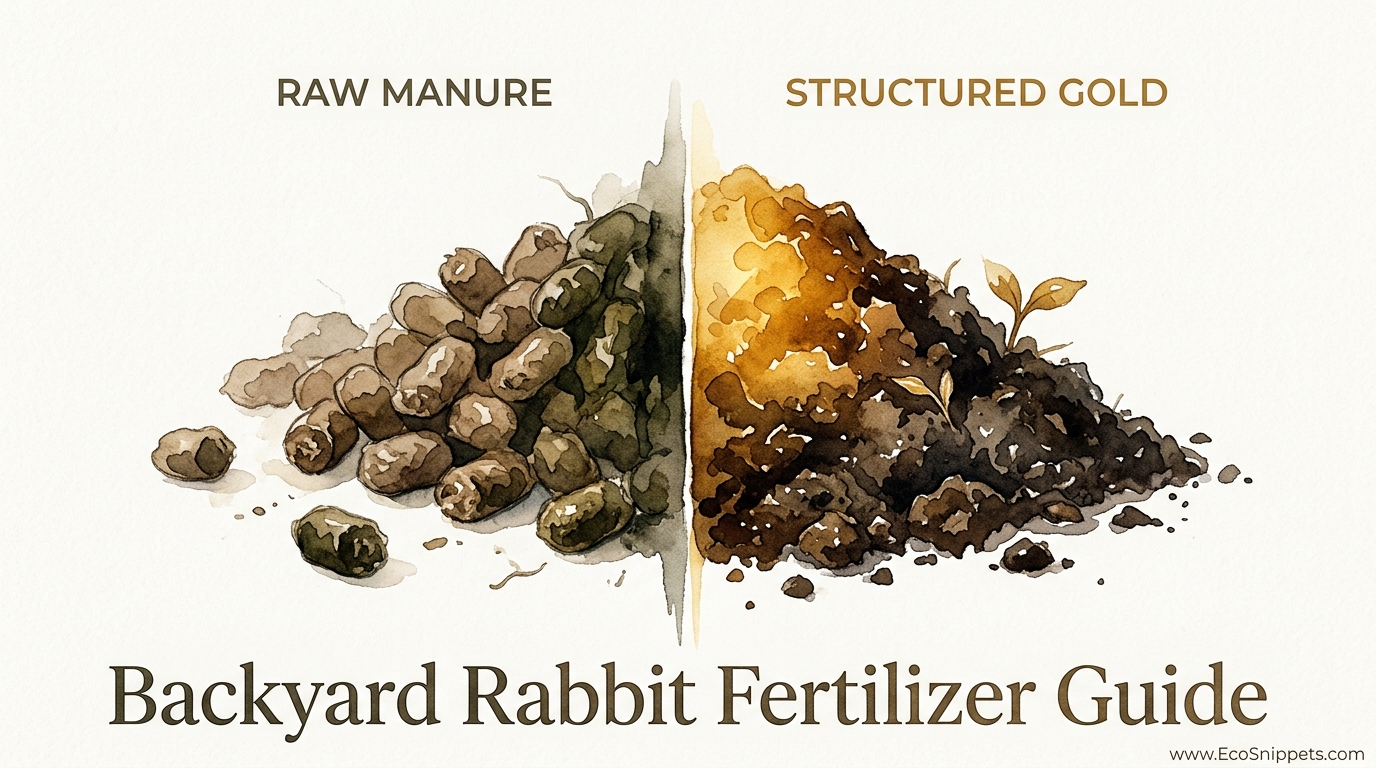
Backyard Rabbit Fertilizer Guide
Rabbit fertilizer is often called “cold manure.” Unlike the hot waste produced by chickens, cows, or horses, rabbit droppings do not require a long aging process before they touch your plants. You can take a handful of fresh pellets and drop them directly into a planting hole without worrying about nitrogen burn. This unique characteristic makes it the ultimate “fast-track” nutrient source for the backyard grower.
The nutrient profile of this material is staggering. Most livestock manures provide a modest boost, but rabbit waste typically carries an NPK ratio of approximately 2.4-1.4-0.6. This means it contains more than twice the nitrogen of chicken manure and four times the potency of steer or horse waste. It is particularly rich in phosphorus, the element responsible for heavy flowering and robust root development. For anyone struggling with “all leaf and no fruit” in their garden, this is the corrective medicine.
In a real-world homestead setting, the value extends beyond just the NPK numbers. The pelletized form of the manure acts as a slow-release capsule. These small, fibrous spheres break down over weeks, providing a steady stream of minerals rather than a single, volatile spike. This makes it perfect for heavy feeders like tomatoes, corn, and pumpkins. It also works as a top-tier soil conditioner, improving the tilth and water-holding capacity of both heavy clay and sandy soils.
How It Works: The Worm-Integrated System
The transition from “raw manure” to “structured gold” happens through the process of vermicomposting. Instead of letting manure sit in a stagnant pile, you place a living bed of composting worms—specifically Red Wigglers (Eisenia fetida)—directly under the rabbit cages. These worms are nature’s most efficient recyclers, capable of consuming half their body weight in organic matter every single day.
Gravity does most of the heavy lifting here. As the rabbits drop their pellets and waste hay through the wire floors of their hutches, the material falls directly into a prepared worm bed. The worms migrate upward toward the fresh food, digesting the manure and turning it into worm castings. These castings are biologically superior to raw manure, containing higher concentrations of beneficial bacteria and humic acid.
Setting up this system requires a specific structural approach. You should aim to have your rabbit cages suspended at least 30 to 36 inches above the ground. This height allows for adequate airflow and provides enough vertical space for a deep worm bed. A common mistake is placing the cages too low, which leads to poor ventilation and a buildup of ammonia gas that can irritate the rabbits’ sensitive respiratory systems.
The bed itself should be roughly 12 inches deep and extending 6 inches beyond the perimeter of the hutch. This extra width ensures that you catch every stray pellet and prevent “cone-shaped” manure piles from spilling into your walkways. A simple wooden frame made from untreated cedar or pallet wood works perfectly to contain the bedding material. Using a screen bottom rather than a solid floor or tarp is crucial, as it allows excess urine to drain away while keeping the worms from escaping into the native soil.
Benefits of the Integrated Approach
Odors vanish almost instantly when you introduce a healthy worm population. In a standard setup, rabbit urine and manure sit and ferment, creating that classic “farm smell.” In a worm-integrated system, the worms and the associated aerobic bacteria process the nitrogen-rich waste before it has a chance to go anaerobic. The result is a rabbitry that smells like damp forest earth rather than a stable.
Fly populations are drastically reduced through this method. Flies are attracted to the moisture and stagnant nutrients of raw manure. Since the worms are constantly turning the material and the bedding is kept aerated, the environment becomes far less hospitable for fly larvae. This creates a much more pleasant experience for both the rabbits and the humans tending to them.
The fertility output is doubled in value. Raw manure is good, but vermicompost is elite. Research shows that worm-processed rabbit manure contains significantly higher levels of available phosphorus and trace minerals like calcium and magnesium. Furthermore, the presence of worms creates a secondary harvest. A thriving bed can produce pounds of surplus worms that can be used as high-protein treats for chickens or sold to other gardeners.
Resource efficiency reaches its peak with this “stacking” method. You are using the same square footage to produce two different crops: meat or pelts from the rabbits, and premium fertilizer from the worms. This maximizes the productivity of a small backyard footprint, which is the hallmark of a high-functioning homestead.
Challenges and Common Mistakes
Ammonia buildup is the most dangerous pitfall for the beginner. While rabbit manure is “cold,” rabbit urine is extremely high in nitrogen. If the urine doesn’t drain quickly through the bedding, it can create “hot spots” that kill the worms and release toxic fumes. You must ensure your bedding has enough carbon—like shredded cardboard or straw—to soak up the liquids and balance the nitrogen.
Moisture management requires a careful eye. Composting worms breathe through their skin and need a damp environment, similar to a wrung-out sponge. However, if the bed becomes waterlogged from excessive urine or rainwater, the worms will suffocate and try to escape. Regularly checking the moisture level by squeezing a handful of bedding is a vital chore. If water drips out when you squeeze, it is too wet; if the bedding feels dusty, it is too dry.
Overfeeding can happen even with a small number of rabbits. If you have a massive hutch over a small worm bed, the manure will pile up faster than the worms can eat it. This creates a “thermal” composting effect where the pile heats up to 120 degrees or higher. While this is great for traditional composting, it will cook your worms. If you see the pile starting to steam or feel hot to the touch, you need to spread it out or add more carbon-rich bedding to cool it down.
Limitations and Environmental Constraints
Extreme temperatures present a significant hurdle. In regions with harsh winters, the worm beds can freeze solid if they are not insulated. Red Wigglers will die if the bedding temperature drops below freezing for extended periods. To combat this, northern farmers often have to bank the sides of the worm beds with straw bales or move the system into a protected greenhouse or barn during the winter months.
Predators can also be an issue. Everything from rats to raccoons may be attracted to the moisture and the potential for spilled rabbit feed in the worm bins. Protecting the “bottom” of your system is just as important as protecting the rabbits. Hardware cloth (1/4 inch mesh) is usually necessary to keep rodents from tunneling into the rich, warm worm beds and feasting on your population.
Urban constraints might limit the size of your operation. While a single hutch is usually undetectable, a large-scale worm-integrated system requires space and access. If you live in a neighborhood with strict homeowners’ association rules, you might need to use a more contained “bin” system under the hutch rather than an open-air bed to keep the setup looking tidy and professional.
Comparison: Raw Manure vs. Structured Gold (Vermicompost)
Understanding the difference between raw manure and worm-processed manure helps you decide how to prioritize your labor. While both are beneficial, they serve different roles in the garden ecosystem. The following table highlights the key differences based on maintenance and nutrient availability.
| Feature | Raw Rabbit Manure | Worm-Integrated “Structured Gold” |
|---|---|---|
| Nutrient Availability | Slow release over several months. | Immediate microbial and mineral uptake. |
| Microbial Diversity | Moderate; mostly gut bacteria. | Exceptional; high in aerobic soil microbes. |
| Odor Level | Low to Moderate (ammonia-heavy). | Near zero; smells like fresh earth. |
| Ease of Application | Easy (pellets can be scattered). | Moderate (requires harvesting/sifting). |
| Pest Attraction | High (flies and gnats). | Low (worms disrupt fly life cycles). |
Practical Tips for Success
Starting with a high-carbon foundation is the secret to a smell-free system. Before you even place a rabbit in the hutch, fill your worm bed with 6 to 8 inches of shredded brown cardboard, coconut coir, or aged fall leaves. This “brown” material acts as a buffer against the high-nitrogen “green” waste from the rabbits. It prevents the system from becoming a mucky, anaerobic mess in the first few weeks.
Add the worms only after the first layer of manure has landed. If you put worms into a brand-new bed with no food, they will crawl away. Wait until your rabbits have provided a thin layer of pellets and spilled hay across the surface. Once you have a “food floor,” introduce your Red Wigglers. They will settle in quickly and begin working the material from the bottom up.
Hydration is your daily responsibility. In hot summer months, the rabbit waste and bedding can dry out rapidly. Use a gentle misting setting on your garden hose to dampen the worm beds every morning. Avoid a heavy stream that could drown the worms or wash away the precious liquid fertilizer—often called “worm tea”—that accumulates at the bottom of the bed.
- Keep a supply of shredded paper nearby to top off the bed if it looks too wet.
- Monitor the “cone” height; if the manure piles touch the bottom of the cage, the rabbits will get dirty.
- Harvest the bottom layer of castings every six months to keep the bed height manageable.
- Use a garden fork rather than a shovel when turning the bed to avoid injuring the worms.
Advanced Considerations for the Serious Practitioner
Scaling up your rabbitry requires a proportional increase in your worm population. A single breeding doe and her litters can produce over a ton of manure in a year. To process this volume, you will need approximately 2 to 3 pounds of worms per hutch. If you find the manure is accumulating faster than it is being digested, it is time to split your worm population and start a second bed or sell the excess manure to neighbors.
Microbial activity can be enhanced by adding “rock dust” or azomite to the worm beds. The worms use these fine minerals in their gizzards to help grind up the fibrous rabbit waste. As a secondary benefit, these minerals become chelated during the digestion process, making them more available to your plants when you eventually spread the castings in the garden.
Generating “liquid gold” through a leachate collection system is the ultimate pro move. If you build your worm beds on a slight incline with a plastic liner and a drain at the low point, you can collect the excess moisture that filters through the bed. This liquid is packed with nutrients. Diluted to the color of weak tea, it makes an incredible foliar spray that boosts plant immunity and speeds up growth during the peak of the season.
Examples and Realistic Scenarios
Imagine a typical backyard setup with two breeding does and one buck. This small “herd” will produce roughly 15 to 20 pounds of manure and waste hay every week. Without a worm system, you would be looking at 800 to 1,000 pounds of waste to manage annually. You would spend hours every month shoveling, hauling, and turning a compost pile just to keep the smell down.
In a worm-integrated system, those same three rabbits feed a bed of approximately 5,000 to 10,000 Red Wigglers. Throughout the year, those worms turn that 1,000 pounds of raw waste into approximately 400 pounds of pure, high-grade worm castings. Instead of a “chore,” your waste management becomes a “harvest.”
One spring, you might find your garden soil is depleted and the heavy rains have washed away the nutrients. Instead of buying synthetic fertilizers, you reach under your hutches and pull out several buckets of dark, crumbly castings. You top-dress your garlic and heavy-feeding brassicas, and within a week, you see a visible change in color from pale yellow to deep, vibrant green. This is the precision fuel of a well-run homestead.
Final Thoughts
The transition from rabbit owner to nutrient manager is a shift in mindset. It requires looking past the daily tasks and seeing the biological potential of every input on your land. Integrating worms into your rabbitry isn’t just about cleaning cages; it’s about building a foundation of soil health that will last for generations. It is an act of stewardship that honors the animal, the earth, and the future of your family’s food security.
Mastering this system takes time and observation. You will learn to read the signs of your worms and the health of your rabbits as a single, unified organism. There is a deep satisfaction in knowing that your backyard operation is not only producing meat but also creating the most valuable soil amendment available to man. This is how the pioneers lived—minimizing waste and maximizing the gifts of nature.
Take the first step today by preparing a simple frame under one of your hutches. Start small, watch the results, and let the worms do the heavy lifting. Before long, you’ll stop seeing “rabbit poop” and start seeing the “structured gold” that will transform your garden into a lush, thriving oasis of abundance.
