How To Become More Self-Sufficient Without Starting a Full-Blown Farm…
Want to start preserving your harvest, making your own soap, or building a backyard root cellar — but not sure where to begin? “Homesteading Advice” gives you instant lifetime access to 35+ practical homesteading books on food preservation, veggie gardening, DIY natural cleaning products (save over $250 per year with this skill alone), brewing, off-grid energy, and a whole lot more…
Click Here To Check It Out Now!
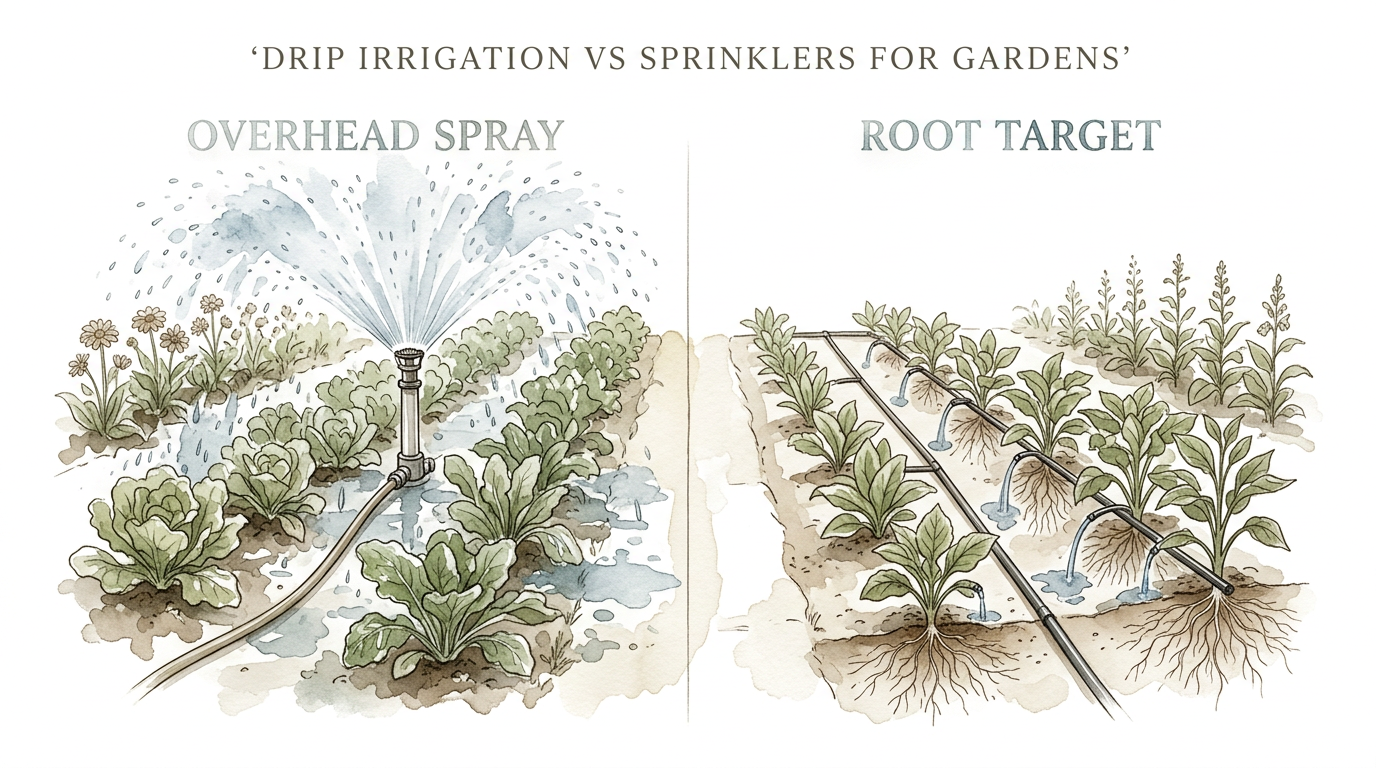
You are wasting 60% of your water before it even touches the roots. Overhead watering creates disease and feeds weeds in the aisles. Precision drip irrigation puts the water exactly where your crops need it.
Watering a garden the old way often feels like a battle against the sun and the wind. You stand there with a hose or set up a wobbling sprinkler, watching half the moisture vanish into the dry air before it can settle. The water that does land often splashes onto the leaves, inviting blight and powdery mildew to take hold of your hard work. Meanwhile, the paths between your rows become a lush carpet of weeds, thriving on the overspray meant for your tomatoes.
Stepping away from the chaos of overhead spray is more than just a modern convenience; it is an act of stewardship. Precision drip irrigation mimics the slow, deliberate seepage of the earth itself. It treats water as the precious resource it is, delivering it one drop at a time directly to the root zone. This method honors the ancestral wisdom of self-reliance, ensuring that every ounce of effort—and every drop of water—serves the harvest.
Drip Irrigation Vs Sprinklers For Gardens
Sprinklers were designed to mimic rain, but they often fail to account for the harsh realities of a summer afternoon. In a traditional overhead system, water is flung into the air where wind drift can carry it feet away from its intended target. On hot days, evaporation takes a massive toll, often stealing 30% to 50% of the moisture before it even makes contact with the soil. This creates a cycle of waste that forces you to pump more water and spend more money, all while the plants remain stressed.
Drip irrigation exists to solve this fundamental inefficiency. Instead of drenching the entire landscape, a drip system uses a network of low-pressure tubes and emitters to apply water only where the roots are actively growing. This targeted approach ensures that the soil surface remains relatively dry, which is the first line of defense against the weed seeds lying dormant in your garden aisles. Without a steady supply of surface moisture, those weeds never stand a chance.
Real-world application shows that drip systems reach an efficiency of 90% to 95%, compared to the measly 60% to 75% efficiency of high-end sprinklers. In many regions, this isn’t just a matter of preference; it’s the difference between a thriving garden and a total crop failure during a drought. A drip system allows you to maintain a productive garden even when water restrictions are tight, providing the slow, steady deep-watering that plants like peppers, tomatoes, and melons crave.
How It Works: The Anatomy of a Precision System
Understanding a drip system is like understanding the plumbing of the homestead. It starts at the water source and moves through several critical components that ensure the flow remains steady and clean. The heart of the system is the header or the main line, which carries the bulk of the water from your tap or pump to the garden beds.
A pressure regulator is non-negotiable in these setups. Most household water pressure sits between 40 and 60 PSI, which is enough to blow the fittings right off a drip line. A regulator drops that pressure down to a manageable 10 to 25 PSI, allowing the emitters to weep water at a consistent rate without bursting. Following the regulator is the filter. Even if your water looks clear, tiny particles of sand, silt, or mineral scale can clog the microscopic openings in your emitters. A 150 to 200-mesh filter acts as the system’s lungs, keeping the flow pure.
From the main line, water moves into the laterals—either drip tape or emitter tubing. Drip tape is a thin-walled, flat hose with pre-installed holes at specific intervals, perfect for long, straight rows of annual vegetables. Emitter tubing is more durable and often features “pressure-compensating” emitters that ensure the last plant in the row gets just as much water as the first. The water exits these emitters slowly, allowing the soil to absorb it through capillary action, creating a deep bulb of moisture beneath the plant.
Benefits of Targeted Root Watering
Healthier plants are the most immediate reward for switching to a precision system. Because the leaves never get wet, the risk of fungal diseases is slashed. Blights that once devastated your potatoes or squash are denied the humid environment they need to spread. You are no longer creating an artificial rainstorm every evening; instead, you are providing a subterranean reservoir that stays cool and consistent.
Conservation is a virtue on the self-reliant homestead, and the water savings are substantial. Using 50% less water means less strain on your well and lower costs if you are on a municipal line. This efficiency also extends to your labor. Setting a timer allows you to walk away, knowing the garden is being tended with more precision than you could ever achieve with a hand-held hose. You can spend those saved hours mending fences, tending livestock, or preserving the harvest.
Weed management becomes significantly easier when the aisles remain dry. Weeds are opportunists; they wait for the “free” water provided by overhead sprinklers to take over the garden. By keeping the moisture restricted to a six-inch circle around your crops, you effectively starve the surrounding weeds. This reduces the need for heavy tilling or constant hoeing, which in turn preserves the delicate structure of your soil and the life of the worms beneath.
Challenges: The Vigilance Required
Clogging is the silent enemy of the drip irrigator. Mineral deposits from hard water—specifically calcium and magnesium—can build up inside the emitters over a season, slowly choking off the flow. This isn’t always visible from the surface, meaning a plant could be wilting while the system appears to be “on.” Regular inspection is the only way to catch this before it costs you a crop.
Rodents present a physical challenge that many beginners overlook. Gophers, moles, and even thirsty squirrels have been known to chew through thin drip tape in search of a drink during a dry spell. Finding a leak caused by a toothy intruder can be a frustrating game of “follow the puddle.” Using thicker-walled tubing or burying the lines slightly can help, but a truly persistent rodent requires a more active management strategy, such as trapping or providing an alternative water source far from the garden.
System monitoring is a chore that never truly ends. You must walk your rows regularly to check for “geysers”—blown-off emitters or cracked fittings—and to ensure the pressure remains stable. A sudden drop in pressure usually indicates a major leak somewhere up the line, while a rise in pressure might mean your filter is nearly plugged. This requires a level of attentiveness that overhead watering does not, but it is the price of high-efficiency success.
Limitations: When Drip is Not the Answer
Germinating small seeds can be difficult with a drip-only system. While the “moisture bulb” created by an emitter spreads sideways through the soil, it may not reach the top half-inch of the soil surface where tiny seeds like carrots or lettuce are trying to sprout. In these cases, you might still need a light overhead mist for the first week or two until the roots are deep enough to find the drip zone.
Dense ground covers and lawns are generally better served by traditional sprinklers. Drip irrigation is a “point-source” system, meaning it works best for plants that are spaced out in rows or clusters. Trying to water an entire lawn with drip would require an impractical amount of tubing and hundreds of emitters, making the cost and complexity prohibitive.
Environmental constraints also play a role. If your water source is heavily laden with iron or algae, you may find that no amount of filtration is enough to keep the system running smoothly. Surface water from ponds often requires expensive sand media filters that are too bulky for a small-scale gardener. In these situations, the maintenance of a drip system might outweigh the benefits, and a simple furrow irrigation or high-volume sprinkler might be more practical.
Comparing the Two Approaches
Choosing between these systems depends on your soil, your crops, and your available time. The following table highlights the key differences based on measurable factors.
| Feature | Overhead Sprinklers | Precision Drip Irrigation |
|---|---|---|
| Water Efficiency | 65% – 75% | 90% – 95% |
| Disease Risk | High (Wet Foliage) | Low (Dry Foliage) |
| Weed Growth | Promotes weeds in aisles | Suppresses weeds in aisles |
| Initial Setup Cost | Low to Moderate | Moderate to High |
| Maintenance Level | Low | Moderate (Requires monitoring) |
| Wind Interference | Significant loss/drift | None (Applied at soil level) |
Practical Tips for the Modern Pioneer
Mulching over your drip lines is one of the most effective ways to double your efficiency. A thick layer of straw, wood chips, or leaves protects the tubing from the sun’s UV rays and prevents the small amount of surface moisture from evaporating. This creates a cool, damp environment right at the soil surface, which encourages beneficial fungi and keeps your plants’ “feet” happy during a heatwave.
Timing your watering for the pre-dawn hours ensures the plants have a full reservoir of moisture before the heat of the day arrives. While drip irrigation reduces evaporation, watering in the early morning still allows any accidental surface moisture to dry quickly, further reducing disease risk. Avoid watering late at night, as even a small amount of dampness at the base of a plant can invite slugs and snails.
Winterizing your system is a vital ritual for anyone in a cold climate. If water stays in the lines and freezes, it will split the plastic and ruin your investment. Always blow out the lines with an air compressor or drain them thoroughly before the first frost. Store your timers and regulators indoors in a climate-controlled space to prevent the internal seals from cracking in the bitter cold.
Advanced Considerations: Fertigation and Automation
Fertigation allows you to feed your plants through the same system that waters them. By installing a simple Venturi injector or a pressure-balanced tank, you can add liquid seaweed, compost tea, or water-soluble organic fertilizers directly into the water stream. This “spoon-feeding” approach ensures the nutrients go exactly where the roots are, preventing runoff and ensuring no fertilizer is wasted on the weeds.
Automation can be a double-edged sword for the homesteader. While a digital timer offers convenience, it can also lead to a “set it and forget it” mentality that is dangerous in a garden. Advanced practitioners use soil moisture sensors that talk to the timer, only allowing the water to turn on when the soil reaches a specific level of dryness. This mimics the natural rhythm of the earth and prevents overwatering during rainy weeks.
Gravity-fed systems are the gold standard for those seeking true independence. If you have a pond or a large rain catchment tank on higher ground, you can run a drip system without any electricity or pumps. These systems require “low-pressure” drip tape and larger filters to account for the lower force of the water, but they provide a level of resilience that no grid-tied system can match.
A Practical Scenario: The 1,000 Square Foot Plot
Imagine a garden plot 20 feet wide by 50 feet long, filled with five rows of tomatoes and peppers. To water this with a sprinkler, you would likely run it for an hour, pumping roughly 300 gallons of water. Due to evaporation and wind, only about 180 gallons would actually reach the soil, and a good portion of that would be in the paths.
Switching to a drip system changes the math entirely. Using a 0.5 GPH (gallons per hour) emitter spacing every 12 inches, you would have 250 emitters total. Running this system for one hour delivers exactly 125 gallons. Because 95% of that water goes directly into the root zone of the crops, the plants actually receive more usable moisture (118 gallons) than they did with the sprinkler, despite you using less than half the total water.
This reduction in volume also means your pump doesn’t have to work as hard. Instead of pushing a high-volume spray through a small nozzle, it slowly pushes a steady stream. This saves energy and extends the life of your equipment, proving that efficiency is a cumulative benefit that touches every part of the homestead.
Final Thoughts
Mastering the art of precision irrigation is a fundamental step toward a more resilient and self-reliant life. It requires a shift in perspective, moving away from the “more is better” mentality of the past and toward a focused, intentional approach. By putting the water exactly where it counts, you are not just growing vegetables; you are practicing a form of land management that respects the limits of your environment.
Success with these systems comes down to observation. Watch how the soil changes after a watering cycle, listen for the telltale hiss of a leak, and learn the specific needs of each crop. As you gain experience, the complexity of the initial setup will give way to a sense of deep satisfaction, knowing that your harvest is supported by a system as efficient as it is effective.
Do not be afraid to start small. A single row of drip tape is enough to teach you the basics. Over time, as your confidence grows, you can expand the network to include every corner of your property. This is the path of the modern pioneer—using the best of today’s tools to honor the timeless goal of a bountiful, sustainable harvest.
