How To Become More Self-Sufficient Without Starting a Full-Blown Farm…
Want to start preserving your harvest, making your own soap, or building a backyard root cellar — but not sure where to begin? “Homesteading Advice” gives you instant lifetime access to 35+ practical homesteading books on food preservation, veggie gardening, DIY natural cleaning products (save over $250 per year with this skill alone), brewing, off-grid energy, and a whole lot more…
Click Here To Check It Out Now!
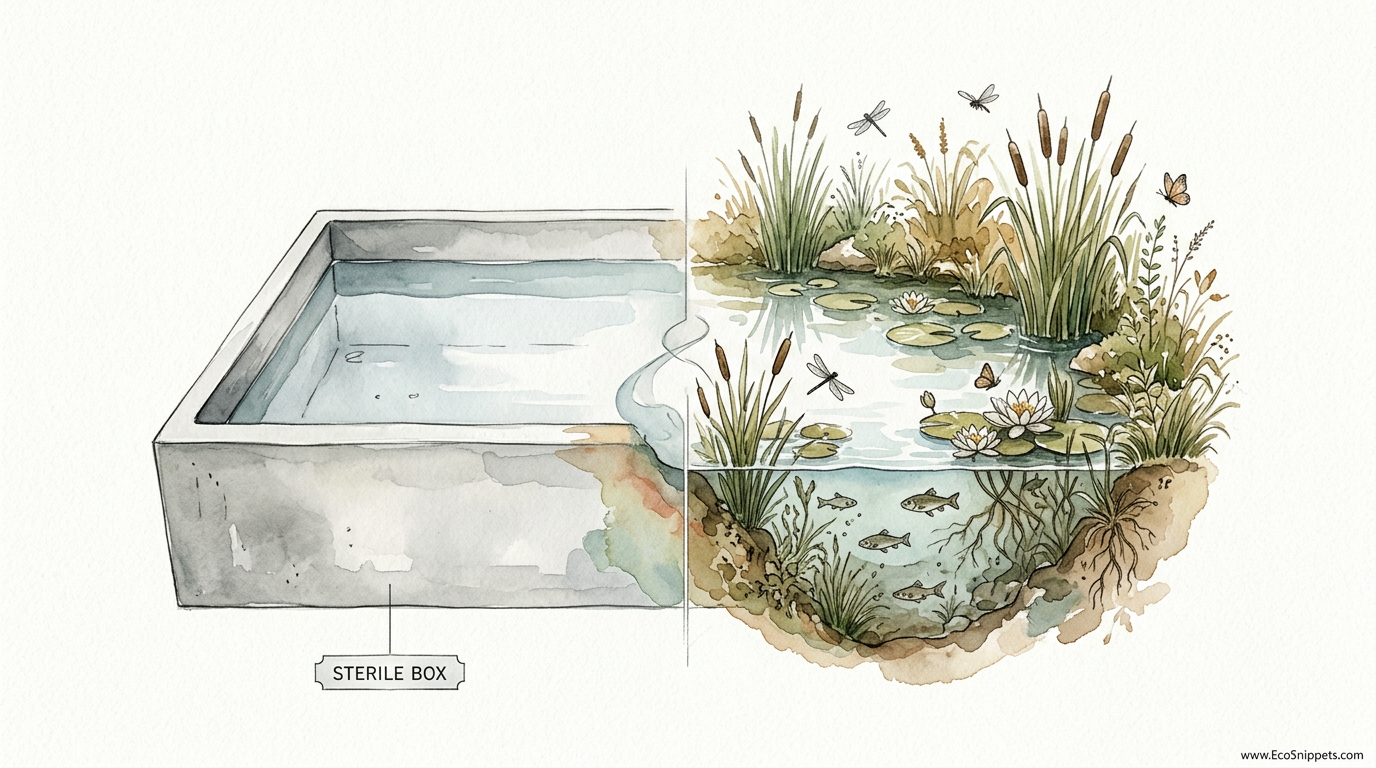
One is a chemical-dependent drain on your wallet; the other is a self-cleaning emergency water reservoir that feeds your ecosystem. Traditional pools are sterile deserts that require constant electricity and toxic chemicals to stay clear. A natural swimming pond uses the power of ‘wild’ biology to filter water, providing a beautiful place to swim and a massive, living water backup for your backyard farm.
Choosing a natural swimming pond is a return to ancestral wisdom, where water was treated as a precious resource rather than a disposable hobby. Modern traditional pools rely on chlorine, a harsh chemical that kills everything it touches. In contrast, a living pool invites life in, using a sophisticated balance of plants and beneficial bacteria to keep the water pristine and safe for your family.
This guide will walk you through the process of trading that blue plastic box for a resilient, self-sustaining ecosystem. Whether you are looking to secure your farm’s water future or simply want to swim in water that feels like a mountain lake, the following steps will provide the foundation for your project.
How To Build A Living Pool For Water Storage
A living pool, or natural swimming pond (NSP), is a dual-purpose body of water divided into two distinct zones: a swimming area and a regeneration zone. While it looks like a beautiful garden feature, it functions as a biological water treatment plant. Unlike a traditional pool that is a “sterile box,” this “living habitat” uses gravity and low-energy pumps to move water through gravel beds and plant roots.
In a real-world setting, these ponds are more than just recreation. Many homesteaders use them as a central hub for their water management strategy. During a drought, the 50,000 to 100,000 gallons of water stored in your pond can become a lifeline for your livestock and crops. In fire-prone regions, these ponds serve as a critical reservoir for emergency fire suppression, allowing you to draft water when municipal systems fail.
Visualizing this system is easy if you think of a natural mountain lake. The water is clear because it is constantly moving through wetlands at its edges. We are simply recreating that wetland in your backyard. The “regeneration zone” acts as the kidney of the pond, filtering out impurities and absorbing excess nutrients that would otherwise fuel algae growth.
The Mechanics of Biological Filtration
The heart of a living pool is the nitrogen cycle. Beneficial bacteria colonize the surfaces of the gravel and rock in your regeneration zone. These microbes break down organic matter—like dust or skin cells—into nitrates that your aquatic plants then consume as food. This process starves out “bad” algae by removing its nutrient source before it can take hold.
Water circulation is the engine of this process. Most systems use a small, energy-efficient pump to pull water from the surface of the swim zone and push it through the bottom of the gravel bed in the regeneration area. As the water rises through the gravel and the roots of your plants, it is scrubbed clean. Aeration is also vital; keeping oxygen levels high ensures that your aerobic bacteria stay healthy and your water stays smelling fresh like rain.
Phosphate management is the secret to long-term clarity. Algae needs phosphate to thrive, and many natural pond builders use specialized filter media, like clinoptilolite or volcanic rock, to lock up these minerals. This creates a “low-nutrient” environment where water stays crystal clear without the need for a single drop of chlorine.
Step-by-Step Construction Guide
Building a living pond requires more sweat than a traditional pool, but the result is a permanent asset rather than a temporary luxury. Start by choosing a level site that receives at least 6 hours of sunlight. Sunlight is the fuel for your plants, but too much can lead to overheating, so balancing your plant cover is essential.
1. Excavation and Zoning
Dig two connected basins. The swimming zone should be at least 6 to 8 feet deep to help stabilize water temperatures. A deeper pool stays cooler in the summer and is less prone to rapid algae blooms. The regeneration zone should be roughly the same surface area as the swimming zone but only 12 to 18 inches deep. This 1:1 ratio is the gold standard for maintaining water quality.
2. Lining the Basin
Traditional pioneers used bentonite clay to seal their ponds, and this remains an excellent, permanent option if your soil allows for it. For most modern builds, an EPDM rubber liner is the most reliable choice. It is flexible, durable, and won’t leach toxins into your ecosystem. Ensure you lay down a thick geotextile underlayment first to protect the liner from rocks and roots.
3. Internal Walls and Plumbing
Build a low internal wall to separate the swimming area from the planting area. This wall usually stops about 4 inches below the water surface, allowing water to flow over it while keeping the gravel and plants contained. Install your plumbing now, placing the intake skimmers at the surface of the swim zone and the return pipes at the bottom of the regeneration zone.
4. Filling and Planting
Use clean, washed gravel in the regeneration zone. Avoid limestone, as it can raise the pH of your water and cause mineral buildup. Once your gravel is in place, fill the pond with water and begin planting. Native aquatic plants are your best friends here; they are already adapted to your local climate and will thrive with minimal intervention.
Choosing Your Filter: The Plant Hierarchy
Plants in a living pool are not just decoration; they are the specialized workers that maintain your water. You need a mix of three types of plants to create a resilient ecosystem.
- Submerged Oxygenators: These plants, like Hornwort or Water Milfoil, stay entirely underwater. They pump oxygen directly into the water and compete with algae for nutrients.
- Floating Plants: Water lilies and Frogbit provide shade. By covering 30-50% of your pond’s surface, they keep water temperatures down and prevent sunlight from reaching algae at the bottom.
- Emergent Marginals: Plants like Pickerelweed, Sedges, and Irises grow in the shallow edges. Their dense root systems are the primary filters that pull nitrates and phosphates out of the water.
Avoid using garden soil when planting. Instead, tuck the plants directly into the gravel. This forces the plants to pull their nutrients from the water itself, which is exactly how they clean your pool.
Benefits of a Living Pool
The most immediate benefit is the health of your family. Swimming in a natural pond feels like swimming in a fresh spring. Your skin won’t itch, your eyes won’t burn, and you won’t smell like a chemical plant when you get out.
The financial benefits are equally compelling over the long term. While the initial setup might cost 20% to 30% more than a chlorine pool, your annual maintenance costs are significantly lower. You won’t spend money on expensive chemical buckets every week. A natural pond’s electricity needs are also lower, as you are running low-wattage circulation pumps rather than high-pressure sand filters.
From a homesteading perspective, the ecological value is unmatched. A living pool becomes a sanctuary for dragonflies, which hunt mosquitoes, and frogs, which keep your garden pests in check. You are creating a “living habitat” that supports local biodiversity while providing your farm with a reliable water reservoir.
Challenges and Common Mistakes
One of the biggest mistakes is undersizing the regeneration zone. If your planting area is too small, it won’t be able to keep up with the nutrient load, and your water will turn green. Always aim for a 50/50 split between swimming and planting.
Poor location choice is another pitfall. Placing a pond under a heavy canopy of deciduous trees will lead to a massive influx of leaves. While a skimmer can handle some debris, an overload of rotting organic matter will overwhelm your biological filter and turn the water dark with tannins.
Treating the pond like a sterile pool is a recipe for disaster. Adding algaecides or any chemicals “just to clear it up” will kill the very bacteria and plants that you worked so hard to establish. You must have the patience to let the ecosystem find its balance, which can take a full season.
Limitations of the Natural Approach
Natural swimming ponds are not for everyone. If you insist on a “resort-blue” look where you can see a coin on the bottom in ten feet of water at all times, you may be disappointed. Natural water has a slight green or golden tint and a soft “biofilm” on the rocks, which is perfectly healthy but different from the bleached look of a chlorine pool.
Climate is another constraint. In very arid regions, evaporation can be a major issue, requiring a reliable source of makeup water to keep the plants alive. In very cold climates, the pond will freeze over, which is great for ice skating but means you must winterize your pumps to prevent damage.
Space is the final hurdle. Because you need a regeneration zone equal in size to your swimming area, a natural pond requires twice the footprint of a traditional pool. This makes them difficult to install in small, urban backyards.
Sterile Box vs. Living Habitat
| Feature | Traditional “Sterile Box” | Natural “Living Habitat” |
|---|---|---|
| Filtration | Chemical (Chlorine/Salt) | Biological (Plants/Bacteria) |
| Operating Cost | High (Chemicals & Power) | Low (Plants & Low-Watt Pump) |
| Biodiversity | None (Toxic to wildlife) | High (Birds, Bees, Frogs) |
| Water Usage | Wasteful (Regular drainage) | Conservative (Ecosystem cycle) |
| Winter Use | Covered and dormant | Ice skating or habitat |
Practical Tips for Success
Maintaining a living pool is more like gardening than pool cleaning. Spend time each spring thinning out your plants and removing dead stalks. This prevents old plant matter from decaying in the water and releasing nutrients back into the system.
Installing a “robotic pond cleaner” is a worthy investment. These specialized vacuums can handle the fine silt and biofilm that settles on the bottom of the swim zone, keeping your swimming area feeling clean underfoot without disturbing the regeneration zone.
Test your water periodically for phosphorus levels. If you notice a sudden spike in algae, it’s usually because of an outside nutrient source, like lawn fertilizer runoff or bird droppings. Addressing the source of the problem is always better than trying to treat the symptom.
Advanced Considerations: The Emergency Reservoir
For the serious practitioner, a living pool can be integrated into your home’s survival infrastructure. By installing a “dry hydrant”—a non-pressurized pipe that extends into the deep end—you allow fire trucks to hook up and pump water directly from your pond. This can significantly reduce your fire insurance premiums in rural areas.
Integration with your irrigation system is another advanced step. A secondary pump can pull water from the pond to water your fruit trees or garden during a dry spell. Because the water is “living,” it is rich in beneficial microbes that can actually improve your soil health, unlike the chlorinated water from a city tap.
Consider adding a “bubble-lift” filtration system. This technique uses air bubbles to move water through the gravel beds rather than a traditional impeller pump. It is incredibly efficient, has no moving parts in the water, and provides massive oxygenation, which is the secret to high-performance biological filtration.
Example Scenario: The Drought-Proof Homestead
Imagine a small farm in a region where water restrictions are common. The owner replaces an old, cracked concrete pool with a 60-foot long natural swimming pond. One half is for family swimming, and the other half is a lush wetland filled with iris and water lilies.
During a record heatwave, the local municipality bans garden watering. The homesteader uses a small solar-powered pump to draw 500 gallons a day from the pond to keep their high-value vegetable beds alive. Because the pond is designed to hold 80,000 gallons, this minor draw doesn’t even drop the water level significantly, and the ecosystem remains balanced.
When a wildfire threatens the area, the local fire crew identifies the pond as a “static water source.” They are able to draft water quickly, saving the homestead while other properties with empty or chemical-laden pools struggle to find a water supply. The pool paid for itself not just in swimming hours, but in property protection.
Final Thoughts
Embracing the living pool philosophy is about more than just a place to cool off in July. It is an investment in self-reliance and environmental stewardship. You are choosing to work with the forces of nature rather than fighting them with expensive poisons.
The shift from a sterile box to a living habitat requires a change in mindset. You must learn to appreciate the lifecycle of the water and the creatures that call it home. In exchange, you get a water source that is safer for your children, better for your garden, and a critical backup for your farm’s future.
Building your own natural swimming pond is a significant undertaking, but the rewards are measured in decades of health and security. Start small if you must, but start now. Your backyard ecosystem—and your wallet—will thank you for it. Look into local native plant nurseries and sustainable pond contractors to help you take the first step toward your own living oasis.
