How To Become More Self-Sufficient Without Starting a Full-Blown Farm…
Want to start preserving your harvest, making your own soap, or building a backyard root cellar — but not sure where to begin? “Homesteading Advice” gives you instant lifetime access to 35+ practical homesteading books on food preservation, veggie gardening, DIY natural cleaning products (save over $250 per year with this skill alone), brewing, off-grid energy, and a whole lot more…
Click Here To Check It Out Now!
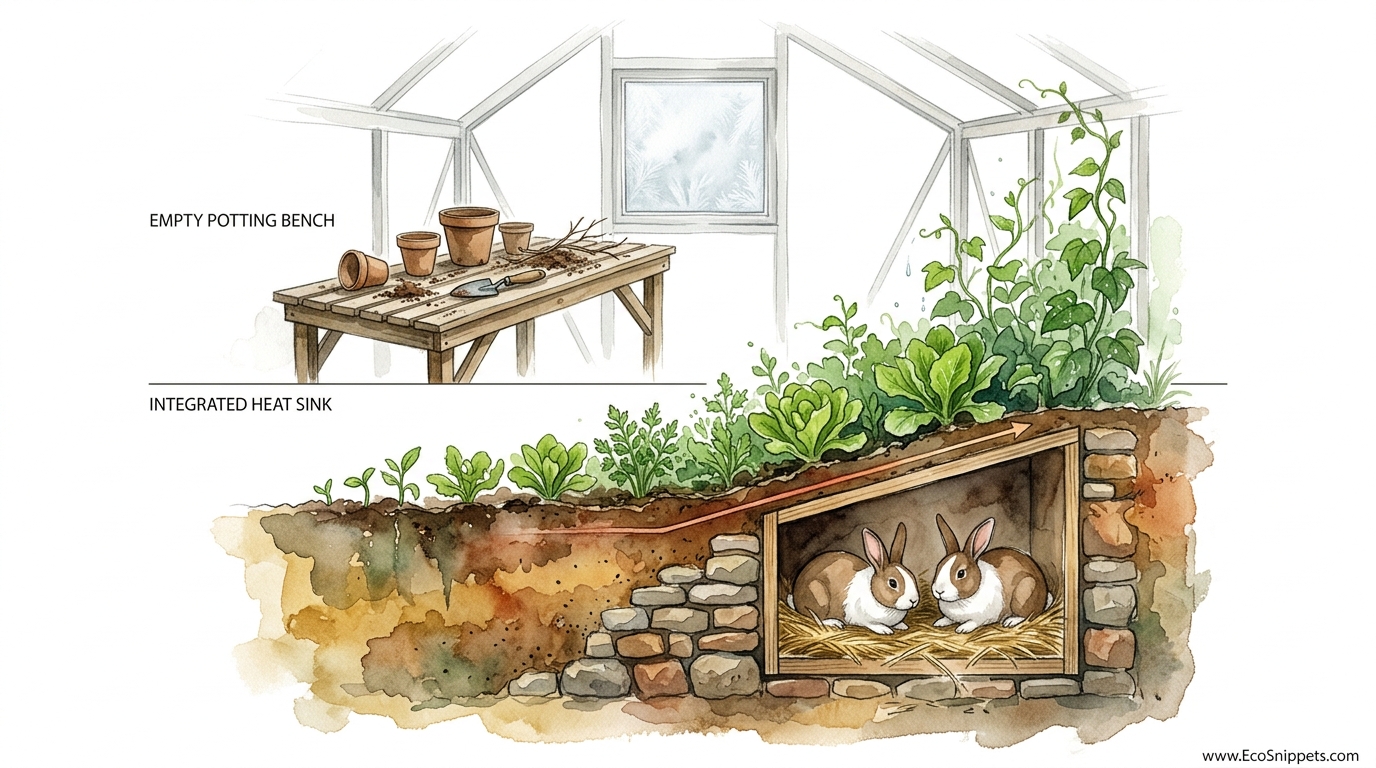
Your greenhouse benches are currently wasting energy – turn them into a passive heater and fertilizer factory. In a small backyard farm, every square inch must do two jobs. Why have a bench that just sits there when you can have one that breathes? Rabbits maintain a body temp of 101°F; by housing them under your seed starting area, you get free bottom heat, high-nitrogen manure, and a high-quality protein source in one footprint.
Homesteaders often overlook the literal biological engines sitting in their backyard. A rabbit is more than a fluffy pet or a meat source; it is a radiant heater that never needs to be plugged into the grid. When you place these animals in a greenhouse environment, you tap into a closed-loop system that mimics the efficiency of a natural ecosystem. This approach turns a static structure into a living, breathing production center.
Managing a greenhouse through the lean months of winter requires ingenuity and a refusal to waste resources. Traditional heating methods rely on expensive electricity or propane that eats into your profits and self-reliance. Integrating livestock directly into your growing space creates a symbiotic relationship where the animals provide warmth and carbon dioxide, while the plants offer oxygen and a sense of shelter.
Integrated Greenhouse Design With Rabbits
Integrated greenhouse design refers to a system where livestock and crops share the same climate-controlled environment to maximize resource efficiency. This concept relies on the “integrated heat sink” principle, where the biological heat produced by animals is captured and utilized by the plants above them. It is a departure from the modern industrial model of separating animal husbandry from crop production.
Historically, old-world farmers understood that heat rises. They often built barns with living quarters above the stable to keep the family warm during harsh winters. Bringing rabbits into the greenhouse applies this ancestral wisdom to modern small-scale agriculture. The rabbits live in cages suspended beneath the potting benches, allowing their thermal energy to drift upward toward the root zones of delicate seedlings.
Real-world application of this design is found in permaculture “rabbitats” or bioshelters. These systems are used by serious practitioners to extend the growing season into early spring without the need for fossil-fuel heaters. The setup creates a microclimate where the soil in your seed trays stays several degrees warmer than the ambient air, which is exactly what high-value crops like tomatoes and peppers need to germinate.
How the Biological Heat Sink Functions
The mechanics of this system are grounded in simple physics and biology. A healthy adult rabbit has a core body temperature between 101°F and 103°F. They dissipate this heat primarily through their ears and breath. In a confined space like the area under a greenhouse bench, this radiant heat accumulates. Because warm air is less dense than cool air, it rises directly into the underside of your potting bench.
Capturing this energy requires a bench top that allows for airflow. Using hardware cloth or expanded metal for the bench surface ensures that the heat reaches the bottom of your seed trays. This “bottom heat” is a gold standard in the nursery industry because it encourages rapid root development while keeping the foliage cool. This prevents leggy growth and produces sturdier transplants.
Manure management is the second half of the mechanical cycle. Rabbit droppings are categorized as “cold manure,” meaning they have a lower moisture content and a chemical makeup that won’t burn plants like “hot” chicken or cow manure. As the pellets fall, they can be collected in bins or directly onto a composting floor. This decomposition process produces its own secondary heat, further contributing to the warmth of the greenhouse.
The Practical Benefits of Rabbit Integration
The most immediate advantage is the reduction in heating costs. Five to ten rabbits can produce enough radiant energy to keep a small 8×10 greenhouse several degrees above the freezing point on clear winter nights. While they won’t replace a furnace in a blizzard, they provide the critical buffer that keeps tender greens from turning to ice. This passive heating allows for earlier planting and later harvesting than a standard cold frame.
Nutritional output is the second major benefit. Rabbit manure is often called “garden gold” because it contains roughly 2.4% nitrogen, 1.4% phosphorus, and 0.6% potassium. This makes it more potent than cow, horse, or even sheep manure. Because it does not require composting before use, a grower can take pellets straight from under the bench and top-dress their vegetable beds. This high nitrogen content is perfect for the lush, green growth required for spring starts.
Space efficiency is a primary concern for the backyard farmer. Combining your rabbitry with your greenhouse saves the footprint of two separate buildings. You only need to walk to one location to feed your stock and water your plants. This integration also simplifies the process of disposing of crop waste; spent pea vines, carrot tops, and lettuce trimmings go directly into the rabbit feeders, closing the nutrient loop on-site.
Challenges: Managing Air Quality and Moisture
Ammonia is the primary threat to an integrated greenhouse. Rabbit urine contains high levels of urea, which bacteria break down into ammonia gas. If this gas is allowed to accumulate, it can damage the delicate leaves of your plants and cause respiratory distress in your animals. A pungent smell is a clear warning that your management system is failing and air quality has become toxic.
Moisture management is another significant hurdle. Rabbits exhale water vapor, and their urine adds to the humidity levels inside the greenhouse. During winter, this can lead to heavy condensation on the glazing, which blocks sunlight and encourages fungal diseases like powdery mildew or botrytis. Maintaining a balance between keeping the heat in and letting the damp, stale air out is a constant task for the grower.
Structural decay is a risk when using wood for benches. The constant presence of moisture and the corrosive nature of animal urine will rot traditional lumber in just a few seasons. Cedar or locust are better choices for their natural rot resistance, but metal frames provide the longest lifespan. Ignoring the structural integrity of your benches can lead to a catastrophic collapse, harming both your plants and your livestock.
Limitations and Environmental Constraints
Summer heat is the most significant limitation of this system. Greenhouses are designed to trap heat, and while this is a blessing in January, it is a death sentence for rabbits in July. Temperatures above 85°F can cause heatstroke in rabbits very quickly. Unless your greenhouse has professional-grade ventilation, shade cloths, and perhaps an evaporative cooling system, the rabbits must be moved to a cooler location once the weather warms.
Geography plays a role in the effectiveness of the thermal sink. In extremely northern climates with prolonged sub-zero temperatures, the heat from a few rabbits will not be enough to prevent freezing without significant insulation like straw bales or earth-berming. Conversely, in southern climates, the window for keeping rabbits in a greenhouse is so narrow that the effort of integration might not be worth the risk of animal loss.
Species-specific needs can sometimes conflict with intensive plant production. Rabbits require a quiet environment to thrive and breed. If your greenhouse is a high-traffic area with constant noise and activity, your does may become stressed and fail to care for their litters. The integration requires a disciplined approach to noise and schedule to ensure the welfare of the animals remains a priority.
Comparing Potting Bench Designs
Choosing between a standard potting bench and an integrated living heat sink depends on your goals for self-reliance and the time you can commit to maintenance.
| Feature | EMPTY POTTING BENCH | INTEGRATED HEAT SINK |
|---|---|---|
| Energy Source | External (Electric/Gas) | Biological (Metabolism) |
| Fertilizer Output | None | High-Nitrogen Pellets |
| Maintenance Level | Low | High (Feeding/Cleaning) |
| Winter Efficiency | Passive only | Active Bio-Heat |
| Cost Over Time | Increasing (Fuel costs) | Decreasing (Resource loops) |
Practical Tips for a Successful Setup
Building your system starts with the floor. Concrete or heavy paving stones under the cages make cleaning much easier and help reflect some of the heat back upward. Avoid dirt floors if possible, as they absorb urine and become a breeding ground for flies and pathogens. A slight slope in the flooring toward a central drain or collection point will save hours of back-breaking labor over the course of a year.
Ventilation must be handled at two levels. High vents allow heat and humidity to escape during the day, while low vents near the rabbits ensure fresh oxygen is always available at their level. Installing a small solar-powered fan can assist in moving air through the “rabbit zone” without costing you a cent in electricity. This constant air movement is the best defense against ammonia buildup and respiratory illness.
Choose breeds that are known for their hardiness and meat production. New Zealand Whites and Californians are the standard for a reason; they have high feed-to-meat conversion ratios and produce significant body heat. If you are more interested in wool, French Angoras can work, but their long fur requires much more maintenance in a potentially dusty greenhouse environment. Stick to the short-haired meat breeds for the most efficient “heat sink” performance.
Advanced Considerations for the Serious Practitioner
Vermiculture integration is the next step for a truly advanced system. Placing worm bins directly under the rabbit cages allows red wigglers to process the manure as it falls. The worms eat the droppings and the urine-soaked bedding, converting it into high-value worm castings almost instantly. This process further reduces odors and produces a secondary income stream or a premium soil amendment for your most demanding plants.
Thermal mass can be used to stabilize the temperature fluctuations. Placing 55-gallon drums of water behind the rabbit cages creates a heat battery. The water absorbs the excess solar heat during the day and the biological heat from the rabbits at night. This prevents the sharp temperature drops that can stress both seedlings and livestock during the pre-dawn hours.
Automated watering systems are a necessity for larger setups. Nipple waterers connected to a central reservoir ensure the rabbits always have clean water. In a greenhouse, water consumption will be higher than in a traditional outdoor hutch due to the increased ambient temperature. Keeping the reservoir outside the greenhouse or insulated will prevent it from becoming a breeding ground for algae in the sunlight.
Scenario: The Early Spring Start
Imagine a homestead in zone 5 during late February. Outside, the ground is frozen solid and a dusting of snow sits on the garden beds. Inside an integrated 10×12 greenhouse, the sun is just beginning to hit the glass. Beneath the main bench, six New Zealand does are finishing their morning hay, their bodies radiating a steady 101°F into the space around them.
On top of the bench, three dozen trays of heirloom tomatoes and peppers are nestled into the warmth. A thermometer pushed into the soil shows a consistent 72°F, even though the air temperature in the greenhouse dropped to 45°F overnight. The rising heat from the rabbits has kept the root zones active and the germination rates high.
By the time the sun is high in the sky, the homesteader opens the top vents to let out the humidity. They scoop a bucket of fresh, odorless pellets from the collection bin and scatter them around the base of the perennial kale in the corner of the greenhouse. This cycle of heat and nutrients has already given these plants a six-week head start on the neighbors’ gardens, all without turning on a single electric heater.
Final Thoughts
The integration of rabbits into a greenhouse is a testament to the power of stacking functions on the homestead. It moves the farmer away from being a consumer of energy and toward being a manager of biological systems. By understanding the needs of both the animal and the plant, you create a space that is more productive and resilient than either could be on its own.
Success with this method requires observation and a willingness to adjust your designs based on the feedback of your animals. It isn’t a “set it and forget it” system; it is a partnership with nature. Those who master the balance of heat, airflow, and nutrient cycling will find their greenhouses transformed into a centerpiece of self-reliance and abundance.
As you look at your empty potting benches this season, consider the wasted potential. Turning that space into a living heat sink is an investment in your soil, your food security, and the future of your land. Start small, monitor your air quality, and let the ancestral wisdom of integrated farming guide your hands.
