How To Become More Self-Sufficient Without Starting a Full-Blown Farm…
Want to start preserving your harvest, making your own soap, or building a backyard root cellar — but not sure where to begin? “Homesteading Advice” gives you instant lifetime access to 35+ practical homesteading books on food preservation, veggie gardening, DIY natural cleaning products (save over $250 per year with this skill alone), brewing, off-grid energy, and a whole lot more…
Click Here To Check It Out Now!
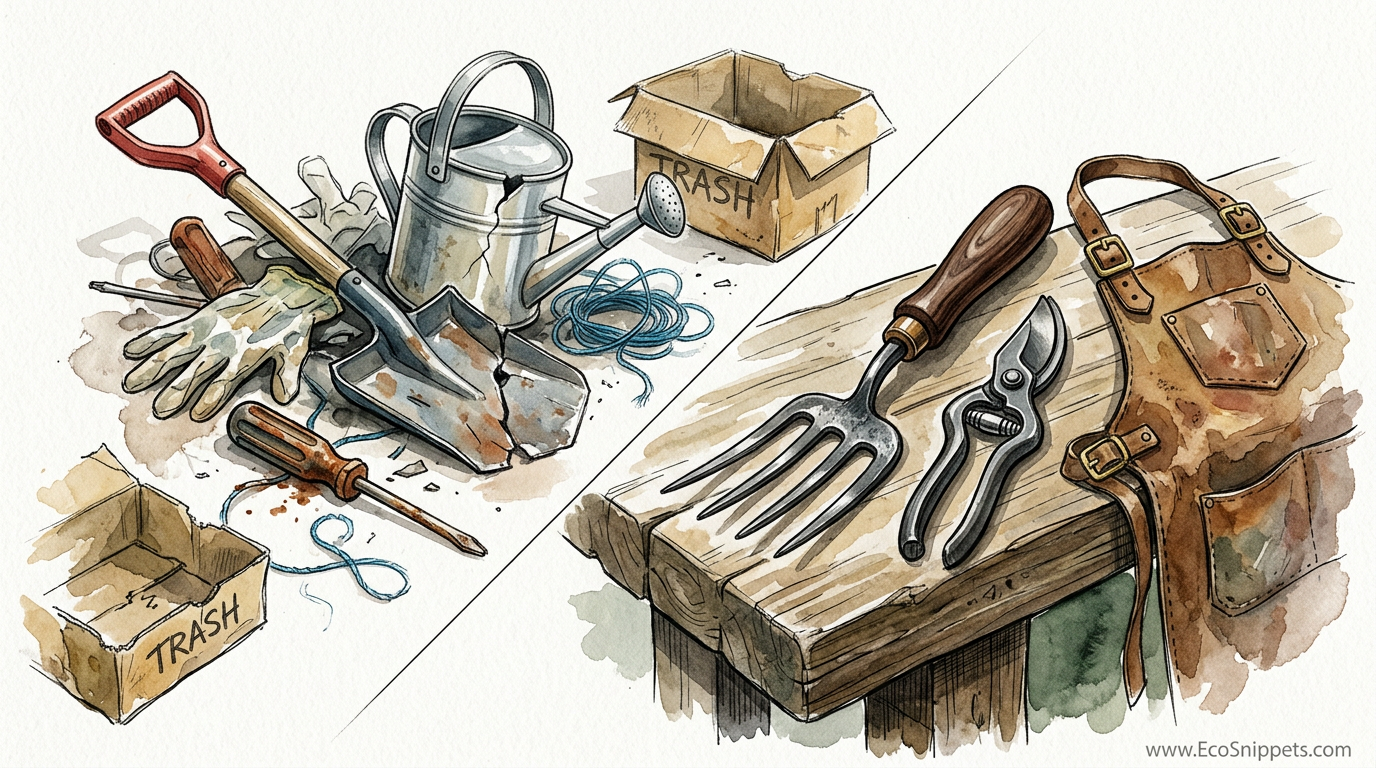
Why buy ten shovels in a lifetime when you can buy one that your grandson will use? Modern ‘big box’ tools are designed to fail, forcing you back into the consumer cycle. True homesteading is about breaking that cycle. A forged tool isn’t just an object; it’s a legacy that gets sharper with every decade of use.
Walking into a typical hardware store today is an exercise in planned obsolescence. You see rows of shiny, painted shovels and axes with handles made of plastic or mystery wood. These tools look the part, but the first time they hit a stubborn oak root or a patch of frozen clay, they buckle. The steel is soft, the handles are brittle, and the connection points are weak.
Choosing generational steel over disposable trash is a foundational step in self-reliance. It means you stop being a customer and start being a steward. When you invest in high-quality equipment, you are buying your time back. You are ensuring that when the work gets hard, your tools won’t be the reason you have to stop.
This guide will walk you through the nuances of identifying true quality. We will look at the metallurgy, the handle craft, and the maintenance rituals that keep these tools alive for a century. Whether you are breaking ground for a new garden or felling a tree for winter fuel, the steel in your hand should be as reliable as the ground beneath your feet.
Investing In Quality Homestead Equipment
Investing in quality homestead equipment is the practice of selecting tools based on their long-term durability, material integrity, and repairability rather than their initial price tag. In the world of the self-reliant, we often call this “buying once to cry once.” It is the realization that a $150 forged shovel is cheaper than five $40 stamped shovels that fail when you need them most.
True homestead tools are defined by how they are manufactured. Most modern tools are “stamped,” meaning they are cut out of a cold sheet of steel like a cookie cutter. Generational tools, however, are usually “forged.” This process involves heating the metal until it is glowing red and then hammering or pressing it into shape. This isn’t just for show; the physical hammering aligns the internal grain of the steel, making it incredibly resistant to snapping or bending.
These tools exist because the homestead environment is unforgiving. Real-world situations—like prying a 50-pound rock out of a fence hole or hacking through sun-baked clay—require a level of structural integrity that mass-produced items cannot provide. You will find these tools in the hands of professional foresters, serious market gardeners, and traditional craftsmen who cannot afford for a tool to fail in the middle of a project.
Visualizing the difference is easy. A stamped shovel usually has a “hollow back,” where the metal is simply folded to create a socket for the handle. A forged shovel is “solid shank,” meaning the blade and the socket are one thick, continuous piece of steel. This solid construction eliminates the primary failure point where the handle usually snaps off the blade.
How Forging and Material Science Work
The difference between a tool that lasts five years and one that lasts a hundred lies in the grain of the metal. Think of steel like wood; it has a direction. When a tool is forged at temperatures between 1,100°C and 1,200°C, the internal crystals are crushed and aligned to follow the shape of the tool. This creates a “flow” in the metal that allows it to absorb impacts without cracking.
Most high-end homestead tools utilize carbon steel rather than stainless steel. Carbon steel is an alloy of iron and a small percentage of carbon (usually 0.5% to 1.5%). This specific mixture allows the metal to be “heat treated.” A blacksmith can harden the edge so it stays razor-sharp for months, while leaving the rest of the tool slightly “softer” or more flexible so it doesn’t shatter when it hits a rock.
The handle is just as critical as the head. High-quality wooden handles are typically made from American Hickory or White Ash. These aren’t just any woods; they are chosen for their specific cellular structures. Hickory is incredibly dense and has the best shock-absorption properties, making it the only choice for felling axes. Ash is slightly lighter and more flexible, which is ideal for long-handled tools like hay forks or garden hoes.
The connection method, or the “tang,” is the final piece of the puzzle. There are three main ways a tool head attaches to a handle:
- Solid Socket: The metal forms a complete tube that the handle slides into. This is very strong and easy to replace if the wood ever breaks.
- Solid Strap: Two long metal “straps” extend from the tool head and are riveted through the handle. This is the strongest design for prying and heavy lifting.
- Hollow Back: A thin sheet of metal is bent around the handle. This is the hallmark of “disposable trash” and should be avoided for serious work.
The Practical Benefits of Generational Steel
The most immediate benefit of using forged equipment is efficiency. A high-carbon steel shovel or hoe can be sharpened to a knife-like edge. When your tool is sharp, you spend less energy on every swing or thrust. In a long day of digging, this can mean the difference between finishing the job and being too exhausted to move the next morning.
Reliability is the second major advantage. On a homestead, you are often far from a hardware store. If your only shovel breaks while you are trying to divert a flood or fix a broken water line, you are in serious trouble. A forged tool provides the peace of mind that it will hold up under extreme stress. It allows you to push the tool to its limit without the constant fear of a catastrophic failure.
There is also an ergonomic benefit that is often overlooked. Quality tools are balanced. A well-made axe or scythe is designed to work with the physics of your body, not against it. The weight is distributed where it needs to be to provide momentum, which reduces the strain on your wrists, elbows, and back. Over a lifetime of manual labor, these small differences in tool geometry prevent chronic injuries.
Challenges and Common Mistakes
The biggest hurdle for most people is the initial cost. It is painful to spend $200 on a broadfork when you can see one for $60 online. However, the mistake is viewing tools as an expense rather than an investment. The cheap tool is a liability; the expensive tool is an asset. Many people end up spending more money over five years by replacing cheap tools than they would have by buying one good one.
Neglecting maintenance is another frequent error. Because high-carbon steel is not stainless, it will rust if left in the rain or stored in a damp shed. Rust isn’t just an aesthetic issue; it creates “pitting” that weakens the metal and ruins the edge. Many beginners treat their tools like plastic—using them and then throwing them in a corner. A forged tool requires a relationship; it needs to be cleaned and oiled after use.
Using the wrong tool for the job is a mistake that can break even the best steel. For example, using a felling axe to split wood, or using a garden spade as a pry bar for a massive boulder, puts stress on the tool that it wasn’t designed to handle. Even “unbreakable” tools have limits. Learning the specific purpose of each tool in your shed is part of the transition from consumer to practitioner.
Limitations and Realistic Constraints
Weight is a factor that some users find difficult. Forged tools are generally heavier than their stamped or plastic counterparts because they contain more high-density steel. While this weight helps with momentum (especially for axes and shovels), it can be fatiguing for users who are not accustomed to manual labor. There is a learning curve to letting the tool’s weight do the work for you.
Environmental factors can also pose a challenge. If you live in a coastal area with high salt in the air, carbon steel tools will rust at an accelerated rate. In these specific environments, you might actually prefer a high-quality stainless steel tool from a reputable brand like DeWit, even if it is slightly less “tough” than carbon steel. You must balance the material choice with your local climate.
Finally, there is the issue of “repair skills.” Owning generational tools implies that you know how to maintain them. If you aren’t willing to learn how to sharpen an edge with a file or replace a broken handle with a new piece of hickory, you won’t get the full value out of the equipment. These tools are designed to be repaired, but that requires a baseline level of homestead skill.
Comparison: Forged vs. Stamped Equipment
To help you see the difference in measurable terms, let’s compare the two primary manufacturing styles you will encounter at the store.
| Feature | Stamped (Disposable) | Forged (Generational) |
|---|---|---|
| Manufacturing | Cut from cold sheet metal | Heated and hammered into shape |
| Steel Quality | Low-carbon, soft, often brittle | High-carbon, tempered, tough |
| Handle Material | Plastic, fiberglass, or low-grade pine | Straight-grain Hickory or Ash |
| Edge Retention | Dulls quickly; difficult to sharpen | Stays sharp; easy to hone with a file |
| Connection Point | Hollow back (weak) | Solid shank or socket (strong) |
| Long-term Cost | High (repeated replacements) | Low (one-time investment) |
Practical Tips for Tool Stewardship
Maintaining your tools doesn’t have to be a chore. One of the best “old-timer” tricks is the sand bucket. Fill a five-gallon bucket with coarse sand and pour in a quart of boiled linseed oil (not motor oil, which can contaminate your soil). Every time you finish using a shovel or hoe, plunge it into the sand several times. The sand abrades away the dirt and sap, while the oil leaves a protective coating on the steel.
When it comes to wood handles, avoid varnish or paint. These coatings eventually crack, allowing moisture to get trapped against the wood, which leads to rot and splinters. Instead, sand your handles smooth and rub them with boiled linseed oil. The oil penetrates the fibers, keeping the wood flexible and water-resistant. A well-oiled handle feels warm and soft in the hand, reducing the likelihood of blisters.
Keep a “mill bastard” file in your workshop. This is the primary tool for sharpening shovels, hoes, and axes. Unlike knives, which require fine whetstones, most homestead tools just need a clean, consistent bevel. Aim for a 45-degree angle on your shovels. You don’t want them razor-sharp (which would make the edge fragile), but you want them “working sharp”—enough to slice through a sod or a root with ease.
Advanced Considerations for the Serious Practitioner
As you grow more experienced, you may want to look into specialized alloys. For example, some high-end broadforks use boron steel, which is even harder and more resilient than standard carbon steel. Brands like Meadow Creature are famous for creating “unbreakable” broadforks that can be used to break new ground in heavy clay—a task that would snap a standard garden fork in minutes.
Another advanced skill is “re-handling.” If you find a high-quality vintage tool head at an estate sale, don’t pass it up just because the handle is broken. Learning to fit a new hickory handle involves shaping the “eye” of the tool and driving in a wooden wedge followed by a metal cross-wedge. A vintage head made of 1940s American steel is often superior to anything you can buy new today.
Consider the grain orientation of your handles. If you are buying a replacement handle for an axe, look at the end grain. You want the lines of the wood to run parallel to the direction of the axe head. If the grain runs sideways (perpendicular), the handle is much more likely to snap under the shock of a heavy swing. This attention to detail is what separates a tool user from a tool master.
Real-World Scenario: Breaking Ground
Imagine you are starting a 500-square-foot garden in an area that has been lawn for twenty years. If you use a standard hardware store spade, you will likely spend the afternoon struggling. The blunt, stamped edge will bounce off the grass. The hollow-back socket will collect mud, making the tool heavier with every scoop. By the third hour, the handle will likely start to “creak” at the rivet point.
Now, imagine the same task with a solid-shank, forged spade and a high-tensile broadfork. The spade, sharpened to a clean edge, slices through the sod like a knife through cake. You use the broadfork—a tool with 12-inch forged tines—to lift and aerate the soil without turning it over. Because the tools are balanced and sharp, you finish the work in half the time with half the fatigue. The tools are dirty, but after a quick dip in the sand bucket, they look as good as the day you bought them.
This isn’t just about making the job easier; it’s about the sustainability of your own body. Homesteading is a marathon, not a sprint. If you beat your body up using poor equipment, you won’t be able to enjoy the fruits of your labor. Quality tools are an investment in your own physical longevity.
Final Thoughts
The shift toward high-quality homestead equipment is more than a purchasing decision; it is a commitment to a different way of living. It is an acknowledgment that the things we own should have value, history, and a purpose. When you hold a tool that was made with intention, you tend to use it with intention.
Start small. You don’t need to replace every tool in your shed today. Begin with the tools you use most—perhaps a high-quality shovel or a really good pair of pruning shears. Feel the weight, notice the edge retention, and practice the maintenance. Once you experience the difference that “generational steel” makes, you will never want to go back to the disposable alternatives.
Ultimately, these tools are symbols of self-reliance. They represent the ability to provide for oneself and one’s family without being tethered to a fragile supply chain of cheap goods. Take care of your steel, and it will take care of you, your children, and the generations that follow.
