How To Become More Self-Sufficient Without Starting a Full-Blown Farm…
Want to start preserving your harvest, making your own soap, or building a backyard root cellar — but not sure where to begin? “Homesteading Advice” gives you instant lifetime access to 35+ practical homesteading books on food preservation, veggie gardening, DIY natural cleaning products (save over $250 per year with this skill alone), brewing, off-grid energy, and a whole lot more…
Click Here To Check It Out Now!
The Wisdom of Living Structures in the Modern Garden
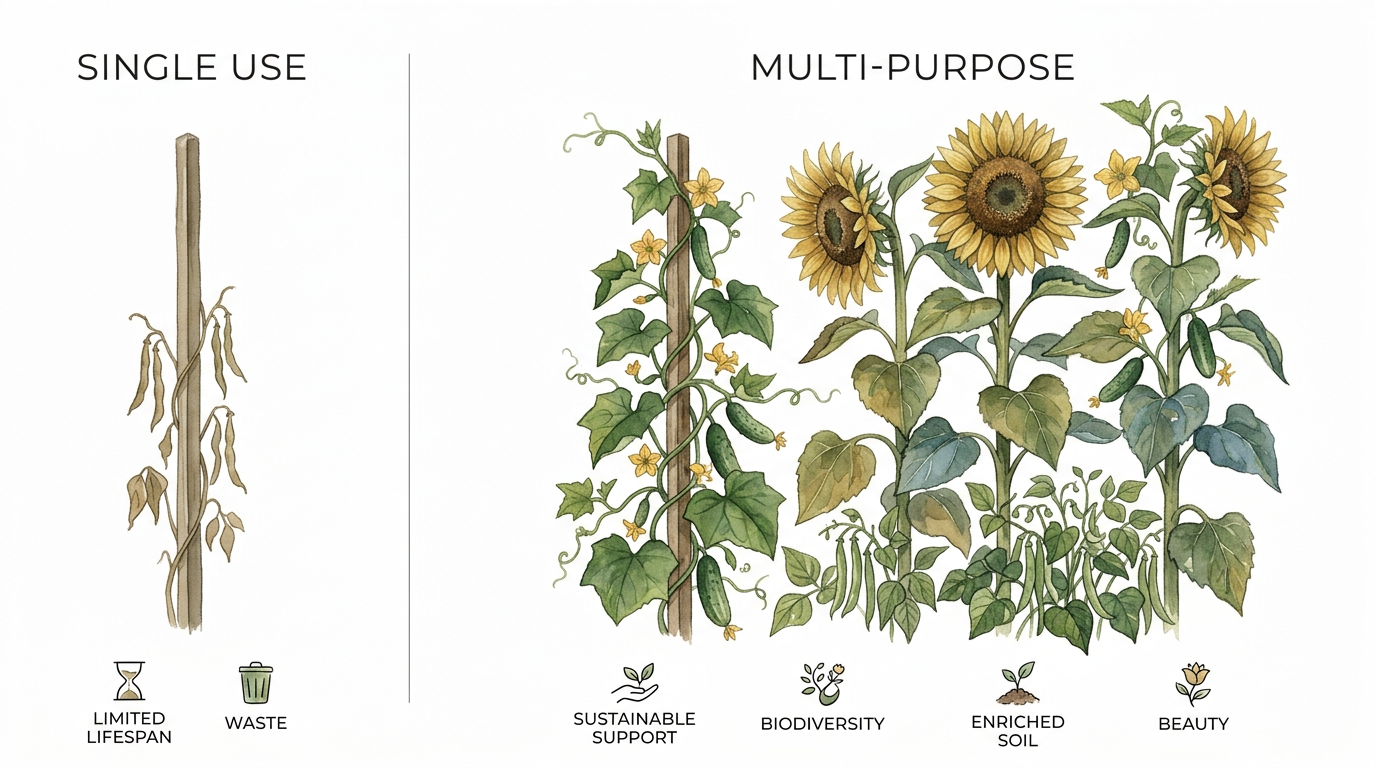
Why buy a piece of plastic when you can grow a support system that feeds the bees and your family? Every element in your garden should do at least three things. A plastic stake only holds a plant up. A sunflower holds a plant up, feeds pollinators, produces edible seeds, and looks stunning. Which one do you want?
Modern gardening often relies on temporary fixes and synthetic shortcuts. We see rows of green plastic netting and rows of pressure-treated lumber used to coerce plants into growing upward. These materials eventually degrade, crack under the sun, and find their way into a landfill. Choosing a living trellis instead connects you to a cycle of growth that has sustained civilizations for thousands of years.
Walking through a garden supported by sunflowers feels different than walking through a sea of metal cages. There is a weight of history and a sense of self-reliance in this method. It is the practice of looking at a seed and seeing not just a flower, but a pillar. It is about understanding the synergy between different species and letting nature do the heavy lifting.
This approach requires a shift in mindset. You are no longer just a consumer of garden supplies; you are a designer of ecosystems. When you plant a sunflower to support a bean vine, you are orchestrating a relationship. This guide will show you how to master that relationship, ensuring both plants thrive while reducing your reliance on store-bought junk.
Living Trellises: Using Sunflowers To Support Crops
A living trellis is exactly what it sounds like: a sturdy, tall-growing plant used as a physical support for climbing or vining crops. While various plants can serve this purpose, the sunflower stands as the undisputed king of the living trellis world. Its thick, fibrous stalk and rapid growth make it a natural replacement for wooden poles or wire mesh.
This technique is a cornerstone of polyculture gardening. In the real world, plants rarely grow in isolated monocultures. They cluster, lean, and climb on one another. By using sunflowers to support crops like pole beans, peas, or small cucumbers, you are mimicking the structural complexity found in nature. This method maximizes vertical space, allowing you to grow significantly more food in the same square footage.
Historically, this concept is rooted in the “Three Sisters” planting method practiced by various Indigenous peoples across North America. While the traditional triad includes corn, beans, and squash, sunflowers were often integrated or used as a corn substitute in certain regions. The sunflower provides the “bone” of the operation, giving the climbing vines a textured surface to grab onto as they reach for the sun.
Visualizing this setup is easy. Imagine a towering Helianthus annuus, its head heavy with seeds, while a lush green bean vine spirals up its trunk. The sunflower provides the height, and the bean provides nitrogen for the soil. It is a functional piece of art that works for you from the moment the seeds sprout until the final harvest is pulled from the vine.
The Mechanics of the Sunflower Support System
Success with living trellises depends entirely on timing and variety selection. You cannot simply throw all your seeds in the ground on the same day and expect a perfect result. The sunflower must be established enough to handle the weight and the “strangling” nature of climbing vines. If the vine grows faster than the sunflower, it will pull the young stalk to the ground or shade out its leaves.
Selecting the right sunflower variety is the first critical step. Avoid the multi-branching, decorative types that produce dozens of small flowers. While beautiful, their stalks are often too thin and their growth habit too bushy. Look for giant, single-stem varieties such as the Mammoth Grey Stripe, Titan, or Mongolian Giant. These varieties are bred for massive stalks that become almost woody as the season progresses.
Timing the planting is the second most important factor. Experience suggests giving the sunflower a two-to-three-week head start. Once the sunflower reaches about 12 to 18 inches in height and has developed a sturdy base, it is time to plant your climbing seeds at the base of the stalk. This ensures the sunflower stays ahead of the climber, maintaining its role as the dominant structural element.
Planting depth and spacing also matter. Sunflowers are heavy feeders and require plenty of root space to anchor themselves against the wind. Space your sunflowers at least 24 inches apart. When planting the climbing crops, sow two or three seeds around the base of each sunflower, approximately 4 inches away from the main stalk. This prevents the climbers from competing too aggressively with the sunflower’s primary taproot during the early stages of growth.
Benefits of a Living Sunflower Trellis
Choosing a living support over a static one offers several measurable advantages for the homestead. The most immediate benefit is the production of secondary yields. A wooden stake produces nothing. A sunflower produces high-protein seeds for your family or your poultry, and its petals can be used for natural dyes or medicinal teas. Every inch of the plant contributes to your self-sufficiency.
Biodiversity in the garden increases exponentially when you use sunflowers. The massive flower heads attract a wide array of pollinators, including honeybees, bumblebees, and beneficial wasps. These insects then stick around to pollinate your other crops, leading to higher yields across the board. Furthermore, sunflowers act as “trap crops,” drawing aphids and other pests away from more sensitive vegetables like your beans or peppers.
Soil health is another area where sunflowers shine. They possess deep taproots that can break up compacted soil layers, a process sometimes called “biological tiling.” These roots reach deep into the subsoil to pull up minerals that shallower plants cannot access. When the season ends, the root systems decompose, leaving behind channels for air and water to penetrate the earth, and the stalks can be chopped down to serve as carbon-rich mulch.
Environmental resilience is enhanced through the use of living windbreaks. A row of sturdy sunflowers can protect more delicate crops from high winds and scorching afternoon sun. They create a microclimate that retains moisture and reduces the physical stress on climbing vines. Unlike a rigid fence, a sunflower has a degree of flexibility, swaying with the wind rather than snapping under its pressure.
Challenges and Common Pitfalls
Many gardeners fail with living trellises because they underestimate the sunflower’s need for resources. Sunflowers are “heavy drinkers” and “heavy eaters.” They will compete with your climbing crops for water and nitrogen. If you do not provide enough supplemental nutrition, both the support and the climber will look stunted and yellow. Regular applications of compost tea or well-aged manure are essential to keep the system running smoothly.
Allelopathy is a scientific term every sunflower gardener should know. Sunflowers produce certain chemicals in their roots, leaves, and hulls that can inhibit the growth of surrounding plants. This is nature’s way of reducing competition. While beans and peas are generally hardy enough to withstand these toxins, some sensitive varieties might struggle. To avoid this, ensure your soil is rich in organic matter, which helps buffer these chemical effects, and avoid planting sunflowers near potatoes or pole beans known to be particularly sensitive.
Weight management is a common point of failure. If you plant a heavy-fruiting crop like a large-fruited cucumber or a heavy gourd on a sunflower, the sheer weight can snap the stalk during a summer storm. Stick to lighter crops like snap peas, pole beans, or small “personal-sized” melons. If you must grow heavier crops, you may need to provide a backup stake, which defeats the purpose of the living trellis.
Overcrowding can lead to fungal issues. The dense foliage of a sunflower combined with the thick vines of a climber can restrict airflow. In humid climates, this is a recipe for powdery mildew or rust. Proper spacing and the occasional removal of the sunflower’s lower leaves can help maintain the airflow necessary to keep the plants healthy and productive throughout the dampest parts of the season.
Limitations and Environmental Constraints
A living trellis is not a universal solution for every garden or every climate. In regions with very short growing seasons, the sunflower might not reach a sufficient height before the climbing crop needs to start its upward journey. This method relies on a long, warm summer where both plants have time to mature. If your frost-free window is less than 90 days, you may find the timing too tight to manage effectively.
Water availability is a major constraint. In drought-prone areas without irrigation, the competition between the sunflower and the vine can be lethal. Because the sunflower is so efficient at extracting moisture, it can effectively “starve” the climber. This system works best in areas with consistent rainfall or for gardeners who are committed to a rigorous watering schedule.
Sunlight requirements are non-negotiable. Sunflowers are called “sun” flowers for a reason; they require at least six to eight hours of direct light. If your garden is partially shaded, the sunflower stalks will become “leggy” and weak as they reach for light. A weak stalk cannot support a climbing vine. If you cannot provide full sun, you are better off using a traditional metal or wooden trellis that doesn’t rely on light to maintain its structural integrity.
Comparing Support Methods
Deciding between a living trellis and a manufactured one involves weighing several factors. Below is a comparison to help you determine which fits your gardening philosophy and physical needs.
| Feature | Sunflower Trellis | Metal Cattle Panel | Plastic Netting |
|---|---|---|---|
| Initial Cost | Very Low (Seed price) | High | Moderate |
| Additional Yield | Seeds, Petals, Biomass | None | None |
| Longevity | Single Season (Compostable) | Decades | 1-2 Seasons |
| Eco-Impact | Positive (Carbon sink) | Neutral/Industrial | Negative (Microplastics) |
| Setup Effort | Low (Planting) | High (Heavy lifting) | Moderate (Tying) |
While the cattle panel wins on longevity, the sunflower trellis is the clear winner for those looking to build soil and harvest extra food. The choice depends on whether you view your garden as a permanent construction project or a seasonal biological process. For the self-reliant grower, the biological process almost always provides more value over time.
Practical Tips for Best Results
To maximize the efficiency of your living trellis, consider “scarring” the sunflower stalk slightly as it grows. This doesn’t mean hurting the plant, but rather allowing the climbing vine’s tendrils to find purchase on the rough exterior. Sunflowers naturally have a hairy, textured stalk, but if you notice your vines are sliding down, you can gently guide them or loosely tie them with a piece of natural twine until they take hold.
Removing the lower leaves of the sunflower is a pro-level move. Once the sunflower is about four feet tall, clip off the leaves on the bottom two feet of the stalk. This does two things: it improves airflow at the soil level to prevent disease, and it provides a clear “ladder” for your climbing beans to follow without getting tangled in the sunflower’s own foliage. This also directs more of the sunflower’s energy toward its seed head and upper growth.
Mulching is non-negotiable in a sunflower trellis system. Because these plants are such heavy consumers of water, you need to lock in every drop of moisture. Use a thick layer of straw, shredded leaves, or wood chips around the base of the “unit.” This prevents the soil from baking and helps maintain a steady supply of nutrients as the mulch breaks down throughout the summer.
Keep a close eye on the “lean.” Sunflowers exhibit heliotropism, meaning they track the sun. In their early stages, the heads will move from east to west. As the stalks mature and the heads become heavy with seeds, they generally settle facing east. Ensure your climbing crops are planted in a way that they won’t be shaded out by this natural tilt. Planting the climbers on the south or west side of the sunflower often provides the best light exposure.
Advanced Considerations for the Serious Practitioner
For those looking to take this further, consider the role of sunflowers in “phytoremediation.” Sunflowers are exceptionally good at pulling heavy metals and toxins out of the soil. While this is great for cleaning up land, it means you should be cautious if you are growing them in soil you suspect is contaminated. If you are using them for soil cleanup, do not eat the seeds; instead, harvest the stalks and dispose of them safely.
Seed saving is the ultimate expression of homestead grit. Don’t just buy new seeds every year. Select the sturdiest, thickest-stalked sunflower from your garden and save its seeds for next year’s “trellis batch.” By doing this, you are performing localized plant breeding. Over several generations, you will develop a strain of sunflower that is perfectly adapted to your specific soil, wind conditions, and climbing crop pairings.
Integrating nitrogen-fixers is essential for the long-term viability of this system. Pole beans are legumes, meaning they have a symbiotic relationship with Rhizobium bacteria in the soil to “fix” nitrogen from the air. This nitrogen eventually benefits the sunflower. To maximize this, ensure your bean seeds are inoculated with the appropriate bacteria before planting. This turns your living trellis into a self-fertilizing engine.
Consider the “afterlife” of the trellis. Once the harvest is over, the sunflower stalks can be left standing through the winter. They provide valuable habitat for over-wintering beneficial insects and birds. In the spring, the dried stalks are incredibly strong and can be used as “garden bamboo” for small fences, or crushed and used as a high-carbon addition to a new compost pile. Nothing goes to waste.
Real-World Scenarios
Let’s look at a practical application on a standard 10×10 garden plot. Instead of installing expensive raised beds and wooden trellises, a gardener plants four rows of Mammoth sunflowers, spaced 30 inches apart. Three weeks later, they plant “Kentucky Wonder” pole beans at the base of each stalk. By mid-July, the garden is a vertical forest.
In this scenario, the gardener harvests roughly 15 pounds of beans over the course of the season. Simultaneously, they harvest 10 pounds of sunflower seeds. The total cost of the “infrastructure” was less than five dollars for two packets of seeds. In a neighboring plot using plastic netting and metal stakes, the gardener harvested the same amount of beans but had no seeds, spent forty dollars on materials, and had to untangle a mess of plastic at the end of the year.
Another example involves using sunflowers as a living screen. A homestead located near a busy road plants a dense double-row of sunflowers. They use these sunflowers to support not just beans, but also flowering vines like sweet peas and morning glories. The result is a sound-dampening, dust-filtering wall that provides food and beauty. The sunflowers are harvested in October, and the stalks are chopped into the soil to prepare for a winter cover crop.
These examples illustrate that the living trellis is more than just a garden trick; it is a strategy for efficiency. It reduces the “external inputs” required to run a productive homestead. When you stop buying things to solve problems and start growing solutions, you are truly practicing the art of self-reliance.
Final Thoughts
The transition from synthetic supports to living ones is a journey back to ancestral wisdom. It requires more observation and better timing than simply hammering a stake into the ground, but the rewards are significantly higher. You gain a garden that is more resilient, more productive, and infinitely more beautiful.
By using sunflowers as your primary structural support, you are participating in a closed-loop system. The soil feeds the sunflower, the sunflower supports the bean, the bean feeds the soil, and you harvest from both. This is the essence of “pioneer-grit” gardening. It is about making the most of what you have and working with nature rather than trying to dominate it.
Start small if you must. Plant three or four giant sunflowers this season and pair them with a few pole bean seeds. Observe how they interact. Watch how the bees flock to the giants and how the beans find their way up the stalks. Once you see the system in action, you will likely never go back to buying plastic stakes again. The future of your garden is living, breathing, and reaching for the sun.
