How To Become More Self-Sufficient Without Starting a Full-Blown Farm…
Want to start preserving your harvest, making your own soap, or building a backyard root cellar — but not sure where to begin? “Homesteading Advice” gives you instant lifetime access to 35+ practical homesteading books on food preservation, veggie gardening, DIY natural cleaning products (save over $250 per year with this skill alone), brewing, off-grid energy, and a whole lot more…
Click Here To Check It Out Now!
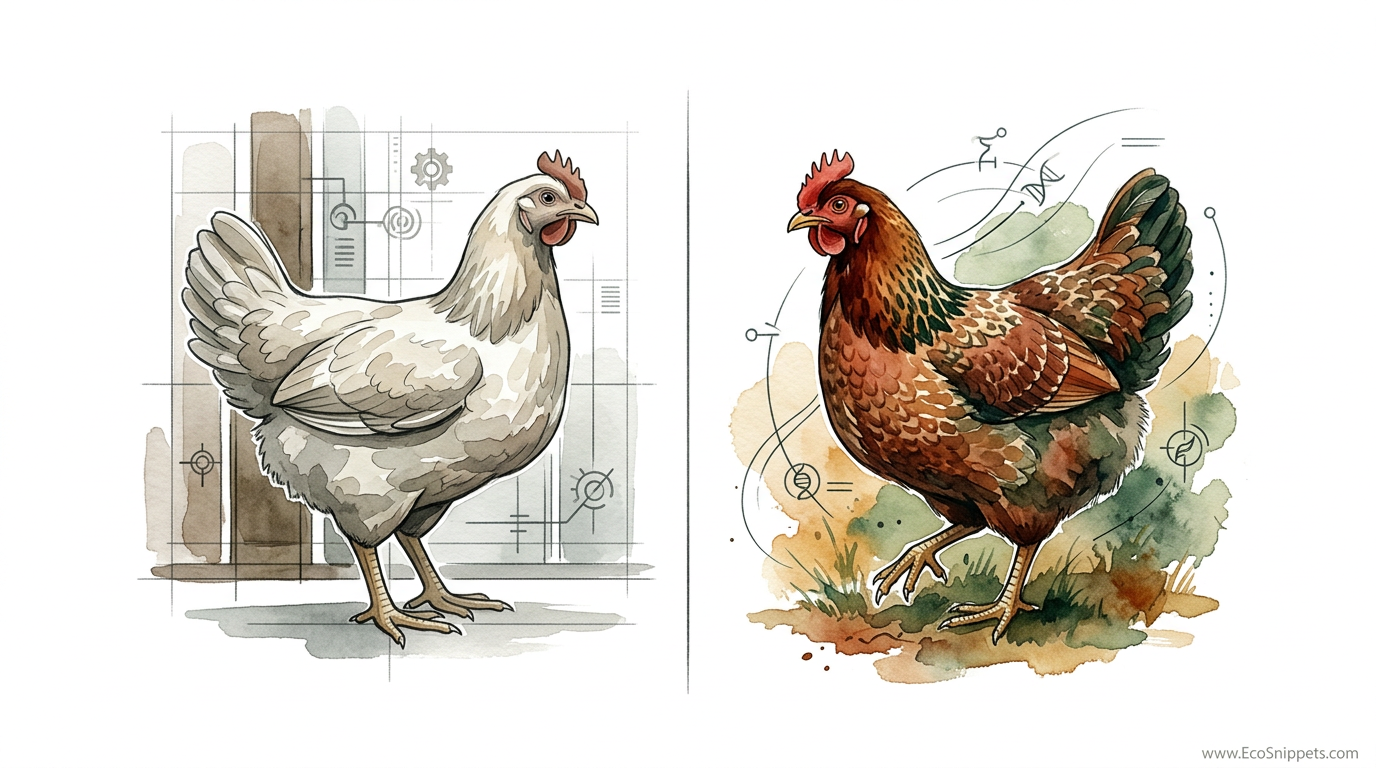
We traded 5,000 years of survival instincts for a bird that can’t live through a single afternoon power outage. In our quest for speed, we bred the ‘survival’ right out of our livestock. Industrial hybrids grow fast, but they are fragile. If the feed store closes or the heat kicks off, they are gone. Heritage breeds are the true prepper’s choice—slower to grow, but impossible to quit.
When you start your journey into self-reliance, the first animal you usually bring home is the chicken. It makes sense. They are the “gateway drug” of homesteading, providing a steady stream of protein and turning kitchen scraps into garden gold. But if you walk into a typical farm supply store, you are often met with birds designed for a factory, not a farmstead. These birds are bred for a world that never fails—a world of climate-controlled sheds, high-protein soy pellets, and antibiotic safety nets.
True resilience is about more than just surviving; it is about thriving when the systems we rely on falter. A resilient bird knows how to find its own food, how to spot a hawk before it strikes, and how to survive a blizzard without a heat lamp. This guide dives deep into the world of heritage legacy poultry, helping you choose the birds that will still be pecking in your yard long after the fragile hybrids have disappeared.
Most Resilient Chicken Breeds For Homesteaders
Resilience in the poultry world is a combination of genetic vigor, environmental adaptation, and behavioral intelligence. While industrial hybrids are “disposable” assets with a productive lifespan of barely two years, heritage breeds are built for the long haul. They possess dense bone structure, robust organ systems, and the “pioneer grit” required to handle the unpredictable nature of outdoor life.
A resilient breed is defined by its ability to perform “dual-purpose” roles. This means they provide a respectable amount of eggs while also carrying enough meat to feed a family when necessary. They aren’t just egg machines; they are holistic components of a self-sustaining ecosystem. These birds are also “true-breeding,” meaning that if you let your rooster and hens mate, the offspring will look and perform just like their parents. This is the cornerstone of food security—owning the means of reproduction.
The Buckeye: The American Original
The Buckeye is perhaps the most rugged bird ever developed on American soil. Created by Nettie Metcalf in Ohio during the late 1800s, it is the only American breed credited entirely to a woman. Metcalf wanted a bird that could handle the brutal Midwestern winters, and she succeeded spectacularly. Buckeyes are solid, heavy birds with a deep mahogany color that resembles the nut they are named after.
What sets the Buckeye apart is its unique “pea comb.” Most chickens have a “single comb” (the tall, floppy red ridge), which is highly susceptible to frostbite. The pea comb is low-profile and stays close to the head, making it nearly immune to freezing. Beyond their physical toughness, Buckeyes are famous for being “mousers.” They have a retained game-bird instinct that makes them active hunters of small rodents, a trait that can significantly reduce feed costs and pest issues in the barn.
The Chantecler: The King of the Cold
If you live in a climate where the mercury regularly drops below zero, the Chantecler is your bird. Developed by a monk in Quebec, this breed was literally engineered for the Canadian winter. It features a “cushion comb” and almost non-existent wattles. Since wattles and combs are the primary sites for frostbite, the Chantecler is essentially built with a built-in winter coat.
These birds have a thick, tight plumage that traps body heat more efficiently than almost any other breed. While they aren’t the fastest layers, they are “winter layers,” meaning they tend to keep producing eggs even when the days get short and the snow gets deep. They are calm, gentle, and possess a quiet dignity that makes them a favorite for families with children.
The Dominique: America’s First Breed
The Dominique is the ultimate survivor of the American frontier. They were the birds that traveled west in covered wagons because they were small enough to transport but tough enough to forage for their own dinner at every camp stop. Their “cuckoo” feather pattern (a messy black-and-white barring) is actually a form of camouflage that makes them difficult for aerial predators like hawks to track against a forest floor.
Dominiques have a rose comb, which provides excellent cold resistance. They are legendary foragers, often preferring to spend their days deep in the brush rather than hanging around a feeder. For the homesteader who wants a bird that requires minimal intervention, the Dominique is a top-tier candidate. They are smart, flighty when they need to be, and extremely protective of their chicks.
The Black Australorp: The Record Holder
Coming from Australia, the Australorp was bred from the Orpington with a focus on pure production without losing the heritage hardiness. In the 1920s, an Australorp set a world record by laying 364 eggs in 365 days. While you shouldn’t expect that level of output from every bird, they remain some of the most consistent heritage layers in existence.
What makes them resilient is their adaptability. They handle heat surprisingly well for a black bird, and their heavy bodies allow them to withstand cold nights. They are the “gentle giants” of the poultry world—friendly, docile, and excellent mothers. If your goal is to have a freezer full of meat and a basket full of eggs without the flightiness of some other heritage breeds, the Australorp is the gold standard.
Choosing Your Flock Based on Your Environment
Resilience is not a one-size-fits-all metric. A bird that is a survivor in the sub-arctic conditions of Vermont might struggle in the humid heat of Georgia. When selecting your breeds, you must look at your specific micro-climate and your homestead’s topography. You are looking for a biological match for your land.
Consider the “Comb Rule” as your first filter. If you live in a cold climate, prioritize breeds with pea, rose, or cushion combs. These low-profile combs have less surface area, which prevents the moisture in the bird’s breath from freezing on the tissue. If you live in a hot climate, a large single comb is actually an advantage—it acts like a radiator, helping the bird dissipate heat through its blood vessels.
Next, look at your predator pressure. If you are surrounded by woods and have high aerial predator threats, avoid solid white birds like the White Leghorn or White Plymouth Rock unless they are confined. Instead, choose birds with “barred” or “partridge” patterns. These patterns break up the bird’s silhouette, making them nearly invisible to a hawk looking down from 100 feet in the air.
Finally, evaluate your space. Some breeds, like the Rhode Island Red (Heritage), are high-energy and can become aggressive or prone to “feather picking” if they are kept in tight confinement. If you have a small backyard, choose a more docile breed like the Australorp or Sussex. If you have 40 acres of woods, unleash the Buckeyes or Dominiques and let them earn their keep by foraging.
The Benefits of Choosing Heritage Over Hybrid
The primary benefit of heritage breeds is their longevity. An industrial hybrid (like an ISA Brown or a Cornish Cross) is genetically programmed for a “burn fast, die young” lifestyle. By the time they are two years old, their bodies are often failing—prolapsed vents, brittle bones, and reproductive tumors are common. In contrast, a healthy heritage hen can live for 8 to 12 years and continue laying eggs for much of that time.
Another massive advantage is genetic sovereignty. You cannot breed industrial hybrids at home to get the same bird; they are a complex cross of several lines that only a few multi-national corporations control. When you own a flock of heritage Delaware or Plymouth Rock chickens, you own the genetics. You can hatch your own eggs, select the best roosters, and improve the resilience of your flock year after year. You are no longer a customer of the industrial food system; you are a producer.
Heritage birds also provide superior nutrition. Because they grow slower and forage more aggressively, their meat and eggs are more nutrient-dense. Studies have shown that heritage birds allowed to pasture have higher levels of Omega-3 fatty acids and Vitamin A than their factory-raised counterparts. You can see the difference in the yolk—a rich, deep orange that holds its shape, rather than the pale yellow watery mess found in store-bought eggs.
Challenges and Common Mistakes
The most common mistake new homesteaders make is expecting heritage birds to perform like hybrids. If you are used to getting an egg every single day from a bird that grows to market weight in 8 weeks, heritage birds will feel like a letdown at first. You must adjust your expectations to “slow and steady.”
A heritage meat bird may take 16 to 20 weeks to reach the same weight a Cornish Cross hits in 8. This means you are feeding that bird for twice as long. However, if that bird is foraging 50% of its diet from your pasture, the “feed conversion” math changes in your favor. The mistake is trying to raise a heritage bird in a small, bare pen where they can’t forage. Without the ability to roam, you are just paying for a slower-growing bird without getting the benefit of their survival skills.
Another challenge is “the rooster problem.” Because you are breeding for resilience and predator awareness, heritage roosters can be more aggressive than their hybrid cousins. A Dominique rooster is a fierce protector. While this is great for the safety of the hens, it can be a challenge for small children or neighbors. Managing a “pioneer gritty” rooster requires a different set of skills—you must establish yourself as the alpha without resorting to violence, ensuring the rooster respects your space while remaining alert to the woods.
Limitations and Realistic Constraints
Heritage breeds are not ideal for everyone. If you are running a commercial egg business where every penny of profit depends on the number of eggs laid per pound of feed, you might find heritage birds difficult to manage. Their production is often seasonal. When the winter hits or they enter a molt, heritage hens will stop laying to conserve energy. This is a natural, healthy process, but it can be frustrating if you have customers expecting a dozen eggs every week year-round.
Environmental constraints also play a role. If you live in an urban environment with a 10×10 foot run, a breed like the Icelandic or the Buckeye will be miserable. These birds have a psychological need for movement and exploration. Forcing a high-forage breed into tight confinement often leads to behavioral issues like egg-eating or bullying. In these cases, it is actually better to choose a more “domesticated” heritage breed like the Orpington or a light-production hybrid that handles confinement with less stress.
Industrial Hybrid vs. Heritage Legacy
To understand why resilience matters, it helps to look at the numbers and traits side-by-side. This table compares the typical “Industrial Hybrid” (designed for maximum short-term yield) with the “Heritage Legacy” bird (designed for long-term survival).
| Trait | Industrial Hybrid | Heritage Legacy |
|---|---|---|
| Productive Lifespan | 1.5 – 2 Years | 6 – 10 Years |
| Egg Yield (Peak) | 300+ per year | 150 – 250 per year |
| Reproduction | Does not breed true | Breeds true to type |
| Foraging Ability | Low (Relies on feeders) | High (Active hunters) |
| Predator Awareness | Poor (Often docile/slow) | Excellent (Alert/Savvy) |
| Bone/Organ Health | Fragile (Rapid growth issues) | Robust (Slow development) |
As the table shows, the hybrid wins on pure speed, but the heritage bird wins on sustainability. For a homesteader, the “cost per egg” may be higher with a heritage bird in the first year, but over a five-year period, the heritage bird often proves more economical because you aren’t constantly replacing a dying flock.
Practical Tips for a Resilient Flock
Building a resilient flock goes beyond just choosing the right breed; it is about how you manage them. If you treat a heritage bird like a factory bird, you will lose the benefits of their genetics. Here are a few ways to lean into their strengths:
- Ferment Your Feed: Heritage birds have robust digestive systems. By fermenting your chicken feed in water for 3 days, you introduce probiotics and make the nutrients more bioavailable. This mimics the natural “pickled” seeds they would find in the wild and drastically improves their immune health.
- Design a “Forage First” Coop: Instead of a static coop, consider a “chicken tractor” or an electric netting system. Moving the birds to fresh grass every day keeps their parasite load low and ensures they are getting the high-protein insects they need to build the muscle that supports their resilience.
- Select for Broodiness: Many modern hatcheries have bred the “mothering instinct” out of heritage birds so they lay more eggs. If you want true resilience, seek out breeders whose hens still “go broody” (sit on eggs to hatch them). A hen that can raise her own replacements is the ultimate asset for a self-sufficient homestead.
- Cull for Character: On a homestead, you are the selective pressure. If a bird is consistently sick, weak, or a bully, they shouldn’t be part of your breeding program. By only keeping the toughest, smartest birds, you create a localized strain that is perfectly adapted to your specific predators and diseases.
Advanced Considerations: Landrace Birds
For the serious practitioner, the next step beyond heritage breeds is the landrace bird. A landrace is a population of chickens that has lived in a specific region for so long that they have become a biological reflection of that place. Examples include the Icelandic Chicken or the Swedish Flower Hen.
These birds don’t have a “standard of perfection” in terms of color or size. Instead, they have a “standard of survival.” They are incredibly diverse—some are black, some are spotted, some have crests. This diversity is their superpower. If a new disease sweeps through the area, the high genetic variation in a landrace flock means that at least some birds will likely have the natural immunity to survive. If you want the absolute pinnacle of “impossible to quit” poultry, look into landrace populations.
Scenario: The Winter Power Outage
Imagine it is January in Maine. A winter storm knocks out the power for four days. In a modern coop with 50 ISA Brown hybrids and a heat lamp, the results are catastrophic. The birds have no internal fat reserves, their feathers are thin, and they have never learned to huddle properly because the heat lamp was always there. By day two, the mortality rate is climbing.
Now look at the neighbor’s coop. They have a mix of Chanteclers and Buckeyes. These birds have spent the last six months developing deep fat stores from autumn foraging. Their plumage is dense and downy. When the heat goes out, they don’t panic; they simply move to the highest roost, fluff their feathers, and tuck their heads under their wings. Because they have small combs, there is no frostbite to cause secondary infections. On day five, when the sun comes out, they hop down and start scratching in the bedding as if nothing happened. That is the difference between a product and a partner.
Final Thoughts
The path to self-reliance is paved with hard lessons, but choosing the right livestock shouldn’t be one of them. We live in an era of fragile efficiency, where we are encouraged to choose the fastest and the most productive at the expense of the enduring. But the homesteader knows that speed is a luxury of the stable. When things get difficult, endurance is the only currency that matters.
By bringing heritage breeds back to your land, you aren’t just raising chickens; you are participating in a grand act of conservation. You are keeping alive the genetic libraries that our ancestors spent thousands of years curating. These birds are the living history of our struggle for survival, and in return for a little space and a dry coop, they offer a level of security that no grocery store can match.
Start small. Buy a handful of Buckeyes or Australorps. Watch how they move, how they hunt, and how they interact with the world. You will quickly see that they aren’t just “birds”—they are small, feathered miracles of engineering, designed to thrive in a world that doesn’t always have the lights on. Once you see a heritage hen lead her brood through a summer storm with perfect confidence, you’ll never want to go back to the bird that needs a power outlet to survive the afternoon.
