How To Become More Self-Sufficient Without Starting a Full-Blown Farm…
Want to start preserving your harvest, making your own soap, or building a backyard root cellar — but not sure where to begin? “Homesteading Advice” gives you instant lifetime access to 35+ practical homesteading books on food preservation, veggie gardening, DIY natural cleaning products (save over $250 per year with this skill alone), brewing, off-grid energy, and a whole lot more…
Click Here To Check It Out Now!
The Resilient Dandelion: From Lawn Nuisance to Homestead Essential
The ‘weed’ you’ve been trying to kill is actually a free pharmacy and grocery store in one. Most modern homeowners see a sea of yellow in their yard and reach for the chemical sprayer, but the wise homesteader sees a gift from the earth. Dandelions are one of the most useful plants on any homestead, serving as a multi-functional tool for health, nutrition, and soil regeneration.
They are the first food for bees in the early spring, a powerful liver tonic for humans, and a nutrient-rich addition to your dinner plate—all for free. This golden-headed plant has followed human civilization across the globe for centuries, not as a pest, but as a survival staple. If you are looking to reclaim ancestral wisdom and build a self-reliant lifestyle, it is time to stop fighting the dandelion and start harvesting it.
Foraging dandelions is the perfect entry point for those new to wildcrafting. They are easily identifiable, grow in abundance, and every single part of the plant is usable. From the tip of the blossom to the bottom of the deep taproot, there is no waste to be found here. Let’s look at how you can turn this backyard rebel into a cornerstone of your homestead pantry and medicine cabinet.
Uses For Dandelions On The Homestead
The dandelion (Taraxacum officinale) is a powerhouse of versatility. In the pioneer days, nothing was wasted, and the dandelion was no exception. It served as a fresh vegetable after a long winter, a medicinal tea for various ailments, and even a beverage base. Today, we can use these same methods to reduce our grocery bills and increase our self-sufficiency.
Culinary Bounty: The leaves, especially when young, are a nutrient-dense green that rivals kale or spinach. The flowers can be fried into fritters, steeped into a delicate jelly, or fermented into traditional dandelion wine. Even the roots, when roasted, provide a hearty, caffeine-free alternative to coffee that supports digestion.
Medicinal Support: Traditionally, dandelions have been used as a “spring tonic.” After months of eating stored grains and salted meats, the bitter compounds in dandelions helped jumpstart the liver and kidneys. They act as a mild diuretic—earning them the folk name “piss-a-bed”—but unlike synthetic diuretics, they are high in potassium, helping the body maintain its mineral balance.
Livestock and Garden Benefits: Dandelions aren’t just for humans. They are excellent forage for chickens, rabbits, and goats, providing essential vitamins during the early growing season. In the garden, their deep taproots act as “dynamic accumulators,” pulling minerals like calcium and iron from deep in the subsoil and bringing them to the surface where other plants can reach them.
How to Harvest and Process Dandelions
To get the most out of your dandelions, you must understand the rhythm of the plant. Like any crop, there is a right time and a wrong time to harvest. Success on the homestead depends on working with nature’s timeline rather than against it.
Harvesting the Greens
Dandelion leaves are best harvested in the early spring before the flowers appear. At this stage, they are tender and have a pleasant, slightly bitter flavor similar to arugula. As the plant matures and the flower stalks rise, the leaves become increasingly bitter and tough.
When picking greens, look for plants growing in rich, moist soil. Use a sharp knife to cut the leaves at the base of the crown. If you find the bitterness too strong, you can “blanch” the plants by covering them with a bucket for a few days before harvesting, which turns the leaves pale and mild.
Harvesting the Flowers
Flowers should be picked at midday when they are fully open and dry. If you are making jelly or wine, you only want the yellow petals. The green base of the flower (the bracts) is very bitter and can ruin a delicate recipe. Pinch the yellow petals away from the green base using your fingernails or a pair of kitchen shears.
Harvesting the Roots
The roots are best harvested in the late fall or early spring. In the fall, the plant has spent all summer storing nutrients in the root for winter survival, making them thick and sweet. In the spring, they are prime for medicinal use. Use a garden fork or a dedicated weeding tool to dig deep; dandelion roots can grow over a foot long, and you want as much of that “gold” as possible.
How It Works: Preparing Your Foraged Goods
Once you’ve harvested your bounty, you need to know how to process it properly. Foraging is only half the battle; the “pioneer-grit” comes in the preparation. Whether you are stocking the pantry or the apothecary, these methods will ensure nothing goes to waste.
- Drying for Tea: Clean the roots thoroughly with a scrub brush. Slice them into small coins and dry them in a dehydrator or a low oven until they are brittle. You can do the same with the leaves for a medicinal infusion.
- Roasting the Root: To make “homestead coffee,” take your dried root coins and roast them in a cast-iron skillet or oven at 350°F until they turn dark brown and smell nutty. Grind them just like coffee beans.
- Infusing Oil: Fill a jar with dried dandelion blossoms and cover with a carrier oil like olive or almond oil. Let it sit for 4-6 weeks. This oil is incredible for soothing sore muscles and dry skin.
- Kitchen Prep: Always wash your greens in cool water with a splash of vinegar to remove any “hitchhikers” or grit. If using them in a salad, a strong vinaigrette with honey or maple syrup helps balance the natural bitterness.
The Practical Benefits of the Dandelion
Why bother with a plant that most people try to kill? The benefits are both practical and biological. Embracing the dandelion is a step toward a more resilient and sustainable way of living. It reduces your dependence on external systems and reconnects you with the land beneath your feet.
Nutritional Density: Dandelions are packed with vitamins A, C, and K, along with significant amounts of calcium, potassium, iron, and manganese. Gram for gram, they are often more nutritious than the vegetables you buy at the grocery store. This makes them a vital resource for anyone looking to optimize their health naturally.
Cost-Effective Resilience: On the homestead, every penny saved is a penny earned. Replacing expensive supplements or store-bought greens with foraged dandelions is an easy way to trim the budget. Furthermore, because they are incredibly hardy, they provide a reliable food source even in years when your main garden might struggle.
Environmental Stewardship: By allowing dandelions to grow, you are providing a critical early-season nectar source for pollinators. A healthy bee population is essential for the pollination of your fruit trees and garden vegetables. Additionally, the deep taproots help break up compacted soil and improve drainage, acting as a natural aerator for your land.
Challenges and Common Mistakes
While dandelions are a gift, there are pitfalls to avoid. Foraging requires a keen eye and a bit of common sense. If you rush the process, you could end up with a bitter mess—or worse, a bellyache.
The Pesticide Trap: This is the most critical rule of foraging: never harvest from an area that has been treated with chemicals. Many lawns are sprayed with broadleaf herbicides specifically designed to kill dandelions. If the grass looks too perfect, or if you see those little yellow “chem-lawn” flags, stay away. Only harvest from “wild” areas or your own untreated land.
Mistaking the Lookalikes: While true dandelions are easy to spot, there are “false dandelions” like Cat’s Ear (Hypochaeris radicata). The easiest way to tell the difference is the stem. A true dandelion has a single, hollow, leafless stalk for every flower. If the stalk is solid, hairy, or branches off into multiple flowers, it’s not a true dandelion. While most lookalikes aren’t toxic, they don’t offer the same benefits.
Ignoring the Bitterness: If you try to eat a large, mature dandelion leaf raw in the middle of July, you will likely never want to eat one again. It will be incredibly bitter. Understand that bitterness is often a sign of medicinal potency, but for eating, you must use culinary techniques like sautéing with fat (bacon grease is a homestead favorite) or blanching to make them palatable.
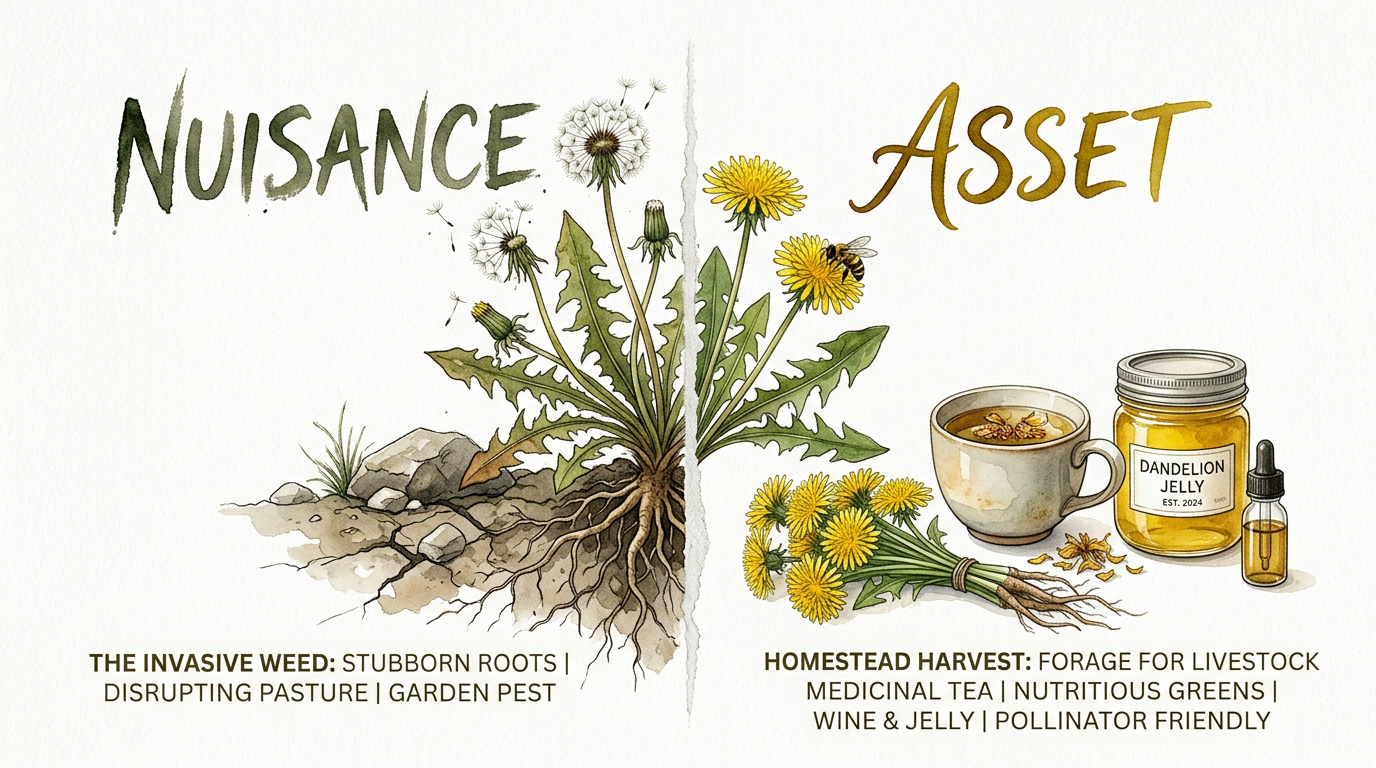
Context: Nuisance vs. Asset
To truly appreciate the dandelion, we must shift our perspective. Modern culture has spent millions of dollars branding this plant as an “enemy” of the suburban landscape. On the homestead, we view things through a lens of utility and ancestral wisdom.
| Feature | Dandelion as a Nuisance | Dandelion as a Homestead Asset |
|---|---|---|
| Economic Impact | Cost of herbicides and lawn services. | Free source of food and medicine. |
| Soil Health | Viewed as a sign of “poor” lawn maintenance. | Breaks up compaction; pulls up minerals. |
| Biodiversity | Leads to monoculture grass lawns. | Supports bees, butterflies, and livestock. |
| Health Use | Often seen as a source of seasonal allergies. | Used for liver detox and digestive aid. |
Practical Tips and Best Practices
Ready to start your first harvest? Follow these simple guidelines to ensure you are gathering the best quality plants while maintaining the health of your land.
- Harvest in Clean Areas: Stay at least 50 feet away from busy roads to avoid runoff and exhaust pollutants.
- Use the “Rule of Thirds”: Never strip an area bare. Take one-third of the plants for yourself, leave one-third for the bees, and leave one-third to go to seed for next year.
- Keep Your Tools Sharp: A dedicated dandelion digger or a long-bladed knife makes harvesting roots much easier and less damaging to the surrounding grass.
- Process Immediately: Dandelion greens wilt quickly. If you can’t use them right away, wrap them in a damp cloth and store them in the cellar or refrigerator.
- Label Your Storage: If you are drying roots or leaves for tea, label your jars with the date and location of harvest. Proper organization is key to a functional homestead apothecary.
The Wisdom of the “Lion’s Tooth”
The name “dandelion” comes from the French dent-de-lion, meaning “lion’s tooth,” referring to the jagged edges of the leaves. There is a certain fierce strength in this plant. It can grow through cracks in concrete, survive freezing winters, and thrive in soil that other plants find inhospitable. It is a survivor, and by incorporating it into our lives, we inherit a bit of that resilience.
Ancestral wisdom teaches us that the earth provides exactly what we need, often right at our doorstep. The dandelion isn’t an invader; it’s an invitation to look closer at the natural world. It challenges us to move beyond the superficial beauty of a manicured lawn and toward the deep, rugged beauty of a functional ecosystem.
Next time you see those yellow blossoms popping up in your pasture or garden, don’t reach for the hoe. Reach for a basket. Whether you’re brewing a cup of roasted root tea or tossing a handful of spring greens into a skillet, you’re participating in a tradition of self-reliance that spans generations. The homestead is not just about what you plant; it’s about what you have the wisdom to harvest.
Final Thoughts
Mastering the use of dandelions is a badge of honor for any homesteader. It proves that you can see value where others see waste. It shows that you understand the cycles of the seasons and the needs of your body. Most importantly, it demonstrates a commitment to a life lived in harmony with the land.
Start small. Try a dandelion leaf in your next sandwich or dry a few roots for a winter tonic. As your knowledge grows, so will your appreciation for this humble “weed.” You may soon find yourself wishing you had more dandelions on your property, a true sign that you have transitioned from a consumer to a steward of the earth.
Building a resilient life isn’t always about high-tech solutions or expensive equipment. Often, it’s about the simplest things—like the golden flower that’s been waiting for you to notice it all along. Take that first step today, and rediscover the free pharmacy and grocery store growing in your own backyard.
