How To Become More Self-Sufficient Without Starting a Full-Blown Farm…
Want to start preserving your harvest, making your own soap, or building a backyard root cellar — but not sure where to begin? “Homesteading Advice” gives you instant lifetime access to 35+ practical homesteading books on food preservation, veggie gardening, DIY natural cleaning products (save over $250 per year with this skill alone), brewing, off-grid energy, and a whole lot more…
Click Here To Check It Out Now!
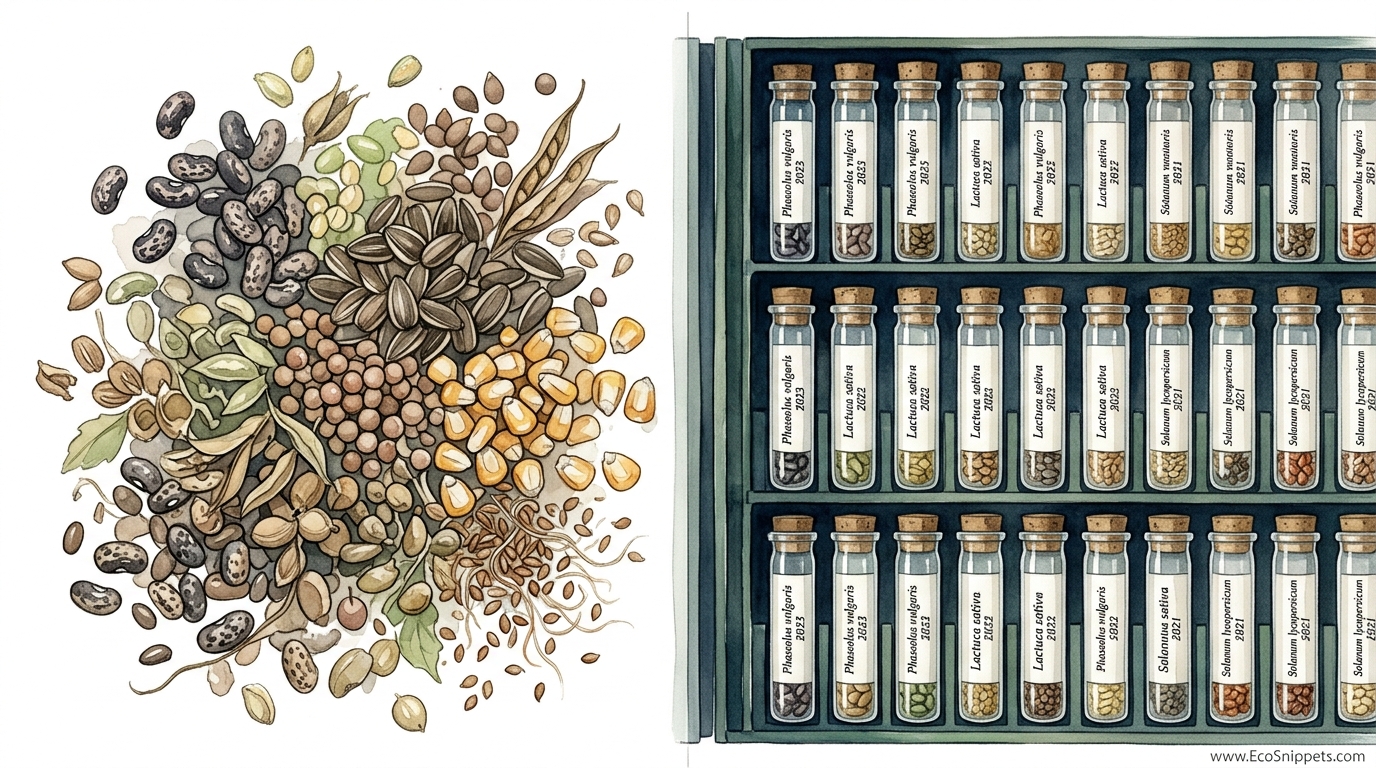
Stop letting your future harvest rot in a shoebox—here is how the pros protect 50 years of genetics with one simple organizational shift. Every year, thousands of backyard farmers lose their rarest heirloom genetics to moisture, heat, and the ‘mystery baggie’ trap. A chaotic seed pile isn’t just an eyesore; it’s a liability to your food security. True sustainability starts with a system that treats your seeds like the biological gold they are. Transition from a messy heap to a systematic vault and ensure your garden thrives for generations.
Heirloom seeds are more than just potential vegetables. They represent a lineage of resilience, flavor, and history that has survived wars, droughts, and the industrialization of our food system. When you toss a half-used packet of 100-year-old corn into a junk drawer, you are gambling with an irreplaceable genetic inheritance. A serious practitioner knows that the garden does not begin in the spring; it begins in the dark, cool silence of a well-ordered vault.
Mastering the art of seed preservation requires a shift in perspective. You must stop viewing seeds as dormant objects and start seeing them as living embryos in a state of suspended animation. Every moment they spend in a humid kitchen or a hot garage, they are burning through their limited energy reserves. Efficiency in the field starts with the discipline you show in your storage shed.
Organizing Heirloom Seeds For Long-term Viability
Long-term viability is the measure of how many seeds in a given lot remain alive and capable of germinating over time. Heirloom seeds are open-pollinated varieties that breed true to type, meaning the offspring will look and taste like the parent. Because these genetics are not controlled by massive corporations, the responsibility for their survival rests entirely on your shoulders. Organizing for viability means creating an environment that slows the seed’s metabolism to a crawl.
The “Rule of 100” serves as the foundational law for every serious seed saver. This rule states that the sum of the storage temperature (in degrees Fahrenheit) and the relative humidity (%) should ideally be less than 100. If your storage room is 70°F and the humidity is 60%, your total is 130, which is a recipe for rapid genetic decay. Professionals aim for a “magic number” closer to 70 or 80 by using climate-controlled spaces or specialized containers.
Real-world storage scenarios often involve a struggle against the elements. In a humid climate, moisture is the primary enemy, as it can trigger premature germination or fungal rot. In arid regions, excessive heat can bake the delicate oils inside the seed, rendering them sterile. Successful organization addresses these environmental threats while providing a logical roadmap for the grower to find exactly what they need during the frantic planting window.
Think of your seed collection as a library of survival. A library without a catalog is just a pile of paper. A seed collection without a system is just a heap of potential failures. Proper organization ensures that you use the oldest seeds first, track which varieties perform best in your microclimate, and protect your “biological gold” from the steady march of time.
How to Build Your Genetic Vault
Creating a professional-grade seed vault does not require a laboratory, but it does require a dedicated process. The transition from a chaotic shoebox to a systematic vault happens in four distinct phases: cleaning, drying, categorizing, and housing. Skipping any of these steps will compromise the integrity of your entire collection.
Step 1: The Cleanse and Inspection
Never store seeds that are still covered in fruit pulp or garden debris. Debris holds moisture and attracts pests like weevils or moths. Ensure your seeds are threshed and winnowed until only the pure seed remains. Inspect every batch for “mystery seeds” or cross-pollinated outliers that might dilute your heirloom line in future seasons.
Step 2: The Bone-Dry Rule
Moisture is the single greatest killer of seed viability. Professional growers often use the “snap test” for larger seeds like beans or corn. If the seed bends instead of snapping cleanly when hit with a hammer or bitten, it still contains too much internal moisture for long-term storage. Use food-grade silica gel packets to pull residual moisture out of the seeds before sealing them in airtight containers.
Step 3: Choosing an Organizational Logic
Decide how you want to retrieve your seeds. Beginners often organize alphabetically, but experienced practitioners usually choose between a botanical or a seasonal system. Organizing by botanical family (e.g., Solanaceae for tomatoes and peppers) helps you manage crop rotation and understand shared pests. Seasonal organization (e.g., “Early Spring Direct Sow”) makes the actual act of planting much more efficient during the busy weeks of the year.
Step 4: Selecting the Right Housing
Glass is superior to plastic for long-term storage because it is a perfect vapor barrier. Mason jars with tight-sealing lids are the gold standard for the homestead. Inside these jars, you can store individual packets made of paper or small Mylar bags. This “layered” approach provides an extra level of protection against accidental moisture exposure when you open the main jar to retrieve a specific variety.
Benefits of a Systematic Seed Vault
The move toward a rigorous organizational system offers practical, measurable advantages that go far beyond a tidy workspace. When you treat your seeds with the respect they deserve, your garden responds with a level of vigor that “mystery baggie” gardeners can only dream of. The benefits manifest in both the quality of your harvest and the security of your homestead.
- Predictable Germination Rates: When seeds are stored at a constant temperature and low humidity, their germination rates remain high for years. This means you can plant exactly the number of seeds you need, reducing waste and thinning time.
- Regional Adaptation: By saving and organizing your own heirloom seeds year after year, you are effectively “breeding” plants that are specifically adapted to your local soil and climate. This is a level of customization that store-bought seeds cannot offer.
- Financial Independence: A well-managed vault allows you to stop buying seeds every year. For a serious gardener, this can save hundreds of dollars annually, especially as the price of high-quality organic seeds continues to rise.
- Preservation of History: Many heirloom varieties are one bad season away from extinction. Your vault becomes a sanctuary for rare genetics, ensuring that the flavors and stories of our ancestors are passed down to the next generation.
Common Mistakes to Avoid
Even well-intentioned gardeners often fall into traps that can wipe out their entire collection in a single season. Most of these errors stem from a lack of understanding of seed physiology. Recognizing these pitfalls is the first step toward true mastery of the craft.
One of the most frequent mistakes is storing seeds in the refrigerator without a perfect seal. Refrigerators are surprisingly humid environments. If a jar lid is even slightly loose, the seeds will absorb moisture from the fridge, leading to mold. Furthermore, taking a cold jar out of the fridge and opening it immediately causes condensation to form on the seeds. You must always let the container reach room temperature before breaking the seal.
Labeling errors are the “silent killers” of the seed heap. “Red Tomato” is not a label; it is a riddle. A professional label includes the specific variety name, the year of harvest, the source of the seeds, and any notes on germination rates. Without this data, you cannot make informed decisions about which seeds are still viable and which need to be grown out and refreshed.
Another pitfall is the use of clear containers in brightly lit areas. Light triggers certain biochemical pathways in seeds that can signal them to “wake up.” This premature metabolic activity burns through the seed’s energy stores. Always store your glass jars in a dark cupboard, an opaque bin, or a dedicated root cellar to ensure the embryos remain in deep dormancy.
Limitations and Environmental Constraints
While a vault system is the best approach for most gardeners, it is important to understand the realistic boundaries of seed storage. Not all seeds are created equal, and some genetics simply cannot be “vaulted” for decades without specialized equipment. A balanced understanding of these limitations will prevent frustration down the road.
Short-lived seeds, such as those in the Allium family (onions, leeks, and chives) or parsnips, rarely last more than a year or two even under perfect conditions. These varieties have high oil contents that go rancid or metabolic rates that simply cannot be slowed down enough for long-term storage. For these crops, the only way to “organize” is to grow them out every single season to ensure a fresh supply of seed.
Environmental trade-offs also play a role. While freezing can extend the life of many seeds to 20 years or more, it requires the seeds to be extremely dry (below 8% moisture content). If you freeze a seed that still has significant internal water, the water will expand into ice crystals and shred the cell walls of the embryo. For the average homesteader, a cool, dark basement at 55°F is often safer and more reliable than a freezer that might lose power or harbor improperly dried seeds.
The Seed Heap vs. The Genetic Vault
To help visualize the difference between a haphazard approach and a professional system, consider the following comparison. Efficiency, cost, and long-term security are all affected by the transition from the heap to the vault.
| Feature | The Seed Heap (Chaotic) | The Genetic Vault (Systematic) |
|---|---|---|
| Retrieval Time | 15-30 minutes of searching | Less than 60 seconds |
| Viability Lifespan | 1-3 years on average | 5-15+ years for most varieties |
| Germination Success | Erratic and unpredictable | High and consistent (85%+) |
| Inventory Knowledge | Based on memory/guessing | Data-driven via logs or apps |
| Risk of Loss | High (Moisture/Pests/Heat) | Low (Sealed/Protected/Dark) |
Practical Tips for Immediate Application
Transitioning to a professional organizational system does not have to happen overnight. You can begin implementing these best practices today to secure your current collection and build a foundation for the future. Consistency is the hallmark of a successful seed saver.
- Use Silica Color Indicators: Buy silica gel packets that change color (e.g., from orange to green) when they are saturated. This provides an immediate visual cue that the moisture levels in your vault have spiked and need attention.
- Standardize Your Packets: Move away from a mix of odd-sized envelopes. Standardizing on 2×3 inch or 3×5 inch coin envelopes makes filing and searching significantly easier. You can store these in photo album sleeves or dedicated seed organizer boxes.
- Create a “Planting Queue” Box: During the winter, pull the packets you intend to plant this season and move them to a separate, smaller box organized by month. This keeps your main vault sealed and protected while giving you easy access to what you need in the spring.
- Keep an Analog Log: While digital spreadsheets are powerful, a physical notebook kept in the vault is a reliable backup. Record the date every time you enter the vault and note any changes in temperature or humidity.
Advanced Considerations for Serious Practitioners
For those who want to go beyond basic organization and move into true genetic stewardship, there are deeper layers to explore. Managing a seed vault at this level involves understanding genetic bottlenecks and population dynamics. You aren’t just storing seeds; you are managing a living population.
Population size is a critical factor often overlooked by beginners. If you only save seeds from two or three tomato plants every year, you are slowly narrowing the genetic diversity of that variety. Over time, this leads to inbreeding depression and a loss of vigor. A serious practitioner organizes their vault to ensure they are rotating their “grow-outs” and saving seeds from a large enough population (often 20-50 plants for cross-pollinated crops) to maintain genetic health.
Furthermore, consider the “Master and Working” system. Keep a “Master Collection” of your rarest genetics in a deep-freeze or highly controlled environment that is rarely opened. Use a “Working Collection” for your daily gardening needs. This ensures that even if a catastrophe hits your working seeds—such as a flood or a pest infestation—your core genetics remain safe in their separate, undisturbed sanctuary.
Real-World Scenario: The 50-Year Heirloom Revival
Consider the case of a homesteader who discovers a forgotten stash of “Hickory King” corn seeds in a relative’s basement. These seeds are 15 years old and have been stored in a rusty ammo can with a decent rubber seal. In a chaotic “seed heap” mindset, the gardener might simply throw them in the ground and hope for the best, likely resulting in 0% germination and the loss of those genetics forever.
The systematic practitioner approaches this differently. First, they perform a germination test using the “paper towel method” to see if any life remains. Finding only 10% viability, they realize they only have a few dozen living seeds. They organize a dedicated, isolated plot to grow these survivors, ensuring no cross-pollination from modern corn. They harvest every single kernel from the successful ears, dry them to perfection, and file them into their vault with a detailed history. Through one organizational shift, a 50-year-old family legacy is saved from the brink of extinction and secured for the next half-century.
Final Thoughts
Your seed collection is the foundation of your self-reliance. It is a biological bank account that pays dividends in flavor, nutrition, and security every single year. Moving from a messy shoebox to a systematic genetic vault is not an act of obsessive tidiness; it is a fundamental duty of the modern pioneer. By mastering the Rule of 100 and implementing a logical categorization system, you transform yourself from a mere consumer of seeds into a true steward of the earth.
Sustainability is not a destination; it is a practice. It requires the discipline to dry your seeds properly, the foresight to label them accurately, and the wisdom to protect them from the elements. As you build your vault, you aren’t just organizing your garden—you are ensuring that the ancestral wisdom held within those tiny embryos will be there to feed your grandchildren. Start your organizational shift today and treat your seeds like the biological gold they truly are.
The path to a resilient homestead is paved with small, intentional actions. Once you have your seeds in order, you will likely find that your entire gardening process becomes more focused and productive. You might even find yourself inspired to dive deeper into the world of plant breeding or community seed swapping. Whatever your next step may be, remember that a thriving harvest always begins with a well-ordered vault.
