How To Become More Self-Sufficient Without Starting a Full-Blown Farm…
Want to start preserving your harvest, making your own soap, or building a backyard root cellar — but not sure where to begin? “Homesteading Advice” gives you instant lifetime access to 35+ practical homesteading books on food preservation, veggie gardening, DIY natural cleaning products (save over $250 per year with this skill alone), brewing, off-grid energy, and a whole lot more…
Click Here To Check It Out Now!
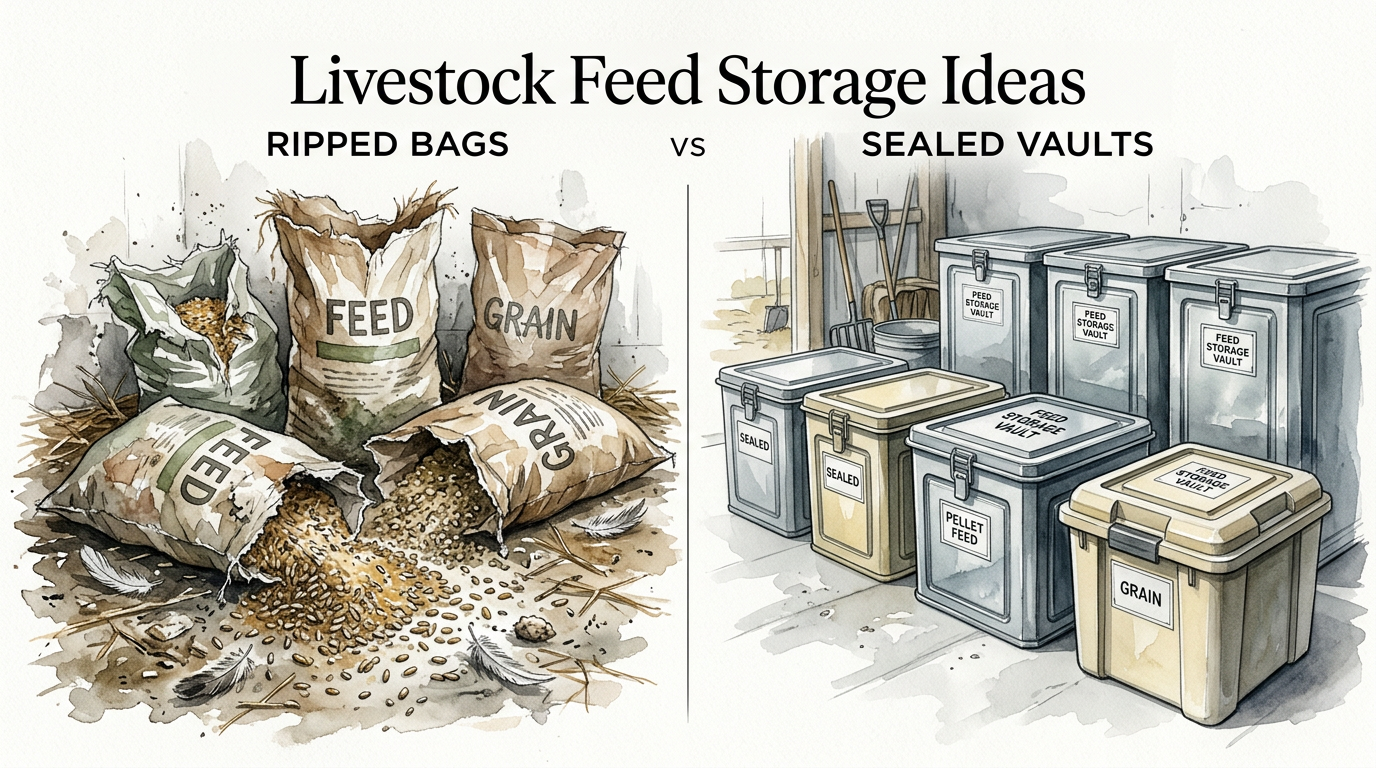
You are paying for the local rodent population to feast while your livestock’s food goes stale. Spilled feed is wasted profit. Transitioning from paper bags to sealed metal vaults keeps your feed fresh, prevents disease from pests, and makes chores 10x faster with organized labeling.
Managing a homestead is a lesson in stewardship. Every grain of corn and every pellet of protein represents hard-earned money and the future health of your animals. Leaving that investment in the original paper bags is an invitation to disaster. Those thin layers of paper offer no defense against a hungry rat or a humid afternoon.
Success on the land requires a shift in mindset. You must stop thinking of feed as a commodity to be tossed in a corner and start seeing it as a vital resource to be fortified. Proper storage is the difference between a thriving flock and a struggling one. It is about the grit to do things right the first time so you do not have to pay for mistakes later.
Livestock Feed Storage Ideas
Livestock feed storage is the practice of securing animal nutrition in specialized containers to prevent degradation from environmental factors and pests. In the real world, this looks like a dedicated room or area where every bag is emptied into a secure vessel. It is the fortress that stands between your animals’ health and the outside world.
Pioneers understood that a winter’s supply of grain was the lifeblood of the farm. If the grain spoiled, the livestock suffered, and the family’s security was shaken. Today, the stakes remain just as high. Whether you are managing five chickens or fifty head of cattle, the principles of preservation remain unchanged.
Visualize your feed room as a vault. Instead of a pile of torn bags leaking grain onto the floor, you see a row of uniform, sealed containers. Each one is labeled, dated, and positioned for easy access. This organization eliminates the chaotic scramble during morning chores and ensures that the oldest feed is always used first.
Common storage solutions range from repurposed household items to industrial-grade silos. Many small-scale farmers find success with galvanized metal trash cans or heavy-duty plastic drums. Others choose to breathe new life into old chest freezers, utilizing their insulated walls and airtight gaskets to create a rodent-proof bunker.
How to Build Your Feed Vault System
Establishing a fortified storage system requires a methodical approach. You cannot simply throw a lid on a bucket and call it a day. You must address the three pillars of preservation: cleanliness, containment, and rotation.
Start by preparing your storage space. Every crack in the floor or gap in the siding is a highway for mice. Sweep the area thoroughly and patch any holes with hardware cloth or expanding foam. A clean floor makes it easier to spot spills before they attract unwanted visitors.
Select your vessels based on the volume of feed you handle. Pouring feed directly into a container is usually better than placing the bag inside it. This allows you to inspect the grain for mold or insects immediately. Use a dedicated scoop for each bin to prevent cross-contamination between different types of feed.
Labeling is the final step in the physical setup. Use a grease pencil or a waterproof label to mark the type of feed and the date of purchase. This simple act of record-keeping prevents you from accidentally feeding starter crumbs to mature hens or using a bag of minerals that has lost its potency.
Maintaining the system is a weekly task. When a bin is empty, do not simply refill it. Take a moment to wipe down the interior and ensure no dust or old grain is trapped in the corners. This prevents the “caking” effect where old, damp feed creates a breeding ground for bacteria at the bottom of the bin.
The Practical Benefits of Fortified Storage
The most immediate benefit of switching to sealed vaults is the financial return. A single rat can consume or contaminate a significant portion of a 50-pound bag in a month. When you multiply that by a colony of rodents, you are essentially throwing a portion of your paycheck into the dirt every week.
Disease prevention is another massive advantage. Rodents are carriers of pathogens like Salmonella and Leptospirosis. When they urinate or defecate on open feed, those diseases are passed directly to your livestock. Secure storage acts as a biosecurity barrier, protecting your animals from invisible threats that can lead to costly vet bills or loss of life.
Time is the one resource you cannot buy more of. An organized feed room makes chores 10x faster. You no longer have to struggle with stubborn bag ties or search for the right supplement in a dark corner. Everything is where it belongs, and the scooping process becomes a rhythmic, efficient part of your day.
Nutritional integrity is also preserved. Exposure to air and light causes vitamins to degrade and fats to go rancid. Sealed containers slow down the oxidation process, ensuring that the expensive protein and minerals you paid for actually reach the animal’s digestive system in their most potent form.
Common Mistakes and Pitfalls
Many beginners believe that a plastic lid is enough to stop a determined rat. This is a dangerous misunderstanding of rodent biology. Rats have teeth that can chew through light plastic, wood, and even soft aluminum. If they can smell the grain, they will find a way in. Metal is the only true defense against a persistent pest.
Forgetting the “First In, First Out” (FIFO) rule is another frequent error. If you keep topping off a half-full bin with fresh feed, the grain at the bottom stays there for months. Eventually, that bottom layer will spoil, mold, and contaminate the entire batch. You must empty the bin completely before adding a new supply.
Moisture traps are often created by accident. Storing feed bins directly on a concrete floor can lead to condensation inside the container. The temperature difference between the cold floor and the warmer air inside the bin creates sweat. Always elevate your storage containers on pallets or blocks to allow air to circulate underneath.
Mixing different types of feed in the same container is a recipe for nutritional imbalance. While it might seem convenient to blend your scratch grain and your layer pellets, animals will often pick out the “treats” and leave the nutrition behind. Keep your components separate until they reach the feeding trough.
Limitations and Environmental Constraints
Sealed metal vaults are superior for most situations, but they are not a universal fix for every climate. In extremely humid environments, an airtight seal can actually trap moisture inside if the feed was slightly damp when purchased. In these cases, you may need to include desiccant packs or ensure your storage room is climate-controlled.
Weight and mobility are practical boundaries to consider. A 55-gallon drum full of grain can weigh over 300 pounds. Once it is positioned, it is likely staying there. If your homestead requires you to move feed between different barns or paddocks, you will need a system of smaller, portable containers or a dedicated feed cart.
Initial cost can be a hurdle for those just starting out. High-quality galvanized bins and professional-grade silos require an upfront investment. While this pays for itself in saved feed over time, it can be a strain on a tight startup budget. Repurposed items like old freezers are excellent bridges until you can afford a permanent setup.
Space is the final constraint. A properly organized feed room takes up more square footage than a pile of bags in the corner. You must weigh the value of that space against the efficiency and safety gained. On smaller properties, this might mean building a dedicated “feed hut” outside the main barn.
Comparison of Storage Methods
| Feature | Paper Bags | Plastic Bins | Metal Vaults |
|---|---|---|---|
| Rodent Resistance | Zero | Low to Moderate | High |
| Moisture Protection | Minimal | Good | Excellent |
| Durability | Temporary | 2-5 Years | 10-20+ Years |
| Ease of Cleaning | N/A | Easy | Moderate |
Practical Tips and Best Practices
Implementation of a feed system is only half the battle. You must also develop the habits that keep the system running. Use a “date-in” and “empty-by” system to track your inventory. This ensures you are never caught with a mountain of feed that is past its prime.
Store your bags off the floor immediately upon arrival. Even if you haven’t had time to pour them into bins, getting them onto a pallet protects them from rising dampness and makes it harder for mice to hide underneath. A well-placed pallet can be the first line of defense in an unfortified room.
Keep a “spill kit” in the feed room. This should include a stiff broom, a dustpan, and a dedicated trash can for waste. Sweeping up immediately after every feeding session removes the “scent trail” that leads pests to your storage area. Discipline in the small things leads to success in the large ones.
Utilize natural deterrents to keep the environment hostile for pests. Some farmers find that peppermint oil or strong-smelling herbs can discourage mice, but these should never replace physical barriers. Think of them as secondary layers of protection.
Advanced Considerations for the Serious Practitioner
Scaling your operation requires a shift from individual bins to bulk storage. Bulk silos can drastically reduce the cost per pound of feed, but they introduce new challenges. Temperature fluctuations in large metal structures can cause significant condensation. Monitoring grain temperature and using aeration fans becomes necessary at this level.
Humidity control is a sophisticated way to extend shelf life. Serious practitioners often use dehumidifiers in their feed rooms to keep the ambient moisture below 60%. This prevents the growth of invisible molds that produce mycotoxins, which can cause subtle but serious health issues in livestock.
Automation is the next frontier for the organized homesteader. Gravity-fed dispensers and wall-mounted bins save floor space and reduce the physical strain of scooping. Designing a “flow-through” system where feed enters at one end of the room and exits at the other ensures perfect rotation without manual tracking.
Consider the layout of your feed room in relation to your daily path. A well-designed space accounts for the ergonomics of lifting 50-pound bags and the width of the doorways for cart access. Every unnecessary step you take is energy wasted that could be spent elsewhere on the farm.
A Realistic Scenario: The Winter Stockpile
Imagine a homesteader in a northern climate preparing for a four-month winter. They have twenty chickens, four goats, and two pigs. Buying feed weekly during a blizzard is not an option. They must stockpile.
This practitioner uses three 31-gallon galvanized trash cans for the chicken crumble, four 55-gallon metal drums for the goat hay-pellets and grain, and a repurposed chest freezer for the pig’s high-protein mix. Each container is elevated on 4×4 lumber to prevent ground-moisture transfer.
They buy their feed in bulk in late October. As each bag is poured, they drop a small silica gel packet (securely tied in a cloth bag) on top to absorb any ambient moisture. They label each lid with a piece of blue painter’s tape and a sharpie.
During the winter, they follow a strict path. They empty the first chicken bin completely, sweep the bottom, and then move to the second. By February, their feed is as fresh as it was in October, and they haven’t lost a single ounce to the rats that are surely huddling in the nearby woods.
Final Thoughts
Securing your livestock’s nutrition is an act of respect for the animals and the resources you have been given. Moving away from the fragility of paper bags and toward the permanence of sealed vaults is a hallmark of a mature homestead. It is a commitment to efficiency over convenience.
Spilled grain is not just a mess; it is a symptom of a system that lacks discipline. By building a fortress for your feed, you are reclaiming your profit and safeguarding the health of your farm. The pioneer spirit is not just about survival; it is about thriving through foresight and preparation.
Apply these principles today. Start with one metal can if you must, but start now. Your livestock will thank you with better health, and your wallet will thank you with every bag of feed that actually makes it into the trough rather than the bellies of the local pests.
