How To Become More Self-Sufficient Without Starting a Full-Blown Farm…
Want to start preserving your harvest, making your own soap, or building a backyard root cellar — but not sure where to begin? “Homesteading Advice” gives you instant lifetime access to 35+ practical homesteading books on food preservation, veggie gardening, DIY natural cleaning products (save over $250 per year with this skill alone), brewing, off-grid energy, and a whole lot more…
Click Here To Check It Out Now!
Most people wonder why their homemade wraps don’t stick like the store-bought ones—the secret is one missing ingredient from the forest. If your DIY food wraps are stiff and useless, you are missing the sticky magic of pine rosin. Here is how to upgrade your craft from ‘beginner’ to ‘pro’ using natural tree resin for a seal that actually rivals plastic wrap.
In the old days, our ancestors didn’t have the luxury of disposable plastics. They relied on what the land provided to keep their harvests fresh and their larders stocked. The transition from a basic waxed cloth to a high-performance, resin-infused wrap is more than just a kitchen hack; it is a return to a time when tools were built to last and ingredients were chosen for their inherent strength.
DIY Beeswax Wraps That Actually Stick
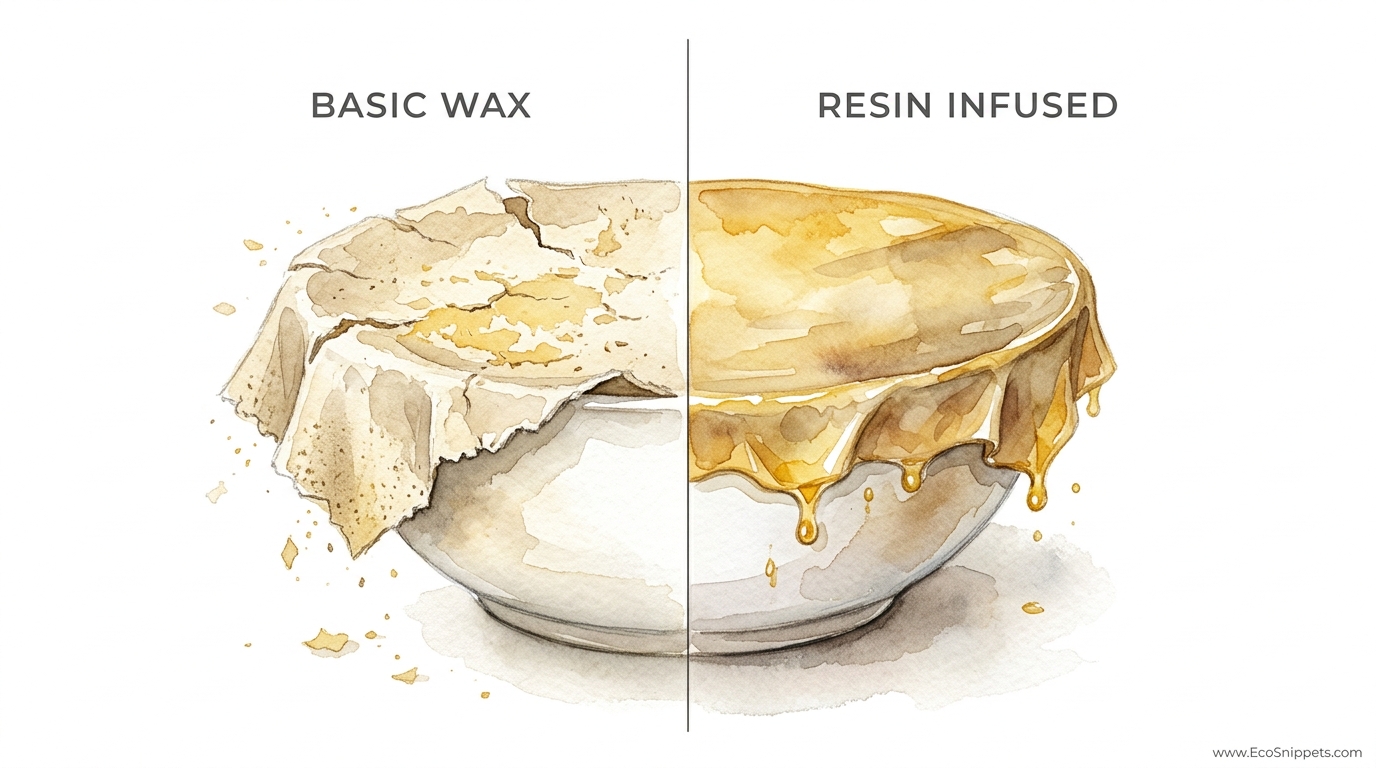
At its simplest, a beeswax wrap is a piece of natural fabric infused with a blend of wax, oil, and resin. While many beginners start by simply melting beeswax onto cotton, they quickly find that these “basic” wraps lack the necessary grip to stay sealed around a bowl or a block of cheese. Without a tackifier, the wax eventually cracks and loses its ability to cling to surfaces.
The addition of pine rosin changes the physical properties of the wrap entirely. Rosin is the solid form of resin obtained from pines and other conifers, produced by heating fresh liquid resin to remove volatile terpenes like turpentine. In the world of traditional crafts, this substance is often referred to as “colophony.” When blended with wax, it provides a persistent stickiness that responds to the warmth of your hands, allowing the wrap to mold and seal just like the commercial versions you see in high-end eco-shops.
Historically, this practice draws from the “naval stores” industry, where pine resin was used to waterproof wooden ships and seal ceramic amphorae for wine storage. Today, we use it to create a breathable, antimicrobial barrier for our food. This barrier keeps moisture out while allowing the food to “breathe,” a critical factor in preventing the slimy rot often associated with food trapped in airtight plastic.
The Science of the Blend: How It Works
Creating a wrap that performs consistently requires understanding the trinity of ingredients: the foundation, the softener, and the binder. Each plays a distinct role in the final product’s durability and “stick factor.”
The Foundation (Beeswax): Pure beeswax provides the waterproof structure. It is naturally antibacterial and antifungal, which helps inhibit the growth of food-borne pathogens. When selecting wax, look for triple-filtered yellow beeswax, which retains the faint, nostalgic scent of honey without the debris found in raw “cappings” wax.
The Softener (Jojoba Oil): If you used only wax and rosin, your wrap would be as brittle as a cracker once it cooled. Jojoba oil is technically a liquid wax, not a true oil, which makes it highly resistant to rancidity compared to olive or coconut oil. It keeps the beeswax pliable, preventing the “flaking” that ruins many DIY projects after only a few uses.
The Binder (Pine Rosin): This is the anchor. Rosin provides the adhesive quality that allows the wrap to stick to itself and to the rim of a glass bowl. Because it has a higher melting point than beeswax, it must be finely ground before mixing to ensure it dissolves evenly rather than forming sticky “pebbles” on your fabric.
How to Make Resin-Infused Wraps: A Step-by-Step Guide
The most reliable method for a professional finish is the “Double Boiler and Brush” technique. This ensures the ingredients are fully homogenized before they ever touch the fabric.
The Golden Ratio
While every maker eventually finds their own preference, a time-tested starting ratio is:
- 3.5 ounces (approx. 100g) of filtered beeswax pellets.
- 0.7 ounces (approx. 20g) of finely powdered pine rosin.
- 1 tablespoon of organic jojoba oil.
Step 1: Preparation
Wash your fabric (100% cotton, linen, or hemp) to remove any factory starches or sizing agents. These chemicals can prevent the wax from saturating the fibers. Cut the fabric into your desired sizes—7×7 inches for snacks, 10×10 inches for sandwiches, and 12×12 inches for large bowls or loaves of bread. Using pinking shears to cut the edges will prevent fraying over time.
Step 2: The Melt
Place your beeswax and jojoba oil in a dedicated double boiler or a clean tin can set inside a pot of simmering water. Once the wax is liquid, slowly whisk in the powdered rosin. Be patient; rosin can take longer to melt and may initially clump into a toffee-like mass. Continue stirring until the mixture is crystal clear and fully combined.
Step 3: The Application
Preheat your oven to a low setting—around 200°F (95°C). Lay a sheet of parchment paper on a baking tray and place your fabric on top. Use a dedicated natural-bristle brush to paint a thin, even coat of the hot mixture onto the cloth. You do not need to soak it; the heat of the oven will help the mixture wick through the fibers.
Step 4: The Oven Set
Slide the tray into the oven for 2 to 3 minutes. This allows the wax to fully liquefy and penetrate the back of the fabric. Remove the tray and use your brush to redistribute any pools of wax toward dry spots. Work quickly—as soon as you lift the fabric from the parchment, it will cool and set within seconds. Give it a gentle “waft” in the air to speed up the hardening process.
Benefits of the Resin-Infused Approach
The most immediate advantage is superior adhesion. A wrap without resin requires significant pressure and heat from your hands to stay closed, and even then, it often pops open in the fridge. Resin-infused wraps “grip” the surface of a container, creating a reliable seal that protects against oxidation and dehydration.
Another benefit is extended lifespan. Because the resin helps the wax bond more tightly to the fabric fibers, the coating is less likely to crack or flake off during washing. A well-made resin wrap can easily last 12 months with proper care, whereas a basic wax wrap might start losing its effectiveness within three to four months.
Finally, the antimicrobial synergy between beeswax and pine resin cannot be overstated. Both substances are produced by their respective hosts (bees and trees) specifically to seal wounds and ward off infection. When used on food, they create a sanitary environment that is particularly beneficial for preserving hard cheeses and crusty sourdough bread.
Challenges and Common Mistakes
One frequent error is over-saturation. If your wrap is so thick that it feels gummy or leaves a heavy residue on your glassware, you have used too much mixture. The goal is to infuse the fibers, not to create a thick plastic-like sheet. If you find your wraps are too thick, you can place a fresh piece of fabric over the “heavy” one and iron them together between parchment paper to transfer the excess wax.
Another pitfall is rosin clumping. If the rosin isn’t ground finely enough, it will settle at the bottom of your double boiler or create sticky bumps on the fabric. To avoid this, always crush your rosin into a fine powder using a mortar and pestle or by placing it in a bag and hitting it with a mallet before melting.
Temperature management is also critical. If the oven is too hot, you risk scorching the beeswax, which ruins its scent and properties. Keep your oven at the lowest possible setting. If you see the wax smoking, remove it immediately and lower the heat.
Limitations and Practical Boundaries
While these wraps are versatile, they are not a universal replacement for all storage needs. The most significant limitation is heat sensitivity. Because the wrap is designed to melt and mold, it cannot be used in microwaves, dishwashers, or to cover hot leftovers. Wait for your food to cool completely before sealing.
Environmental constraints also play a role. In extremely cold climates, the resin and wax may become quite stiff. You will need to “warm” the wrap between your hands for several seconds longer than usual to activate the stickiness. Conversely, in very hot kitchens, the wraps can become overly tacky and may leave a light residue on surfaces.
Crucially, raw meat and fish should never be wrapped directly in beeswax wraps. Because the wraps can only be cleaned with cold water and mild soap, they cannot be sanitized at the temperatures required to kill bacteria found in raw animal proteins. Use a glass container and use the wrap as a lid instead.
Comparison: Basic Wax vs. Resin-Infused
To understand why serious practitioners prefer the resin-infused method, it helps to look at the measurable differences in performance and cost.
| Feature | Basic Beeswax Wrap | Resin-Infused Wrap |
|---|---|---|
| Cling Quality | Low (requires heat/pressure) | High (sticks like plastic wrap) |
| Durability | Medium (tends to flake) | Very High (bonded to fibers) |
| Flexibility | Stiff (prone to cracking) | Pliable (supple feel) |
| Initial Cost | Very Low | Moderate (cost of rosin/oil) |
| Maintenance | Frequent refreshing needed | Minimal refreshing needed |
Practical Tips and Best Practices
Success starts with fabric selection. While any natural fiber works, a thin, tightly woven “quilting cotton” is the gold standard. It absorbs the wax evenly without becoming overly heavy. For those storing cheese, linen is an excellent alternative because its larger fiber structure allows for even better breathability.
When it comes to cleaning, cold water is your only friend. Use a mild, alcohol-free dish soap and a soft sponge. Never wring or twist the wrap, as this will fracture the wax coating. Instead, lay it flat on a drying rack or hang it up with a clothespin. Once dry, store your wraps in a cool, dark drawer away from the stove or toaster.
- Avoid acidic foods like cut lemons or pineapples for long-term storage, as the acid can slowly degrade the wax.
- Use different patterns of fabric to color-code your food types (e.g., blue for cheese, green for veggies).
- If your wrap loses its stick after many months, simply pop it back in the oven on parchment paper to “reset” the wax.
Advanced Considerations: Customizing Your Craft
Once you have mastered the basic recipe, you can begin to scale and tune your mixture for specific needs. If you find yourself in a humid environment where mold is a concern, you might slightly increase the ratio of jojoba oil and pine rosin, as both have enhanced antimicrobial properties compared to beeswax alone.
Serious practitioners also look at the source of their rosin. While many purchase commercial “gum rosin,” some prefer to source wild “pitch” or “resin” from fallen trees. If you choose this path, you must purify the resin by melting and straining it through fine cheesecloth to remove bark, dirt, and insects. Be aware that raw resin still contains turpentine and other volatiles, so it must be heated outdoors or in a well-ventilated area to be converted into food-safe rosin.
Furthermore, consider the weight of your fabric. A lightweight fabric (around 150 GSM) is ideal for wrapping small herbs, while a heavier weight (220-250 GSM) provides the structural integrity needed for “bread bags” or large bowl covers. Matching the fabric weight to the intended use ensures you aren’t wasting expensive wax mixture on wraps that are unnecessarily thick.
Real-World Examples and Scenarios
Consider the “Onion Test.” Most people avoid wrapping half an onion in plastic because the smell eventually permeates the fridge. A resin-infused beeswax wrap creates a thick enough barrier to contain the odor while the pine and wax antimicrobial properties keep the cut surface from developing that “slick” bacterial film. Simply wrap the onion, press the edges firmly with your palms, and tuck it in the crisper drawer.
Another scenario is the “Sourdough Shield.” Unlike plastic, which makes bread crust soft and chewy, a large beeswax wrap keeps the moisture inside the loaf while allowing the crust to stay firm. For a standard 10-inch boule, a 14×14 inch wrap is ideal. The resin allows you to fold the corners down securely, creating a “package” that won’t unravel on the counter.
For small snacks like nuts or carrot sticks, you can fold a medium-sized wrap into a “pouch.” The resin is what makes this possible—by pressing the sides together, you create a semi-permanent seal that stays shut in a lunchbox, replacing the need for disposable zip-top bags.
Final Thoughts
Mastering the art of the resin-infused wrap is a meaningful step toward a self-reliant kitchen. By moving away from “beginner” methods that rely on wax alone, you are creating a tool that functions with the same reliability as the industrial products we’ve grown accustomed to, but without the chemical footprint. It is a testament to the fact that the forest often provides the very solutions we try to replicate in a factory.
This process requires a bit of grit—the resin is sticky, the wax is hot, and the cleanup takes effort. However, the result is a kitchen staple that honors the traditions of those who came before us. It is an investment in quality and a commitment to the “pioneer” spirit of making things that actually work.
As you experiment with your ratios and fabric types, you’ll find that these wraps become more than just storage; they become a part of your kitchen’s rhythm. Whether you are sealing a jar of fermenting kraut or wrapping a gift of homemade bread, you are using a material that is as natural as the food it protects. Take the leap, add the rosin, and finally experience the sticky magic for yourself.
