How To Become More Self-Sufficient Without Starting a Full-Blown Farm…
Want to start preserving your harvest, making your own soap, or building a backyard root cellar — but not sure where to begin? “Homesteading Advice” gives you instant lifetime access to 35+ practical homesteading books on food preservation, veggie gardening, DIY natural cleaning products (save over $250 per year with this skill alone), brewing, off-grid energy, and a whole lot more…
Click Here To Check It Out Now!
Most paper turns to dust in 50 years; this will hold your family’s story for 500. Modern paper is designed to fail. Made from bleached wood pulp and acidic chemicals, it’s a ticking clock of brittleness. But by upcycling your old linen and cotton scraps into hand-cast rag paper, you create a surface that actually gets stronger with age. It’s time to stop leaving notes on disposable pulp and start crafting the pages that will hold your family’s history.
Living on a homestead often means looking back to move forward. You likely already save your kitchen scraps for the compost and your wood ash for the garden. Saving your worn-out cotton shirts and linen bedsheets follows that same path of self-reliance. True rag paper is a relic of a time when nothing was wasted, and quality was measured in centuries, not fiscal quarters.
Creating your own paper is more than a craft; it is an act of preservation. Wood pulp paper, which became the standard in the mid-19th century, contains a polymer called lignin. Lignin is the “glue” that holds trees together, but in paper, it creates acid that eats the fibers from the inside out. Cotton and linen are nearly pure cellulose, meaning they lack this self-destruct mechanism. When you master this skill, you provide your descendants with a tangible connection to the past that won’t crumble at their touch.
DIY Cotton Paper Making For Homesteaders
Handmade cotton paper is a substrate created from processed textile fibers rather than wood fibers. For over a thousand years, “rag paper” was the only kind of paper known to the Western world. It was the medium of the Gutenberg Bible and the Declaration of Independence. Because cotton and linen fibers are significantly longer and stronger than the short, brittle fibers found in wood, the resulting sheets are incredibly durable and flexible.
Homesteaders find this practice particularly valuable because it closes a loop in the domestic economy. Instead of sending an old, torn denim jacket or a frayed cotton tablecloth to a landfill, you transform it into a high-value resource. This paper can be used for heirloom seeds packets, property maps, family ledgers, or even hand-bound journals. It is thick, tactile, and carries a “tooth” or texture that modern machine-made paper cannot replicate.
Think of the difference between a store-bought loaf of bread and a sourdough loaf made from ancient grains. The store-bought version is fast and cheap but lacks soul and longevity. The handmade version requires patience and an understanding of the materials. Cotton rag paper is the “sourdough” of the writing world. It possesses a weight and a strength that makes every word written upon it feel permanent.
The Science of Longevity: Why Cotton Outlasts Wood
Understanding the raw materials helps you appreciate the process. Wood is approximately 40% to 50% cellulose, with the rest being lignin and hemicellulose. Extracting the cellulose from wood requires harsh chemical pulping (the Kraft process) and heavy bleaching. These processes leave behind chemical residues that contribute to the eventual yellowing and “slow fire” of wood-based books.
Cotton fibers, especially those from high-quality textiles, are roughly 99% alpha-cellulose. Cellulose is a long-chain polymer that provides the structural integrity of the plant cell wall. In a sheet of paper, these long chains entwine and form hydrogen bonds as the water evaporates. Cotton fibers are hollow, tube-like structures that are both soft and incredibly strong. When beaten into a pulp, these tubes fray into tiny “fibrils” that lock together like a microscopic puzzle.
Archival quality is the primary metric here. A document on 100% cotton rag paper, stored in a stable environment, can survive for 500 to 1,000 years. In contrast, the newsprint from the 1940s is already turning to orange dust in many archives. Choosing cotton is a deliberate choice for the long-term survival of your records.
Gathering Your Materials and Tools
Success in papermaking starts with the right kit. You do not need industrial machinery, but you do need a few specific items.
The Fiber Source
Natural fibers are mandatory. Look for 100% cotton, linen, hemp, or flax. Avoid any synthetic blends like poly-cotton, as polyester fibers will not bond and will likely cause your sheets to fall apart. Old t-shirts, jeans, bedsheets, and towels are perfect candidates. Remove all “hard” parts like zippers, buttons, and elastic bands.
The Pulping Equipment
Professional mills use a Hollander beater, but a heavy-duty kitchen blender works for small-scale homestead production. Be aware that processing rags is hard on a motor. Pulsing the blender and using plenty of water protects the blades. For a truly traditional approach, you can use a large mortar and pestle or a heavy wooden mallet to pound the fibers, though this is significantly more labor-intensive.
The Mould and Deckle
This is the heart of the operation. The mould is a wooden frame with a fine mesh screen stretched across it. The deckle is a secondary frame that sits on top to contain the pulp and determine the size of the sheet. You can build these easily using scrap cedar and fine window screening or brass mesh.
The Vat and Felts
A large plastic tub, big enough to submerge your mould and deckle comfortably, serves as your vat. For “couching” (transferring the wet sheets), you need absorbent cloths known as felts. Old wool blankets or thick pieces of heavy-duty felt work best. Some homesteaders use heavy interfacing or even old denim scraps as couching cloths.
Step-by-Step Process: From Rags to Reams
Transforming fabric into paper involves breaking down the structure of the weave to reclaim the individual fibers.
1. Preparing the Rags
Cut your chosen textiles into small squares, roughly half an inch to one inch in size. Removing seams and thick hems ensures a consistent pulp. If you are using denim or heavy canvas, smaller pieces are better. Sorting your rags by color allows you to create naturally tinted paper without the use of chemical dyes.
2. The Alkaline Cook
Boiling the rags in an alkaline solution is a critical step for longevity. It removes oils, waxes, starches, and any remaining non-cellulose materials. Soda ash (sodium carbonate) is the standard choice. Use a ratio of approximately 20% soda ash to the dry weight of the fiber. For a small batch, adding one to two tablespoons of soda ash per gallon of water is usually sufficient.
Place the rags in a stainless steel or enamel pot. Avoid aluminum, as the soda ash will react with it. Simmer the rags for two to four hours. The water will likely turn dark as the impurities leach out. Once the rags feel slippery and pull apart easily between your fingers, they are ready.
3. Rinsing and Neutralizing
Thoroughly rinse the cooked rags in cold water. You must wash away all the soda ash and loosened debris. Continue rinsing until the water runs clear and the fibers no longer feel slimy. This step ensures the finished paper has a neutral or slightly alkaline pH, which is the key to its 500-year lifespan.
4. Beating into Pulp
Fill your blender three-quarters full with water. Add a small handful of the cooked, rinsed rags. Pulse the blender carefully. The goal is to separate the fibers, not to chop them into microscopic dust. Long fibers make for stronger paper. Continue blending until the mixture looks like a creamy slurry with no visible pieces of fabric weave remaining.
5. The Vat and Sheet Formation
Fill your vat with several inches of water and pour in your pulp slurry. The “consistency” of the vat determines the thickness of your paper. A higher ratio of pulp to water yields a thicker, cardstock-like sheet. Stir the vat vigorously with your hands to suspend the fibers.
Hold the mould and deckle together, screen side up. Dip them into the vat at a 45-degree angle, then level them out and lift straight up. As the water drains through the screen, give the frame a gentle shake in all four directions. This “mending” motion interlocks the fibers while they are still floating in the water.
6. Couching the Sheet
Remove the deckle (the top frame). Carefully flip the mould over and press it firmly onto a damp felt. This process is called “couching” (pronounced koo-ching). Apply even pressure and lift the mould away, leaving the wet sheet of paper on the felt. Place another damp felt on top and repeat the process.
7. Pressing and Drying
A stack of wet sheets and felts is called a “post.” You must press this post to remove excess water and densify the paper. A simple press can be made with two pieces of heavy plywood and several C-clamps or heavy weights. For higher quality, a hydraulic jack press is used.
After pressing for 30 to 60 minutes, carefully peel the damp sheets from the felts. You can air-dry them by hanging them on a line, laying them flat on a screen, or brushing them onto a smooth surface like glass or a wooden board for a flatter finish.
Benefits of Upcycling Rags into Paper
Choosing to make your own paper provides rewards that go far beyond the finished product.
- Unmatched Durability: Cotton rag paper resists tearing and folding fatigue better than any other material. It is the reason centuries-old maps are still legible while modern paperbacks are crumbling.
- Waste Reduction: This process utilizes the final life stage of textiles that would otherwise be discarded. It represents the pinnacle of homestead efficiency.
- Chemical Purity: By controlling the process, you avoid the chlorine bleaches and synthetic fillers found in commercial paper. You are creating a “clean” product.
- Tactile Experience: The weight and texture of handmade paper elevate the act of writing. It demands a slower, more intentional pace.
- Economic Resilience: Learning to create your own high-quality stationery and archival materials reduces your dependence on global supply chains.
Challenges and Common Pitfalls
Mastering the craft requires an awareness of potential hurdles. Most beginners struggle with consistency in their early batches.
Pulp clumps are a common issue. This usually happens if the rags were not cooked long enough or if the blender was overstuffed. If you see “marbles” of fiber in your paper, return the pulp to the blender for another round. Ensuring the fibers are fully suspended in the vat with frequent stirring also prevents clumping.
Sticking to the felts often occurs if the felts are too dry or if the pressing was uneven. Always dampen your couching cloths before starting. If a sheet refuses to transfer from the mould, try using a sponge to pull more moisture from the back of the screen before lifting.
Blender burnout is the most frequent technical failure. Rags are surprisingly tough. Never try to process too much at once. If the motor smells hot or sounds strained, stop immediately. Adding more water to the blender reduces the load on the motor and actually helps separate the fibers more efficiently.
Limitations: When Hand-Cast Paper May Not Work
While rag paper is superior for many things, it is not a universal replacement for all modern paper needs.
Inkjet and laser printers often struggle with handmade paper. The high texture can cause ink to “feather” or bleed, and the thickness may jam standard home printers. Furthermore, the lack of synthetic surface coatings means that digital inks may not look as sharp as they do on commercial photo paper.
High-volume production is also a constraint. Making paper by hand is slow. If you need 500 sheets for a project, expect to spend many days at the vat. For most homesteaders, this paper is reserved for special uses rather than daily scratchpad duty.
Lastly, the sizing of the paper is a variable. Unsized paper (known as “waterleaf”) is highly absorbent, much like a paper towel. If you intend to use fountain pens or watercolors, you must add a sizing agent. Without sizing, your ink will spread uncontrollably through the fibers.
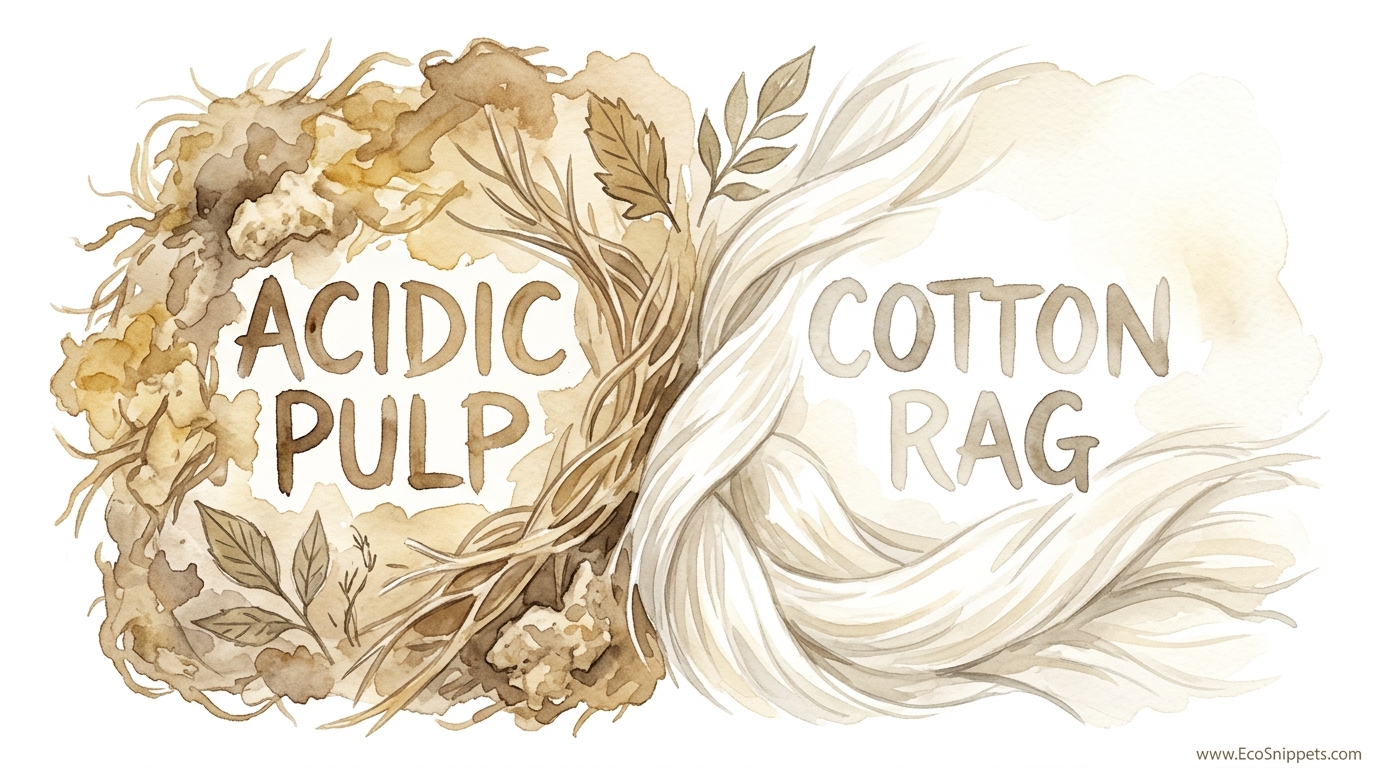
Cotton Rag vs. Acidic Wood Pulp
Understanding the differences between these two materials highlights why the effort of handmade paper is worthwhile.
| Feature | Acidic Wood Pulp | Cotton Rag Paper |
|---|---|---|
| Expected Lifespan | 40–70 Years | 500–1,000+ Years |
| pH Balance | Typically Acidic (pH 4.5–5.5) | Neutral to Alkaline (pH 7.0–8.5) |
| Primary Component | Wood Lignin & Short Cellulose | Pure Long-Chain Alpha-Cellulose |
| Strength | Brittle when dry | High tensile and fold strength |
| Environmental Impact | Requires logging and heavy chemicals | Upcycles existing textile waste |
Practical Tips and Best Practices
Fine-tuning your process will lead to professional-quality results on a homestead budget.
- Use Rain Water: If your well water is high in iron or minerals, it can discolor your paper. Collected rain water is naturally soft and usually leads to brighter, cleaner sheets.
- Master Sizing: Adding a small amount of liquid starch or gelatin to the vat (internal sizing) or brushing it onto the dried sheet (external sizing) makes the paper ink-ready. Traditionally, rabbit skin glue or gelatin from animal hides was used on the homestead.
- Source Vintage Linens: Older textiles often have higher-quality fibers. Look for 100% linen tablecloths at thrift stores. They make for exceptionally crisp and strong paper.
- Add a “Signature”: You can include dried flowers, bits of thread, or even a watermark made by stitching a wire shape onto your mould. This makes every sheet a unique piece of art.
- Test for pH: Keep a set of pH testing drops or strips. Ensuring your final pulp is neutral or slightly alkaline is the only way to guarantee the 500-year lifespan.
Advanced Considerations: Internal vs. External Sizing
For those who want to use their paper for calligraphy or professional artwork, sizing is the most important advanced topic.
Internal sizing involves adding the sizing agent directly into the vat. This coats every fiber before the sheet is formed. It provides a consistent resistance to ink throughout the entire thickness of the paper. Methylcellulose is a popular modern choice for this because it is pH neutral and does not spoil.
External sizing, or “tub-sizing,” involves dipping the finished, dried sheet into a warm bath of gelatin or starch. This creates a skin on the surface of the paper. It allows the pen to glide smoothly and prevents the ink from penetrating deep into the fibers. Historical documents were almost always tub-sized with animal-based gelatin. This not only improved the writing surface but also added an extra layer of protection against environmental moisture.
Choosing between the two depends on your end use. Watercolorists often prefer a combination of both to allow for complex layering of paint without the paper warping or pilling. For a simple family ledger, a basic internal starch sizing is usually sufficient.
Examples and Scenarios
Consider the case of the “Homestead Ledger.” A farmer wants to record the annual yields, weather patterns, and livestock lineages for the next three generations. If she writes this in a standard store-bought notebook, the pages will likely be yellow and brittle by the time her grandchildren take over the land.
Instead, she spends a weekend processing old white cotton shirts and a worn-out linen apron. She creates 50 thick, creamy sheets of rag paper, sized with a simple cornstarch solution. She binds these sheets into a leather-covered book. Because the paper is acid-free and made of long cellulose fibers, the records remain flexible and white. Two hundred years later, her descendants can still turn those pages, reading her handwriting as clearly as the day it was written.
Another scenario involves property boundaries. Mapping out water lines, buried cables, and orchard grafts is vital for long-term land management. Hand-cast paper, reinforced with a bit of abaca or hemp fiber, provides a map that can withstand being folded and unfolded thousands of times without tearing at the seams. This is practical self-reliance in its most durable form.
Final Thoughts
Modernity has traded permanence for convenience. We are the first generations in history to leave behind a digital footprint that may disappear with a single server failure and a physical footprint that turns to dust in a human lifetime. Reclaiming the art of rag papermaking is a quiet rebellion against this planned obsolescence. It is a way to ensure that the wisdom you gain on your land outlasts your time upon it.
The process of cooking, beating, and casting fiber is deeply meditative. It connects you to the medieval monks, the early American pioneers, and the master printers of the Renaissance. There is an honest satisfaction in seeing a pile of old rags transformed into a stack of beautiful, functional art.
Start small with a single blender and a handmade frame. Experiment with the colors of your waste textiles and the textures of your local plants. Once you hold a sheet of your own 500-year paper in your hands, you will find it difficult to ever go back to the disposable pulp of the modern world. Craft the pages that deserve your story.
