How To Become More Self-Sufficient Without Starting a Full-Blown Farm…
Want to start preserving your harvest, making your own soap, or building a backyard root cellar — but not sure where to begin? “Homesteading Advice” gives you instant lifetime access to 35+ practical homesteading books on food preservation, veggie gardening, DIY natural cleaning products (save over $250 per year with this skill alone), brewing, off-grid energy, and a whole lot more…
Click Here To Check It Out Now!
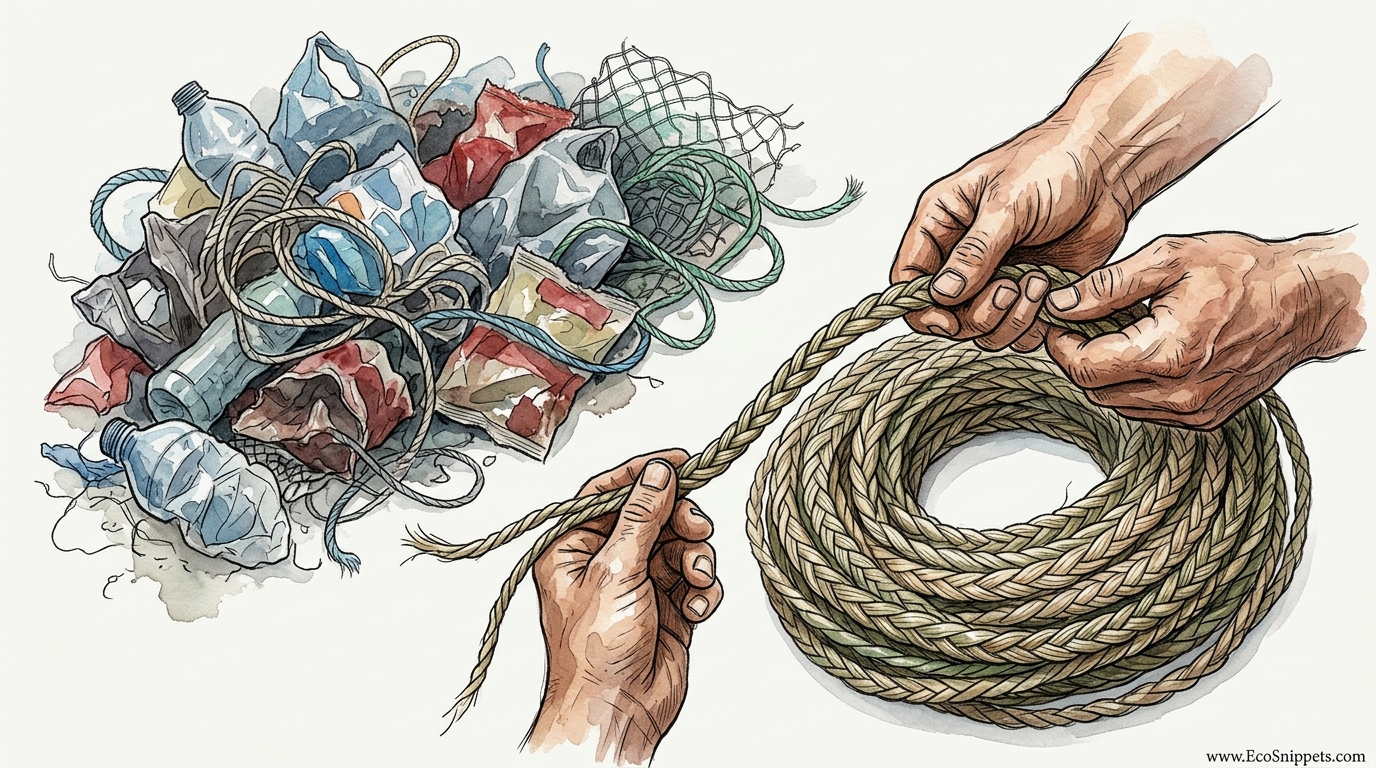
Stop buying plastic string when your backyard is growing 500-lb test rope for free. Every year, homesteaders buy miles of plastic twine that eventually breaks, tangles in mowers, and poisons the soil. Meanwhile, the ‘weeds’ on your fence line are full of long-staple fibers waiting to be twisted into cordage that is stronger than store-bought junk and 100% compostable.
The modern world has forgotten the simple magic of the twist. You likely walk past ten different species of fiber-bearing plants every morning without realizing you are stepping over the raw materials for heavy-duty utility line. Making your own rope is not just a survival skill for the deep woods; it is a fundamental act of self-reliance that connects you to thousands of years of human grit and ingenuity.
How To Make Natural Cordage From Backyard Plants
Natural cordage is the art of extracting long, flexible fibers from plants and twisting them into a cohesive line. It exists because plants require structural integrity to stand against the wind and transport water, and those same structural “veins” can be repurposed by humans for everything from fishing line to heavy haulage. In the real world, you see these principles in the heavy Manila ropes used on ships or the linen threads in your finest clothing.
To understand cordage, you must understand the difference between bast fibers and leaf fibers. Bast fibers are found in the inner bark of certain trees or the stalks of herbaceous plants like stinging nettle. Leaf fibers are the long, structural strands found inside tough, sword-like leaves like yucca or agave. When you twist these fibers together, they lock against one another using friction. This friction creates a mechanical advantage where the more you pull on the rope, the tighter the fibers grip each other.
Imagine a single hair. It is easy to snap. Now imagine a thick braid of hair. It becomes exponentially harder to break. This is the core principle of cordage. By harvesting the right plants at the right time and applying the “reverse wrap” technique, you can create a tether that will hold a 500-lb load or secure a ladder with total confidence.
The “Hardware Store” in the Woods: Identifying Your Materials
The first step to building wild strength is knowing which plants to look for. Not every weed has the internal structure to become rope. You are looking for plants with “staple length”—the length of the individual fibers within the plant. The longer the staple, the easier it is to twist and the stronger the final product will be.
Dogbane (Apocynum cannabinum)
Commonly known as Indian Hemp, Dogbane is the undisputed king of North American wild fibers. Indigenous people used this plant for everything from bowstrings to fishing nets because the fibers are exceptionally fine and strong. It is a perennial that grows in fields and along roadsides, often reaching four feet in height. You can identify it by its reddish stems and milky sap, though you should harvest it in late fall when the stalks are dry and brown.
Stinging Nettle (Urtica dioica)
While most people avoid the “sting,” the homesteader sees a goldmine. Stinging nettle contains some of the strongest bast fibers in the temperate world. Once the plant is dried or retted, the stinging hairs (trichomes) lose their potency, leaving behind a fiber that is comparable to high-quality flax. Nettle cordage is famous for its resistance to rot and its incredible tensile strength when wet.
Milkweed (Asclepias spp.)
Milkweed is not just for monarch butterflies. The stalks contain a soft, silky fiber that is surprisingly durable. While it may not reach the 500-lb test of a thick Dogbane rope as easily, it is perfect for smaller utility tasks like garden ties or lightweight lashings. The fibers are very easy to extract once the plant has gone to seed in the autumn.
Inner Bark of Trees (Basswood and Cedar)
The “bast” layer of certain trees—the thin, slimy layer between the wood and the outer bark—is a traditional source of heavy rope. Basswood (Tilia americana) is often called the “rope tree” because its inner bark can be stripped in long ribbons. Once soaked in water to loosen the layers, these ribbons can be twisted into thick, heavy-duty cables that were historically used for everything from hoisting sails to tethering livestock.
Processing Your Harvest: From Stalk to Fiber
Raw plants cannot be twisted into rope immediately. They require processing to separate the “trash” (the woody core and outer skin) from the “treasure” (the long fibers). Depending on the plant, you will use one of three primary methods: retting, stripping, or pounding.
The Retting Process
Retting is a controlled rot. It uses moisture and bacteria to dissolve the pectins and cellular tissues that glue the fibers to the woody stalk. There are two main ways to do this:
- Water Retting: Submerge your stalks or bark in a pond or a tub of water for 5 to 14 days. You must watch this closely; under-retting makes it hard to separate the fibers, while over-retting will cause the bacteria to eat the fibers themselves, weakening the rope.
- Dew Retting: Lay your harvested stalks out in a grassy field for several weeks. The morning dew and the sun work together to slowly break down the plant. This takes longer but often produces a cleaner fiber.
Mechanical Stripping and Crushing
For plants like Dogbane or Milkweed harvested in the late fall, you can skip the retting. The weather has already done the work for you. You simply crush the dry stalks with your hands or a wooden mallet. This breaks the brittle woody core into small pieces (called shives), which you can then peel away from the ribbons of fiber.
Pounding (The Leaf Method)
Leaf fibers like Yucca require a more aggressive approach. You must place the green leaves on a flat log and pound them with a smooth rock or wooden baton. This crushes the fleshy green pulp, which can then be scraped away with a dull knife or the edge of a seashell. What remains are the long, white, structural fibers that run the length of the leaf.
How It Works: The Reverse Wrap Technique
The secret to a rope that does not unravel is the reverse wrap. This technique creates a balanced internal tension. You are essentially twisting two bundles of fiber in one direction while simultaneously wrapping them around each other in the opposite direction. These opposing forces lock the rope together.
Follow these steps to master the basic two-ply twist:
- The Kink: Take a bundle of processed fiber and twist it tightly in the middle until it naturally kinks and forms a small loop. Pinch this loop between your thumb and forefinger. You now have two strands.
- The Twist: Take the strand furthest from you (the “top” strand) and twist it away from your body (clockwise). Twist it until it is tight and wants to curl.
- The Wrap: While holding that twist, pull the top strand over the bottom strand toward your body (counter-clockwise). Now, what was the bottom strand is on top.
- Repeat: Continue this rhythm: Twist the top strand away, then wrap it over the bottom strand toward you. Your hands will develop a “pioneer-grit” muscle memory as the cordage begins to grow out of your fingertips.
- Splicing for Length: Never let both strands end at the same time. When one strand gets thin, lay a new bundle of fiber into the twist. The friction of the wrap will lock the new fiber in place, allowing you to make a rope that is miles long if necessary.
Benefits of Natural Cordage
Using the plants in your backyard offers more than just a sense of accomplishment. It solves several practical problems that modern plastic string creates.
Natural fibers like Dogbane and Nettle are 100% biodegradable. If a piece of handmade rope falls into the garden or gets tangled in a fence, it will eventually rot and return nutrients to the soil. Plastic twine, on the other hand, breaks down into microplastics that stay in your land forever and can kill livestock if ingested.
The wild strength of these fibers is often superior to the cheap, “disposable” twine found in big-box stores. Properly processed Dogbane cordage has a tensile strength that rivals commercial nylon but with significantly less stretch. This makes it ideal for tasks where you need a firm, unyielding hold, such as lashing a tool handle or building a permanent trellis.
Finally, the cost is zero. In an era of rising prices and fragile supply chains, being able to walk into your backyard and harvest high-quality rope is a major step toward true homestead independence. You are no longer dependent on a factory halfway across the globe for a basic necessity.
Challenges and Common Mistakes
The most frequent error beginners make is inconsistent thickness. If one of your two strands is much thicker than the other, the thin strand will simply wrap around the thick one rather than twisting together. This creates a “barber pole” effect that is structurally weak and prone to snapping. Always keep your bundles uniform by adding small amounts of fiber frequently rather than large chunks all at once.
Another pitfall is improper retting. If you are too impatient and pull your bark out of the water early, you will end up fighting the plant to get the fibers free. You will likely snap the fibers in the process, resulting in short, hairy cordage that is difficult to work with. Patience is a requirement for quality.
Many folks also fail to remove the outer “bark” or epidermis from the fibers. While it might seem easier to leave it on, the outer skin of the plant does not have the same tensile strength as the inner fibers. It will eventually flake off, causing your knots to loosen and your rope to lose its diameter. Spend the extra time to clean your fibers until they are pure and long-staple.
Limitations: When Natural Cordage May Not Be Ideal
While we advocate for ancestral wisdom, we also value practical reality. Natural rope has its boundaries. The primary enemy of natural fiber is moisture and rot. Unlike polypropylene, which can sit in a puddle for years, natural cordage will eventually degrade if it stays wet and has no airflow. For permanent outdoor installations that will be buried or constantly submerged, you must either treat the rope with pine tar or be prepared to replace it every few seasons.
Another limitation is time. You can buy 500 feet of plastic twine for five dollars in five minutes. Making 500 feet of high-quality Dogbane rope might take you a week of harvesting, processing, and twisting. For high-volume, low-stakes tasks—like tying up hundreds of tomato plants—the time investment may not always be justified unless you have a dedicated “rope-making hour” in the evenings.
Finally, breaking strength is variable. In a factory, every inch of nylon is tested for a specific load. With handmade cordage, the strength depends entirely on your skill and the quality of that year’s harvest. Never use handmade natural cordage for life-safety applications like climbing or heavy overhead lifting unless you are a master practitioner with years of testing experience.
Natural Cordage vs. Synthetic Twine
Understanding how your backyard rope stacks up against store-bought options helps you choose the right tool for the job.
| Feature | Handmade Natural Cordage | Commercial Plastic Twine |
|---|---|---|
| Material Cost | Free (Wild Harvested) | Ongoing Expense |
| Environmental Impact | Compostable & Soil-Building | Polluting (Microplastics) |
| UV Resistance | High (Depends on Plant) | Low (Becomes Brittle) |
| Stretch | Very Low (Excellent for Lashings) | Moderate to High |
| Time Investment | High (Labor Intensive) | Zero |
Practical Tips for Better Rope
If you want to move from “beginner” to “artisan,” focus on these best practices to improve the quality of your lines:
- Harvest After the First Frost: For plants like Dogbane and Nettle, waiting until after a hard frost naturally begins the retting process on the stalk. The leaves fall off, and the sap retreats, leaving you with cleaner, more workable fibers.
- Keep Your Hands Damp: When twisting dry fibers, your hands may struggle to grip. A light mist of water on your palms or a quick dip of the fiber bundle will make the strands more pliable and help the twist lock into place.
- The “Thigh Roll” Technique: If your hands get tired of the reverse wrap, you can roll the fibers against your thigh. Place the two strands on your leg, roll them away from you with your palm to twist them, then let them wrap back together as you pull your hand toward you. This is the fastest way to make yards of cordage in a single sitting.
- Singe the Fuzz: Natural rope often has small “whiskers” sticking out. Once the rope is finished, quickly pass it through a flame. This singes off the loose ends, making the rope smoother to handle and preventing it from catching on rough surfaces.
Advanced Considerations: Plying Up for 500-lb Strength
A simple two-ply string made of Milkweed might hold 50 lbs, but how do you get to the 500-lb test rope mentioned earlier? The answer is plying up. This is the process of taking several finished pieces of cordage and twisting them together again.
To make a heavy-duty rope, you first create three long strands of two-ply cordage. You then treat these three strands as your “fibers” and perform the reverse wrap again (this time in the opposite direction of your original twist). This creates a four-ply or six-ply rope. Because the internal tensions are balanced at every level, the resulting rope is incredibly stable and strong.
Historically, the strongest natural ropes—like those used for 1/4-inch Manila lines—reached breaking strengths of over 500 lbs. By using high-tensile fibers like Dogbane and plying them up to a 1/4-inch or 3/8-inch thickness, you can create a backyard rope capable of towing a small vehicle or supporting a heavy swinging bench.
Scenario: Building a Garden Trellis
Consider a practical scenario. You have a heavy crop of indeterminate tomatoes that need support. Instead of buying a roll of green plastic tape, you spend an afternoon harvesting Yucca from the corner of your property.
You pound the leaves and extract the long, white fibers. Using the reverse wrap, you create twenty 5-foot lengths of two-ply string. Because Yucca fibers are naturally high in silica, they resist rot better than cotton. You use these strings to lash together cedar poles.
By the end of the season, your trellis has held up 200 lbs of fruit and vine without snapping. When the winter comes, you simply cut the strings and throw them into the compost pile. Your soil is cleaner, your wallet is fuller, and your garden was supported by the very land it grows in.
Final Thoughts
The transition from consumer to producer starts with the smallest things—even a piece of string. When you stop buying plastic and start harvesting wild strength, you are reclaiming a piece of human history. You are training your eyes to see the world not as a collection of weeds, but as a vast warehouse of potential tools and materials.
Mastering natural cordage is a meditative process. It requires you to slow down, to feel the texture of the plants, and to understand the physics of the twist. Whether you are building a shelter in the woods or just tying up a bundle of firewood at home, the confidence that comes from a rope you made yourself is unmatched.
Start small. Find a patch of Nettle or Milkweed this autumn. Process a few stalks and twist your first few feet of line. Once you feel that first “click” of the fibers locking together, you will never look at a weed the same way again. Experiment with different plants in your specific region, and soon you will have a mental map of where your backyard is growing 500-lb test rope for free.
