How To Become More Self-Sufficient Without Starting a Full-Blown Farm…
Want to start preserving your harvest, making your own soap, or building a backyard root cellar — but not sure where to begin? “Homesteading Advice” gives you instant lifetime access to 35+ practical homesteading books on food preservation, veggie gardening, DIY natural cleaning products (save over $250 per year with this skill alone), brewing, off-grid energy, and a whole lot more…
Click Here To Check It Out Now!
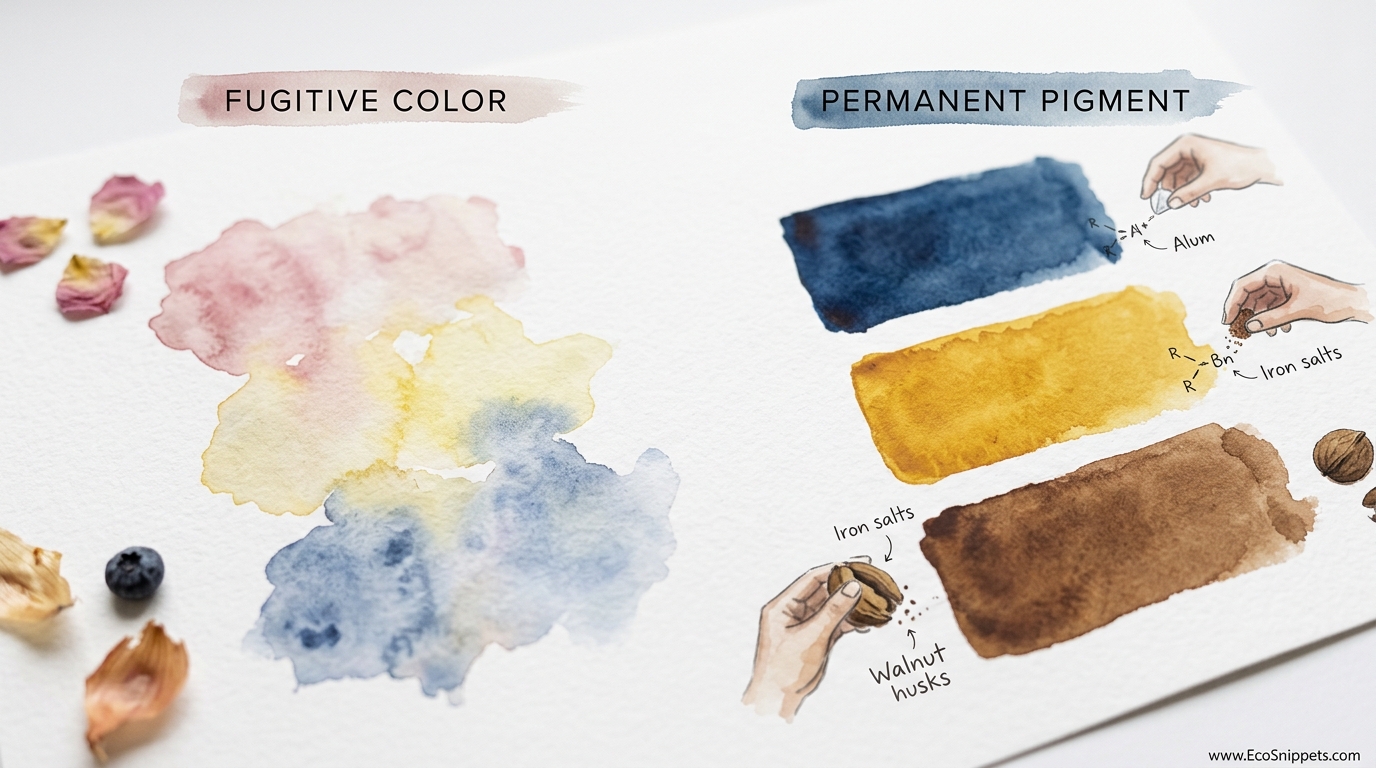
Most ‘natural’ dyes wash out in a week – unless you know the Pro forager’s chemical ‘lock’ secret. Beets and turmeric make for great Instagram photos, but they are ‘fugitive’ dyes that disappear in the sun. For professional, heirloom-quality color, you need to look to the forest floor. Oak galls and iron create a pigment that literally bites into the fiber.
This is the alchemy of the ancients. For centuries, before synthetic coal-tar dyes arrived in the 1850s, the world was colored by the forest and the forge. If you have ever seen a medieval manuscript with ink so black it seems to vibrate off the vellum, you have seen the power of oak galls and iron.
Practical, real-world dyeing is not about finding a pretty color in the kitchen and hoping it stays. True self-reliance requires understanding how molecules bond. When you use iron and tannins, you aren’t just staining a shirt; you are creating an organometallic coordination polymer inside the very structure of the cloth.
Learning this process moves you from the realm of hobbyist to the ranks of the serious practitioner. This guide will walk you through the grit and the grace of permanent natural dyeing, focusing on the materials that provide ancestral permanence.
Natural Fabric Dyeing Tutorial
Natural fabric dyeing is the process of using organic materials—roots, barks, leaves, and minerals—to imbue textiles with lasting color. Unlike modern liquid dyes that coat the surface, natural dyeing involves a series of chemical reactions that allow pigments to bond with the molecular chains of the fiber.
In the real world, this is used by artisans creating museum-grade replicas, sustainable fashion designers, and survivalists who value tools that do not rely on a supply chain. It exists because the Earth provides everything necessary to create a full spectrum of color, provided you understand the chemistry of the “lock.”
Think of a “fugitive” dye like a guest who stays for a night; a “permanent” pigment is a resident who moves in and renovates the house. To achieve this, we use a mordant. A mordant—from the Latin *mordere*, meaning “to bite”—is usually a metallic salt that bridges the gap between the dye molecule and the fabric.
While many beginners use alum (potassium aluminum sulfate), the pro forager looks to the pairing of tannins and iron. This combination creates some of the most lightfast and washfast blacks, grays, and purples in the natural world.
The Chemistry of the Lock: Tannins and Iron
Understanding why certain dyes fail while others endure requires a look at the molecular level. Tannins are polyphenolic compounds found in abundance in certain plants, specifically oak trees, pomegranates, and sumac. They serve as the tree’s defense mechanism against pests, but for the dyer, they are the foundation of permanence.
When tannins meet iron, specifically ferrous sulfate or “iron liquor,” they form a complex known as ferric tannate. This is technically an insoluble pigment. Because the reaction happens inside the water-swollen pores of the fiber, the resulting pigment becomes trapped once the fiber dries and the pores close.
This reaction is identical to the one used to create Iron Gall Ink, the primary writing medium for the Western world from the 5th century until the 20th. When you apply this to fabric, you are effectively “printing” the color into the material.
The process involves two distinct stages. First, the fiber is saturated with tannins. These tannins act as a “sunscreen” for the fabric, protecting it from UV degradation. Second, the iron is introduced. The iron reacts with the tannin, shifting the color from a pale beige or brown to a deep charcoal or blue-black. This shift is often called “saddening” the color.
The Forager’s Guide: Identifying and Gathering Oak Galls
Oak galls are not a fruit of the tree, but a response to an invader. Small gall wasps lay their eggs in the buds or branches of oak trees. The tree, in an effort to protect itself, grows a hard, tannin-rich shell around the larva. These growths are concentrated storehouses of the highest quality tannic acid found in nature.
Look for Marble Galls on the twigs of oak trees. These are round, hard, and about the size of a large marble. They turn from green to brown as they mature. You should prioritize galls that have a tiny “exit hole,” indicating the wasp has already emerged and moved on.
Apple Galls are larger and spongier, often found on the leaves or stems. While they contain tannins, they are generally less concentrated than the marble variety. For the most potent dye, seek out Aleppo Galls if you are in a region where they grow, as they are the gold standard for tannin content.
Gathering should happen in late summer or early autumn when the galls fall naturally to the forest floor. Never strip a tree of its green, developing galls. Nature provides a surplus on the ground if you are patient. Once gathered, dry them thoroughly to prevent mold, then crush them into a fine powder using a mortar and pestle or a heavy hammer and a canvas bag.
Forging the Modifier: Making Iron Liquor at Home
Serious practitioners do not buy packets of ferrous sulfate; they forge their own iron liquor. This is a simple but time-intensive process of oxidation that yields a potent liquid mordant.
Find a large glass jar with a tight-sealing lid. Fill it with rusty nails, old iron bolts, or scrap steel wool. It is essential that the metal is iron-based; stainless steel will not work for this purpose.
Pour in two parts water and one part white distilled vinegar. The vinegar provides the acidic environment necessary to accelerate the oxidation process. Seal the jar and place it in a dark corner.
Over the course of two to three weeks, the liquid will turn from clear to a deep, rusty orange or murky black. This is your iron acetate solution. A little of this liquid goes an incredibly long way. Label it clearly and keep it away from children and pets, as concentrated iron is toxic if ingested.
Preparation: The Importance of Scouring
Skipping the scouring process is the primary reason for splotchy, uneven dye results. Scouring is a deep-cleaning process that removes natural waxes, pectins, and industrial oils that prevent the dye from reaching the fiber.
Cotton and linen are cellulose fibers and require a rigorous scour. Fill a large stainless steel pot with water and add one teaspoon of soda ash (sodium carbonate) and a drop of pH-neutral detergent for every pound of fabric. Simmer the fabric for at least two hours. You will be surprised to see the water turn a muddy brown; this is the “gunk” leaving your “clean” white fabric.
Wool and silk are protein fibers and must be handled with care. High heat and agitation will cause wool to felt. Use a gentle, pH-neutral soap and keep the temperature below a simmer (around 180°F). Do not shock the wool by moving it from hot to cold water; let it cool down in the pot before rinsing.
Properly scoured fabric should absorb water instantly. If water beads on the surface of the dry fabric, it is not clean enough. Re-scour until the water penetrates the fibers immediately.
The Step-by-Step Procedure: The Double Bath Method
To achieve the “chemical lock,” you must follow a specific sequence. This method ensures the tannins and iron meet inside the fiber rather than just clumping on the surface.
Step 1: The Tannin Bath
Crushed oak galls should be simmered in water for about an hour to extract the tannic acid. Strain the liquid through a fine muslin cloth to remove the grit. Add enough water to the pot so the fabric can move freely.
Place your wetted, scoured fabric into the tannin bath. For cellulose fibers like cotton, let them soak for at least 12 to 24 hours. You do not need constant heat for this stage; a long, cold soak is often more effective at allowing the large tannin molecules to migrate into the center of the fibers. The fabric will take on a pale tan or beige hue.
Step 2: The Iron Bath
Remove the fabric from the tannin bath and wring it out gently. Do not rinse it yet. In a separate vessel, prepare a cool water bath and add two to three tablespoons of your homemade iron liquor. Stir well.
Submerge the tannin-soaked fabric into the iron bath. You will see an immediate and dramatic color shift. The pale beige will turn to charcoal or silver-grey within seconds. Stir the fabric constantly for about 10 to 15 minutes to ensure the iron reaches every fold and crease.
Step 3: The Finishing Rinse
Remove the fabric and rinse it thoroughly in cool water. Some dyers use a “chalk bath” at this stage—adding a teaspoon of calcium carbonate to the rinse water. This neutralizes the acidity of the iron and tannins, which helps protect the fiber from “iron rot” over time. Wash with a mild detergent until the water runs clear and hang the fabric to dry out of direct sunlight.
Benefits of Permanent Pigment
Choosing the tannin-iron path offers several measurable advantages over other natural dyeing methods. These benefits are why this combination has remained a staple of traditional craft for millennia.
- Unmatched Lightfastness: Unlike flower-based dyes that fade in a single summer, ferric tannate is highly resistant to UV degradation. It is a pigment, not just a stain.
- Wash Stability: Once the chemical lock is established, the color is remarkably stable through repeated laundering, provided you use pH-neutral soaps.
- Resource Independence: Both oak galls and iron are foraged materials. You do not need to rely on imported indigo or expensive cochineal bugs to achieve deep, dark tones.
- Fiber Protection: Tannins naturally consolidate fibers, making them more resistant to abrasion and environmental decay.
Challenges and Common Mistakes
Working with iron and tannins requires a disciplined approach. Errors in this process can lead to more than just a bad color; they can physically destroy the textile.
The most common mistake is using too much iron. Iron is a “harsh” mordant. If the concentration is too high, it creates an acidic reaction that eats away at the molecular chains of the fiber, a condition known as “iron rot.” This is particularly dangerous for protein fibers like wool and silk. Always err on the side of “less is more” with iron liquor.
Another pitfall is poor movement in the dye pot. If the fabric is crowded, the tannins will not distribute evenly. When the iron is added, it will react more strongly with the areas of high tannin concentration, resulting in dark splotches and uneven “tigering.” Always use a vessel large enough for the fabric to swim.
Using reactive pots like aluminum or copper for the iron stage can also cause issues. The iron will react with the pot itself, contaminating the bath and potentially ruining the finish. Stick to stainless steel or unchipped enamelware.
Limitations: When This Method is Not Ideal
While oak galls and iron provide permanence, they do not provide a rainbow. If your goal is a vibrant sky blue or a neon pink, this is not the method for you.
Ferric tannate is limited to a palette of greys, blacks, deep purples, and olive drabs. It is an “earthy” palette. While you can use iron as a modifier for other dyes—such as turning yellow weld into a deep forest green—it will always “sadden” or mute the original color.
Furthermore, iron can make fibers feel slightly “crunchy” or stiff initially. While this usually washes out over time, it may not be ideal for delicate garments where a soft hand-feel is the primary priority. Lastly, because of the potential for fiber degradation, this method should be used sparingly on heirloom wools that are meant to last centuries.
Comparison: Fugitive vs. Permanent
To understand the value of the “chemical lock,” look at how it compares to common household “dyes.”
| Feature | Fugitive (Kitchen Scraps) | Permanent (Oak Gall & Iron) |
|---|---|---|
| Color Source | Beets, Turmeric, Cabbage | Oak Galls, Sumac, Iron |
| Bonding Type | Surface Stain (Hydrogen bonding) | Chemical Lock (Coordination Polymer) |
| Lightfastness | Poor (Fades in days) | Excellent (Decades/Centuries) |
| Cost/Complexity | Low / Very Easy | Medium / Technical |
| Fabric Feel | No change | Slightly stiff initially |
Practical Tips for Success
Applying these techniques requires a mix of patience and precision. These best practices will ensure your results look intentional rather than accidental.
- Monitor the pH: Iron and tannins prefer a slightly acidic to neutral environment. If your water is very hard (alkaline), it can cause the iron to precipitate too quickly. Use rainwater if possible.
- The Resting Period: Let your tannin-soaked fabric rest overnight before moving it to the iron bath. This allows the tannins to fully integrate into the fiber’s core.
- Test Swatches: Always keep a “sacrificial” strip of the same fabric to test your iron concentration. Dip the swatch first to see if the gray is too light or the black is too muddy.
- Temperature Control: Heat is rarely needed for the iron stage. Cool water slows down the reaction, giving you more control over the evenness of the color.
Advanced Considerations: Overdyeing and Layering
Once you master the basics of the tannin-iron lock, you can begin to use it as a foundation for complex, layered colors. This is where the true artistry begins.
Overdyeing involves taking a fabric that has already been dyed with a different plant—such as weld (yellow) or madder (red)—and then subjecting it to a light tannin-iron bath. This can create rich, complex hues like antique gold or deep mahogany that are impossible to achieve with a single dye pot.
You can also use the “mud cloth” technique from West Africa, known as Bogolanfini. This involves painting patterns onto tannin-soaked fabric with iron-rich mud. The reaction happens only where the mud is applied, allowing for intricate, permanent designs that are physically part of the cloth.
For the serious practitioner, consider the “Iron-Indigo Overdye.” By dyeing a fabric blue with indigo and then “saddening” it with a light oak gall and iron rinse, you can achieve the “midnight black” that was highly sought after by 18th-century tailors.
Example Scenario: Dyeing a Legacy Canvas Bag
Imagine you have a heavy cotton canvas bag that you want to turn into a rugged, weather-resistant field pack. A simple stain will rub off on your clothes, but the chemical lock will stay put.
First, you scour the bag in a boiling pot of soda ash for two hours. You gather two pounds of oak galls from a local park, crush them, and simmer them into a dark tea. You submerge the bag and let it sit for two days, turning it twice a day.
In your iron jar, you have three-week-old iron liquor. You prepare a cold water bath in a five-gallon bucket and add half a cup of the liquor. You move the bag from the tannin pot to the bucket. Instantly, the bag turns from a dirty beige to a deep, militaristic charcoal.
After a final rinse in a chalk bath and a wash with neutral soap, the bag is dry. The color does not rub off. It does not fade in the sun. It has become a permanent part of the bag’s history, a result of forest foraging and simple chemistry.
Final Thoughts
Mastering the use of oak galls and iron is a rite of passage for any dyer. It marks the transition from playing with color to commanding it. This process respects the history of the craft and the inherent power of the natural world.
The chemical lock is not a shortcut. It requires foraging, fermenting, and a deep understanding of the fibers under your hands. However, the reward is a textile that carries the weight of ancestral wisdom and the permanence of the forest itself.
As you move forward, do not be afraid to experiment with different types of tannins—pomegranate skins, walnut husks, or chestnut wood. Each brings its own subtle undertone to the iron reaction. The more you work with these materials, the more you will realize that the most beautiful and enduring colors are not found in a bottle, but in the slow, deliberate work of the chemical lock.
