How To Become More Self-Sufficient Without Starting a Full-Blown Farm…
Want to start preserving your harvest, making your own soap, or building a backyard root cellar — but not sure where to begin? “Homesteading Advice” gives you instant lifetime access to 35+ practical homesteading books on food preservation, veggie gardening, DIY natural cleaning products (save over $250 per year with this skill alone), brewing, off-grid energy, and a whole lot more…
Click Here To Check It Out Now!
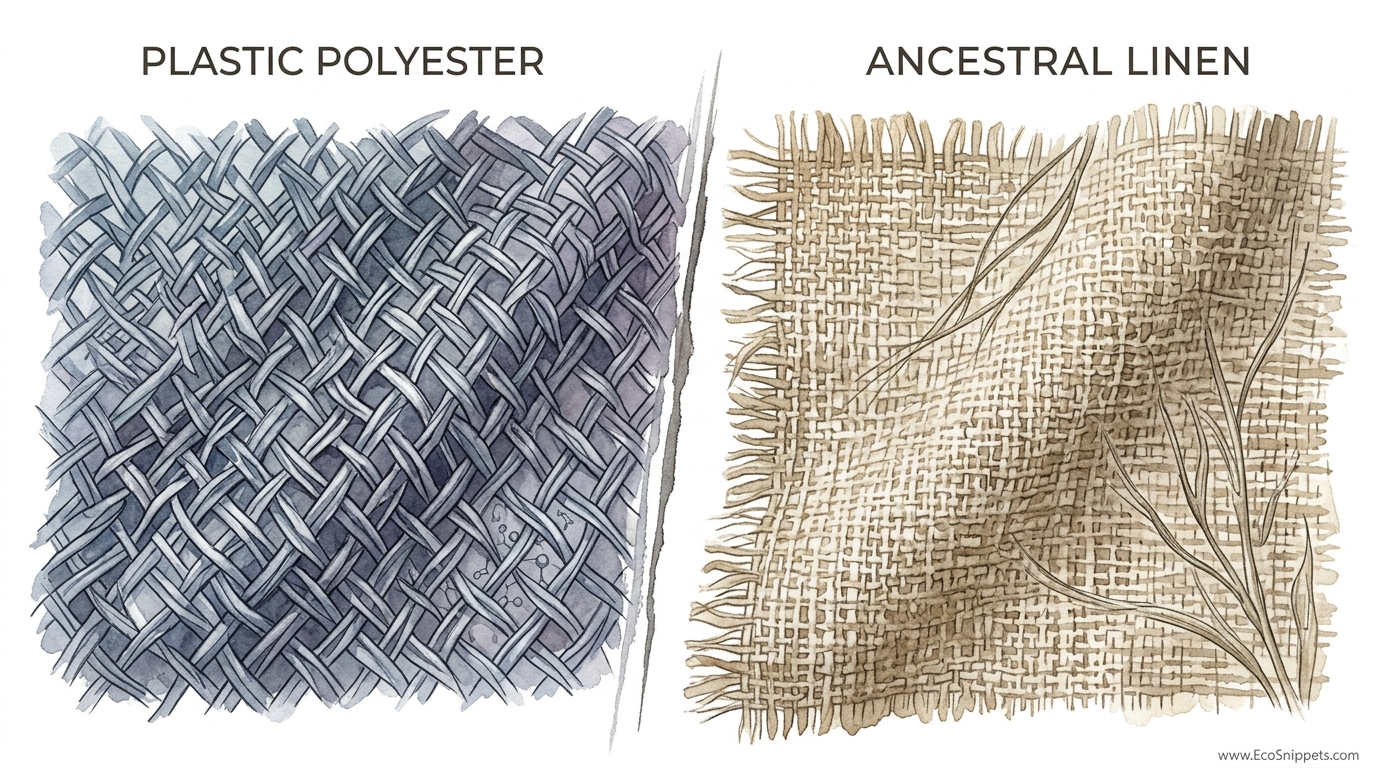
We traded a fabric that lasts for centuries for a plastic-derived textile that makes you sweat and pollutes the ocean. In the 1800s, linen was an heirloom passed down in dowries because it lasted generations. Today, we sleep in ‘microfiber’—which is just a fancy word for recycled plastic. Linen is anti-bacterial, moth-resistant, and actually gets stronger when wet. It’s time to return to the fiber that grows from the earth, not a lab.
Choosing what we wear and sleep on is one of the most basic acts of self-reliance. For most of human history, textiles were an investment in survival and comfort. We chose fibers that worked with our bodies, regulated our temperature, and stood up to the rigors of a hard day’s work. Somewhere along the way, we traded that ancestral wisdom for the convenience of “cheap and disposable.”
Modern synthetic fabrics are essentially wearable oil. They are produced in massive chemical vats, extruded into thin plastic threads, and woven into garments that trap heat and harbor bacteria. Reclaiming the use of natural fibers isn’t just a trend; it is a return to a standard of quality that our great-grandparents would have recognized instantly.
Eco Friendly Alternatives To Synthetic Fabrics
Natural fibers offer a level of performance that high-tech synthetics struggle to mimic. These materials come from plants and animals, evolved over millennia to protect life from the elements. Unlike polyester, which is a petroleum-based plastic, these alternatives are part of a biological cycle.
Linen is the heavyweight champion of the natural fiber world. Derived from the stalks of the flax plant, it is one of the oldest textiles known to man, with evidence of use dating back over 30,000 years. It thrives in poor soil and requires far less water than cotton, making it a rugged, sustainable choice for those who value longevity.
Hemp is a close relative in terms of durability and feel. This plant grows like a weed, requires no pesticides, and produces a fiber that is incredibly resistant to mold and UV light. It was once the backbone of the shipping industry, used for sails and ropes because of its legendary strength.
Wool remains the gold standard for temperature regulation. Whether it comes from sheep, goats, or alpacas, wool is a complex protein fiber that can absorb large amounts of moisture without feeling damp. It provides warmth in the winter and, surprisingly, breathability in the summer, thanks to its natural crimp and insulating air pockets.
Organic cotton and Tencel (Lyocell) provide softer alternatives for those with sensitive skin. While traditional cotton is water-intensive, organic methods focus on soil health and rainwater. Tencel is a semi-synthetic made from wood pulp in a closed-loop system, offering a silky drape without the environmental guilt of traditional rayon or polyester.
How the Journey from Seed to Sheet Works
Understanding the process of natural fiber production helps you appreciate the value of the finished product. Synthetic fibers are created through a process called polymerization, where chemicals are heated and forced through tiny holes to create plastic strands. Natural fibers, specifically linen, require a more patient, mechanical approach.
Flax plants are harvested by pulling them out by the root to preserve the longest possible fibers. The stalks are then subjected to a process called “retting,” where moisture and bacteria break down the natural “glue” holding the fibers to the woody stem. This is often done in fields using morning dew or in slow-moving water, a method that hasn’t changed much in centuries.
Once the fibers are loosened, they go through “scutching” and “hackling.” These mechanical processes beat and comb the stalks to separate the long, golden “line” fibers from the shorter, coarser “tow” fibers. The long fibers are then spun into yarn and woven into the fabric we know as linen.
This mechanical separation is why linen is so much stronger than cotton or polyester. The fibers are long and continuous, sometimes reaching several feet in length. In contrast, cotton fibers are rarely longer than two inches, and synthetic fibers are essentially a continuous extrusion of plastic that lacks the internal cellular structure of a plant.
Benefits of Natural Fibers Over Plastics
Natural textiles provide a biological advantage that no plastic can match. Your skin is your largest organ, and it needs to breathe to regulate your internal temperature and manage moisture. Natural fibers facilitate this process through a combination of “wicking” and “breathability.”
Hollow-core fibers found in flax and hemp act as natural insulators. They trap air to keep you warm when it is cool, but they also allow heat to escape when you are working hard. This is why a linen shirt feels “cool” to the touch even in the middle of a humid summer; it is actively moving heat away from your body.
Antibacterial properties are a major win for natural fibers. Linen and hemp naturally resist the growth of bacteria and fungi, which is why they don’t develop that “sour” smell that synthetic workout clothes get after just one use. In the 1800s, this made linen the perfect choice for undergarments and bed sheets that couldn’t be washed every day.
Durability is where the “ancestral heirloom” claim truly comes from. Most modern clothes are designed to fall apart after thirty washes, a concept known as planned obsolescence. Pure linen, however, gets stronger when it is wet and actually softens with every wash, becoming more comfortable and resilient over decades of use.
Common Mistakes to Avoid
The biggest pitfall for beginners is expecting natural fibers to behave like plastic. We have been conditioned by “fast fashion” to expect clothes that never wrinkle, never change shape, and require zero thought to maintain. This mindset is the enemy of quality.
Avoid “linen-look” or “linen-blend” fabrics that contain a high percentage of polyester. These are often sold to capitalize on the aesthetic of linen without providing any of the actual benefits. You end up with a garment that still makes you sweat and still sheds microplastics, but looks like it was made from flax.
Washing natural fibers with harsh chemical detergents and fabric softeners is a recipe for disaster. Fabric softeners work by coating fibers in a thin layer of wax or silicone to make them feel “soft.” On linen or wool, this coating clogs the pores of the fiber, destroying its ability to breathe and wick moisture.
Over-drying is another common error. High heat in a tumble dryer is incredibly aggressive and can cause natural fibers to become brittle and snap. If you have ever seen a “lint” trap full of fuzz after drying your clothes, you are literally watching your garments turn into dust; those are the broken pieces of your clothes.
Limitations of Natural Textiles
Transparency is key to making a good investment, and natural fibers do have specific constraints. Linen is famous for its wrinkles. Because the fibers are so strong and lack the elasticity of plastic, they hold a crease easily. If you cannot stand the look of a lived-in, rumpled fabric, pure linen may frustrate you.
Cold weather performance requires a strategy of layering. While wool is an incredible insulator, a single layer of linen or hemp will not keep you warm in a blizzard. These plant-based fibers are designed for airflow, which means you need to pair them with a dense outer layer to trap that warmth in extreme conditions.
Initial cost is a significant barrier for many. Producing a high-quality linen sheet set takes more time, more skill, and more manual labor than churning out a thousand polyester sets. You are paying a premium for a product that will last twenty years instead of two, but that upfront investment can be a shock.
Elasticity is naturally low in plant fibers. If you are looking for a garment that hugs your body like spandex, you will not find it in pure flax or hemp. These fabrics drape and flow rather than stretch and snap back. For high-impact sports where compression is needed, natural fibers are often blended with a small amount of elastic.
Plastic Polyester vs. Ancestral Linen
| Feature | Plastic Polyester | Ancestral Linen |
|---|---|---|
| Source | Petroleum / Plastic | Flax Plant |
| Breathability | Low (Traps heat) | High (Hollow fibers) |
| Skin Health | Can harbor bacteria/odor | Antibacterial/Hypoallergenic |
| Durability | 2-3 years (Pills easily) | 20+ years (Gets stronger) |
| Biodegradability | 200-500 years | 6.5 months (Compostable) |
| Maintenance | Easy wash/dry | Gentle wash/Air dry preferred |
Practical Tips for Transitioning
Start with your bed. We spend a third of our lives sleeping, and this is where synthetic fabrics do the most damage by making us sweat and disrupting our body’s natural temperature regulation. Replacing “microfiber” sheets with linen or hemp will immediately improve your sleep quality.
Look for the weight of the fabric, often measured in GSM (Grams per Square Meter). For clothing, a weight of 150-180 GSM is ideal for all-season wear. For bedding or heavy-duty trousers, look for 200 GSM or higher. Heavier weights will feel stiff at first but will become incredibly soft and supple over time.
Adopt the “Wash Less, Air More” philosophy. Because natural fibers are antibacterial and moisture-wicking, they don’t need to be laundered after every use. Often, hanging a linen shirt or wool sweater in a breezy spot for a few hours is enough to refresh it, extending its life and saving water.
Invest in a good quality steamer or learn the “Damp Iron” trick. If you want a crisp look, iron your linen while it is still slightly damp. The steam will relax the fibers more effectively than a dry iron on bone-dry fabric, giving you that polished finish without the frustration.
Advanced Considerations for the Serious Practitioner
For those looking to fully commit to an ancestral textile lifestyle, sourcing becomes the next frontier. Not all linen is created equal. Look for certifications like “OEKO-TEX Standard 100,” which ensures the fabric is free from harmful chemicals and pesticides used during processing.
European flax (often marked with the “Masters of Linen” tag) is widely considered the highest quality in the world. The climate in regions like France and Belgium is perfect for flax, and the long history of textile production there ensures a superior weave. Cheap, mass-produced linen from other regions may use shorter fibers, which will pill and wear out faster.
Think about “Color Sovereignty.” Most brightly colored synthetics are dyed with azo dyes that can be skin irritants. Consider choosing natural, undyed linen (often a beautiful “oatmeal” or “sand” color) or garments dyed with plant-based pigments. These natural colors age with a beautiful patina that synthetic dyes cannot replicate.
Mastering the art of mending is the final step in textile self-reliance. Because natural fibers are so durable, they are worth repairing. A small tear in a linen sheet can be patched or darned, and the repair becomes a part of the garment’s history. This is how a piece of fabric becomes an heirloom.
Transforming Your Living Space: A Scenario
Imagine a standard bedroom filled with synthetic materials. The sheets are “microfiber” (plastic), the rug is nylon, and the curtains are polyester. In the summer, the room feels stuffy; in the winter, the air feels static and dry. When you sleep, you wake up feeling clammy because the plastic sheets cannot absorb your sweat.
Now, replace those items one by one. Swap the microfiber for 100% flax linen sheets. Hang heavy linen or cotton curtains that allow air to move while blocking the sun’s heat. Replace the nylon rug with a wool or jute alternative.
The difference is immediate and sensory. The room smells different—cleaner and more earthy. Your skin feels better against the sheets. You no longer wake up with “night sweats” caused by trapped body heat. This is not just an aesthetic change; it is an environmental upgrade for your personal health.
Final Thoughts
Returning to natural fibers is an act of quiet rebellion against a world that prioritizes the cheap, the fast, and the disposable. It is a choice to stand on the side of quality, durability, and health. When you choose linen, hemp, or wool, you are connecting yourself to a lineage of makers and pioneers who understood that the things we hold closest to our skin should come from the earth.
The transition doesn’t have to happen overnight. Start by checking the tags on your current wardrobe and replacing items as they wear out. Look for pieces that feel substantial and honest. Over time, you will build a collection of textiles that don’t just last for a season, but for a lifetime.
Embrace the wrinkles, the weight, and the history of these ancient materials. By stepping away from the plastic-derived textiles of the lab and returning to the fibers of the field, you are reclaiming a standard of living that values the long-term over the immediate. It is a journey back to the heirloom, and it starts with a single thread.
