How To Become More Self-Sufficient Without Starting a Full-Blown Farm…
Want to start preserving your harvest, making your own soap, or building a backyard root cellar — but not sure where to begin? “Homesteading Advice” gives you instant lifetime access to 35+ practical homesteading books on food preservation, veggie gardening, DIY natural cleaning products (save over $250 per year with this skill alone), brewing, off-grid energy, and a whole lot more…
Click Here To Check It Out Now!
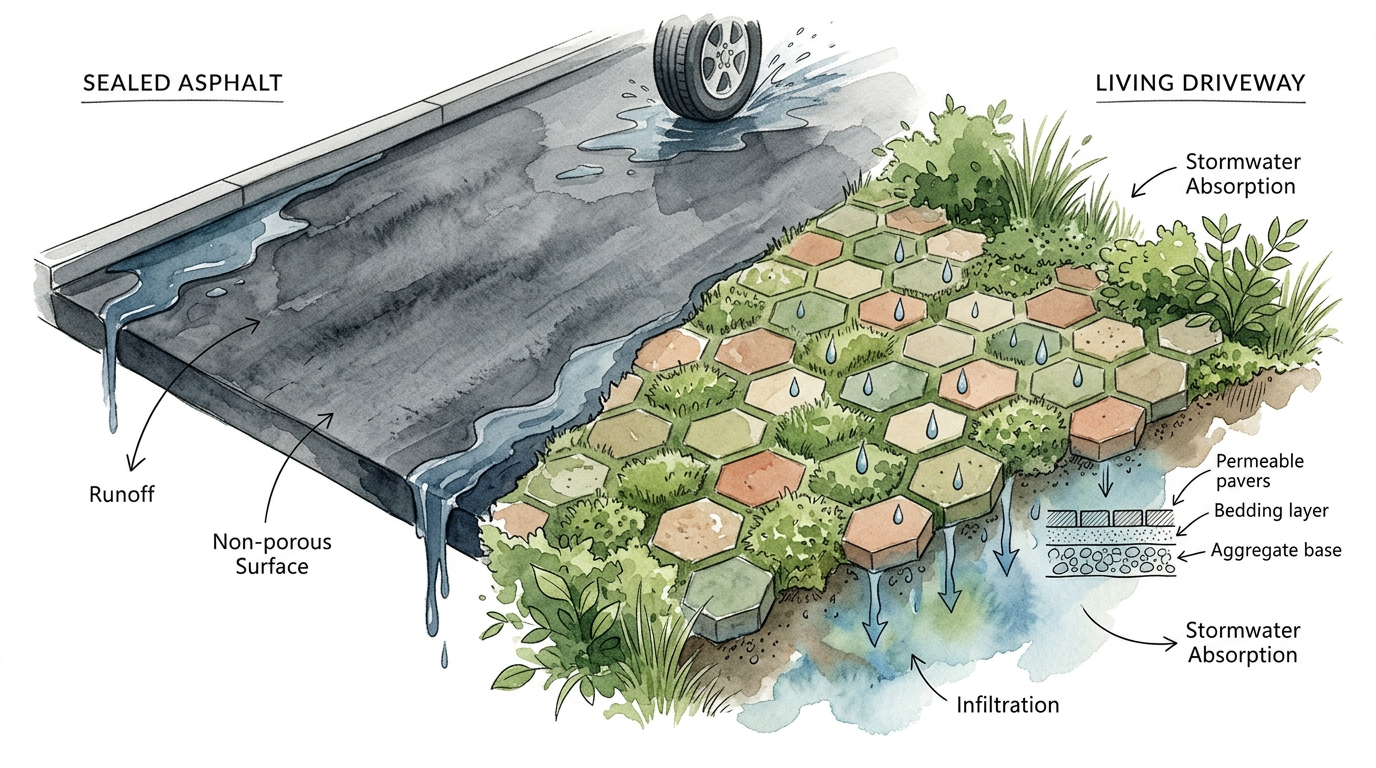
Your driveway is either a heat island and a flood risk, or it’s a living part of your homestead ecosystem. Standard driveways are dead zones that cause runoff and erosion. Living driveways use permeable grids to support vehicles while allowing the earth to breathe, absorb water, and stay cool. Switch from asphalt to life.
For generations, the homestead was a place where every square inch of ground served a purpose. The path to the barn or the trail for the wagon wasn’t just a scar on the land; it was a functional part of the drainage and the life of the soil. Modern construction changed that, trading the wisdom of the earth for the convenience of petroleum-based sheets that suffocate the life beneath them. This transition to “dead” surfaces has cost us more than just aesthetics.
Modern driveways act like a lid on a jar, preventing the sky’s rain from reaching the roots and the aquifers. When heavy rains hit, that water doesn’t soak in; it gathers speed, picks up oil and road grime, and rushes into the nearest ditch, causing erosion and flooding. A living driveway turns this cycle on its head. It treats the land with the respect it deserves, allowing the sky and the soil to stay in constant conversation.
Eco-friendly Permeable Driveway Systems
Eco-friendly permeable driveway systems represent a return to common-sense land management. These systems consist of a structural layer designed to support the weight of a multi-ton vehicle without compacting the soil into a brick. At their core, they are a marriage of engineering and ecology. Instead of a solid, impermeable slab, these driveways utilize various materials that feature open spaces, or “voids,” which allow water to pass through the surface and into the ground.
You might see these in the form of heavy-duty plastic grids, concrete lattices, or specially formulated porous pavements. In the real world, these are used anywhere that drainage is a concern or where local regulations limit the amount of “impervious cover” a property can have. Think of them as a structural sponge. They provide the grit and stability needed for a heavy truck while maintaining the porosity of a forest floor.
Ancient pathways were often made of packed stone and earth, which functioned similarly but lacked the modern structural reinforcement to prevent ruts and mud in high-traffic areas. Today’s systems solve the mud problem once and for all. They create a stable, clean surface that won’t sink into the mire, even after a week of heavy spring rain. This makes them ideal for the self-reliant homesteader who needs a reliable path but refuses to pave over the very land they are trying to preserve.
How the Living Driveway Functions
A living driveway works through a layered approach that mimics the natural filtration of the earth. The surface you see—whether it is grass peeking through concrete grids or crushed stone held in a plastic honeycomb—is only the top of the system. Beneath that surface lies a carefully engineered reservoir of clean, crushed stone. This layer provides the structural “bones” of the driveway, ensuring it doesn’t shift or buckle under the weight of a vehicle.
Rainwater hits the surface and immediately disappears into the gaps. It then trickles down through the stone reservoir, which acts as a massive underground basin. This reservoir holds the water temporarily, allowing it to slowly seep into the native soil at a pace the earth can handle. This slow release prevents the “flash flooding” effect common with traditional asphalt.
During this journey through the stone layers, the water is naturally filtered. Beneficial microbes living in the aggregate layers break down hydrocarbons from oil drips and trap heavy metals before they can reach the groundwater. This is nature’s own purification system at work. You aren’t just managing water; you are actively cleaning it before it returns to the aquifer that likely feeds your own well.
The Step-by-Step Path to a Living Driveway
Building a living driveway requires more sweat and foresight than simply calling a paving crew, but the result is a legacy that lasts. The process begins with excavation. You must dig deep enough to accommodate the layers of stone and the grid itself. For most residential driveways, this means removing 10 to 16 inches of soil.
Once the area is cleared, the subgrade soil must be leveled and compacted. Testing the drainage of this native soil is a vital step. A simple “perc test”—digging a hole, filling it with water, and timing how long it takes to drain—will tell you if your soil can handle the water load. If you have heavy clay that holds water like a bowl, you may need to install an underdrain to lead excess water away to a rain garden or a lower part of the property.
The first true layer of the system is a permeable geotextile fabric. Lay this across the bare earth to prevent the stone from sinking into the soil over time. This fabric acts like a filter, letting water through while keeping the layers separate. On top of this, you will spread 6 to 10 inches of “clean” crushed stone—usually 3/4-inch to 1.5-inch in size. Use stone that has been washed so there is no “fines” or dust to clog the drainage.
Compact this stone layer in stages, using a heavy plate compactor. A solid base is the difference between a driveway that stays level for forty years and one that ruts out in three. After the base is firm, add a 1-inch “bedding layer” of smaller crushed stone to create a perfectly flat surface for the grids. Lay the grids down, snap them together, and fill the cells with your chosen material—either more crushed stone or a mix of soil and hardy grass seed.
Benefits of Choosing the Living Path
The advantages of a permeable system go far beyond simple water management. One of the most noticeable benefits in the height of summer is the cooling effect. Asphalt is a massive heat sink; it absorbs solar energy all day and radiates it back into the air, creating a “heat island” that can make your home’s exterior feel like an oven. Permeable surfaces, especially those with grass, stay significantly cooler. They “breathe,” allowing moisture to evaporate and cool the surrounding air.
Longevity is another factor where the living driveway often wins out. Traditional asphalt is prone to cracking as the ground shifts and goes through freeze-thaw cycles. Once a crack starts, water gets in, freezes, and heaves the pavement. Permeable pavers and grids are modular. They have “give” and can move slightly with the earth without breaking. If a single section is ever damaged, you can simply pull it up and replace it without having to repave the entire surface.
Financial savings also appear in unexpected places. Many municipalities now charge “stormwater fees” based on the amount of impermeable surface on a lot. By installing a living driveway, you may reduce or eliminate these fees. Furthermore, you won’t spend your weekends every few years applying toxic, smelly sealants to the surface. The maintenance for a living driveway is often as simple as a quick sweep or, if you chose the grass option, an occasional mow.
The Challenges and Potential Pitfalls
Every worthwhile project comes with its own set of trials. The most common mistake in building a permeable driveway is neglecting the quality of the base. If you use “road base” or stone that contains dust and sand, the system will clog almost immediately. The water needs clear paths through the stones to reach the soil below. “Clean” stone is mandatory; anything else is just making a different kind of impermeable road.
Clogging from external debris is another reality. Over years of use, leaves, dirt, and organic matter can settle into the gaps of the pavers. If left unmanaged, this debris can turn into a thin layer of soil that prevents water from infiltrating. Regular maintenance involves blowing off leaves and occasionally using a shop vac or a pressure washer to clear out the top layer of the joints. It is a small price to pay for a system that works with nature, but it cannot be ignored.
Planning the edges of the driveway is also a critical task. Without a firm edge restraint—like a concrete curb, a heavy timber, or a specialized plastic edging—the grids or pavers can migrate outward over time. This “spreading” weakens the interlocking system and creates gaps. Secure the perimeter with the same grit and determination you used to build the base, ensuring nothing shifts when a heavy delivery truck pulls in.
Limitations: When the Earth Says No
As much as we advocate for living systems, there are times when the land or the usage dictates a different approach. Steep slopes are a primary concern. Most permeable grid systems are rated for slopes up to 5% or 10%. If your driveway is a mountain trail with a 20% grade, a standard gravel grid may eventually slide or “surf” down the hill. In these cases, you need specialized engineering or a different form of erosion control.
Soil type also dictates the feasibility of full infiltration. If your homestead sits on a thick layer of blue clay, the water you “collect” in your driveway reservoir will have nowhere to go. It will sit there like a subterranean pond, potentially softening the ground under your house’s foundation. In these scenarios, the driveway must be designed as a “partial infiltration” system with a pipe to carry the overflow to a safe discharge point.
Heavy machinery requirements can also push these systems to their limit. While high-quality plastic grids can support the weight of a fire truck, they aren’t designed for the constant “scuffing” and turning of heavy tracked equipment like bulldozers or tanks. If your daily life involves heavy industrial traffic, you may need a hybrid approach where the high-turn areas remain reinforced and the long stretches of path stay living.
Comparison: Sealed Asphalt vs. Living Driveway
| Factor | Sealed Asphalt | Living Driveway (Grids/Pavers) |
|---|---|---|
| Initial Cost | Lower ($5 – $10 per sq. ft.) | Moderate ($7 – $15 per sq. ft.) |
| Lifespan | 15 – 20 Years | 30 – 50+ Years |
| Maintenance | Sealant every 2-3 years, patching cracks | Occasional cleaning/mowing |
| Drainage | None (100% Runoff) | Excellent (Natural Infiltration) |
| Surface Temp | Very Hot (Absorbs UV) | Cool (Breathable) |
| DIY Potential | Low (Requires heavy paving equipment) | High (Can be built with manual labor) |
Practical Tips for Success
Choosing the right infill material is the most important decision you will make after the base is set. If you prefer a “stone” look, use angular, crushed gravel rather than rounded “pea gravel.” Angular stones lock together under pressure, creating a firm surface that won’t shift when you walk on it. Rounded stones act like ball bearings and will constantly spill out of the grids.
If you choose the “living” grass option, select a seed mix that can handle “foot traffic” and occasional compaction. Species like creeping thyme, micro-clover, or specific dwarf fescues are excellent choices. These plants are tough, low-growing, and won’t mind the occasional tire roll. Avoid using standard lush lawn grass, which often requires too much water and doesn’t handle the heat of a driveway environment well.
During the winter months, snow removal requires a slight adjustment. If you use a snowblower or a plow, set the blade or the skids about an inch higher than you would for asphalt. This prevents the metal blade from catching the edges of the grid or digging out the gravel. A small layer of snow left on the surface won’t hurt; because the driveway is permeable, as that snow melts, the water will simply soak into the ground rather than forming a sheet of ice.
Advanced Considerations: Rainwater Harvesting
For the advanced practitioner, a living driveway isn’t just a drain; it is a catchment system. Instead of letting all that water soak into the deep earth, you can design the system to capture it. By lining the bottom of your stone reservoir with an impermeable pond liner and sloping it toward a central sump, you can collect thousands of gallons of clean, filtered rainwater during every storm.
This water can be pumped into a cistern for use in irrigating your garden or providing water for livestock. Imagine a 1,000-square-foot driveway receiving one inch of rain. That single storm produces over 600 gallons of water. In many climates, a living driveway can provide a significant portion of a homestead’s water needs, turning a “parking spot” into a vital resource.
This level of design requires careful calculation of “void space” in your stone. Typically, a crushed stone base has about 30% to 40% void space. This means your driveway base acts as a giant underground tank. Understanding these numbers allows you to size your storage and pumps correctly, ensuring you never waste a drop of the sky’s bounty.
Example: The Rural Homestead Retrofit
Consider a typical homestead in the Pacific Northwest, where rain is constant and the soil is often saturated. A family with a 50-foot gravel driveway found themselves fighting mud every spring. Every two years, they had to pay for a fresh load of gravel to be spread and “crowned,” yet the mud always won. The runoff from the driveway was also eroding the base of their vegetable garden downhill.
They decided to retrofit the most used section—the 20-foot area near the house—with a plastic grid system filled with local 1/2-inch crushed granite. They excavated 12 inches, laid down the geotextile, and filled it with clean stone. The result was immediate. The mud disappeared, and the “river” that used to flow through their garden during storms vanished.
The driveway now serves as a clean, stable “mud room” for their vehicles. They even planted creeping thyme in the lower-traffic edges of the grid, which releases a pleasant scent every time they step out of the car. They haven’t bought a load of gravel in five years, and the driveway looks better today than the day it was installed.
Final Thoughts
Building a living driveway is an act of stewardship. It is a decision to stop fighting nature and start working with it. By choosing a permeable system, you are protecting your local watershed, cooling your immediate environment, and building a structure that will likely outlast you. It requires the grit to dig deep and the wisdom to choose materials that allow the earth to breathe.
The transition from asphalt to life is more than a home improvement project; it is a shift in mindset. It moves us away from the “pave and forget” mentality of the modern age and back toward the ancestral wisdom of land management. Every drop of water that soaks into your soil is a gift to the future of your land.
We encourage you to look at your current paths and see the potential for life. Whether you start with a small patio or tackle the entire driveway, the benefits will ripple out through your soil and your soul. Experiment with different groundcovers, learn the “feel” of your soil’s drainage, and take pride in building something that truly belongs on the homestead.
