How To Become More Self-Sufficient Without Starting a Full-Blown Farm…
Want to start preserving your harvest, making your own soap, or building a backyard root cellar — but not sure where to begin? “Homesteading Advice” gives you instant lifetime access to 35+ practical homesteading books on food preservation, veggie gardening, DIY natural cleaning products (save over $250 per year with this skill alone), brewing, off-grid energy, and a whole lot more…
Click Here To Check It Out Now!
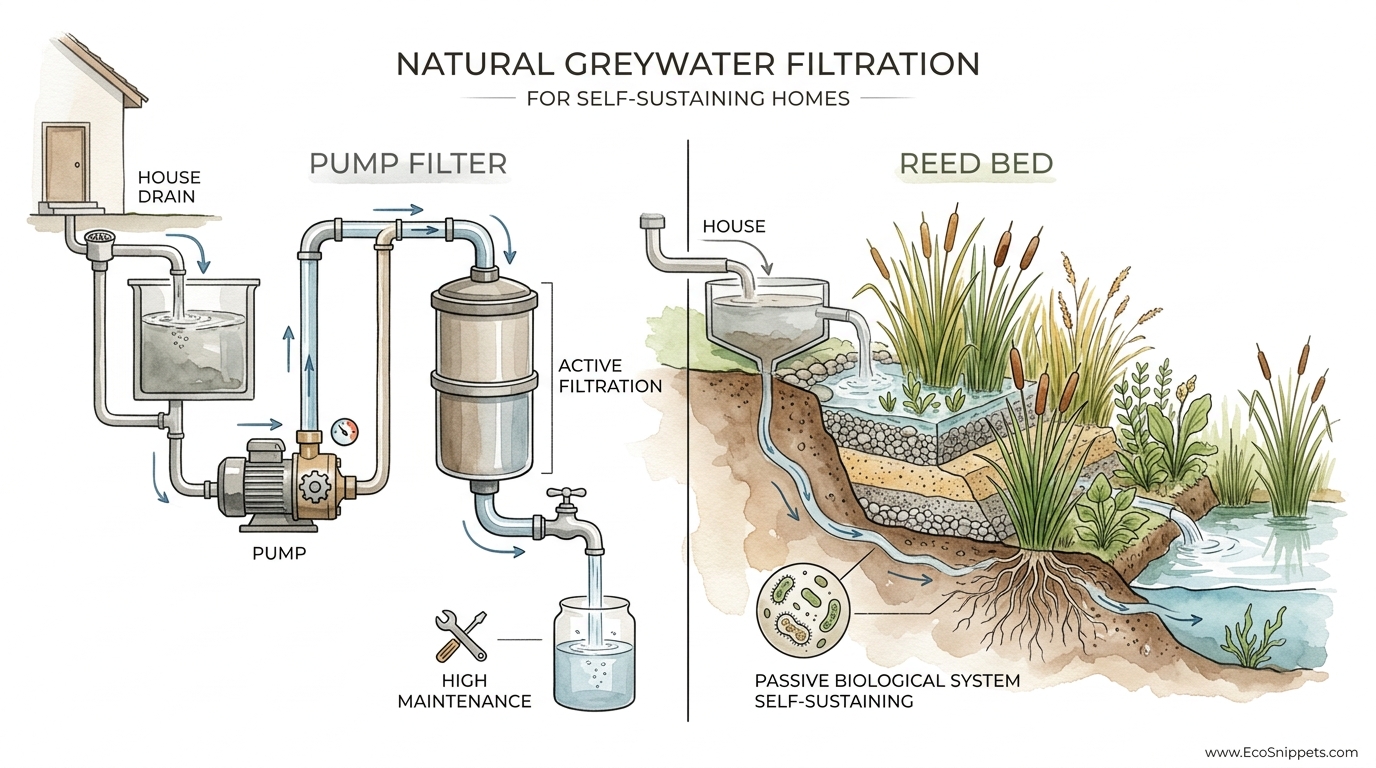
Stop fighting algae with electricity and start using the dynamic power of living roots to clean your water for free. Mechanical filters are static tools that require constant cleaning and electricity. A biological reed bed is a dynamic ecosystem that actually gets more efficient over time. Letting specialized plants eat the nutrients that cause algae creates a self-regulating system that provides habitat while providing pristine water quality.
Imagine a system that does not break down when the power goes out. Picture a filter that grows more capable with every passing season. This is the promise of the reed bed—a technology as old as the earth’s first wetlands, refined for the modern self-sustaining home. You are no longer just a consumer of water when you implement these living systems; you become a steward of a cycle.
This guide will walk you through the grit and the glory of building your own natural filtration system. We will move past the superficial “green” marketing and get into the actual mechanics of rhizosphere biology and hydraulic conductivity. Whether you are carving a homestead out of the high desert or retrofitting a suburban lot for resilience, the principles of natural greywater filtration remain the same: trust the roots, respect the microbes, and let gravity do the heavy lifting.
Natural Greywater Filtration For Self-sustaining Homes
Natural greywater filtration is the art and science of using constructed wetlands to treat wastewater from sinks, showers, and laundry. This water, known as greywater, contains organic matter, soap residues, and nutrients that would cause pollution if dumped directly into a stream. However, those same “pollutants” are actually a feast for specific types of plants and bacteria.
Self-sustaining homes thrive on closed-loop systems. In a conventional house, water is used once and then banished to a sewer or a septic tank where its potential is lost. A reed bed changes the trajectory of that water. Instead of being a waste product, greywater becomes the lifeblood of a lush, productive garden feature. This system sits between your house and the landscape, acting as a living kidney that purifies the flow before it reaches your orchards or ornamental ponds.
Real-world applications range from simple backyard “banana circles” to complex multi-stage vertical flow wetlands. In rural settings, these systems often replace expensive and maintenance-heavy mechanical treatment plants. They exist because nature is far better at processing organic chemistry than any machine we have ever built. Using the ancestral wisdom of how marshes clean the earth, we can create a pocket-sized wilderness that works for us 24 hours a day.
Visualizing this concept is simple. Think of a shallow, lined basin filled with gravel and planted with reeds. As water moves through the gravel, it passes through a dense forest of roots. Millions of microscopic organisms live on those roots, reaching out to grab and digest the particles in the water. The result is a clear, odorless effluent that is ready to be returned to the earth.
The Biological Mechanics: How It Works
Living filters operate through a combination of physical, chemical, and biological processes. The physical part is easy to understand: the gravel and sand acting as a giant strainer. Larger particles get trapped in the gaps between the stones. However, the real magic happens at the microscopic level in a region called the rhizosphere—the area immediately surrounding the plant roots.
Roots of plants like the Common Reed (Phragmites australis) or Bulrushes (Typha) have a unique ability. They pump oxygen down from their leaves into their root systems to survive in waterlogged soil. Some of this oxygen leaks out into the surrounding gravel, creating tiny “oxygen islands” in an otherwise anaerobic environment. This creates a patchwork of aerobic and anaerobic zones.
Different bacteria thrive in these different zones. Aerobic bacteria are exceptionally fast at breaking down organic carbon (measured as BOD, or Biochemical Oxygen Demand). Meanwhile, anaerobic bacteria in the deeper, oxygen-poor zones are experts at denitrification, turning nitrates back into harmless nitrogen gas. This dual-zone architecture allows a reed bed to strip complex soaps and organic loads from the water with incredible efficiency.
Plants themselves also play a direct role. They take up nitrogen and phosphorus to build their own tissues. While the bacteria do the majority of the “heavy lifting” in terms of volume, the plants act as the engineers. They maintain the structural integrity of the filter, prevent the gravel from clogging by shifting and growing, and provide the surface area for the bacterial biofilm to grow on.
Vertical Flow vs. Horizontal Flow Systems
Choosing the right design depends on your site’s topography and the strength of your greywater. There are two primary configurations used in domestic settings: Vertical Flow (VF) and Horizontal Flow (HF). Each has a specific job and requires a different approach to construction.
Vertical Flow Reed Beds
Vertical flow systems are the high-performance engines of the wetland world. In this setup, water is dosed onto the surface of the bed all at once, usually via a tipping bucket or a pump. The water then trickles down through layers of sand and gravel, eventually exiting through pipes at the bottom. This “pulsing” action is critical. As the water drains away, it sucks fresh air down into the filter media.
High oxygen levels make VF beds excellent at removing ammonia and handling stronger waste. They have a smaller footprint than horizontal beds because they are more efficient per square foot. However, they require more “head” (vertical drop) or a pump to function. If your land is flat, a VF bed will require mechanical help to dose the water correctly.
Horizontal Flow Reed Beds
Horizontal flow systems are the steady workhorses. The water enters one end, stays below the surface of the gravel at a constant level, and slowly seeps horizontally toward the outlet. These systems are predominantly anaerobic because the water is always present, preventing air from entering the gravel.
Simplicity is the main advantage here. If you have a slight slope, a horizontal bed can run entirely on gravity with no moving parts. They are superior at removing suspended solids and are very effective as a “polishing” stage after a VF bed or a septic tank. Because the water is hidden beneath a layer of dry gravel, there is no risk of odors or mosquitoes, making them ideal for areas close to the house.
Building the Basin: Steps and Materials
Constructing a reed bed requires a mix of excavation and careful layering. The goal is to create a leak-proof vessel that guides the water through the root zone without escaping into the surrounding soil prematurely.
1. Excavation: Dig a trench or basin. For a standard family of four, a horizontal greywater-only bed usually requires about 20 to 25 square meters of surface area. Vertical beds can be smaller, often around 10 to 15 square meters. The depth should be approximately 600mm to 700mm. Ensure the base has a slight fall (about 1%) toward the outlet.
2. Lining: Protecting the groundwater is paramount. Use a heavy-duty pond liner, such as 1.0mm EPDM or HDPE. Before laying the liner, put down a thick layer of sand or a geotextile underlay to prevent sharp rocks in the soil from puncturing the membrane.
3. Plumbing: Install the inlet and outlet pipes. The inlet should distribute water evenly across the width of the bed. For a horizontal bed, an adjustable outlet (like a swiveling elbow pipe) is essential. This allows you to control the water level within the gravel.
4. Substrate Layering: Fill the basin with clean, washed gravel. For a horizontal bed, use 20mm-40mm round stone at the inlet and outlet zones to prevent clogging. Use 5mm-10mm pea gravel for the main body where the plants will grow. Vertical beds require a more complex layering of large stones at the bottom, followed by pea gravel, and topped with a layer of sharp sand.
5. Planting: Set your plants into the pea gravel. Space them roughly 3 to 4 plants per square meter. It is best to plant in the spring so they have a full growing season to establish their roots before the winter chill sets in.
Benefits of the Natural Approach
Choosing a biological reed bed over a mechanical pump filter offers several long-term advantages that align with the philosophy of self-reliance. Resilience is the most significant benefit. Mechanical filters rely on electricity and proprietary replacement cartridges. In contrast, a reed bed relies on sunlight and biology. If the grid goes down, your water continues to be cleaned.
Maintenance costs are virtually non-existent once the system is established. You do not need to buy expensive UV bulbs or chemical additives. The “operating cost” is essentially a few hours of gardening once or twice a year to harvest dead reeds and check for weeds. This makes it an ideal solution for remote homesteads where getting supplies is a chore.
Aesthetic value and biodiversity are often overlooked benefits. A well-designed reed bed looks like a deliberate landscape feature—a lush, green oasis that attracts dragonflies, frogs, and birds. It transforms a utility into an ecosystem. Furthermore, the water emerging from the system is high in nitrates (in the case of VF beds), making it an incredible liquid fertilizer for non-edible crops or woodlots.
Challenges and Common Mistakes
Building a living system is not without its pitfalls. Most failures in natural filtration come from poor design or a misunderstanding of what a reed bed can handle. Clogging is the number one enemy. If you send too much fat, oil, or grease (FOG) directly into a gravel bed, it will eventually seal up like a clogged artery.
Installing a grease trap or a simple settling tank before the water reaches the reed bed is a mandatory step. This allows heavy solids to sink and fats to float where they can be manually removed. Skipping this pre-filtration stage is the fastest way to kill a reed bed. Over time, the gravel will need to be replaced if it becomes “blinded” by sludge, but a good pre-filter can extend the life of the gravel to 20 years or more.
Plant selection is another common area for error. Using invasive species can cause headaches for your neighbors and the local environment. Always prioritize native wetland plants that are adapted to your specific climate. Furthermore, many people forget that plants need water. If you go on a long vacation during a drought and your greywater stops flowing, the reeds may die, and the bacterial colony will collapse.
Limitations and Realistic Expectations
Reed beds are powerful, but they are not magic. Environmental constraints dictate where and how they should be used. In extremely cold climates, the biological activity slows down significantly during the winter. While the physical filtration still works, the nutrient uptake by plants stops. In these regions, the bed must be buried deeper, or you must accept lower water quality during the winter months.
Space is another limiting factor. Unlike a compact mechanical unit that can sit under a sink, a reed bed requires square footage. If you live on a tiny urban lot, you may not have the 20 square meters required for a functional horizontal bed. In these cases, a vertical flow system or a specialized “planter box” wetland is a better, albeit more complex, alternative.
Finally, heavy metals and harsh chemicals are a no-go. If you use your sink to wash out oil-based paints, harsh solvents, or heavy industrial cleaners, you will poison the very microbes you are trying to cultivate. Natural filtration requires a “contract” between the user and the system: you provide a clean, organic diet of biodegradable soaps, and the system provides clean water in return.
Comparing the Options
To understand the value of a reed bed, it helps to see how it stacks up against standard mechanical pump filters. Use the following table to weigh the factors that matter most for a self-sustaining home.
| Feature | PUMP FILTER | REED BED |
|---|---|---|
| Power Requirement | Constant Electricity | None (Gravity) or Minimal (Pump Dosing) |
| Maintenance Frequency | Weekly/Monthly Cleaning | Annual Harvesting |
| Longevity | 5–10 Years (Mechanical Wear) | 20+ Years (Biological Growth) |
| Initial Cost | Moderate (Equipment) | Low (Materials) to High (Labor) |
| Effluent Quality | Consistent (if maintained) | Variable (Season dependent) |
| Environmental Impact | Plastic waste (Filters) | Habitat creation |
Practical Tips for Peak Performance
Success with a reed bed is found in the details of your daily habits and seasonal maintenance. Starting with the right soap is the most effective way to ensure your plants thrive. Look for “greywater-safe” detergents that are low in sodium and boron. High salt content in laundry detergent will eventually build up in the soil and stunt the growth of your reeds.
Pre-filtration is your best friend. Install a simple “lint trap” on your washing machine outlet. Fibers from synthetic clothing do not break down easily and can weave through your gravel, making it very difficult to clean later. A simple mesh bag or a dedicated vortex filter can catch these solids before they enter the living system.
Managing the seasons requires a bit of foresight. In the autumn, after the reeds have turned brown and the nutrients have moved back down into the rhizomes, cut the stalks back to about 10cm above the gravel. Remove the dead material and compost it. Leaving the dead reeds on the bed can lead to a buildup of organic matter on the surface, which can eventually impede the flow of water.
Advanced Considerations for the Serious Practitioner
Once you master the basic reed bed, you might consider scaling the system or adding complexity to handle more challenging waste. Multi-stage wetlands are the gold standard for high-purity water. This involves a vertical flow bed for initial “roughing” and nitrification, followed by a horizontal flow bed for denitrification and polishing. This sequence can produce water clean enough to be used in decorative koi ponds.
Recirculating systems are another advanced option. By using a small solar pump to cycle the water through the reed bed multiple times, you can significantly increase the treatment level in a much smaller footprint. This is particularly useful in arid climates where you want to minimize evaporation while maximizing the “contact time” between the water and the root zone.
Integrating the reed bed into a larger “permiculture” design offers the highest level of resilience. For example, the outlet of your reed bed can feed into a “willow crib”—a dense planting of willows used for basket weaving or biomass fuel. This creates a tertiary treatment stage that essentially “disappears” the water into useful plant growth, ensuring that zero waste ever leaves your property line.
Scenarios: Theory in Practice
Consider the case of a high-desert homestead. Water is scarce, and every drop must be used twice. The owners installed a 15-square-meter horizontal reed bed to process water from their outdoor kitchen and shower. They used native Sedge (Carex) and Bulrush (Scirpus). The clear effluent from the bed flows by gravity into a series of mulch basins around their fruit trees. In this dry environment, the reed bed provides a lush microclimate that would be impossible to maintain otherwise.
Contrast this with a forest cabin in a high-rainfall area. Here, the challenge is not scarcity but water quality. The owners built a vertical flow bed to ensure that their greywater doesn’t contaminate the nearby trout stream. Because the terrain is steep, they use a simple “gravity siphoning” tank to dose the bed every few hours. The water coming out is crystal clear and high in oxygen, actually improving the moisture levels of the forest floor without any negative nutrient load.
Final Thoughts
Embracing natural greywater filtration is more than a plumbing choice; it is a declaration of independence. You are stepping away from the “disposable” mindset of modern infrastructure and moving toward a model of stewardship. The reed bed proves that we do not need to choose between modern comfort and environmental integrity. We can have our showers and our laundry, provided we are willing to partner with the biology of the earth to clean up after ourselves.
Building a system that gets better with age is a rare thing in a world of planned obsolescence. Your reed bed will be a testament to your grit and your foresight. It will provide a sanctuary for local wildlife while quietly doing the heavy work of purification. As the roots deepen and the microbial colonies expand, you will find that the system requires less of you, even as it gives more back to the landscape.
Start small if you must, but start. Dig the hole, line the basin, and plant the reeds. There is a deep, ancestral satisfaction in watching water disappear into a bed of gravel and emerge on the other side as a clear, life-giving resource. It is the work of a pioneer—using wisdom and nature to build a home that truly sustains itself.
