How To Become More Self-Sufficient Without Starting a Full-Blown Farm…
Want to start preserving your harvest, making your own soap, or building a backyard root cellar — but not sure where to begin? “Homesteading Advice” gives you instant lifetime access to 35+ practical homesteading books on food preservation, veggie gardening, DIY natural cleaning products (save over $250 per year with this skill alone), brewing, off-grid energy, and a whole lot more…
Click Here To Check It Out Now!
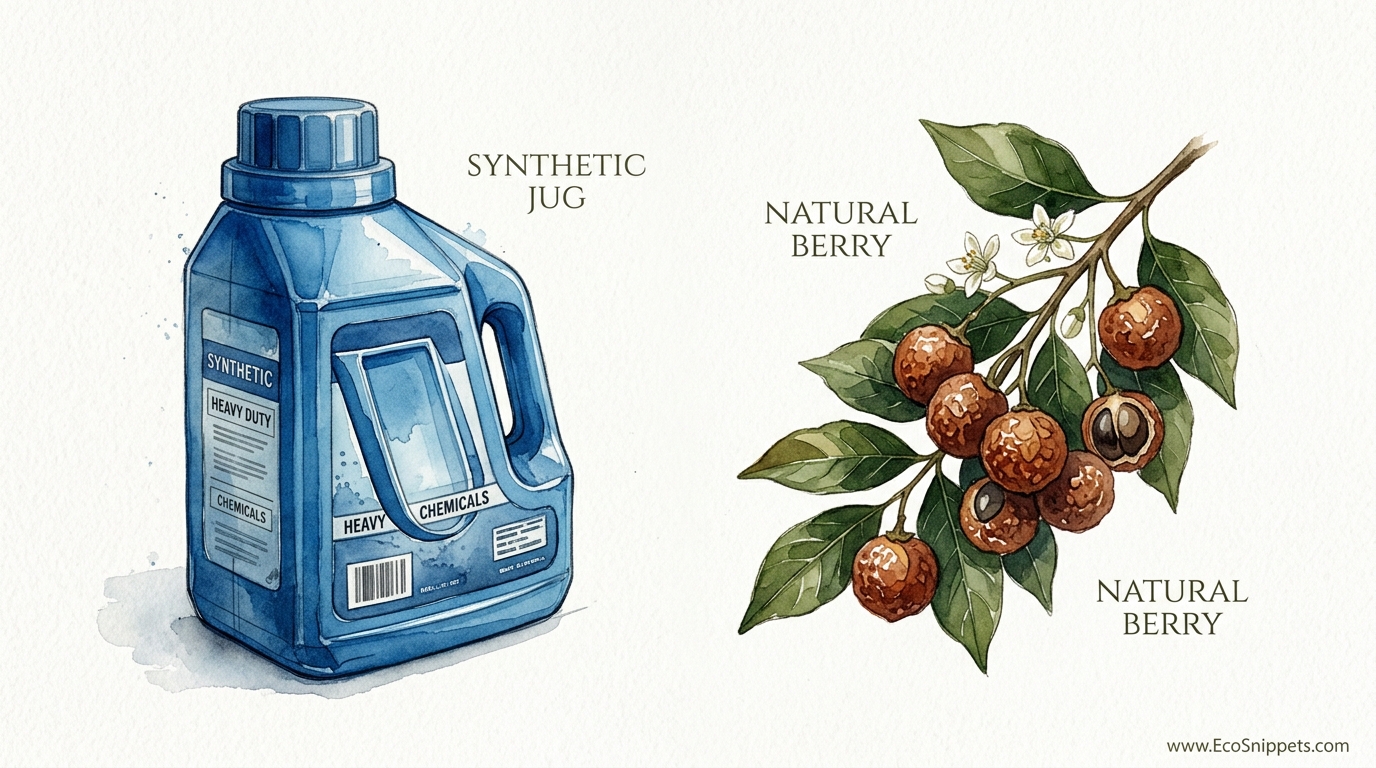
One of these is a petroleum byproduct in a plastic shell; the other literally grows on trees and cleans your clothes for pennies. Did you know most ‘fresh scent’ detergents are actually a cocktail of synthetic surfactants and microplastics? We switched to the Sapindus berry—a fruit that produces natural saponin when it touches water. No plastic jugs, no toxic runoff, and zero skin irritation.
The modern laundry room has become a laboratory of synthetic chemistry. We have traded the wisdom of the woods for the convenience of the laboratory. It is time to look back at how our ancestors kept their linens white without poisoning the well. Choosing a natural path is not just about being “green”; it is about reclaiming self-reliance and protecting the health of the family.
Synthetic detergents were born out of wartime shortages in the early 20th century. When fats and oils were needed for other purposes, chemists turned to petroleum to create surfactants. These chemicals were designed to work, but they were never designed to be gentle on the earth or the human body. Returning to the berry is a return to a simpler, cleaner way of life.
Natural Laundry Detergent Alternatives That Work
Natural laundry alternatives are plant-based substances that contain a high concentration of saponin. Saponin is a glycoside that occurs naturally in many plant species, acting as a defense mechanism against insects and fungi. When these plants are agitated in water, they release a soapy lather that acts as a natural surfactant.
The most prominent of these is the Sapindus berry, commonly known as the soap nut. These are not actually nuts, but the dried shells of fruit from the Sapindus mukorossi tree, which grows primarily in the Himalayan foothills. For centuries, people in India and Nepal have used these berries to wash everything from fine silks to heavy woolens.
Aside from soap nuts, there are local alternatives that grow right in our own backyards. English Ivy, Horse Chestnuts, and Soapwort all contain significant levels of cleaning agents. These plants offer a way to clean our clothes using materials gathered from the land, reducing our dependence on industrial supply chains.
The goal of using these alternatives is to lift dirt and oils from fabric without leaving behind a residue of synthetic dyes or artificial fragrances. Unlike the SYNTHETIC JUG, which coats fibers in optical brighteners to trick the eye into seeing “whiteness,” the NATURAL BERRY simply cleans.
The Science of Saponin: How It Works
Cleaning is essentially the process of making water “wetter.” Water has a high surface tension, which means it tends to bead up rather than penetrate deep into fabric fibers. To clean effectively, we must break that surface tension so the water can reach the dirt.
Saponins are surfactant molecules with a unique structure. One end of the molecule is hydrophilic (water-loving), and the other is lipophilic (fat-loving). When you toss a bag of soap berries into the wash, the lipophilic end of the saponin molecule attaches to the oils and grime on your clothes.
The hydrophilic end then pulls that dirt into the water. As the washing machine agitates, the dirt is lifted away and suspended in the water, where it can be rinsed away down the drain. This process happens naturally, without the need for the harsh petroleum-based chemicals found in conventional detergents.
Heat plays a critical role in this process. While some modern detergents are formulated to work in ice-cold water using enzymes, natural saponins are most effectively released in warm or hot water. The heat helps soften the plant material, allowing the cleaning agents to flow freely into the drum.
The Benefits of Leaving the Synthetic Jug Behind
Switching to natural plant-based cleaners offers a range of practical and observable benefits for the household. The most immediate change many people notice is the disappearance of skin irritation. Conventional detergents often leave a residue of “fragrance” and “brighteners” that can cause eczema, rashes, and respiratory issues.
Environmentally, the impact is profound. Every time we run a load of laundry with synthetic detergent, we are sending microplastics and non-biodegradable surfactants into our local waterways. Soap nuts are 100% biodegradable and can be tossed into the compost pile once they have spent their cleaning power.
Economically, the savings add up quickly. A single kilogram of soap berries can last for over 100 loads of laundry, costing only a few cents per wash. This is a fraction of the price of premium “free and clear” synthetic brands. It is a way to keep more of your hard-earned money while maintaining a high standard of cleanliness.
* Hypoallergenic: Safe for babies and those with extremely sensitive skin.
* Gentle on Fabrics: Does not break down delicate fibers like harsh chemical cleaners do.
* Zero Waste: Usually packaged in cotton or paper rather than heavy plastic jugs.
* Septic Safe: Does not disrupt the delicate bacterial balance in home septic systems.
Common Mistakes and How to Avoid Them
The transition to natural laundry care often fails because people treat soap nuts exactly like they treat liquid detergent. One common mistake is using cold water without a pre-soak. Because saponin is locked inside a dried shell, it needs warmth to activate. If you must wash in cold water, you should soak the berries in a cup of hot water for five minutes first.
Agitation is another factor that people overlook. High-efficiency (HE) front-loaders use very little water and have a gentler tumbling action. While soap nuts are great for HE machines because they are low-sudsing, you may need to add a few more berries to ensure enough saponin is released during the shorter cycles.
Do not overfill your washing machine. Natural surfactants need room to move through the fabric. If the machine is packed too tightly, the water cannot circulate properly, and the saponin will remain trapped near the wash bag rather than cleaning the whole load.
Many people also expect a “mountain breeze” or “spring rain” scent after the wash. Natural berries leave clothes smelling like absolutely nothing—which is how clean clothes should smell. If you crave a scent, you can add a few drops of essential oil to a damp rag and toss it in the dryer.
Limitations of Plant-Based Laundry Cleaners
It is important to be realistic about what a berry can do. Saponin is an excellent general cleaner, but it is not a heavy-duty stain remover. For clothes that are heavily soiled with motor oil, deep grease, or grass stains, the NATURAL BERRY may need a little help from its friends like baking soda or washing soda.
Another limitation is water hardness. If you have very hard water, the minerals can bind to the saponin and make it less effective. In these cases, you might notice your whites becoming dingy over time. Adding a half-cup of white vinegar to the rinse cycle can help strip away those minerals and keep fabrics bright.
The cleaning power of soap nuts also diminishes with each use. While you can reuse the same bag of berries 3 to 5 times, the third wash will not be as potent as the first. It takes a discerning eye to know when the berries are spent—they will feel soft, mushy, and look grey or pale when the saponin is gone.
Comparing Synthetic Detergent vs. Natural Berries
Understanding the measurable differences between these two approaches can help you decide which path fits your homestead best.
| Feature | Synthetic Detergent | Natural Soap Berries |
|---|---|---|
| Primary Ingredient | Petroleum-based surfactants | Plant-derived saponin |
| Cost Per Load | $0.25 – $0.60 | $0.05 – $0.10 |
| Skin Irritation | Common (fragrances/dyes) | Extremely Rare |
| Biodegradability | Poor to Moderate | 100% Compostable |
| Cleaning Power | High (heavy stains) | Moderate (everyday dirt) |
Practical Tips for Maximum Cleaning Power
To get the most out of your natural laundry routine, you must adapt your methods to the rhythm of the plants. Always use a small cotton drawstring bag to hold your berries. This prevents them from getting lost in the sleeves of shirts or the legs of pants.
If you are dealing with whites, remember that soap nuts do not contain optical brighteners. To keep your whites from yellowing, add a half-cup of lemon juice or a tablespoon of sodium percarbonate (oxygen bleach) to the drum. These natural boosters work alongside the saponin to maintain brightness.
For those living in cold climates, consider making a liquid concentrate. Boil about 10 soap berries in 4 cups of water for 20 minutes. Strain the liquid and store it in a glass jar in the refrigerator. Use about a quarter-cup per load. This ensures the saponin is already fully dissolved and ready to work, even in a cold wash.
* Check the Berries: If they still feel tacky or “sticky” when dry, they still have saponin.
* Hard Water Fix: Use 1/4 cup of washing soda to soften the water for better cleaning.
* Agitation: Use a couple of wool dryer balls in the wash to increase physical scrubbing action.
Advanced Considerations: Foraging Your Own Cleaners
For the true practitioner of self-reliance, purchasing soap nuts from the Himalayas is only the first step. You can forage for cleaning agents in many parts of the world. English Ivy (Hedera helix) is an evergreen that contains enough saponin to clean clothes. Simply chop 10-15 large leaves, place them in a mesh bag, and wash on a warm cycle.
Horse Chestnuts (conkers) are another powerful resource. In the autumn, these can be gathered from the ground. To use them, you must crush the nuts to expose the white interior, then soak them in hot water to create a milky, soapy liquid. This liquid is exceptionally potent but should be used quickly as it does not have a long shelf life.
When foraging, always ensure you have identified the plant correctly. Nature provides, but she also demands respect and knowledge. Learning to process your own botanical surfactants is the ultimate way to step away from the industrial jug and toward the ancestral forest.
Example Scenarios for the Natural Laundry Room
Consider a household with a newborn baby. The infant’s skin is thin and highly absorbent. Using a synthetic detergent with “fragrance” means the baby is inhaling and absorbing chemicals 24 hours a day through their clothes and bedding. Switching to soap berries eliminates this toxic load immediately, providing peace of mind that no synthetic irritants are touching the child.
In another scenario, imagine a homesteader who relies on a greywater system to water their orchard. Conventional detergents contain salts and chemicals that can build up in the soil and kill the very trees they are trying to nourish. Soap nuts produce greywater that is safe for the garden, turning a waste product into a resource for the land.
Finally, think of the budget-conscious family. By switching from a $20 jug of premium detergent to a $15 bag of soap nuts that lasts a year, they are saving hundreds of dollars annually. These savings can be redirected toward higher-quality food or other self-reliance projects.
Final Thoughts
Transitioning from synthetic detergents to natural alternatives is a journey of rediscovery. It requires us to slow down, pay attention to the water temperature, and understand the materials we use. The reward is a home that smells like fresh air rather than chemicals, and a conscience that is clear of environmental guilt.
We do not need to rely on petroleum byproducts to live clean lives. The earth has provided everything we need in the form of berries, leaves, and roots. By embracing these natural surfactants, we protect our skin, our wallets, and our waterways. It is a simple change with profound consequences.
Start with a small bag of soap berries or a handful of ivy leaves. Experiment with your water hardness and your machine settings. Once you see that nature can clean just as well as a laboratory, you will never want to go back to the plastic jug again. Use the wisdom of the past to build a cleaner future for your family.
