How To Become More Self-Sufficient Without Starting a Full-Blown Farm…
Want to start preserving your harvest, making your own soap, or building a backyard root cellar — but not sure where to begin? “Homesteading Advice” gives you instant lifetime access to 35+ practical homesteading books on food preservation, veggie gardening, DIY natural cleaning products (save over $250 per year with this skill alone), brewing, off-grid energy, and a whole lot more…
Click Here To Check It Out Now!
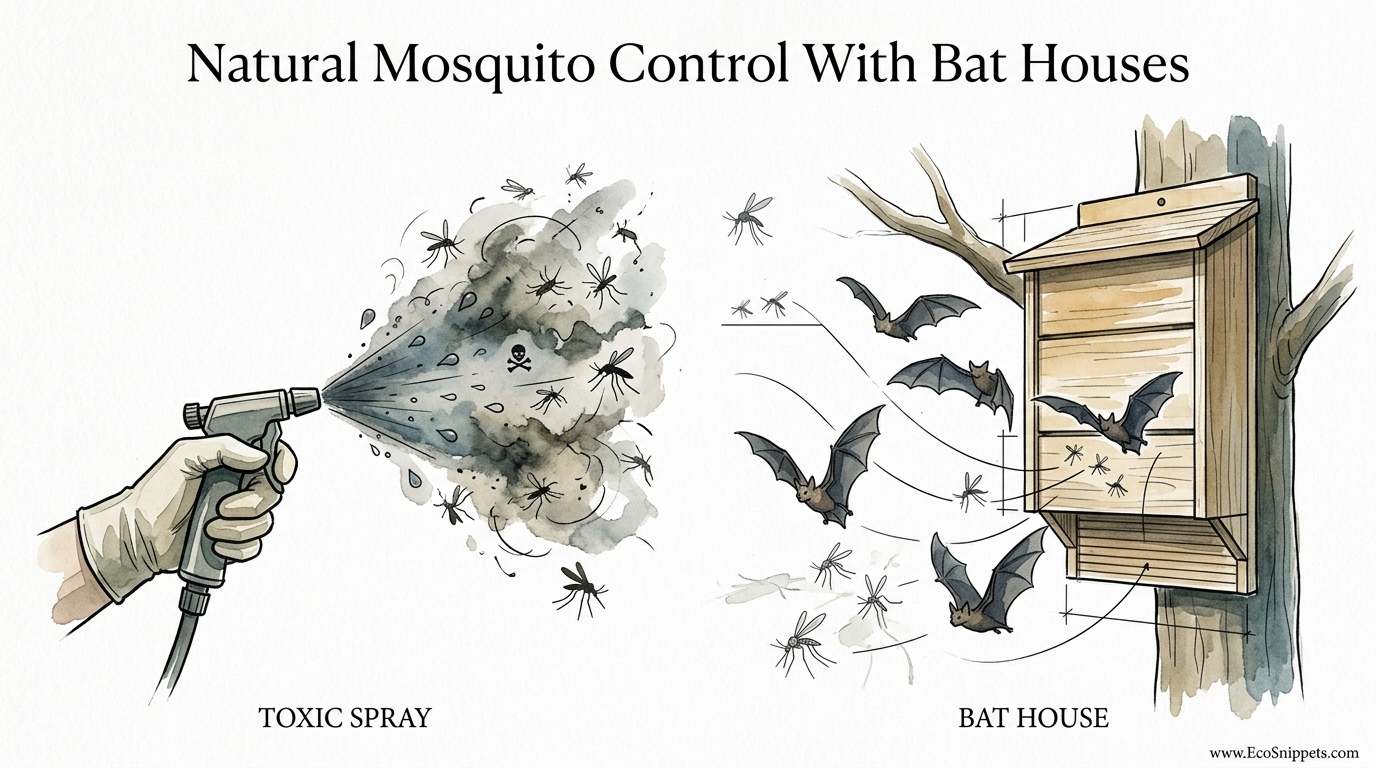
Most people spend hundreds on chemical sprays that kill the ‘good’ bugs along with the bad. Instead of fighting the insects yourself, invite the world’s most efficient predators to your yard. A single bat can eat up to 1,000 mosquitos in an hour, and they pay for their stay with some of the most nutrient-dense fertilizer on the planet. One of these options poisons your local ecosystem, while the other provides a lifetime of free pest control and fertilizer.
There is a quiet dignity in watching a colony of bats take flight at twilight. For generations, our ancestors understood that the land provides everything we need if we are willing to steward it correctly. Modern solutions often involve reaching for a pressurized can or hiring a truck to fog the treeline, but these are temporary bandages on a self-inflicted wound.
When you choose to install a bat house, you are not just buying a piece of wooden garden decor. You are recruiting a specialized workforce that has spent millions of years perfecting the art of aerial insect interception. This guide will walk you through the grit and the grace of establishing a bat colony on your own land, from the precise physics of heat regulation to the ancestral science of guano-enriched soil.
Natural Mosquito Control With Bat Houses
Natural mosquito control is a system of land management that relies on the biological drive of insectivorous predators rather than synthetic interference. In the wild, bats are the primary regulators of nocturnal insect populations. They fill a niche that birds leave vacant when the sun goes down, patrolling the air for beetles, moths, and the dreaded mosquito.
A bat house is a man-made structure designed to mimic the tight, warm crevices found under the bark of old-growth trees or within the rock fissures of a canyon. These structures provide a safe roosting site for bats during the day, protecting them from predators like hawks, owls, and house cats. In many parts of the country, natural roosting sites are disappearing due to urban sprawl and the removal of dead “snag” trees.
By providing a high-quality roost, you encourage bats to move out of your attic or shutters and into a dedicated space. This relationship is a classic trade-off: you provide the security and thermal stability they need for their nurseries, and they provide an invisible shield against the pests that drive you indoors on a summer evening.
Real-world applications of this method range from small backyard setups to massive agricultural operations. Farmers have long known that bats save billions of dollars in crop damage every year. On a smaller scale, a single well-placed bat house can house a colony of 50 to 100 bats, creating a significant dent in the local mosquito population within a few hundred yards of the roost.
How the Bat House System Works
The functionality of a bat house depends entirely on its ability to trap heat and provide a secure foothold for its inhabitants. Bats are tiny mammals with very little body fat, meaning they require exceptionally warm environments to survive the day, especially during the summer when mothers are raising their young (pups).
The internal temperature of a successful bat house should ideally hover between 80°F and 100°F. This is achieved through a combination of solar gain and airtight construction. The house acts as a thermal battery, soaking up the sun’s rays during the day and releasing that warmth slowly as the air cools at night.
Structurally, the house must feature narrow chambers, usually about 3/4 of an inch wide. This specific width allows the bats to press their bellies and backs against the wooden walls, conserving heat through physical contact. If the chambers are too wide, the bats cannot regulate their temperature effectively, and they will likely abandon the structure for a tighter crevice elsewhere.
Ventilation is the second half of the equation. Most designs include a horizontal vent near the bottom of the house. This allows for a temperature gradient, giving the bats the ability to move higher in the house if they are cold or lower toward the vent if they become too warm. It is a simple, passive climate control system that requires no moving parts—just a deep understanding of thermodynamics and animal behavior.
The Benefits of Living With Bats
Choosing a biological solution over a chemical one offers a range of practical, measurable benefits that extend far beyond a few less mosquito bites.
Superior Pest Eradication
Chemical sprays only kill the insects present at the time of application. Bats, however, are a persistent presence. They hunt every single night that the temperature is above 50°F. A nursing mother bat can consume her own body weight in insects in a single night—often up to 4,500 bugs. This consistent pressure on the mosquito population prevents the “rebound” effect often seen after chemical treatments.
The Gold Mine of Guano
The droppings collected under a bat house are one of the most powerful organic fertilizers on the planet. Bat guano typically has an NPK (Nitrogen-Phosphorus-Potassium) ratio of roughly 10-3-1. It is rich in bioremediating microbes that help clean the soil and improve its texture. Unlike synthetic fertilizers that can wash away in the rain, guano is a slow-release nutrient source that builds the long-term health of your garden.
Preservation of Beneficial Insects
Broad-spectrum insecticides do not discriminate. They kill the honeybees that pollinate your garden and the butterflies that bring it life. Bats are selective hunters. They target the night-flying pests that cause the most damage to your comfort and your crops, leaving your daytime pollinators completely unharmed.
Cost and Self-Reliance
A well-built bat house costs less than a single professional mosquito treatment and can last for decades. Once established, the colony requires zero maintenance. You aren’t beholden to a service contract or a rising price at the hardware store. You are simply managing a self-sustaining part of your own ecosystem.
Challenges and Common Mistakes
The primary reason people fail with bat houses is a lack of attention to detail during the installation phase. It is not enough to simply “hang a box” and hope for the best.
The Tree Mounting Trap
Many people instinctively want to nail a bat house to a tree. This is almost always a mistake. Trees provide too much shade, which keeps the house too cold. Even worse, tree branches provide easy “perches” for predators like owls and hawks to sit and wait for the bats to emerge. The rough bark of a tree also provides a ladder for climbing predators like raccoons and snakes.
Incorrect Thermal Color
Color is not an aesthetic choice; it is a functional one. If you live in a northern climate and paint your bat house white, the colony will freeze and leave. If you live in the deep south and paint it black, you will cook the pups alive. You must match the exterior color to your specific geographic temperature zone to ensure the internal roost stays within that 80-100°F sweet spot.
Roughness and Grip
A bat house with smooth interior walls is a death trap. Bats must be able to hang by their toes to sleep. If the wood is sanded smooth or the plastic mesh is too slick, they cannot find a foothold. Many commercial bat houses are made cheaply with smooth plywood. A serious practitioner will always roughen the interior wood with a saw or a heavy rasp before assembly.
Patience and Expectations
Bats are wild animals with high “site fidelity,” meaning they like to go back to the same places every year. It can take one to two years for a colony to find and trust a new house. People often get frustrated and move the house after only six months. This resets the clock and ensures you will never have a resident population.
Limitations: When This Method May Not Work
While bats are extraordinary, they are not a “magic bullet” for every situation. Understanding the boundaries of this approach is essential for realistic land management.
If you live in a location without a permanent water source within a half-mile, your chances of attracting a colony drop significantly. Bats drink on the wing, swooping down to skim the surface of ponds, lakes, or slow-moving streams. Without water, the energy cost of commuting from the roost to the “watering hole” becomes too high for the bats to maintain.
Extreme urban environments with heavy light pollution also present a challenge. Most bat species are “light-averse.” If you mount a bat house directly under a streetlamp or a bright LED security light, they will avoid it. They require a “dark corridor” to exit the roost and fly to their hunting grounds without being spotted by predators.
Lastly, bats are seasonal. In northern regions, they will migrate or hibernate during the winter months. This means you will still have a gap in coverage during the shoulder seasons. A holistic approach usually involves supplementing bat houses with other natural methods, such as removing standing water or using “mosquito dunks” in rain barrels.
The Chemical Reality: Bats vs. Toxic Sprays
Comparing the two methods reveals a stark difference in both cost and environmental impact.
| Feature | Chemical Spraying | Bat House Colony |
|---|---|---|
| Upfront Cost | $100 – $300 per season | $50 – $150 (one-time) |
| Maintenance | Recurring every 3 weeks | Zero once established |
| Impact on Bees | Highly Toxic | None |
| Residue | Persistence in soil/water | None (Organic Fertilizer) |
| Efficiency | Temporary knock-down | Continuous patrolling |
Chemical treatments often lead to the “pesticide treadmill.” This occurs when you kill off the natural predators (like dragonflies and spiders) along with the mosquitoes. Because mosquitoes reproduce so quickly, they often develop resistance to the chemicals and return in even greater numbers, requiring stronger toxins to achieve the same result.
Practical Tips and Best Practices
If you are ready to begin, follow these core principles to maximize your chances of success.
- Mount at the Correct Height: The bottom of the house should be at least 12 feet off the ground, though 15 to 20 feet is significantly more effective. This height gives the bats enough “drop room” to fall into flight when they exit.
- Face the Southeast: In the Northern Hemisphere, a southeast-facing house gets the best morning sun. This warms the house early in the day so the bats can recover from their night of hunting.
- Use Cedar or Exterior Plywood: Avoid pressure-treated wood, which contains copper and other chemicals that can be toxic to bats. Untreated cedar is naturally rot-resistant and provides a better scent and texture.
- Caulk Every Seam: Drafts are the enemy of a warm roost. Use a high-quality, water-based outdoor caulk to seal every joint before you paint. An airtight house is a successful house.
- Clear the Flight Path: Ensure there are no branches, wires, or obstructions within 20 feet of the front of the house. Bats are agile, but they need a clear “runway” to enter and exit at high speeds.
Advanced Considerations: Thermal Zones and Color
For the serious practitioner, understanding the “Merlin Tuttle” color standards is vital. Dr. Merlin Tuttle, a leading bat conservationist, pioneered the research showing that color can increase occupancy rates by up to 50%.
In Region 1 (Northern US/Canada), where July highs average less than 85°F, you should use black or very dark shades. This maximizes heat absorption in a climate where the sun is less intense.
In Region 2 and 3 (Central US), where July highs are between 85°F and 100°F, medium shades like dark browns or grays are appropriate. These absorb enough heat without turning the house into an oven.
In Region 4 (Desert Southwest/Deep South), where highs regularly exceed 100°F, you should use light colors like tan or even white. These regions have so much solar energy that a dark house would become lethally hot for the colony.
If you are unsure, err on the side of a slightly darker color and ensure your ventilation slots are clear. It is generally easier for a bat to move down to a cooler vent than it is for them to generate body heat in a cold house.
The 20-Foot Patrol: A Real-World Example
Imagine a homestead in the Midwest with a medium-sized garden and a small farm pond. For years, the owners used “mosquito coils” and citronella candles with limited success. They eventually installed two back-to-back bat houses on a 20-foot steel pole near the pond.
Because they were within 100 yards of a water source and had a clear flight path over the garden, a small colony of Big Brown Bats moved in by the second summer. By the third year, the colony had grown to roughly 60 individuals.
Calculating the impact: If each bat eats 1,000 insects per hour and hunts for 6 hours a night, that single pole represents the removal of 360,000 insects every 24 hours. The owners noticed a visible reduction in the “cloud” of gnats and mosquitoes that usually plagued the garden at dusk. Furthermore, they began harvesting the guano from beneath the pole once a month, mixing it into a “tea” for their heavy-feeding plants like tomatoes and peppers.
Final Thoughts
Building a home for bats is an act of restoration. It is a way to invite the wisdom of the wild back into our manicured spaces. While the modern world offers a thousand different chemicals to solve our problems, none of them can match the silent efficiency of a bat on the wing.
By choosing this path, you are choosing a long-term relationship with your land. You are trading the loud, toxic hum of a sprayer for the quiet, acrobatic dance of a nocturnal ally. It requires more patience and a bit more grit to set up, but the rewards are a healthier yard, a more vibrant garden, and the satisfaction of knowing you are working with nature, not against it.
Start with a well-built house, place it with precision, and wait. The bats will find you. And when they do, they will pay their rent every night, one mosquito at a time.
