How To Become More Self-Sufficient Without Starting a Full-Blown Farm…
Want to start preserving your harvest, making your own soap, or building a backyard root cellar — but not sure where to begin? “Homesteading Advice” gives you instant lifetime access to 35+ practical homesteading books on food preservation, veggie gardening, DIY natural cleaning products (save over $250 per year with this skill alone), brewing, off-grid energy, and a whole lot more…
Click Here To Check It Out Now!
You cannot drink ‘free’ water if it is laced with the petroleum and heavy metals leaching off your shingles every time it rains. Most preppers think any barrel under a downspout is a win, but standard asphalt roofs act like a chemical filter in reverse. If you want truly potable water, you have to master the ‘First Flush’ and choose the right surface. Here is how to stop collecting toxins and start harvesting life-giving water.
True self-reliance begins with the realization that the sky is a clean source, but the collection surface is often a biohazard. For generations, homesteaders knew the value of a clean cistern, yet modern building materials have complicated this ancient wisdom. We have traded the safety of slate and metal for the convenience of petroleum-based shingles.
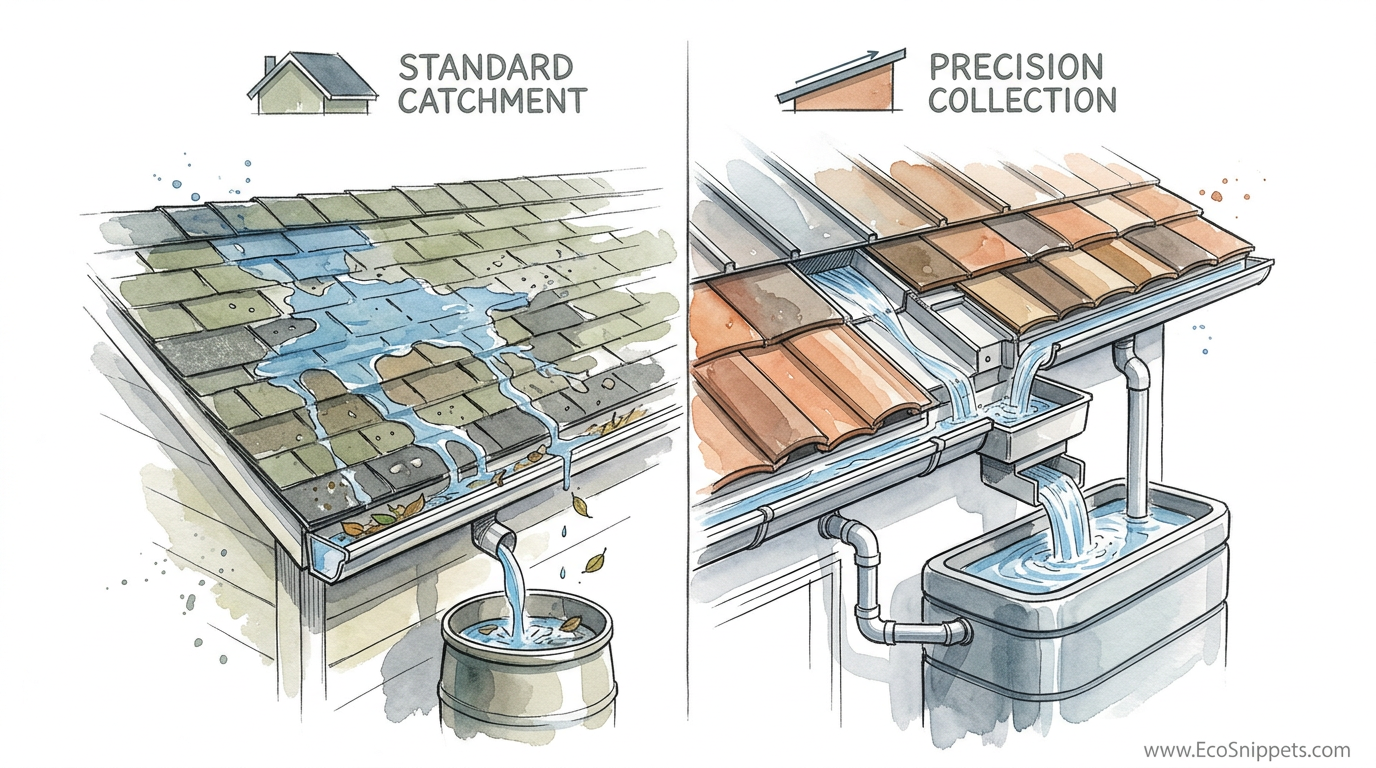
Understanding the chemistry of your roof is not just a technicality; it is a survival skill. When the rain hits a hot, weathered asphalt roof, it doesn’t just run off; it picks up a cocktail of polycyclic aromatic hydrocarbons (PAHs), heavy metals like lead and arsenic, and fine sediment from the shingle granules. Transitioning from a standard catchment mentality to a precision collection strategy ensures that the water you store is an asset, not a liability.
Rainwater Harvesting Roof Materials Compared
Choosing the right roofing material is the foundation of any serious water security plan. Not every surface is created equal, and some are downright dangerous for human consumption. In the world of rainwater harvesting, we categorize roofs by their toxicity, runoff efficiency, and how much maintenance they demand from the homesteader.
Metal roofing stands as the gold standard for anyone seeking potable water. Specifically, standing seam metal or Galvalume roofs provide a smooth, non-porous surface that discourages the growth of moss and algae. Because they lack the rough textures of shingles, they don’t trap bird droppings or windblown dust, allowing the first few minutes of rain to wash the surface clean with minimal effort.
Asphalt shingles, while common, are the most problematic. These are essentially mats of fiberglass or organic felt saturated with bitumen (a heavy petroleum product). To provide color and UV protection, they are coated with ceramic granules that often contain zinc or copper to prevent moss growth. Over time, these chemicals leach into your barrels. While a first flush system can mitigate some of this, asphalt remains a “dirty” source that requires significant post-collection filtration.
Slate and clay tiles offer a more natural alternative, echoing the ancestral wisdom of European and Mediterranean cistern systems. These materials are inert and don’t leach chemicals. However, they are porous. They tend to soak up the first bit of rain, reducing your overall yield, and their rough edges can harbor biofilms and debris. If you use these, you must be more diligent about cleaning the roof surface annually to prevent bacterial buildup.
How the First Flush System Works
The “First Flush” is the most critical component of a precision collection system. It is a simple, gravity-fed mechanism designed to divert the initial volume of water—the most contaminated portion—away from your storage tanks. Think of it as the “wash cycle” for your roof.
When a rain event begins, the water hitting the roof picks up bird droppings, dust, pollen, and chemical residues. This “first flush” enters the downspout and is directed into a vertical pipe called the diverter chamber. As the chamber fills, a ball or float rises with the water level. Once the chamber is full, the ball seats against a seal, blocking the entry and forcing all subsequent (and cleaner) rainwater to flow into your main tank.
Calculations for sizing this system are vital for success. A common rule of thumb is to divert at least 10 gallons of water for every 1,000 square feet of roof area. In areas with high pollution or many overhanging trees, this volume should be doubled. If your diverter is too small, you are letting toxic “wash water” into your drinking supply. If it is too large, you are wasting precious gallons of clean water during short rain showers.
Benefits of Precision Rainwater Collection
Mastering this system provides a level of independence that municipal water can never offer. By focusing on precision collection rather than just catching whatever falls, you reduce the strain on your filtration equipment. Clean water in the tank means fewer filter changes and less chemical treatment, which saves money and labor in the long run.
Precision collection also ensures the longevity of your storage infrastructure. Heavy sediment from asphalt shingles can settle at the bottom of a cistern, creating a “sludge layer” where anaerobic bacteria thrive. By using a first flush diverter, you keep that sediment out, maintaining a healthier environment inside the tank and preventing pump clogs.
There is a psychological benefit to knowing your water is pure. When the grid fails and the taps go dry, the man with a tank full of petroleum-laced water is still in a crisis. The homesteader with a metal roof and a fine-tuned first flush system has a sustainable, life-giving resource that requires only minimal final disinfection.
Challenges and Common Mistakes
One of the most frequent errors is neglecting the “trickle valve” at the bottom of the first flush diverter. This small valve is designed to slowly leak the dirty water out after the rain stops, resetting the system for the next storm. If this valve becomes clogged with a leaf or twig, the chamber stays full of dirty water, and the next rain event will send contaminated runoff directly into your clean tank.
Another pitfall is using the wrong gutter materials. Lead-based flashings or copper gutters can contaminate even the cleanest metal roof runoff. Rainwater is naturally slightly acidic, and it will aggressively leach metals from these components. Always use high-quality aluminum or PVC gutters and ensure all sealants used are rated for potable water contact.
Ignoring the “dry period” between rains is also a mistake. The longer the roof sits dry, the more dust and pollutants accumulate. A system that works perfectly after a two-day dry spell might fail to clean the roof after a month of drought. Serious practitioners adjust their diverter capacity or manually flush the roof during the first big storm after a long dry spell.
Limitations of Rainwater Harvesting
Rainwater harvesting is not a “set it and forget it” solution. It requires an active relationship with your environment. If you live in a high-traffic urban area or near industrial sites, atmospheric deposition may contaminate the rain before it even hits your roof. In these cases, even the best first flush system cannot remove dissolved chemicals like nitrogen oxides or sulfur dioxide.
Climate is another boundary. In regions with prolonged freezing temperatures, external first flush pipes can burst if they don’t drain properly. You must design your system to be “winterized,” which often means bypassing the collection system during the coldest months or installing heat tape—though the latter introduces a dependency on electricity that many self-reliant folks try to avoid.
Finally, there is the reality of storage. A single inch of rain on a 2,000-square-foot roof yields over 1,200 gallons of water. Most beginners vastly underestimate how much storage they need. Without adequate tank capacity, you will find yourself watching thousands of gallons of clean water overflow onto the ground while your garden parches a month later.
Standard Catchment vs Precision Collection
Understanding the difference between these two approaches is the hallmark of a true practitioner. Standard catchment is what you see in suburban backyards: a plastic barrel with a screen on top. It is better than nothing for watering flowers, but it is wholly inadequate for a household’s needs.
| Feature | Standard Catchment | Precision Collection |
|---|---|---|
| Roof Material | Any (usually Asphalt) | Inert (Metal, Slate, Tile) |
| Water Quality | Non-potable / Irrigation only | Potable (with minimal treatment) |
| System Maintenance | Low (Emptying barrels) | Moderate (Cleaning diverters) |
| Filtration Needs | High (Chemicals & Sediment) | Low (Polishing & UV) |
Precision collection requires more upfront investment and engineering, but it pays dividends in water security. By choosing the right surface and installing a properly sized first flush, you are effectively pre-treating your water before it ever touches a filter.
Practical Tips for a Clean Harvest
Start with the gutters. Install “leaf eaters” or rain heads at the top of your downspouts. These are angled screens that shed large debris like leaves and twigs before they even enter the first flush pipe. Keeping the big stuff out prevents the diverter’s trickle valve from clogging and ensures the system operates smoothly.
Regularly inspect your roof for “dead spots” where water might pool. Stagnant water on a roof is a breeding ground for bacteria and mosquitoes. If you have a flat roof, you must be even more vigilant about ensuring the pitch is sufficient for a total, rapid runoff.
Always use food-grade components. If you are using plastic tanks, look for the NSF/ANSI 61 certification. This ensures the plastic won’t leach bisphenol A (BPA) or other endocrine disruptors into your drinking supply over time. Your ancestors used stone and cedar; in the modern age, high-density polyethylene (HDPE) is our best equivalent, provided it is UV-stabilized and opaque to prevent algae growth.
Advanced Considerations for Potable Systems
For those looking to go beyond basic collection, consider the “Charged System” vs. the “Dry System.” A dry system ensures that all pipes drain completely between rains. A charged system (or wet system) keeps the pipes full of water, which allows you to place your tanks further away from the house. However, charged systems require much more careful management to prevent stagnant water and freezing.
Adding a “calmed inlet” to your tank is another advanced technique. Instead of the water splashing down from the top and stirring up any sediment at the bottom, a calmed inlet directs the water to the bottom of the tank and releases it upward. This keeps the water oxygenated and ensures the “bio-film” at the bottom remains undisturbed.
Finally, think about multi-stage filtration. Even with a perfect first flush, you should run your drinking water through a 5-micron sediment filter followed by a 0.5-micron carbon block. For the ultimate peace of mind, a UV sterilization light at the point of use will neutralize any remaining bacteria or viruses that might have slipped through the system.
Example: Calculating Your First Flush Volume
Let’s look at a practical scenario. Suppose you have a homestead with a 1,500-square-foot metal roof. You live in a moderately wooded area with significant bird activity. To ensure clean water, you decide to divert 0.05 gallons per square foot.
The calculation is simple: 1,500 sq ft x 0.05 gallons = 75 gallons. This means your first flush diverter needs to hold 75 gallons of water before the ball seats and sends water to your cistern. Using 4-inch PVC pipe, which holds about 0.66 gallons per foot, you would need over 100 feet of pipe.
Because 100 feet of pipe is impractical for a single downspout, you would either use a larger 12-inch diameter pipe for the chamber (holding about 5.8 gallons per foot) or split the collection across multiple downspouts. A 12-inch pipe would only need to be about 13 feet long to handle the same 75-gallon diversion.
Final Thoughts
Mastering rainwater harvesting is a journey of returning to our roots while navigating the complexities of the modern world. It is about more than just a barrel; it is about understanding the synergy between the sky, your shelter, and your survival. By respecting the chemistry of your roofing materials and the physics of the first flush, you transform a common utility into a reliable lifeline.
Don’t be discouraged by the technical requirements. Start small, observe how the water moves off your roof, and gradually refine your system. The goal isn’t just to collect water—it is to collect water that has the integrity to sustain your family for generations.
Whether you are retrofitting an old farmhouse or building a new off-grid cabin, prioritize the collection surface. Invest in metal, insist on a first flush, and maintain your system with the same grit and diligence our ancestors applied to their wells. Pure water is the foundation of the home, and it starts right over your head.
