How To Become More Self-Sufficient Without Starting a Full-Blown Farm…
Want to start preserving your harvest, making your own soap, or building a backyard root cellar — but not sure where to begin? “Homesteading Advice” gives you instant lifetime access to 35+ practical homesteading books on food preservation, veggie gardening, DIY natural cleaning products (save over $250 per year with this skill alone), brewing, off-grid energy, and a whole lot more…
Click Here To Check It Out Now!
You spend hundreds of dollars trying to aerate your soil while killing the very plant designed to do it for free. Dandelions aren’t a sign of a bad lawn; they are nature’s response to compacted soil. Their deep taproots act as biological drills, breaking up hardpan and bringing minerals to the surface. Stop spraying and start observing.
Modern lawn culture has taught us to view the bright yellow bloom of a dandelion as a personal failure in stewardship. We reach for the sprayer before we even consider why the plant is there in the first place. This reactionary approach ignores the ancestral wisdom that viewed every “weed” as a messenger from the earth itself.
In the old days, a farmer knew that if certain plants took over a patch of ground, the soil was trying to heal itself. Dandelions are the heavy-duty mechanics of the plant world. They show up when the ground is too hard, too tight, and too depleted to support delicate grasses.
Instead of fighting nature’s repair crew, it is time we learned to work with them. By understanding the dandelion’s role as a biological tool, you can save money, reduce chemical use, and build a soil profile that is resilient enough to thrive without constant intervention.
Using Dandelions To Fix Compacted Soil
Dandelions (Taraxacum officinale) are much more than just a stubborn weed with a puffball head. In the world of regenerative land management, they are classified as pioneer plants. These are the hardy species that colonize disturbed or degraded ground to prepare it for more complex life.
When we talk about compacted soil, we are describing a state where the particles of earth are pressed together so tightly that air and water cannot move through them. This “hardpan” layer often occurs in suburban lawns due to heavy foot traffic, construction machinery, or the repetitive weight of lawnmowers. Most lawn grasses have shallow root systems that simply cannot penetrate this barrier.
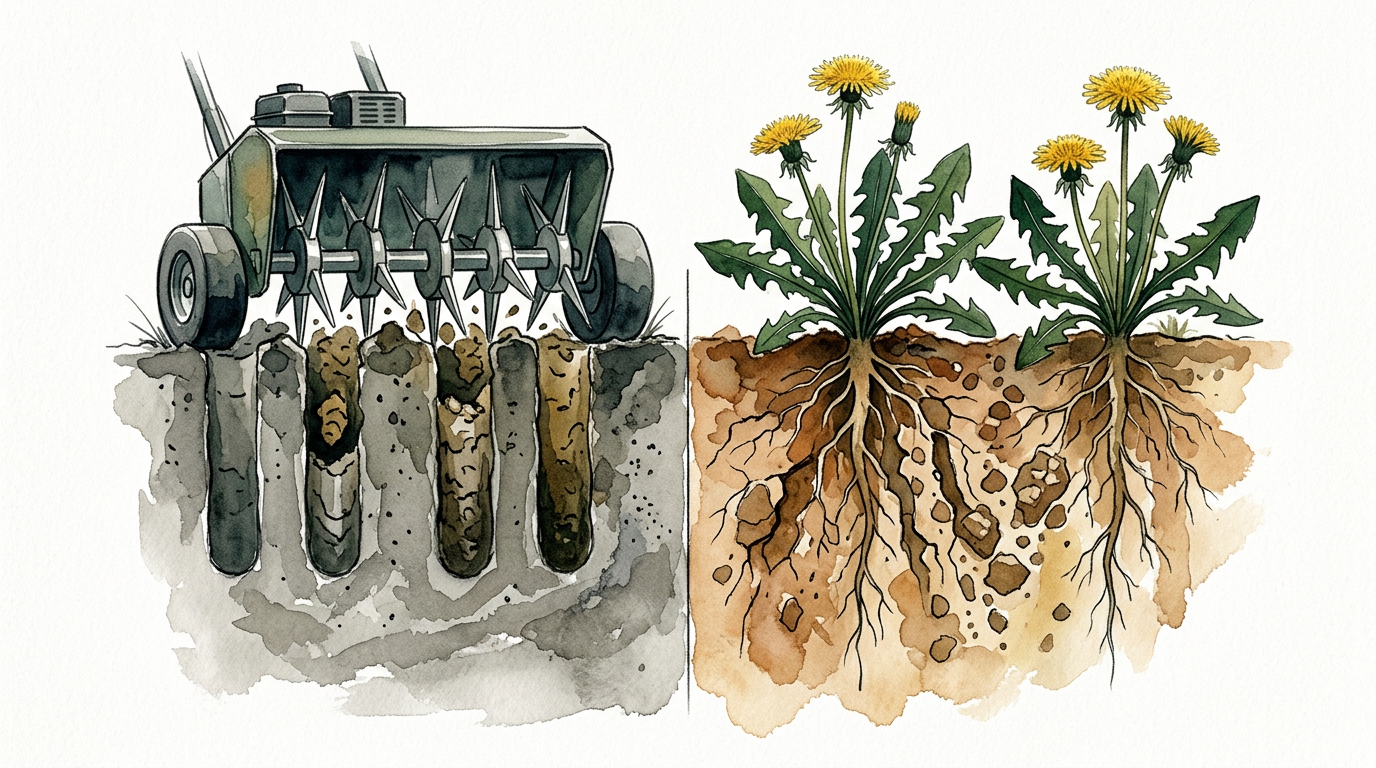
Dandelions are built differently. They possess a singular, powerful taproot that can pierce through clay and hardpan like a hot needle through wax. While your Kentucky Bluegrass might struggle to reach four inches deep, a mature dandelion root can easily descend 6 to 18 inches, and in extreme cases, they have been known to reach depths of 10 to 15 feet.
This deep-diving capability allows the dandelion to serve as a natural tiller. As the root grows, it physically pushes soil particles apart, creating microscopic fissures and macroscopic channels. When the plant eventually dies, these channels remain behind, providing ready-made highways for water to infiltrate the subsoil and for oxygen to reach the aerobic microbes that keep the earth alive.
How the Biological Drill Works
The process of “bio-drilling” is a slow-motion engineering feat that occurs right beneath your boots. It starts when a dandelion seed finds a crack in the compacted surface. Because these plants thrive in high-nitrogen, low-calcium environments—conditions common in compacted lawns—they have a competitive advantage over most grasses.
As the taproot extends downward, it performs several critical functions. First, it exerts physical pressure against the compacted earth. This is a form of mechanical force that no liquid “aerator” can truly replicate. The root is a living, hydraulic system that expands and lengthens with incredible power.
Second, the dandelion acts as a nutrient elevator. Deep in the subsoil, minerals like calcium, potassium, phosphorus, and iron are often locked away, inaccessible to the shallow roots of your grass. The dandelion’s taproot absorbs these minerals and pulls them up into its leaves.
When the dandelion leaves die and decompose—or when you mulch them back into the lawn with your mower—those deep-earth minerals are deposited right on the surface. This is nature’s way of top-dressing your lawn with high-quality fertilizer for free. Over time, this mineral recycling changes the chemistry of the topsoil, making it less hospitable to dandelions and more welcoming to lush, thick grass.
Benefits of the Dandelion Approach
Choosing to let dandelions work their magic offers measurable advantages over the traditional “spray and pray” method. The most immediate benefit is the restoration of the soil’s water-holding capacity. Compacted soil is notorious for runoff; water hits the surface and slides away because it has nowhere to go. Dandelion channels act as sponges, drawing that water down where it can be stored for the dry months.
Another advantage is the boost to soil microbiology. A compacted lawn is often a sterile lawn. Without air, the beneficial fungi and bacteria that process nutrients cannot survive. The “drill” action of the dandelion root reintroduces oxygen (aeration), which jumpstarts the soil food web.
Consider the following benefits:
- Cost Savings: You eliminate the need for expensive mechanical aeration rentals or professional services that often cost hundreds of dollars annually.
- Pollinator Support: Dandelions are one of the first reliable food sources for bees in the early spring. A healthy bee population ensures the rest of your garden remains productive.
- Free Mineral Uplift: The plant brings up calcium and potassium from the subsoil, which helps balance soil pH naturally over several seasons.
- Reduced Chemical Exposure: By stopping the use of broadleaf herbicides, you protect your family, pets, and the local groundwater from toxic runoff.
This approach is about playing the long game. It recognizes that the “weed” is not the problem, but rather the symptom. Addressing the compaction with the tool nature provided is the most sustainable way to build a truly healthy landscape.
Challenges and Common Mistakes
The biggest challenge in using dandelions as a soil-building tool is not biological, but social. We have been conditioned for decades to believe that a single yellow flower is a sign of neglect. Overcoming the urge to “clean up” the lawn is the first hurdle.
A common mistake is letting the dandelions take over completely without any management. If you have a severely compacted lawn, you might see a carpet of yellow. While this is the soil trying to heal, an overabundance of dandelions can eventually crowd out the grass you actually want. The goal is a “species-rich” lawn, not a monoculture of weeds.
Another error is pulling the dandelions by hand too early. If you rip the plant out before it has had time to penetrate the hardpan, you lose the “drill” effect. Furthermore, if you leave even an inch of the root behind, the plant will simply grow back—often with two or three heads instead of one. If you must remove them, wait until the soil is healthy enough that they can be pulled easily with the entire root intact.
Many people also make the mistake of mowing too low. Low mowing scalps the grass, exposing the bare, compacted soil to even more sun and wind. This creates the perfect environment for more dandelion seeds to germinate. Keeping your mower height at three inches or higher provides shade that keeps the soil cool and makes it harder for new dandelion seeds to take hold.
Limitations: When This May Not Be Ideal
While dandelions are incredible tools, they are not a universal panacea for every lawn problem. In cases of extreme, “concrete-like” compaction—such as a path where trucks have been driving—even a dandelion may struggle to establish itself quickly enough to make a difference in a single season.
There are also aesthetic and functional boundaries. If you have a fine-turf putting green or a high-performance sports field, the uneven rosettes of dandelions can create a tripping hazard or interfere with the ball’s roll. In these highly specialized environments, mechanical aeration remains the standard for a reason.
Environmental constraints also play a role. Dandelions prefer moist, slightly acidic soil. In extremely alkaline or bone-dry desert environments, they may not grow vigorously enough to act as effective bio-drills. In such cases, other deep-rooted “cover crops” or mechanical intervention might be necessary to break the initial cycle of compaction.
Finally, if you live in an area with strict Homeowners Association (HOA) rules, the “pioneer-grit” approach to lawn care might land you in legal trouble. In those situations, you have to be more strategic—perhaps allowing dandelions to work in the backyard while using more traditional methods in the front.
MECHANICAL PLUGGER vs DANDELION BIO-DRILL
It is helpful to look at how these two “tools” stack up against each other in terms of long-term soil health and practical application.
| Feature | Mechanical Plugger | Dandelion Bio-Drill |
|---|---|---|
| Depth | Typically 2-3 inches. | 6-18 inches (can reach 10+ feet). |
| Cost | $60-$150 per rental/service. | Free. |
| Mineral Cycling | None; only moves existing soil. | Active uplift of subsoil minerals. |
| Longevity | Temporary; holes fill in quickly. | Permanent improvement of soil structure. |
| Effort | High (hauling heavy machinery). | Zero (passive observation). |
While a mechanical aerator provides instant gratification by pulling visible plugs, it often fails to address the underlying cause of the compaction. The dandelion bio-drill is slower, but it works at a much deeper level and actually improves the fertility of the soil as it goes.
Practical Tips for Managing Your Biological Drills
If you decide to let dandelions do the heavy lifting, you need a management strategy to keep the neighbors happy and the lawn functional. You are not letting the lawn “go to seed” in a chaotic way; you are directing a biological process.
One of the most effective techniques is deadheading. When the yellow flower begins to shrivel but before it turns into a white puffball of seeds, simply snip the head off. This allows the root to continue its work of drilling and mineral accumulation without launching 20,000 new seeds into the neighborhood.
Set your mower to its highest setting. This is a critical best practice for any natural lawn. Tall grass shades out new weed seedlings and encourages the grass roots to grow deeper, following the paths created by the dandelions. As the grass roots grow stronger, they will naturally begin to occupy the space the dandelions have cleared.
Consider “targeted removal” once the soil begins to feel softer. After a few seasons, you will notice that dandelions are easier to pull. This is the sign that they have finished their job. Use a long-handled weeding tool to pull the entire root in the spring when the soil is moist. The hole left behind is a perfect “bio-pore” that you can fill with a pinch of compost and grass seed.
Advanced Considerations for the Serious Practitioner
For those who want to take soil restoration further, dandelions can be used as a primary indicator species. If you see dandelions thriving while your grass is yellowing, it is a signal of low calcium and high compaction. Instead of just letting the dandelions grow, you can support their mission by adding a light dusting of gypsum or garden lime.
Gypsum works chemically to loosen clay soils, acting in tandem with the physical “drilling” of the dandelion roots. This combination can accelerate soil restoration by years. Furthermore, pay attention to the health of the dandelions themselves. Stunted, pale dandelions often indicate a complete lack of organic matter, suggesting that you should top-dress the area with a thin layer of finished compost.
Scaling this concept to larger properties involves “rotational mowing.” Allow one section of the property to bloom and work the soil, while keeping others more manicured. This creates a mosaic of soil-building zones. Over a five-year cycle, you can rotate these zones, ensuring that the entire property benefits from deep-root aeration without ever looking completely unmanaged.
Remember that dandelions also exhale ethylene gas, which can help nearby plants mature and ripen. If you have a fruit orchard or a vegetable patch nearby, having a “biological buffer” of dandelions can actually improve the yields of your food crops by stimulating growth and attracting pollinators early in the season.
Examples of Soil Restoration in Practice
Imagine a new-build home where the backyard was graded by heavy bulldozers. The soil is a grey, lifeless slab of clay. The homeowner tries to plant expensive sod, but it withers within two months because the roots cannot penetrate the surface.
In year one, the homeowner stops spraying and allows the “weeds” to move in. Dandelions and thistles—the two kings of deep-taproot drilling—become the dominant species. Instead of fighting them, the homeowner mows them high and prevents them from going to seed by deadheading the white puffballs.
By year three, the soil has changed. The repetitive growth and decay of those deep roots have introduced organic carbon eighteen inches into the ground. Earthworms, following the channels created by the dandelions, have moved back into the yard. The “concrete” clay has turned into a darker, crumbly loam.
In year four, the homeowner overseeds with a hardy fescue. Because the soil is now porous and mineral-rich, the grass roots dive deep, following the old dandelion paths. The dandelions, now facing stiff competition from healthy grass and balanced soil chemistry, begin to thin out naturally. The “problem” solved itself through biological succession.
Final Thoughts
Nature does not make mistakes; it only provides solutions that we sometimes fail to recognize. The dandelion is not a broadleaf enemy to be eradicated with chemical warfare. It is a highly specialized tool designed to repair the very damage we do to our land through heavy traffic and neglect.
By shifting your perspective from “weed control” to “soil stewardship,” you can harness the power of the dandelion bio-drill. This path requires a bit of grit and the patience to look past a few yellow flowers, but the reward is a lawn that is deeper, stronger, and more self-sustaining than anything a mechanical plugger could ever produce.
Start small. Choose a compacted corner of your property and put the sprayer away. Watch how the dandelions move in, how they drill deep, and how they eventually give way to the very grass you’ve been trying to grow all along. Trust the wisdom of the earth; it has been aerating itself long before we invented the first machine.
