How To Become More Self-Sufficient Without Starting a Full-Blown Farm…
Want to start preserving your harvest, making your own soap, or building a backyard root cellar — but not sure where to begin? “Homesteading Advice” gives you instant lifetime access to 35+ practical homesteading books on food preservation, veggie gardening, DIY natural cleaning products (save over $250 per year with this skill alone), brewing, off-grid energy, and a whole lot more…
Click Here To Check It Out Now!
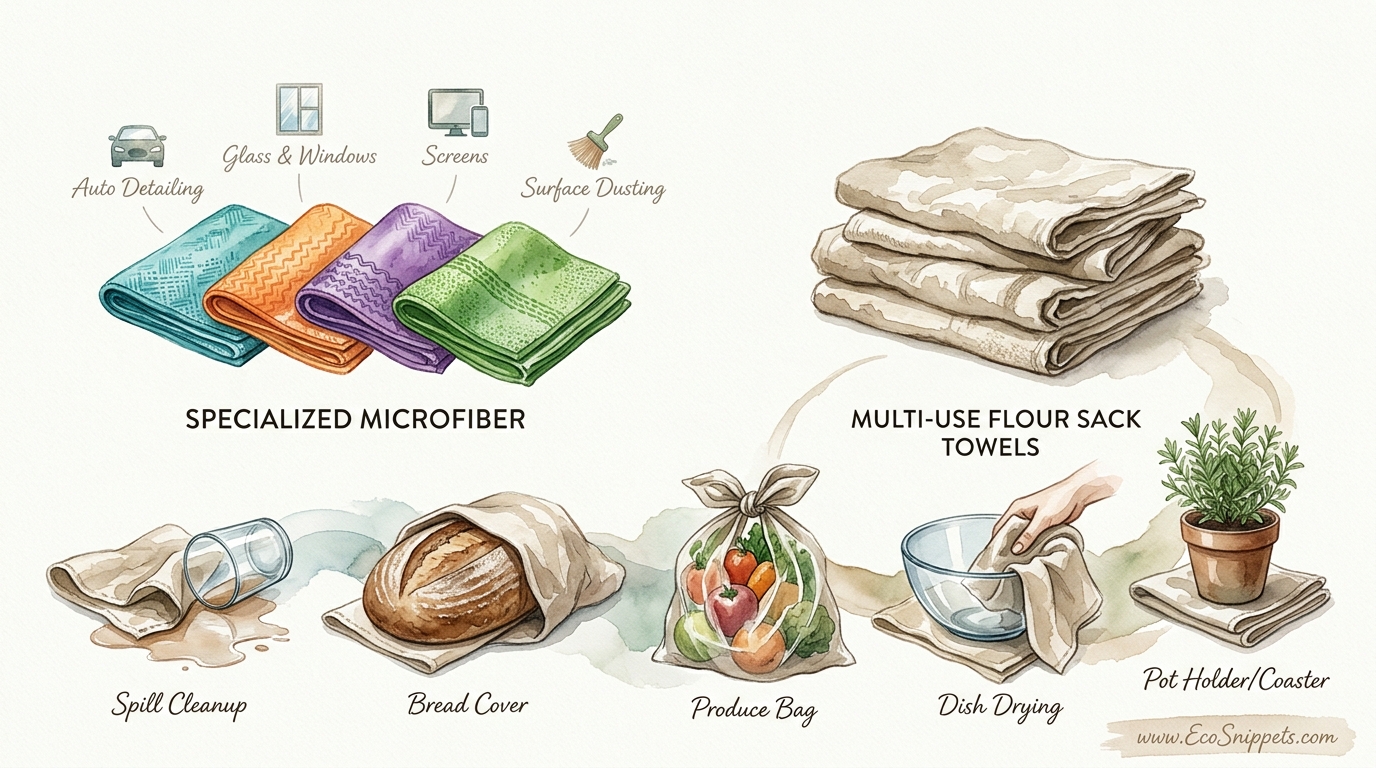
Is your cleaning closet full of plastic fibers that only do one job? We’ve been sold a lie that we need a different synthetic cloth for every surface. The truth? A simple, organic cotton flour sack towel can strain cheese, wrap your sourdough, dry your dishes, and polish your windows without shedding a single microplastic into the water supply. It’s time to simplify.
Modern marketing has convinced most homeowners that cleaning is a high-tech endeavor requiring specialized polymers and chemical-infused wipes. This complexity doesn’t just clutter your cabinets; it detaches you from the self-reliant wisdom that kept households running for generations. A century ago, nothing was wasted, and a single piece of quality fabric was expected to perform a dozen different duties. Reclaiming the flour sack towel is more than a “green” choice; it is a return to an honest, multi-use tool that respects both your labor and the land.
Why Flour Sack Towels Are The Ultimate Zero-waste Tool
Flour sack towels are not actually sacks, though their name carries the weight of a resourceful history. In the 19th and early 20th centuries, staples like flour, sugar, and salt were distributed in large, tightly woven cotton bags. When the bags were empty, mothers and grandmothers didn’t toss them into a bin. They bleached them, hemmed them, and turned them into everything from undergarments and children’s dresses to the legendary kitchen towels we recognize today.
This fabric exists because it had to be strong enough to hold fifty pounds of grain yet soft enough to eventually be worn against a child’s skin. It is 100% natural cotton, woven in a flat, thin style that lacks the loops of a standard terry cloth towel. Because there are no loops, there is no lint. This single characteristic makes it a superior tool for both the kitchen and the cleaning kit.
In a world drowning in “single-use” solutions, the flour sack towel is the antithesis of the throwaway culture. It is biodegradable, highly absorbent, and matures with age. While a synthetic sponge or a microfiber cloth begins to degrade and smell after a few weeks, a cotton flour sack towel only gets softer and more effective the more you wash it. It is a tool built for the long haul, designed by necessity during times when people had plenty of grit but very little money.
How the Flour Sack Towel Outperforms Modern Alternatives
Understanding why this simple cloth works so well requires looking at the science of the weave. Most modern kitchen towels are made of terry cloth, which features thousands of tiny loops designed to trap large amounts of water. While great for soaking up a spill, those loops are notorious for snagging and leaving behind “fuzz” or lint on glassware.
The flour sack towel uses a tight, flat weave. This creates a high surface area of cotton fibers that sit flush against the surface you are cleaning. Instead of pushing water around, the cotton acts like a series of microscopic straws, drawing moisture into the core of the fiber through capillary action. Because the fabric is thin, it also dries remarkably fast. This quick-drying nature is a critical defense against the musty smell often associated with thicker, damp towels that harbor bacteria in their dense layers.
Using these towels in the kitchen provides a level of precision that thicker cloths cannot match. When you wrap a warm loaf of bread, the breathable cotton allows steam to escape just enough to keep the crust from getting soggy, while still retaining the heat. When you use it to strain yogurt or nut milk, the weave is fine enough to catch the smallest solids while allowing the liquid to pass through cleanly. It is the original multi-tasker, doing the work of a paper towel, a cheesecloth, and a polishing rag all at once.
The Culinary Workhorse: From Sourdough to Straining
Every serious baker knows that the enemy of a good rise is a draft or a sticky towel. Flour sack towels are the gold standard for sourdough and yeast breads because they are naturally lint-free. When you dust a towel with a little flour and lay it over your proofing basket, you don’t have to worry about picking tiny fibers out of your dough later. The thinness of the fabric also makes it easier to tuck around a bowl, creating a snug environment for fermentation.
Beyond baking, these towels are essential for the traditional pantry. If you are making homemade labneh or straining fruit for jelly, a flour sack towel is far more durable than the flimsy cheesecloth sold in modern grocery stores. It can be boiled to sanitize it and reused hundreds of times.
- Sourdough Proofing: Use a dry towel to cover rising dough or line a banneton to prevent sticking.
- Cheese Making: Use a sanitized towel to strain curds from whey for fresh ricotta or goat cheese.
- Vegetable Preservation: Wrap washed greens in a dry flour sack towel before placing them in the crisper drawer to keep them crisp for days.
- Nut Milk Straining: Squeeze every drop of almond or oat milk through the fine weave without the fabric tearing under pressure.
The Cleaning Powerhouse: Glass, Silver, and Dust
The “specialized microfiber” industry wants you to believe that you need one cloth for your mirrors, another for your stainless steel, and a third for your dusting. This is marketing fluff designed to keep you buying plastic. A clean, dry flour sack towel is arguably the best tool ever created for cleaning glass. Because it is lint-free and highly absorbent, it leaves windows and mirrors with a streak-free finish that synthetic cloths struggle to replicate.
When it comes to polishing, the softness of aged cotton is unparalleled. It is gentle enough for heirloom silver and delicate enough for the screens of modern electronics. In the pioneer days, these towels were used to “detail” the best china before a Sunday meal; today, they can bring a mirror-like shine to your kitchen faucet or your car’s dashboard.
Dusting with a flour sack towel is equally efficient. A slightly damp towel will trap dust particles within the cotton fibers rather than simply moving them into the air. Once the job is done, you don’t throw the dust away with a disposable wipe; you simply toss the towel in the wash, and it is ready for the next round of honest labor.
Benefits of Choosing Organic Cotton Over Synthetic Microfiber
The practical benefits of flour sack towels are clear, but the environmental advantages are what truly set them apart in the modern age. Most cleaning cloths today are made of microfiber, which is a blend of polyester and polyamide—essentially plastic. Every time you wash a microfiber cloth, thousands of microscopic plastic shards break off and enter the wastewater. These microplastics are too small to be filtered out and eventually end up in our rivers, oceans, and even our own drinking water.
Choosing 100% organic cotton eliminates this cycle of pollution. Cotton is a plant-based fiber that will eventually biodegrade. If a flour sack towel finally reaches the end of its life after years of service, it can be composted or used as a rag for the grimiest garage tasks before being returned to the earth.
| Feature | Flour Sack Towel (Cotton) | Specialized Microfiber (Synthetic) |
|---|---|---|
| Material | 100% Natural Fiber | Plastic-based Polymers |
| Lint Level | Zero (Flat Weave) | Varies (Can shed fibers) |
| Microplastics | None | High shedding per wash |
| Longevity | Years (Gets better with age) | Months (Degrades/Smells) |
| Biodegradable | Yes | No |
| Chemical Safety | Food-safe and Natural | Chemical processing required |
Challenges and Common Mistakes
Transitioning to flour sack towels requires a small shift in how you handle your laundry. The most common mistake people make is treating them like their bathroom towels. If you use commercial fabric softeners or dryer sheets, you will effectively ruin the towel’s primary superpower: absorbency. Fabric softeners work by coating fibers in a thin layer of wax or oil to make them feel “soft,” but this coating prevents the cotton from soaking up water.
Another pitfall is using too much detergent. Because flour sack towels are thin and have a tight weave, they can hold onto soap residue if not rinsed thoroughly. This residue can lead to streaks on glass or a stiff texture when dry. Always aim for a thorough rinse, and consider using a traditional acid like vinegar to strip away any buildup.
New towels also come with a factory “sizing”—a starch-like substance used during the weaving process to keep the threads stiff. If you try to use a brand-new flour sack towel straight out of the package, it will feel non-absorbent and “slick.” You must wash them at least once, preferably twice, in hot water before they reach their full potential.
Limitations of the Flour Sack Towel
While I advocate for these towels as a near-universal tool, they are not magical. Because they are thin, they are not suitable as primary pot holders for high-heat oven use. While you can fold one several times to grab a warm lid, they do not offer the thermal protection of a heavy, quilted oven mitt. Attempting to pull a 500-degree cast iron Dutch oven out of the fire with a single layer of cotton will result in a burn.
Furthermore, they lack the abrasive “scrubbing” power of some synthetic sponges. If you have burnt-on carbon on the bottom of a skillet, a flour sack towel is the wrong tool for the initial degunking. Use a chainmail scrubber or a stiff brush for the heavy lifting, and save the towel for the final drying and polishing.
Practical Tips and Best Practices
Maintaining your collection of flour sack towels is an exercise in simple, effective household management. To keep them bright white without using harsh chlorine bleach—which can weaken the cotton fibers over time—rely on the sun. “Sun-bleaching” is an ancestral technique where wet towels are laid out on the grass or hung in direct sunlight. The UV rays naturally kill bacteria and lift stains without damaging the integrity of the fabric.
For deep cleaning and odor removal, a vinegar and baking soda soak is superior to any “heavy duty” detergent. Fill a basin with hot water, add half a cup of baking soda, and let the towels soak for an hour. Then, run them through a regular wash cycle and add a cup of white vinegar to the rinse cycle. This combination breaks down oils and mineral deposits, leaving the towels soft and “crunch-free” even if you line-dry them.
- Avoid Fabric Softener: Always skip the softener to maintain maximum absorbency.
- Vinegar Rinse: Use white vinegar in the rinse cycle to strip soap residue.
- Sun Dry: Whenever possible, let the sun do the whitening and sanitizing.
- Prep Wash: Always wash new towels twice in hot water before the first use.
- Separate Tasks: Keep a set of towels for culinary use (bread, cheese) and a separate set for cleaning (windows, dusting) to avoid cross-contamination.
Advanced Considerations for the Self-Reliant Home
For those who want to take their self-reliance a step further, look into the weight and “grade” of the cotton. Not all flour sack towels are created equal. High-quality towels are measured by their thread count or the “GSM” (grams per square meter). A higher thread count means a tighter weave, which translates to better straining for fine liquids and more durability over years of heavy washing.
If you are sourcing towels for a working homestead, prioritize organic cotton. Conventional cotton is one of the most chemically intensive crops in the world. Organic cotton ensures that no synthetic pesticides or fertilizers were used in the growing process, which is especially important if the fabric will be in direct contact with your sourdough starter or your family’s food.
You might also consider “un-bleached” or natural-colored flour sack towels. These haven’t undergone the chemical whitening process, making them even more environmentally friendly. They have a beautiful, rustic cream color that fits perfectly in a farmhouse kitchen and hides minor tea or coffee stains better than stark white.
Example Scenario: A Day in the Life of a Single Towel
To truly appreciate the versatility of this tool, consider how a single flour sack towel might be used throughout a day of honest work. In the morning, it is draped over a bowl of rising dough, keeping the temperature stable. Once the bread is in the oven, that same towel (after a quick shake) is used to dry the mixing bowls and floury countertops, leaving them spotless.
In the afternoon, the towel is dampened with a bit of diluted vinegar to wipe down the kitchen windows, catching the light of the setting sun without a single streak. Finally, in the evening, after a quick rinse and hang-dry, it is used to polish the heirloom silverware for a family dinner. One tool, four distinct jobs, and zero waste produced. This is the efficiency of a simplified life.
Final Thoughts
The transition back to flour sack towels is more than a change in your cleaning routine; it is a rejection of the idea that we need “more” to live well. By choosing a high-quality, 100% organic cotton cloth, you are opting for a tool that respects history, protects the water supply, and saves you money in the long run. It is a small but significant act of rebellion against a culture of disposability.
Start with a dozen towels. Wash them well, strip away the factory starches, and begin using them where you once reached for a paper towel or a microfiber cloth. You will quickly find that the “pioneer-grit” approach to household management is not about making things harder—it’s about making things better. Whether you are straining a fresh batch of yogurt or polishing a mirror to a high shine, you’ll be doing it with a tool that has stood the test of time.
Experiment with different uses. See how they perform in your garden for gathering herbs, or how they work as a sustainable gift wrap for a friend. The more you use them, the more you will realize that the simplest solutions are often the most profound. Reclaim your cabinets, simplify your chores, and let the humble flour sack towel prove its worth in your home.
