How To Become More Self-Sufficient Without Starting a Full-Blown Farm…
Want to start preserving your harvest, making your own soap, or building a backyard root cellar — but not sure where to begin? “Homesteading Advice” gives you instant lifetime access to 35+ practical homesteading books on food preservation, veggie gardening, DIY natural cleaning products (save over $250 per year with this skill alone), brewing, off-grid energy, and a whole lot more…
Click Here To Check It Out Now!
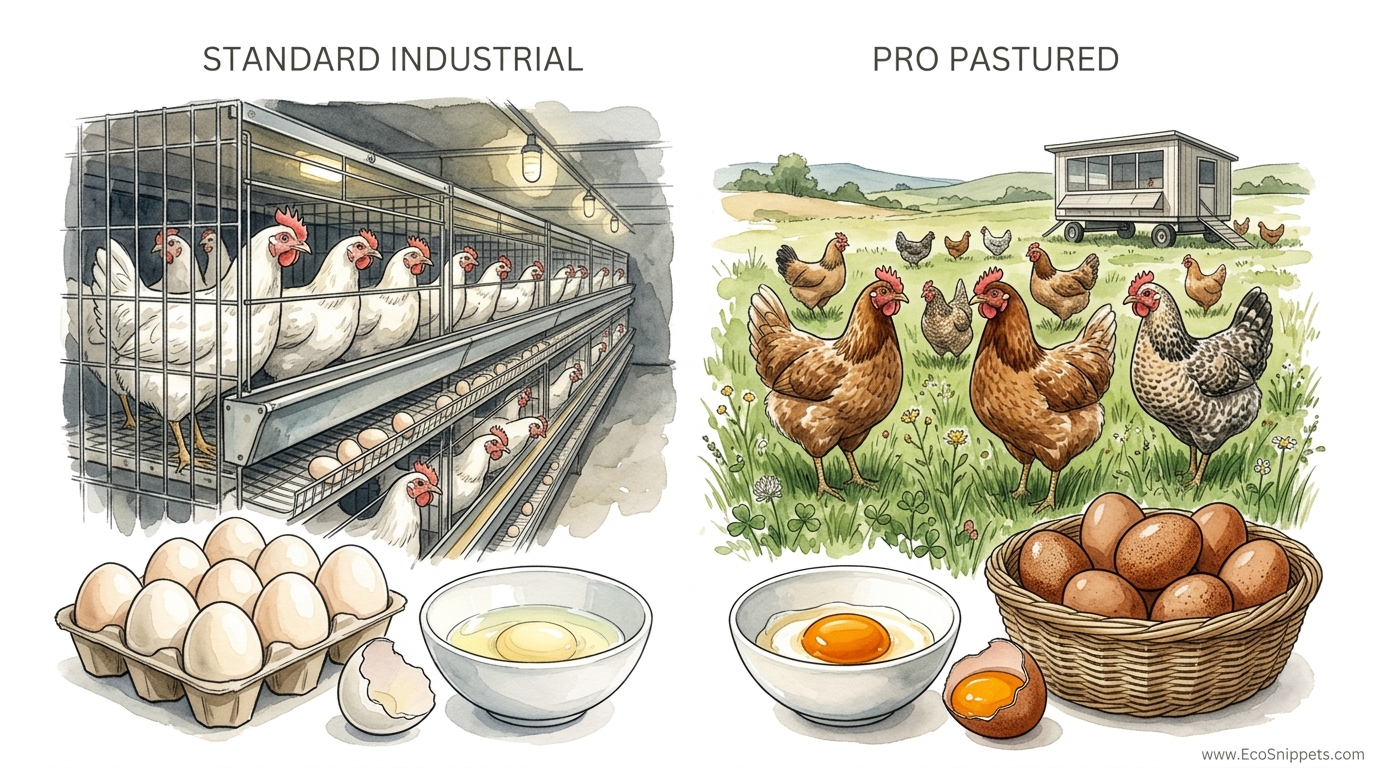
If your yolk is pale yellow, your chicken was a prisoner. If it’s deep orange, it was a predator. Guess which one has more Omega-3s?
Don’t let the ‘Organic’ label at the grocery store fool you. A ‘Standard’ egg comes from a bird that likely never saw a bug. A ‘Pro’ homesteader egg comes from a bird that foraged for grass and insects, packing that yolk with 4x more Vitamin D.
This isn’t just about color or taste. It is about a fundamental shift in how we understand our food systems. When a hen lives the life she was designed for—scratching through the dirt, chasing grasshoppers, and basking in the afternoon sun—she becomes a biological factory for high-density nutrients. The industrial machine has traded this vitality for volume, leaving us with “anemic” eggs that look and act nothing like the sustenance our ancestors relied upon.
Modern homesteaders are reclaiming this ancestral wisdom. They know that a bird is more than just a calorie-converter; it is a creature of the pasture. Understanding the gap between industrial production and pastured excellence is the first step toward self-reliance and true nutritional security.
Grocery Store Vs Pasture Raised Egg Nutrition
The difference between a standard industrial egg and a pro pastured egg is written in the biochemistry of the yolk itself. In a typical grocery store setting, a “Large Grade A” egg is the product of a highly controlled environment. These birds are fed a consistent, monoculture diet of corn and soy, often supplemented with synthetic vitamins because they never touch the earth.
Research from institutions like Pennsylvania State University and independent testing by Mother Earth News has pulled back the curtain on these two different worlds. The data shows that pastured eggs are not just slightly better; they are a different category of food entirely. On average, eggs from hens raised on high-quality pasture contain significantly higher levels of fat-soluble vitamins and essential fatty acids.
Specifically, pastured eggs have been found to contain 4 to 6 times more Vitamin D than their industrial counterparts. This is almost entirely due to the hen’s exposure to direct sunlight, which allows her body to synthesize the vitamin and pass it into the egg. Furthermore, these eggs boast up to 3 times more Vitamin E and 1.5 to 2 times more Vitamin A.
The fatty acid profile is where the “predator” vs “prisoner” analogy truly hits home. Industrial eggs often have a skewed ratio of Omega-6 to Omega-3 fatty acids, sometimes as high as 15:1. Pastured eggs, because the birds consume green forages and omega-rich insects, can bring that ratio down to a much healthier 1.5:1 or 2:1. This makes them a powerful tool for reducing systemic inflammation in the human body.
The Mechanics of Nutrient Accumulation: How It Works
Nutrient density in an egg is the direct result of “bio-accumulation.” A chicken is an omnivore with a high metabolic rate. Everything she consumes—from the chlorophyll in clover to the protein in a beetle—is processed and concentrated into the yolk to provide the best possible start for a potential chick.
Sunlight is the primary driver for Vitamin D3. Hens that roam outdoors act as biological solar panels. When UVB rays hit the hen’s skin and the oils on her feathers, her body produces Vitamin D, which is then sequestered into the fat of the yolk. Indoor birds, even those labeled “Cage-Free,” rarely get enough direct UVB to trigger this process effectively.
Foraging for “greens” provides the carotenoids. Plants like alfalfa, clover, and dandelion are rich in lutein, zeaxanthin, and beta-carotene. These aren’t just pigments; they are potent antioxidants. The hen’s digestive system breaks these down and deposits them in the yolk, creating that signature deep orange hue that indicates high antioxidant levels.
Insect predation provides the “clean” protein and complex fats. Bugs are the “superfood” of the poultry world. When a hen eats a grasshopper or an earthworm, she is getting a concentrated dose of minerals like selenium and zinc, along with long-chain fatty acids that grain simply cannot provide. This diverse diet is the engine behind the nutritional superiority of the pastured egg.
Benefits of Choosing Pasture-Raised Eggs
The most immediate benefit of a pastured egg is the anti-inflammatory profile. Most modern diets are overloaded with Omega-6 fatty acids, which can drive chronic inflammation. By switching to eggs with a high Omega-3 content, you are essentially “tuning” your body’s fat balance with every breakfast.
Heart health and vision support are also major advantages. The high levels of lutein and zeaxanthin found in pastured yolks are specifically linked to eye health and the prevention of macular degeneration. Because these nutrients are packaged with the egg’s natural fats, they are highly bioavailable, meaning your body absorbs them far more efficiently than it would from a synthetic supplement.
Vitamin D levels in pastured eggs can help bridge the gap during winter months. Since many people in northern climates suffer from Vitamin D deficiency, eating two or three pastured eggs a day can provide a significant portion of the recommended daily intake. This supports bone density, immune function, and even mood regulation.
Flavor and culinary performance are the “hidden” benefits. Professional chefs often prefer pastured eggs because the proteins in the whites are stronger and the yolks are creamier. They hold their shape better in a pan and provide a richer, more velvety texture in custards and sauces.
Challenges and Common Mistakes in Egg Selection
Label confusion is the biggest pitfall for the average consumer. The industrial egg industry uses terms like “Cage-Free” or “Free-Range” to imply a pastoral lifestyle that often doesn’t exist. “Cage-Free” birds are still confined to massive barns with thousands of other birds, never seeing the sun. “Free-Range” only requires “access” to the outdoors, which can be a tiny concrete porch the birds never actually use.
Relying solely on yolk color can be misleading. Some large-scale producers have learned that consumers want orange yolks, so they add marigold extract or synthetic dyes to the feed to “fake” the color. While marigold is natural, it doesn’t provide the full spectrum of nutrients that a truly foraging bird would get from diverse wild plants and insects.
Assuming “Organic” means “Pastured” is another frequent error. An organic egg comes from a hen fed organic grain, which is good because it avoids pesticides. However, an organic hen can still be raised in a high-density indoor environment. Nutrition-wise, an organic indoor egg is often closer to a standard egg than it is to a pastured one.
Storage and freshness also play a role. A “Standard” grocery store egg can be up to 45 days old by the time it reaches the shelf. A “Pro” homesteader egg is usually collected and consumed within a few days. As an egg ages, its internal membranes weaken and some nutrient degradation occurs, though the fat-soluble vitamins are relatively stable.
Limitations and Environmental Constraints
Seasonality is a reality of natural systems. Hens naturally slow down or stop laying during the winter as daylight hours decrease. A truly pastured operation follows the rhythm of the seasons. If you want eggs year-round from a pasture-based system, you have to accept that production will fluctuate, or the farmer must use supplemental lighting, which can impact the bird’s rest cycle.
Land requirements are a significant barrier. To maintain a truly “pastured” status, most certifications require at least 108 square feet per bird. This ensures the grass isn’t destroyed and the birds always have fresh forage. For many small-scale homesteaders or urban farmers, this amount of space simply isn’t available, necessitating more creative management like “chicken tractors” or rotational grazing.
Predation is a constant threat in a pasture-raised system. When birds are outside, they are vulnerable to hawks, foxes, and coyotes. Protecting a mobile flock requires more labor, better fencing, and often livestock guardian dogs. These added costs are reflected in the higher price point of pastured eggs.
Egg size and shell consistency can vary more in pastured flocks. Because the birds are eating a wild, variable diet, you won’t get the “cookie-cutter” uniformity found in industrial eggs. Some shells might be thicker, others thinner; some yolks might be slightly different shades of orange depending on which part of the field the hens were working that week.
Comparing Egg Varieties
To visualize the nutritional gap, consider how different labels compare across key metrics. The following table summarizes typical findings from various nutrient studies.
| Nutrient | Standard Industrial | Pro Pastured | Why It Matters |
|---|---|---|---|
| Vitamin D | Low (Indoor birds) | 4x – 6x Higher | Bone & Immune Health |
| Omega-3 | ~50mg per egg | 150mg – 300mg | Brain & Heart Function |
| Vitamin A | Standard | ~60% Higher | Vision & Skin |
| Vitamin E | Standard | 3x Higher | Antioxidant protection |
| Beta-Carotene | Standard | 7x Higher | Anti-inflammatory |
Practical Tips for Maximizing Egg Quality
If you are raising your own birds, focus on “diverse forage.” Don’t just give them a flat grass lawn. Plant “chicken gardens” with clover, alfalfa, kale, and sunflowers. The more variety the hen eats, the more complex the nutrient profile of the egg becomes.
Implement rotational grazing. If chickens stay in one spot too long, they will eat the grass down to the dirt and the area will become a “sacrifice lot” of mud and manure. Move their coop or “tractor” every few days to fresh ground. This ensures they always have access to new bugs and clean greens while preventing the buildup of parasites.
Supplement with Omega-rich “Pro” additions during the winter. When the pasture goes dormant, you can maintain egg quality by feeding your hens sprouted grains (fodder), fermented feed, or small amounts of flaxseed and kelp meal. Kelp is particularly effective at providing trace minerals that might be lacking in standard bagged feed.
Test your eggs at home with the “Height Test.” Crack a store-bought egg and a pastured egg onto a flat plate. A high-quality, fresh, pastured egg will have a yolk that stands tall and round, and the white (albumen) will be thick and cloudy, holding tight around the yolk. A lower-quality egg will “run” across the plate, with a flat yolk and watery whites.
Advanced Considerations for Serious Practitioners
Genetics play a significant role in foraging efficiency. Industrial “Leghorn” hybrids are bred for one thing: turning grain into eggs at maximum speed. They often don’t have the “instinct” to forage as well as heritage breeds. Breeds like the Rhode Island Red, Australorp, or Orpington are “thriftier” birds that know how to work a pasture and find their own food, often resulting in a more complex egg.
Soil health is the foundation of egg health. If your soil is depleted of minerals, the plants growing in it will be low in nutrients, the bugs eating those plants will be low in nutrients, and your eggs will reflect that. Using compost and avoiding chemical fertilizers on your pasture creates a “nutrient cycle” that ends up on your breakfast plate.
Monitor the Omega-6 to Omega-3 ratio in your supplemental feed. Many homesteaders inadvertently sabotage their “pastured” eggs by overfeeding cheap, soy-heavy scratch grains. Soy is extremely high in Omega-6. If you want to maximize the “Pro” qualities of your eggs, look for soy-free feed options or balance the grain with high-quality fish meal or alfalfa pellets.
Example Scenario: The Cost of a “Clean” Omelet
Consider a homesteader named Elias who raises 12 hens on a rotating pasture system. During the peak of spring, his hens are eating approximately 30% of their diet from the field—clover, worms, and beetles. He supplements with a local, non-GMO grain mix.
His neighbor, Sarah, buys the cheapest “Store Brand” eggs at the supermarket for $2.50 a dozen. Elias sells his extra eggs for $7.00 a dozen. At first glance, Sarah is saving money. However, a nutritional analysis would show that to get the same amount of Vitamin D and Omega-3s that Elias gets from two of his pastured eggs, Sarah would have to eat nearly eight of her store-bought eggs.
When you factor in the “nutrient per dollar” ratio, the pastured egg becomes the more efficient purchase. Furthermore, the long-term health benefits—reduced inflammation and better immune support—are “dividends” that Sarah’s cheaper eggs simply don’t pay. Elias is investing in his health, while Sarah is just buying calories.
Final Thoughts
The transition from a “Standard” consumer to a “Pro” pastured advocate is about more than just buying different eggs. It is a realization that food quality is an extension of the environment. A hen that lives as a predator on the pasture is a vessel for the sun’s energy and the earth’s minerals.
Switching to pastured eggs—whether by raising your own or supporting a local farmer—provides a measurable boost to your nutritional intake. You are choosing a food that is naturally high in Vitamin D, Vitamin A, and life-essential Omega-3s. It is a simple, daily act of self-reliance that rejects the hollowed-out nutrition of the industrial complex.
Take a look at your next breakfast. If that yolk is a pale, sickly yellow, remember that you are eating the product of a system that values volume over vitality. Seek out the deep orange. Trust the grit of the pasture. Your body will know the difference.
