How To Become More Self-Sufficient Without Starting a Full-Blown Farm…
Want to start preserving your harvest, making your own soap, or building a backyard root cellar — but not sure where to begin? “Homesteading Advice” gives you instant lifetime access to 35+ practical homesteading books on food preservation, veggie gardening, DIY natural cleaning products (save over $250 per year with this skill alone), brewing, off-grid energy, and a whole lot more…
Click Here To Check It Out Now!
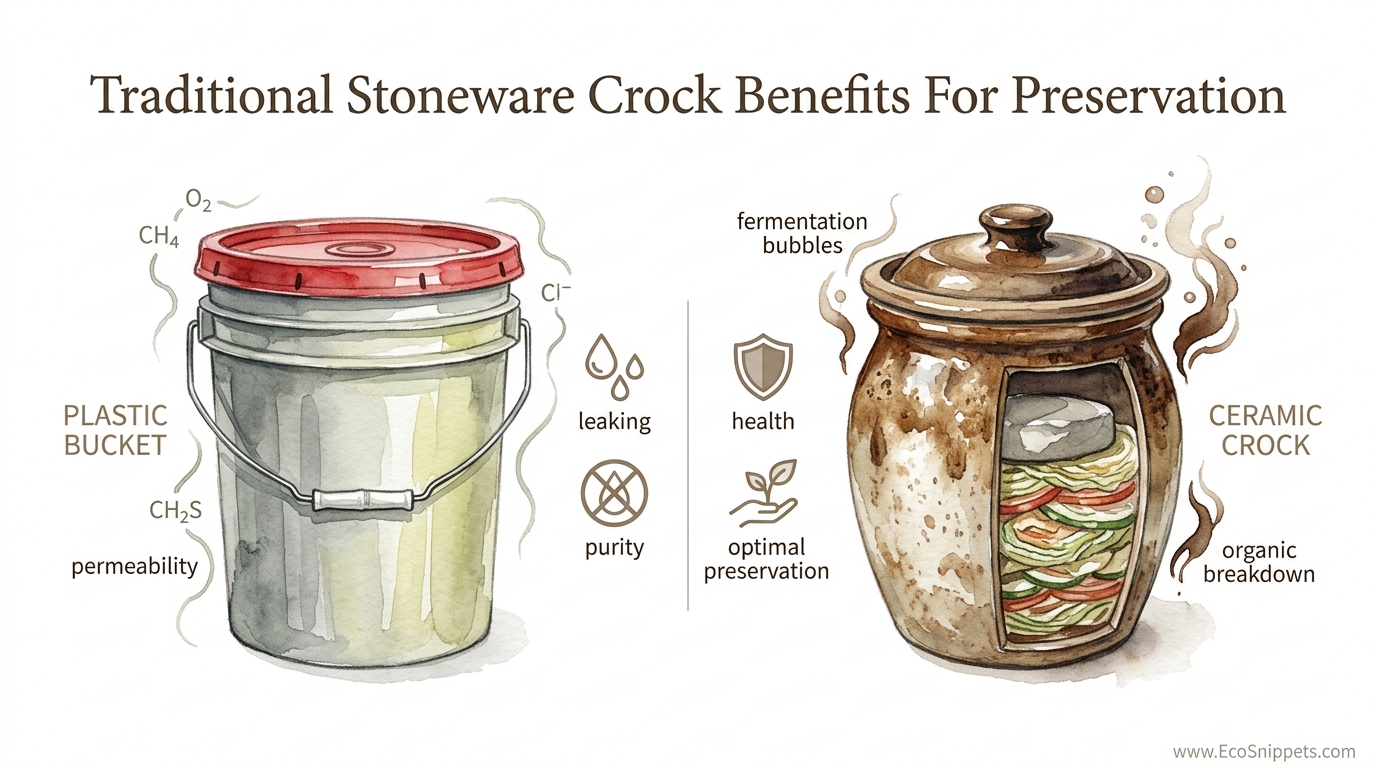
One of these will be in a landfill by next year, while the other will be handed down to your grandchildren. We traded 5,000 years of ceramic wisdom for a 5-cent plastic bucket that leaches chemicals into our probiotics. If you’re serious about food preservation, your tools should be as clean as your ingredients. Stone doesn’t just look better—it preserves better through thermal mass and an unbreakable seal. Stop buying disposables and start building a legacy larder.
Choosing the right vessel is the most important decision you make before a single head of cabbage is shredded. Modern kitchens are filled with thin-walled glass and porous plastics that struggle to maintain the delicate environment required for lactic acid bacteria. Traditional stoneware is different because it was engineered for the slow, steady rhythm of the seasons. It offers a sanctuary for beneficial microbes, shielding them from temperature swings and light pollution.
When you invest in a crock, you aren’t just buying a pot; you are reclaiming a piece of ancestral technology. This is the same equipment that kept families fed through harsh winters before electricity existed. It represents a shift from the “antibiotic” mindset of modern storage toward a “probiotic” partnership with the natural world. Let’s look at why these heavy, silent guardians of the pantry remain the gold standard for anyone who values food as medicine.
Traditional Stoneware Crock Benefits For Preservation
Stoneware crocks are dense, ceramic vessels fired at extremely high temperatures to create a vitrified, stone-like material. Unlike earthenware, which is porous and can leak, stoneware is non-porous and incredibly durable. These vessels have served as the backbone of food preservation in Europe and North America for centuries, particularly in German and Polish traditions. They are specifically designed to facilitate lacto-fermentation, a process where natural bacteria convert sugars into lactic acid.
The primary reason these crocks excel is their incredible thermal mass. Because the walls are thick and heavy, they resist changes in the surrounding environment. If your kitchen warms up in the afternoon sun, the inside of a stoneware crock remains cool and steady. This stability is vital for the specific strains of bacteria, like Lactobacillus, that transform vegetables into kraut or pickles.
Historically, these crocks were found in every root cellar from the American Midwest to the Rhine Valley. They weren’t just for sauerkraut; they held salted meats, pickled eggs, and even butter. In a world of flimsy, disposable containers, the stoneware crock stands as a testament to permanence. It is a tool designed to outlive its owner, gaining character and history with every season of use.
The Science of the Water-Sealed Environment
The most advanced version of this tool is the water-sealed crock, often called a “Harsch-style” or “Gärtopf” crock. This design includes a deep gutter or “moat” around the rim of the vessel. When you place the heavy ceramic lid into this water-filled gutter, it creates a perfect one-way valve. Carbon dioxide produced by the fermenting vegetables can bubble out, but oxygen and contaminants cannot get in.
This anaerobic environment is the secret to a successful ferment. Oxygen is the enemy of lacto-fermentation because it allows mold and Kahm yeast to grow on the surface of the brine. By locking out the air, the water seal ensures that the beneficial bacteria have full control of the vessel. You will often hear a rhythmic “plop-plop” sound as gas escapes the seal, which is the heartbeat of a healthy, living ferment.
Inside the crock, the pressure remains slightly higher than the outside air. This positive pressure further discourages any airborne spores from finding a home in your food. Most water-sealed crocks come with heavy, unglazed ceramic weights that sit directly on the vegetables. These weights keep everything submerged beneath the protective brine, ensuring every inch of the harvest is preserved equally.
Unmatched Advantages of Using Stoneware
One of the greatest benefits of stoneware is its total chemical neutrality. Plastic containers, even those labeled as “food-grade,” can leach endocrine disruptors like BPA or phthalates into acidic environments. Since fermentation creates a highly acidic brine, using plastic is a gamble with your long-term health. Stoneware is inert and won’t react with salt or acid, keeping your probiotics pure.
The opacity of stone is another hidden advantage that many beginners overlook. Light, especially UV rays, can degrade the nutrients in your vegetables and inhibit certain bacterial growth. While glass jars allow light to penetrate and heat the contents, the thick walls of a crock provide total darkness. This mimicry of a subterranean environment is exactly what your preserves need to age gracefully.
Durability is where stoneware truly earns its keep in a legacy larder. A well-made crock is nearly indestructible under normal use and won’t scratch like plastic. Scratches in plastic buckets are notorious for harboring “bad” bacteria that can ruin future batches. Stoneware can be scrubbed, scalded, and sanitized for decades without losing its integrity or safety.
Challenges and Common Mistakes to Watch For
The most common mistake people make with water-sealed crocks is letting the moat run dry. In dry climates or heated homes, the water in the seal can evaporate faster than you expect. If the seal breaks, oxygen rushes in, and you may find a layer of mold waiting for you when you open the lid. Checking the water level once a week is a mandatory habit for any serious fermenter.
Weight management is another area where newcomers struggle. If you don’t use enough weight to keep the vegetables submerged, the “floaters” will rot. Always ensure your brine level is at least an inch above your weights. If your vegetables didn’t produce enough natural juice, you must add a 2% salt-water brine to bridge the gap.
Identifying safe glazes is critical if you are hunting for vintage crocks at flea markets. Older crocks from before the 1970s often used lead or cadmium in their glazes, especially those with bright orange or yellow colors. Acidic ferments will leach these heavy metals directly into your food. If you find an antique beauty, use a lead-testing kit before you ever put food inside it.
When Stoneware May Not Be the Ideal Choice
The sheer weight of these vessels makes them a challenge for some users. A 10-liter crock filled with cabbage and brine can easily weigh 30 to 40 pounds. If you have limited mobility or strength, moving a large crock from the counter to a storage spot can be dangerous. In these cases, smaller 2-liter or 5-liter crocks are much more manageable while still offering the benefits of stone.
Price is a realistic barrier for many people just starting their preservation journey. A high-quality, artisan-made stoneware crock can cost between $100 and $300. This is a significant investment compared to a $5 plastic bucket or a $2 mason jar. While the cost per year is lower because the crock lasts forever, the upfront expense requires a commitment to the craft.
Fragility is the final trade-off for all that durability. While stone doesn’t wear out, it will shatter if dropped on a hard floor. Moving these heavy pots requires focus and a steady grip. If you live a highly mobile lifestyle or move frequently, the risk of breaking a precious heirloom during transport is something to consider.
Stoneware Crocks vs. Plastic Buckets: A Comparison
| Feature | Ceramic Stoneware | Plastic Bucket |
|---|---|---|
| Temperature Stability | Excellent (High Thermal Mass) | Poor (Thin Walls) |
| Chemical Safety | Total (Inert Material) | Risk of Leaching (BPA/Phthalates) |
| Lifespan | Generational (100+ Years) | Disposable (1-3 Years) |
| Light Protection | 100% Opaque | Variable (Often Translucent) |
| Cost | High Upfront | Very Low |
Practical Tips for a Lifetime of Use
Sanitation should be your first priority when starting a new batch. You don’t need harsh chemicals; a good scrub with hot water and a little vinegar or baking soda is usually enough. Avoid using scented dish soaps, as the porous unglazed parts of the weights or the rim can absorb those perfumes and transfer them to your food. Always let your crock dry completely in the sun or a warm spot before storing it away.
Choosing the right salt is the second pillar of success. Never use iodized table salt, as the iodine can inhibit the very bacteria you are trying to cultivate. Look for high-quality sea salt or mined pink salt that is free from anti-caking agents. Aim for a ratio of about 2% to 3% salt by weight relative to the weight of your vegetables for most krauts and pickles.
Vegetable preparation matters more in a large crock than in a small jar. Because of the pressure exerted by the stone weights, finely shredded vegetables will release their juices much faster. If you are doing whole pickles, you may need to “bruise” the vegetables slightly or use a more concentrated brine. The goal is to eliminate air pockets within the pack to ensure a uniform fermentation.
Advanced Considerations for the Serious Practitioner
For those who want to go beyond basic sauerkraut, the stoneware crock allows for long-term aging that other vessels cannot support. Some traditionalists age their ferments for six months to a year in a cool cellar. This extended time allows for secondary and tertiary bacterial successions, resulting in flavors that are much more complex and “cheesy” or “mellow” than a quick two-week ferment.
Consider the mineralogy of your vessel if you are buying from a local potter. Different clay bodies and firing temperatures affect the micro-porosity of the ceramic. While the interior should always be glazed with a food-safe, lead-free finish, some practitioners prefer “breatheable” unglazed exteriors like those found in Korean Onggi pots. These allow for a very minute level of gas exchange that some say improves the flavor of kimchi.
Scaling your production requires a balanced approach to surface area. A very tall, narrow crock will have different fermentation kinetics than a wide, shallow one. The weight of the food itself at the bottom of a 20-liter crock creates a high-pressure environment that can lead to a crunchier texture. Experimenting with different shapes will help you find the “sweet spot” for your specific climate and pantry conditions.
The “Winter Harvest” Scenario
Imagine you have just harvested 20 pounds of late-season cabbage before the first hard frost. In a plastic bucket, you would be worried about the temperature fluctuations in your garage ruining the batch. In a 10-liter stoneware crock, you can shred that cabbage, salt it heavily, and pack it tight with the confidence of a pioneer. The stone will absorb the chill of the night and the warmth of the day, averaging it out into a perfect 65-degree sanctuary.
After two weeks, you hear the “plop” of the water seal slowing down. You resist the urge to peek, knowing that every time you lift the lid, you invite oxygen and mold spores to the party. By mid-January, you finally open the seal. The kraut is translucent, crisp, and smells like a clean, sharp lemon—not like rotting garbage.
This success isn’t luck; it’s physics. The weights kept the cabbage submerged, the water seal kept the air out, and the thermal mass kept the bacteria happy. You scoop out enough for a week’s worth of meals and reseal the moat. That single crock will provide fresh, living enzymes for your family until the first green shoots of spring appear in the garden.
Final Thoughts
Building a legacy larder is about moving away from the “fast and cheap” mindset of modern consumerism. It is an acknowledgment that some things—like the slow transformation of cabbage into kraut—cannot be rushed or shortcut. A stoneware crock is a symbol of that patience. It is a tool that asks you to slow down, pay attention to the water levels, and trust the ancient wisdom of microbes.
When you use stone, you are participating in a tradition that spans five millennia. You are providing your family with food that is safer, more nutritious, and deeper in flavor. These vessels are more than just kitchenware; they are the anchors of a self-reliant home. They remind us that the best way forward is often found by looking at the tools our ancestors never should have put down.
Start with one high-quality crock and learn its rhythms. Watch how the brine reacts to the seasons and listen for the sound of the bubbles. Once you taste the difference between a stone-fermented pickle and a plastic-stored one, you will never go back. You aren’t just making food; you are preserving a way of life.
