How To Become More Self-Sufficient Without Starting a Full-Blown Farm…
Want to start preserving your harvest, making your own soap, or building a backyard root cellar — but not sure where to begin? “Homesteading Advice” gives you instant lifetime access to 35+ practical homesteading books on food preservation, veggie gardening, DIY natural cleaning products (save over $250 per year with this skill alone), brewing, off-grid energy, and a whole lot more…
Click Here To Check It Out Now!
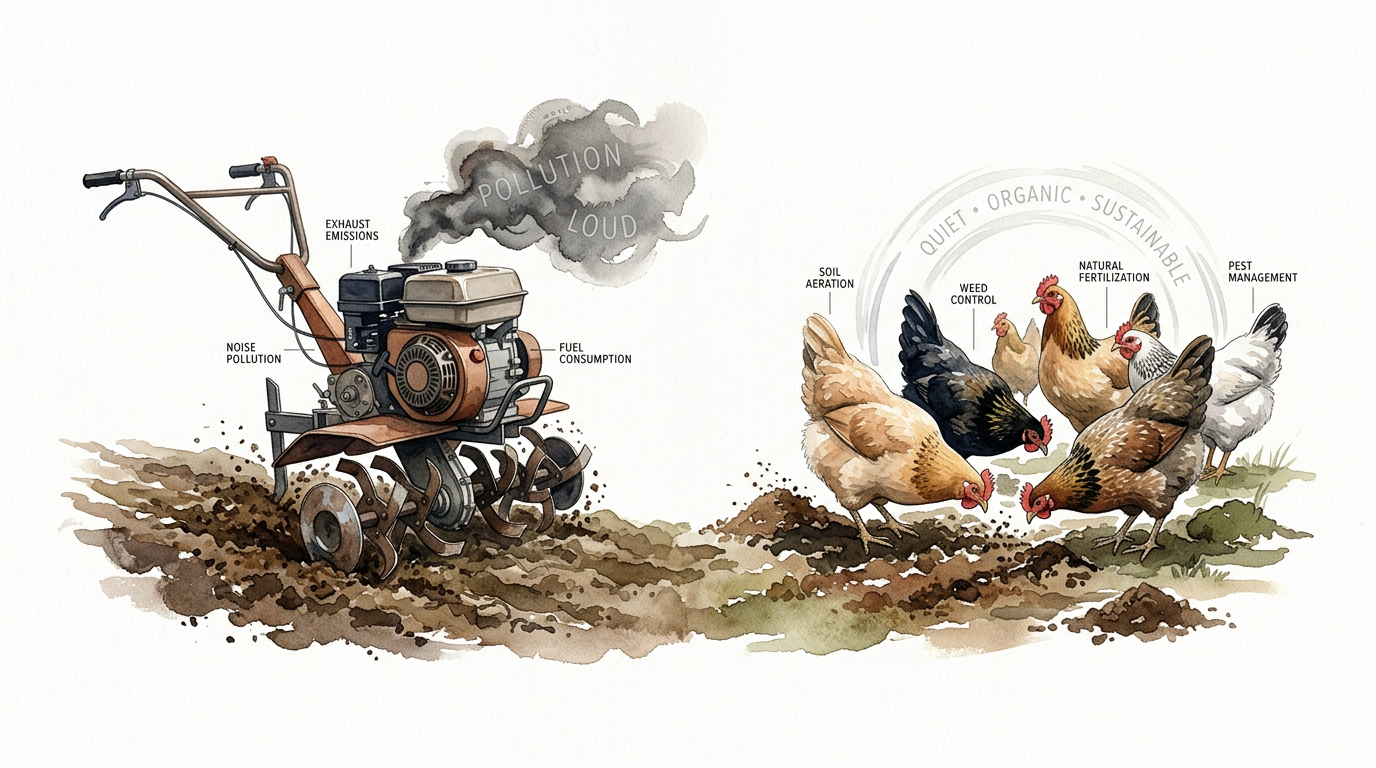
Why work harder than a chicken when they enjoy doing the job for you? Tilling destroys fungal networks and breaks your back. Chickens build soil fertility and clear weeds while you drink your morning coffee. Which one would you choose?
Turning over a garden bed by hand or with a noisy, vibrating rototiller is a chore that feels more like a battle against the earth than a partnership with it. The old ways of homesteading weren’t built on the back of fossil fuels and mechanical maintenance; they were built on the observations of how animals and plants could work in harmony. Using poultry as your primary tilling force isn’t just a clever trick—it’s a return to a system where every living thing has a purpose beyond its final product.
The concept is simple but profound. While a steel blade slices through soil indiscriminately, a chicken’s beak and claws are precision tools. They seek out the very things that plague a gardener: weed seeds, hibernating larvae, and invasive grubs. As they work, they deposit concentrated packets of fertility exactly where they are needed most. This guide will walk you through the grit and wisdom of feathered labor, helping you retire the rototiller for good.
Natural Garden Tilling With Poultry
Natural garden tilling with poultry is the practice of using domesticated birds—primarily chickens—to clear vegetation, aerate the top layer of soil, and incorporate organic matter into garden beds. Instead of relying on a “gas and grind” approach with heavy machinery, this method uses the natural foraging instincts of the flock to prepare the ground for planting. It is a cornerstone of regenerative agriculture and permaculture, focusing on the health of the soil ecosystem rather than just the appearance of the dirt.
Historically, farmers allowed their livestock to graze fallow fields to maintain fertility. In a modern garden setting, this is refined through the use of portable enclosures or rotational grazing. The birds are moved systematically across the landscape, ensuring that no single patch of ground is overtaxed while every square inch receives the benefit of their presence. This isn’t just about clearing weeds; it’s about building a living, breathing soil structure that thrives long after the birds have moved on.
Visualizing this system is easy if you think of your chickens as a “biological workforce.” A rototiller is a blunt instrument that pulverizes soil aggregates, leading to compaction and the death of beneficial microbes. A chicken, by contrast, “scratches” the surface. They turn over the top one to three inches of soil, which is exactly where most weed seeds reside. They don’t just clear the land; they refine it.
How It Works: Systems of Feathered Labor
Implementing poultry tilling requires more than just opening the coop door. To be effective, the labor must be directed and controlled. There are three primary methods used by serious practitioners: the chicken tractor, electric netting, and the fallow rotation system.
The Chicken Tractor Method
A chicken tractor is a bottomless, mobile coop designed to fit the dimensions of your garden beds. By confining a small group of birds to a specific area, you force them to focus their energy. In a typical 4×8 foot bed, four to six chickens can clear established weeds and light sod in roughly a week. This method is ideal for raised beds or small-scale urban gardens where precision is paramount.
Electric Poultry Netting
For larger plots or market gardens, temporary electric netting is the tool of choice. This allows you to fence off a significant area—perhaps several hundred square feet—and move the flock through it in “pulses.” This mimics the natural movement of wild birds across a prairie. The chickens have more room to move, but their impact is still concentrated enough to ensure the ground is thoroughly worked.
Fallow Bed Rotations
Serious homesteaders often use a “one year on, one year off” approach. While half the garden is growing vegetables, the other half is being managed by poultry. The birds spend the entire season on the fallow ground, tilling in cover crops like buckwheat or clover and building up a massive reserve of nutrients. When the seasons flip, the “chicken bed” becomes the most productive part of the garden, requiring almost no supplemental fertilizer.
The Mechanics of the Scratch: Why Chickens Win
When a chicken scratches, it uses its powerful leg muscles to pull the soil backward. This action does two critical things that a mechanical tiller cannot. First, it targets the “seed bank.” Most weeds grow from seeds that have been sitting in the top inch of soil waiting for light. Chickens find and eat these seeds, effectively reducing the weed pressure for the coming year.
Second, the scratching action preserves the mycorrhizal fungi networks located deeper in the soil profile. Mechanical tillers reach deep into the earth, shearing these delicate fungal strands that help plants absorb water and nutrients. Chickens rarely dig deeper than two inches unless they are making a dust bath, leaving the subterranean biological infrastructure intact.
Benefits of Poultry in the Garden
The advantages of this system extend far beyond simple weed removal. It is a multi-functional approach that addresses several garden needs simultaneously.
- Unmatched Fertilization: Chicken manure is one of the “hottest” and most nutrient-dense fertilizers available. It is exceptionally high in nitrogen, phosphorus, and potassium (NPK), which are the building blocks of plant growth. One chicken can produce enough manure to fertilize approximately 50 square feet of garden space in just over a month.
- Integrated Pest Management: Chickens are biological vacuum cleaners. They will seek out squash bug eggs, tomato hornworms, and the larvae of beetles that overwinter in the soil. By the time you plant, the pest population has been decimated without the need for toxic chemicals.
- Waste Recycling: In this system, “garden waste” becomes “chicken feed.” The birds will consume spent vegetable plants, fallen fruit, and weeds, converting that biomass into high-quality protein (eggs) and fertilizer.
- Labor Savings: While you might spend an hour fighting a rototiller to clear a bed, moving a chicken tractor takes five minutes. The birds do the rest of the work while you go about your day.
Challenges and Common Mistakes
Even though the birds are eager to work, things can go wrong if you aren’t paying attention. The most common pitfall is the “Moonscape Effect.” This happens when chickens are left on a single patch of ground for too long. They will not only eat the weeds but eventually destroy the soil structure itself, leaving behind a hard-packed, lifeless surface.
Nitrogen Burn: Because chicken manure is so concentrated, planting immediately after removing the birds can “burn” the roots of sensitive seedlings. The manure needs time to “cool” or break down. A good rule of thumb is to wait two to three weeks after the chickens have finished their work before you put seeds in the ground, or to scratch in some carbon-rich material like straw or wood shavings to balance the nitrogen.
Pathogen Management: Fresh manure can carry Salmonella or E. coli. If you are growing root crops or leafy greens that will be eaten raw, you must be careful. Most organic standards require a 90-to-120-day gap between the application of fresh manure and the harvest of crops that touch the soil. Integrating chickens in the fall for a spring garden is the safest way to handle this.
Limitations: When the Tiller Might Still Be Needed
Poultry labor is not a magic bullet for every situation. Environmental and logistical constraints can sometimes make this method less ideal.
| Constraint | The Limitation | The Solution |
|---|---|---|
| Heavy Clay | Chickens cannot penetrate hard, baked clay soil efficiently. | Moisten the soil or apply a thick layer of mulch first. |
| Perennial Weeds | Birds may eat the leaves of thistles or dock but won’t dig up the deep taproots. | Manual extraction is required for deep-rooted perennials. |
| Small Spaces | Keeping chickens in a tiny urban backyard can lead to odor and noise issues. | Use a very small, well-managed tractor or bantam breeds. |
| Predation | Mobile systems are more vulnerable to foxes, hawks, and neighborhood dogs. | Use heavy-duty hardware cloth and electric fencing. |
Practical Tips and Best Practices
Success with feathered labor depends on choosing the right workers and timing their efforts correctly. Not all chickens are created equal when it comes to garden work.
Selecting the Right Breeds: If tilling is your primary goal, look for “active” breeds known for their foraging abilities. The Rhode Island Red and Plymouth Rock are legendary for their work ethic and hardy nature. If you need birds that can cover a large area quickly, Leghorns are excellent, though they can be flighty. Avoid “ornamental” breeds with feathered feet (like Cochins), as they struggle to scratch effectively and their leg feathers will get filthy in the garden soil.
Timing the Tilling: The best time to put the birds to work is in the “shoulder seasons.” In the late autumn, let them into the garden to clean up spent crops and eat the pests that are trying to bed down for the winter. In the early spring, put them on the beds a month before planting to wake up the soil and clear the first flush of spring weeds.
The Carbon Balance: Always provide a source of carbon for the chickens to work into the soil. If they are tilling a bare bed, scatter a few handfuls of dried leaves, shredded straw, or wood shavings. They will scratch this into the manure, creating a “compost in place” effect that prevents nitrogen loss and builds organic matter.
Advanced Considerations: The Deep Bedding Integration
For those who want to take this to the next level, the “Deep Bedding” system is the pinnacle of poultry-garden integration. Instead of moving the chickens to the garden, you bring the garden’s future soil to the chickens. By layering 6-12 inches of carbon material (wood chips, straw, corn stalks) in a permanent run, you create a massive composting floor.
The chickens will spend their days scratching through this material, breaking it down and enriching it with manure. Over the course of six months to a year, this material transforms into “black gold.” You then harvest this finished compost and spread it over your garden beds. This method is incredibly efficient because it protects the birds from predators and keeps the manure under cover, where the nutrients won’t wash away in the rain.
Example Scenario: Preparing a 1,000 Square Foot Plot
Imagine you have a 1,000 square foot garden that has become overgrown with grass and weeds over the winter. Using the “Gas and Grind” method, you would spend an entire Saturday wrestling a 200-pound machine, burning through a gallon of gas, and ending the day with a sore back.
Instead, you set up 100 linear feet of electric poultry netting around the first 250-square-foot section. You move your flock of 12 hens into this area.
- Week 1: The birds focus on the first section. They eat the green growth and begin scratching the surface.
- Week 2: You move the fence to the next 250-square-foot section. You throw a handful of scratch grain into the first section to encourage them to finish the job as you move them.
- Week 4: The entire 1,000 square feet has been cleared. The weeds are gone, the pests are eaten, and roughly 30-40 pounds of high-nitrogen manure has been evenly distributed across the plot.
Your only “work” was moving a lightweight fence four times. The soil is now primed with fertility and ready for a light raking and planting.
Final Thoughts
Working with poultry is about more than just saving on your gas bill. It is about acknowledging that the most efficient systems on earth are those that mimic nature’s own cycles. When you replace a steel blade with a chicken’s scratch, you are choosing to build soil rather than just stir it. You are choosing a system that produces food (eggs) while it performs maintenance (tilling).
Retiring the rototiller is a declaration of self-reliance. It shows a commitment to the long-term health of your land and a respect for the ancestral wisdom that governed successful farms for centuries. As you stand on your porch with your morning coffee, watching your flock diligently prepare your garden beds, you’ll realize that the “work” isn’t actually work at all—it’s a partnership.
Take it slow, start with a simple tractor, and observe your birds. They will teach you more about soil health than any manual ever could. Once you see the vibrant, dark, nutrient-rich soil that follows in the wake of a well-managed flock, you’ll never want to pull a starter cord again.
