How To Become More Self-Sufficient Without Starting a Full-Blown Farm…
Want to start preserving your harvest, making your own soap, or building a backyard root cellar — but not sure where to begin? “Homesteading Advice” gives you instant lifetime access to 35+ practical homesteading books on food preservation, veggie gardening, DIY natural cleaning products (save over $250 per year with this skill alone), brewing, off-grid energy, and a whole lot more…
Click Here To Check It Out Now!
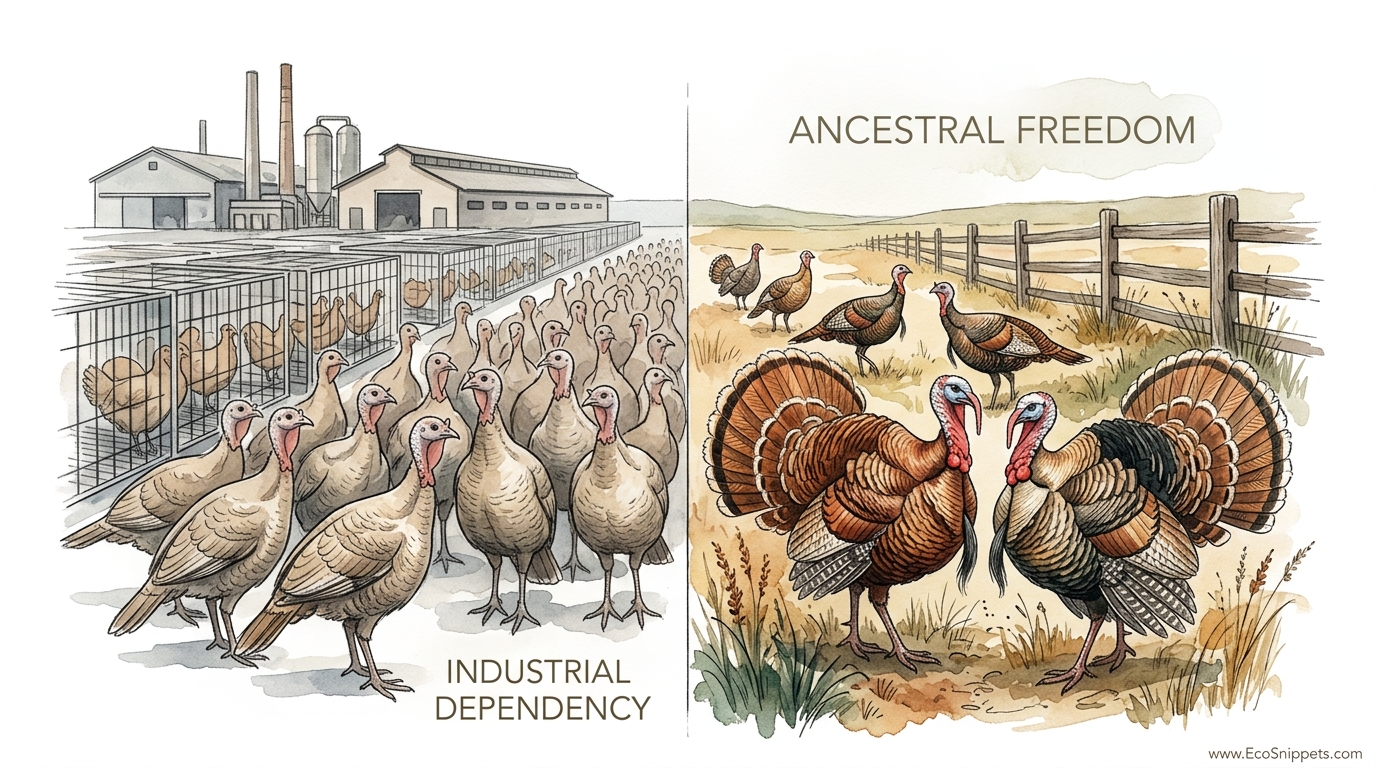
When a breed loses the ability to even mate naturally, you aren’t farming – you’re just renting birds from a corporation. We’ve traded survival for size. The ‘modern’ turkey grows so fast it can’t reproduce without human intervention. That’s not self-sufficiency; that’s dependency. On the other hand, heritage breeds are the ‘old-world’ tanks of the backyard. They fly, they forage, and they raise their own young year after year. Stop buying a product and start raising a legacy.
Raising turkeys on a homestead is a different beast than keeping chickens. Most folks start with the white, broad-breasted birds they see in the feed store. Those birds are bred for one thing: a massive chest of white meat. But that efficiency comes at a heavy cost of genetic fragility.
Heritage turkeys represent the bloodlines of our ancestors. These birds were developed to survive on the range, dodge foxes, and find their own food in the woodlots. If you want a flock that can sustain itself for a century without a hatchery catalog, you have to go back to the roots.
Best Heritage Turkey Breeds For Self-sufficiency
A heritage turkey is a bird that meets three strict criteria: it must mate naturally, have a long productive lifespan, and grow at a slow, healthy rate. While the industrial bird is ready for the table in 16 weeks, a heritage bird takes closer to 28 weeks. This slow growth allows their skeletal structure to harden and their flavor to deepen.
The American Poultry Association recognizes eight primary varieties, but a few stand out for the self-reliant homestead. Choosing the right breed depends on your climate, your space, and whether you value meat yield over maternal instincts.
Bourbon Red
The Bourbon Red is often called the king of the homestead turkey. Developed in Bourbon County, Kentucky, these birds are famous for their deep mahogany feathers and white wing tips. They are widely considered one of the most personable and intelligent breeds.
Homesteaders love Bourbon Reds because the hens are exceptional mothers. They are likely to go broody and will protect their poults with surprising ferocity. They are also top-tier foragers, often finding a significant portion of their diet in the grass if given the room.
Narragansett
Named after Narragansett Bay in Rhode Island, this breed was once the foundation of the New England turkey industry. They have a striking black, gray, and tan pattern that helps them blend into brush better than white birds. Narragansetts are prized for their calm disposition.
They tend to stay closer to home than some of the flightier breeds. If you have limited fencing, the Narragansett’s homebody nature is a major advantage. They mature slightly faster than other heritage types while maintaining excellent meat quality.
Standard Bronze
This is the bird most people picture when they think of a turkey. The Standard Bronze is a heavy-hitter in the heritage world. It was created by crossing domestic European turkeys with wild Eastern turkeys. This cross-breeding gave them incredible “hybrid vigor.”
They are larger than the Bourbon Red or Narragansett, making them the best choice for those who want a big bird for the family table. However, because they are larger, you must watch for leg issues if they are overfed on high-protein grain for too long.
Midget White
If you have a small backyard or a smaller family, the Midget White is the clear winner. Developed in the 1960s to create a “sink-sized” turkey, these birds are compact and efficient. They weigh significantly less than a Bronze but pack a massive punch in terms of flavor.
In multiple taste tests, the Midget White consistently ranks as the best-tasting turkey available. They are also prolific egg layers for a turkey breed. Their small size makes them easier to handle and process if you are working alone.
Beltsville Small White
The Beltsville Small White was a USDA project designed to compete with the rising industrial giants. It is a productive, hardy bird that dresses out very cleanly due to its white feathers. Dark-feathered birds can sometimes leave dark “pin feathers” in the skin, which bothers some people.
Beltsville Whites are active and rugged. They were bred to be a sustainable meat bird for the average American home. While they aren’t as “flashy” as a Royal Palm or a Slate, their utility on a working farm is hard to beat.
How the Self-Sustaining System Works
Achieving self-sufficiency with turkeys requires shifting your mindset from “raising a batch” to “managing a flock.” You aren’t just feeding birds; you are maintaining a breeding cycle. This starts with selecting a “trio”—one tom and two hens—to serve as your foundation stock.
Natural mating is the cornerstone of this system. Unlike commercial birds, heritage toms can physically mount the hens. In the spring, the tom will begin his display, drumming and strutting to attract the hens. This behavior is hardwired and requires no human intervention.
Broodiness is the second critical piece. A heritage hen will find a hidden spot, lay a clutch of 10 to 15 eggs, and sit on them for 28 days. She will lose weight and risk her life to stay on that nest. Once the poults hatch, she will teach them to forage for protein-rich insects.
Foraging efficiency is the third pillar. Heritage turkeys are built to move. They will spend their days walking the perimeter of your pasture, eating grasshoppers, ticks, and weed seeds. This reduces your feed bill and improves the nutritional profile of the meat.
Benefits of the Heritage Approach
The primary advantage of heritage turkeys is their resilience. These birds have a functioning immune system that hasn’t been compromised by generations of confinement breeding. They can handle temperature swings and damp weather far better than industrial poults.
Flavor is the most immediate reward. Because these birds move their muscles and eat a diverse diet, the meat is rich, juicy, and complex. You will find more dark meat on a heritage bird, and the fat layer under the skin provides a self-basting quality during roasting.
Longevity is a benefit often overlooked. A heritage hen can remain productive for 5 to 7 years, and some toms can live for over a decade. This means you don’t have to replace your breeding stock every year. You are building a permanent asset for your land.
Pest control is another measurable win. Turkeys are more aggressive foragers than chickens. They will clear a garden of hornworms and Japanese beetles in a single afternoon. They are also known to hunt small rodents and snakes, acting as a security patrol for your homestead.
Challenges and Common Mistakes
The biggest hurdle for new turkey keepers is Blackhead disease. This is a parasite carried by cecal worms often found in chickens. While chickens can carry it without many symptoms, it is almost 100% fatal for turkeys. Raising turkeys and chickens on the same ground is the most frequent error.
Predators are a constant threat because turkeys like to roost high. If they are left to their own devices, they will fly into trees at night. While this protects them from some ground predators, owls and hawks can easily pick them off. You must provide a secure, roofed enclosure for nighttime.
Poults are more fragile than chicks during the first six weeks. They have a reputation for being “not the smartest” when it comes to finding water or staying warm. You must be vigilant in the brooder. Dip their beaks in the water several times to ensure they know where the “well” is located.
Fencing can be a headache with heritage breeds. Because these birds are lean and strong, they can fly. A standard four-foot fence is merely a suggestion to a Bourbon Red. You either need a covered run, very high fencing, or you must accept that they will roam the neighborhood if not managed.
Limitations of Heritage Breeds
Heritage turkeys are not “get rich quick” birds. Their slow growth rate means you will spend more on feed over the course of seven months than you would on an industrial bird in four months. The cost per pound of meat is significantly higher if you aren’t utilizing high-quality pasture.
Space is a non-negotiable requirement. These birds do not thrive in confinement. If you try to keep heritage turkeys in a small coop all day, they will become stressed, aggressive, and prone to illness. They need at least 50 to 100 square feet of range per bird to stay healthy.
The carcass shape can be a surprise to those used to grocery store birds. A heritage turkey has a long, narrow breast bone. It looks more like a wild bird than a basketball. If you are expecting a massive 30-pound white-meat monster, you will be disappointed.
Comparing Heritage and Industrial Turkeys
Understanding the technical differences helps in planning your homestead’s production goals. This table breaks down the measurable factors between the two paths.
| Feature | Heritage Breeds | Broad-Breasted (Industrial) |
|---|---|---|
| Reproduction | Natural Mating | Artificial Insemination Only |
| Time to Market | 24–28 Weeks | 14–18 Weeks |
| Foraging Ability | Excellent / Self-Sufficient | Poor / Stationary |
| Lifespan | 10–15 Years | Often < 1 Year (Heart/Leg failure) |
| Meat Ratio | 50:50 White to Dark | 70:30 White to Dark |
Practical Tips for Success
Start your poults on a high-protein game bird starter (28-30%). Turkeys grow incredibly fast in the first month and need the extra protein for bone development. If you use standard chicken starter, they may develop “slipped tendons” or weak legs that never recover.
Keep your turkey areas dry and well-drained. Mud is the enemy of turkey health. Damp ground promotes the growth of bacteria and parasites that can sweep through a flock in days. Rotational grazing is the best way to keep the ground fresh and the birds healthy.
Add a small amount of apple cider vinegar to their waterers. This helps maintain a healthy gut pH and can offer a slight edge against internal parasites. It’s an old-world trick that still works wonders for keeping heritage stock in top condition.
Train your birds to come to a specific whistle or bell from day one. Heritage turkeys are curious and will follow you if they trust you. If a predator gets into the yard or a storm rolls in, being able to call them back to the coop instantly is a lifesaver.
Advanced Considerations for the Serious Practitioner
If you want to maintain a flock for decades, you must learn the art of selective breeding. Do not just keep the toms that survive; keep the toms that show the best foraging behavior and the calmest temperament. Selecting for “thriftiness”—the ability to stay in good weight on minimal grain—is key for true self-sufficiency.
Avoid extreme inbreeding by swapping toms with another heritage breeder every three years. While line-breeding can fix certain traits, too much inbreeding will eventually lead to smaller hatch sizes and weaker poults. A fresh set of genetics from a similar heritage line will keep your flock vigorous.
Consider the “hidden” harvest of turkey eggs. While most people only eat the meat, heritage turkey eggs are large, rich, and excellent for baking. A healthy hen will lay around 50 to 80 eggs a year. In a survival situation, those eggs are a massive source of sustainable calories.
A Realistic Homestead Scenario
Imagine a five-acre homestead in the Midwest. The owner starts with a trio of Bourbon Reds in late April. They are kept in a secure brooder for six weeks, then moved to a mobile “turkey tractor” on fresh pasture. By mid-summer, the birds are large enough to be released into a fenced orchard.
The birds spend their days clearing fallen fruit and eating grasshoppers. The owner provides a supplemental 20% grower pellet in the evenings to ensure they come back to the coop. By October, the two hens have each successfully hidden a nest and hatched a late-season “bonus” clutch of five poults each.
In November, the original tom and hens are kept for next year. Three of the young toms from the spring hatch are processed for the family freezer. The result is 60 pounds of high-quality, hormone-free meat and a foundation flock that is already expanding for the following year.
Final Thoughts
Choosing heritage turkey breeds is an investment in the future of your land. These birds are not just livestock; they are partners in a circular ecosystem. By choosing breeds that can mate, hatch, and forage on their own, you are reclaiming a piece of independence that was nearly lost to industrialization.
The transition from “buying birds” to “raising a flock” takes patience and a bit of grit. You will deal with the occasional lost nest or a stubborn tom, but the reward is a sustainable source of the finest meat on the planet. You aren’t just filling a freezer; you are preserving a legacy of self-reliance.
Start small, choose a breed that fits your climate, and give them the space they deserve. Once you hear the first spring gobble of a bird that was hatched on your own dirt, you’ll never look at a plastic-wrapped store turkey the same way again. The path to ancestral freedom is paved with the tracks of heritage birds.
