How To Become More Self-Sufficient Without Starting a Full-Blown Farm…
Want to start preserving your harvest, making your own soap, or building a backyard root cellar — but not sure where to begin? “Homesteading Advice” gives you instant lifetime access to 35+ practical homesteading books on food preservation, veggie gardening, DIY natural cleaning products (save over $250 per year with this skill alone), brewing, off-grid energy, and a whole lot more…
Click Here To Check It Out Now!
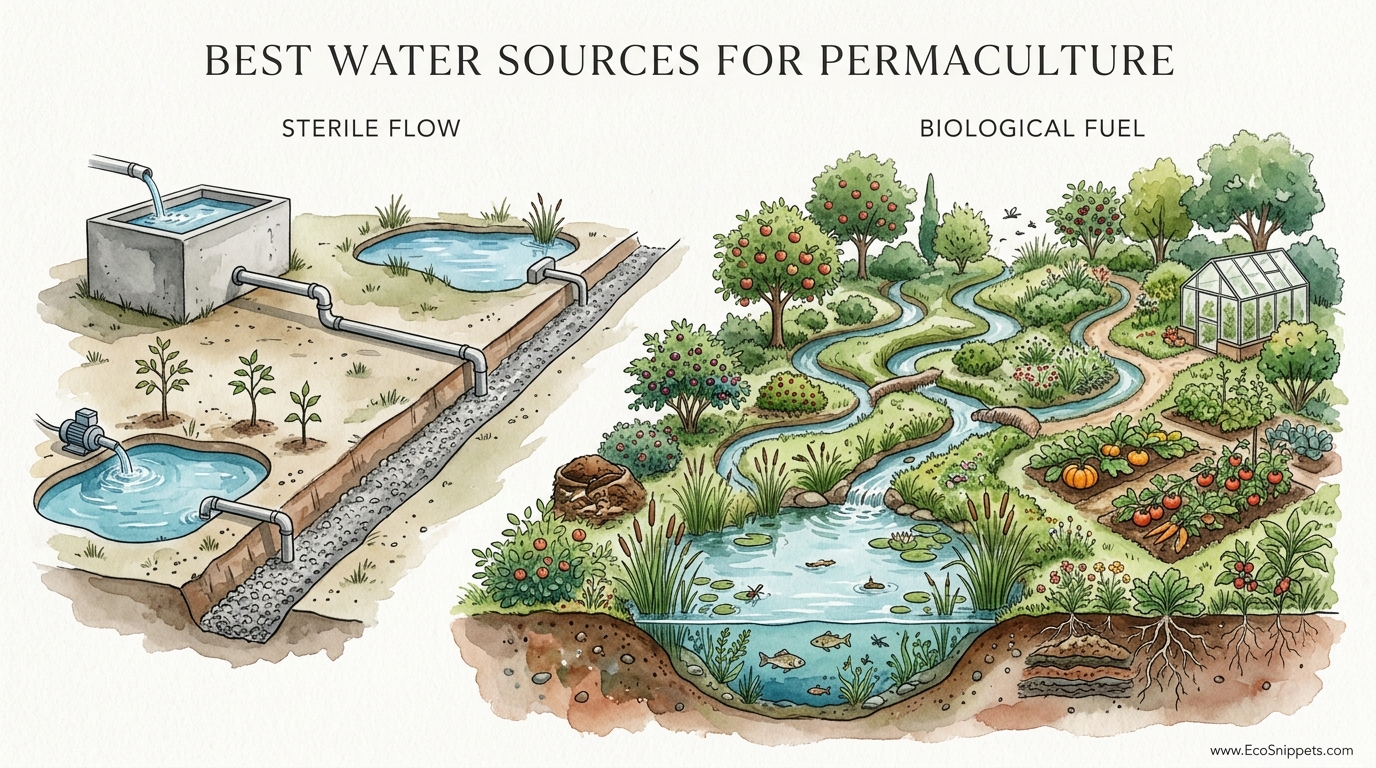
City water is designed to kill bacteria, but your soil is a living organism that needs it to survive. We pay for ‘clean’ water that is chemically treated to be sterile, then we wonder why our garden soil feels like dead dust. Permaculture focuses on ‘living’ water—water that has been warmed by the sun and populated by beneficial microbes in a pond or rain tank. Stop sterilizing your soil and start feeding the biology.
Modern society views water through a narrow lens of sanitation and convenience. We turn a tap and expect a clear, odorless liquid that is safe for human consumption but essentially dead to the earth. This approach, while necessary for dense urban health, often clashes with the needs of a thriving homestead or garden. In the world of permaculture, we look back to how the pioneers and our ancestors managed the land—observing how water moves, sits, and breathes.
When you use city water, you are essentially applying a mild disinfectant to your soil food web. While the microbes in your garden are resilient and can often rebound, the goal of a regenerative system is to move from a state of mere survival to one of abundance. Transitioning from a reliance on municipal systems to harvesting “living water” is one of the most transformative steps you can take for your land’s health and your own self-reliance.
Best Water Sources For Permaculture
The best water for your garden is water that has spent time interacting with the natural world. In permaculture, we prioritize sources that are gravity-fed, biologically active, and harvested on-site. These sources don’t just provide hydration; they act as a delivery system for life, turning a simple resource into biological fuel for your crops.
Rainwater Harvesting: This is the gold standard for most systems. Rainwater is naturally soft, lacks the salts found in many well waters, and is slightly acidic, which helps unlock nutrients in the soil. Whether caught in a simple barrel or a massive cistern, rainwater is the purest starting point for a living water system.
Surface Ponds and Dams: A pond acts as a giant biological battery. It collects runoff, allows sediment to settle, and becomes a hub for local biodiversity. Sun exposure warms the water, while aquatic plants and beneficial bacteria begin the process of “charging” the water with life-giving properties.
Swales and Infiltration Basins: Sometimes the best place to store water is not in a tank, but directly in the earth. Swales—level-bottomed ditches on the contour of the land—slow down runoff and force it to “sink” into the soil. This creates a lens of moisture underground that feeds trees and perennials long after the rains have stopped.
Greywater Systems: Reusing water from sinks, showers, and laundry is a hallmark of a closed-loop system. When managed correctly through biological filters like mulch basins or constructed wetlands, greywater transforms from a waste product into a valuable resource for fruit trees and non-edible landscaping.
How the Biological Fuel System Works
The transition from sterile flow to biological fuel requires a shift in how we manage water storage and distribution. Instead of keeping water locked in dark, pressurized pipes, we allow it to sit, breathe, and interact with the environment. This process mimics the natural hydrological cycle found in pristine ecosystems.
Thermal regulation is the first step. When water sits in a pond or a black rain tank exposed to the sun, it absorbs heat. Cold water from a deep well or a city main can shock sensitive plant roots and slow down the activity of soil microbes. Sun-warmed water maintains the “engine temperature” of your soil, allowing biological processes to continue uninterrupted.
Inoculation follows thermal regulation. As water sits in an open pond or a biologically active tank, it becomes populated with beneficial microbes. Dragonflies, frogs, and even the wind introduce life into the system. This water isn’t just H2O; it is a complex soup of microorganisms that help build the soil’s immunity and nutrient-cycling capabilities.
Gravity-fed distribution ensures this life reaches your plants without the violence of high-pressure pumps. High-pressure systems can physically damage delicate microbial structures. Moving water through swales or low-pressure drip systems allows the “living” components to settle gently into the soil where they are needed most.
Benefits of Living Water Systems
Choosing living water over sterile alternatives provides measurable advantages for both the plants and the person tending the land. It is a more resilient way to garden that pays dividends in soil health and reduced utility costs.
Increased Microbial Activity: Because living water doesn’t contain chlorine or chloramines, it doesn’t suppress the soil food web. Instead, it introduces new life. This leads to faster decomposition of mulch and better nutrient availability for your plants.
Improved Plant Resilience: Plants watered with sun-warmed, biologically active water often show greater resistance to pests and diseases. The “immune system” of the soil is bolstered by the diverse microbes in the water, creating a protective barrier around the roots.
Season Extension: Sun-warmed water can be used to mitigate the effects of early or late frosts. Using warm water to irrigate during a cold snap provides a thermal buffer that can keep sensitive crops like tomatoes or peppers alive for a few extra weeks.
Economic Self-Reliance: Harvesting your own water removes the monthly bill from a municipal provider. In times of drought or infrastructure failure, having 10,000 gallons of water stored in your soil and ponds provides a level of security that no city contract can match.
Challenges and Common Mistakes
Moving away from the “turn-the-tap” simplicity of city water introduces new responsibilities. Failing to manage a living water system correctly can lead to problems that range from minor nuisances to genuine health hazards.
Stagnation is the most common pitfall. Water that sits still for too long without plant life or aeration can become anaerobic. This leads to foul smells and the growth of pathogens that can actually harm your soil rather than help it. Always ensure your ponds have some form of movement, whether through a solar pump or by integrating aquatic plants that oxygenate the water.
Mosquito management is another hurdle for the unprepared. Standing water is a breeding ground for insects. Pioneers knew that a healthy pond needs a balance of predators—frogs, dragonflies, and small fish—to keep the mosquito population in check. If you are using tanks, ensure they are tightly screened to prevent entry.
Algal blooms can occur when water is too rich in nutrients, particularly phosphorus from runoff. While a little algae is a sign of life, a thick green mat can block sunlight and deplete oxygen. Balancing your water system with “hungry” plants like water lilies or reeds can help keep nutrient levels in check.
Limitations and Realistic Constraints
While the goal is total water independence, certain realities can limit the effectiveness of living water systems. It is important to understand these boundaries before over-investing in a system that might not fit your specific context.
Legal restrictions are a major factor in many regions. Some states and municipalities have strict laws regarding rainwater harvesting or the use of greywater. Always research your local building codes and water rights before digging a pond or installing a large-scale cistern system.
Space and topography also dictate what is possible. A flat, quarter-acre urban lot may not have the room for a series of swales or a large dam. In these cases, focus shifts toward smaller, more intensive storage solutions like IBC totes or rain gardens that can handle smaller volumes of water efficiently.
Initial cost and labor can be significant. Building a pond or installing a massive tank system requires an upfront investment of time and money. While the long-term savings are clear, the “pioneer grit” required to design and build these systems is not to be underestimated.
Comparing Sterile Flow vs. Biological Fuel
Understanding the difference between these two approaches helps in making better design decisions for your property. Each has its place, but the goals are fundamentally different.
| Feature | Sterile Flow (City/Well) | Biological Fuel (Pond/Rain) |
|---|---|---|
| Biological Impact | Suppresses soil microbes | Inoculates soil with life |
| Temperature | Cold (shocks roots) | Warmed by the sun |
| Nutrient Content | Low/Chemically altered | Rich in organic matter |
| Reliability | Dependent on infrastructure | On-site and self-managed |
The table above highlights why the permaculture practitioner views water as more than just a liquid. It is a carrier of energy and information for the landscape. While city water is reliable for survival, biological fuel is essential for thriving.
Practical Tips for Revitalizing Your Water
If you are currently stuck using city water, there are several ways to “reanimate” it before it hits your garden. These simple steps can bridge the gap between sterile systems and a fully biological approach.
De-chlorination: If your water contains simple chlorine, letting it sit in an open-top barrel for 24 hours will allow the gas to dissipate. However, many modern cities use chloramines, which do not evaporate. In this case, adding a small amount of humic acid or high-quality compost to the water can help neutralize the chemicals.
Sun-Soaking: Use black barrels or tanks to store your water in a sunny spot. This not only warms the water but also uses UV rays to help break down certain chemical residues. It turns a “cold” resource into a “warm” one that plants find much more agreeable.
Compost Tea Integration: One of the fastest ways to turn sterile water into biological fuel is to steep a bag of high-quality compost in it. This acts as a massive microbial injection, transforming the water into a liquid fertilizer and soil inoculant in one step.
Advanced Considerations for Serious Practitioners
For those ready to move beyond basic rain barrels, the integration of multiple water systems creates a “web” of resilience. This is where the true power of permaculture design shines.
Integrating aquaculture is a prime example. By raising fish or ducks in your irrigation ponds, you are essentially creating a continuous stream of “liquid gold.” The waste from these animals provides a constant source of nitrogen and other nutrients, making the water incredibly potent for garden use. This is the ultimate form of biological fuel.
Using “keyline” principles to move water across the landscape is another advanced technique. By identifying the key points on your land where the slope changes, you can design ponds and swales that distribute water from the wettest parts of the property to the driest using nothing but gravity. This turns your entire landscape into a massive, self-watering sponge.
Pumps and technology still have a place, but they should be used to move water to its highest potential point. A solar pump that lifts water from a low-lying pond to a high-elevation tank allows you to use gravity for the final delivery, combining modern efficiency with ancestral wisdom.
Example Scenario: The Small Homestead Setup
Imagine a half-acre lot. The house has 1,500 square feet of roof space. In a region with 30 inches of annual rain, that roof can harvest nearly 28,000 gallons of water a year. Instead of letting it run into the street, the owner directs it into two 1,500-gallon tanks located at the highest point of the yard.
The overflow from these tanks feeds a small, clay-lined pond in the center of the garden. This pond is home to water lilies, frogs, and a few small fish. On hot summer days, the water in the pond reaches 75 degrees Fahrenheit. When it’s time to water the vegetable beds, the owner opens a valve on the high tanks, and the water flows through a simple drip line.
Twice a week, the owner uses a bucket to scoop “duck-enriched” water from the pond to water the heavy-feeding fruit trees. The result is a system that requires almost zero outside input, provides its own fertilizer, and keeps the soil biology thriving even during a mid-summer heatwave. This is the biological fuel cycle in action.
Final Thoughts
Water is the lifeblood of the land, but only if it is allowed to be alive. Shifting your focus from sterile, high-pressure systems to sun-warmed, microbial-rich sources is a fundamental act of stewardship. It honors the way water has moved through the earth for millennia and respects the complex needs of the soil food web.
Start small by setting up a single rain barrel or letting your watering can sit in the sun for an afternoon. As you observe the positive response from your plants, you will find the motivation to scale up your systems. Every gallon of living water you provide is a vote for a more resilient and self-reliant future.
Experiment with these techniques and watch how your soil transforms from “dead dust” into a rich, dark sponge. The wisdom of the pioneers was built on these observations, and by applying them today, we ensure our gardens will thrive for generations to come.
