How To Become More Self-Sufficient Without Starting a Full-Blown Farm…
Want to start preserving your harvest, making your own soap, or building a backyard root cellar — but not sure where to begin? “Homesteading Advice” gives you instant lifetime access to 35+ practical homesteading books on food preservation, veggie gardening, DIY natural cleaning products (save over $250 per year with this skill alone), brewing, off-grid energy, and a whole lot more…
Click Here To Check It Out Now!
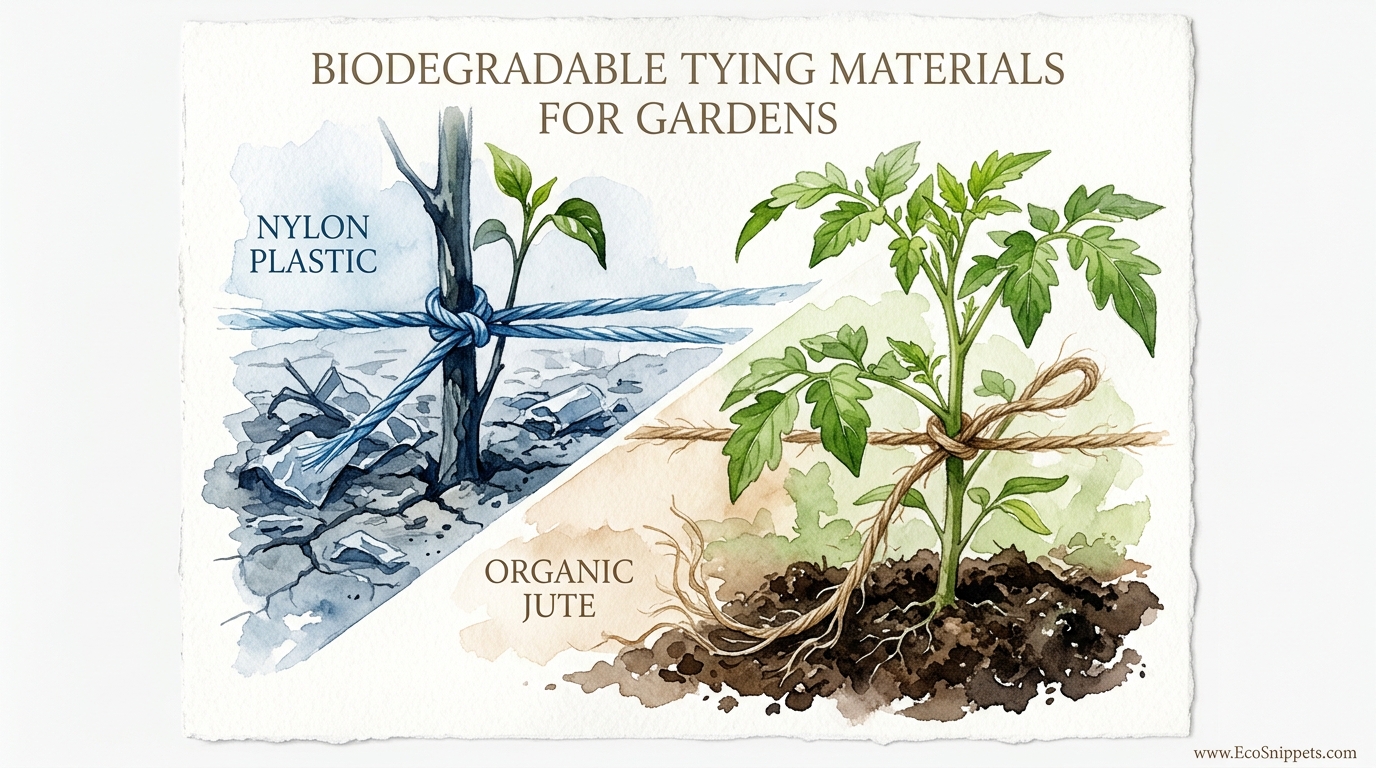
Is your garden support system quietly poisoning your soil with microplastics for the next 500 years? Every year, gardeners leave behind thousands of tiny fragments of synthetic twine in their soil. These microplastics never go away. Switching to natural fibers like Jute, Hemp, or Sisal ensures your tying material becomes a ‘slow-release’ snack for your worms at the end of the season. Use biology, not petroleum.
Walking through a thriving garden often feels like stepping into a sanctuary of life. You see the vibrant green of the leaves, the rich dark hue of the mulch, and the busy movement of beneficial insects. However, a hidden danger often lurks in the very materials used to keep those plants upright. Conventional green or blue plastic twine is made from polypropylene or nylon—materials designed to survive the elements indefinitely.
These synthetic cords do not truly disappear. Sunlight and friction eventually cause them to fragment into microscopic pieces that settle into the earth. Research indicates these microplastics disrupt the delicate structure of soil aggregates, reducing water retention and harming the microbial communities your plants rely on for nutrients. Choosing a biodegradable alternative is more than just an environmental statement; it is a return to the self-reliant wisdom of our ancestors who worked with the land, not against it.
Biodegradable Tying Materials For Gardens
Biodegradable tying materials are cordage options derived entirely from plant-based fibers. Unlike their synthetic counterparts, these materials are composed of complex carbohydrates like cellulose and lignin. Soil microorganisms, fungi, and earthworms recognize these fibers as a source of energy. This biological “familiarity” allows the materials to break down naturally over a single growing season or two, eventually returning to the earth as organic matter.
Historically, gardeners and farmers relied on locally available plants to secure their crops. Long before the era of petrochemicals, materials like jute, flax, and hemp were the backbone of agricultural support. These fibers were harvested from the bark or leaves of plants, retted in water to separate the strands, and spun into durable cordage. Today, these “nostalgic” materials are making a massive comeback as we realize the long-term cost of modern convenience.
In a practical garden setting, these materials serve every role a plastic tie would. They support heavy tomato vines, guide climbing peas up a trellis, and bundle harvested herbs for drying in the barn. The key difference lies in the cleanup. Instead of meticulously picking plastic fragments out of the compost pile, you can simply cut down your spent plants and toss the entire bundle—vines and twine together—directly into the bin. It is a closed-loop system that respects the cycle of the seasons.
The Science of Soil Health and Microplastics
Understanding why synthetic twine is problematic requires looking beneath the surface. When nylon or polypropylene twine sits in the sun, ultraviolet (UV) radiation breaks the polymer chains, making the plastic brittle. These fragments then migrate into the soil. Recent studies from institutions like Oregon State University show that microplastics can weaken soil structure by preventing the formation of stable aggregates. Without these “clumps,” soil becomes less permeable to air and water, essentially suffocating the roots.
Natural fibers offer a starkly different relationship with the earth. Jute twine, for example, can biodegrade in as little as 2 to 6 months in a warm compost environment. As it breaks down, it releases carbon-rich biomass that fuels the very microbes responsible for nitrogen fixation. This transition from a support tool to a soil amendment is the ultimate expression of garden efficiency.
Comparing the “Big Three”: Jute, Hemp, and Sisal
Choosing the right material depends on the weight of the plant and the duration of the support needed. Each natural fiber has a unique “pioneer-grit” profile that suits different tasks:
- Jute: Often called the “Golden Fiber,” jute is soft, pliable, and incredibly gentle on tender stems. It is the best choice for annuals that only need support for a single season.
- Hemp: Hemp is the undisputed king of strength in the natural fiber world. It has a higher tensile strength than jute and is naturally resistant to mold and rot, making it ideal for heavy indeterminate tomatoes or vertical squash.
- Sisal: Derived from the agave plant, sisal is a coarser, stiffer fiber. It provides an exceptional grip, making it the go-to for structural lashings or heavy bundles that must stay tight in high winds.
How to Use Natural Twine Effectively
Using natural fibers requires a slightly different approach than using slick, non-stretch plastics. Natural fibers have a “memory” and a specific way they interact with moisture. Wood and fiber both swell when wet and shrink as they dry, which can affect the tension of your trellises.
Successful trellising starts with the right knot. A clove hitch is excellent for starting a line on a wooden stake because the natural friction of the fibers prevents it from sliding down. For tying individual stems, the figure-eight loop is superior. This knot creates a “buffer zone” between the stake and the plant, allowing the stem to expand in diameter throughout the season without being girdled by the twine.
Tension management is also crucial. Jute and cotton twine may sag slightly after a heavy rain as the fibers relax. Check your lines every few weeks to ensure your “Florida Weave” or vertical supports haven’t developed too much slack. If you are supporting a heavy crop like melons, consider doubling up your strands or using a thicker 3-ply hemp cord to prevent snapping under the mid-summer weight.
Benefits of Choosing Natural Materials
The advantages of biodegradable tying materials extend far beyond simple waste reduction. They impact the health of the plant, the efficiency of the gardener, and the quality of the harvest.
Plant Safety: Natural fibers are generally softer and more “breathable” than plastic. Synthetic ties can trap moisture against the stem, creating a micro-environment where fungal diseases or “node necrosis” can thrive. Jute and hemp, conversely, allow air to circulate. A 2023 study published in the Journal of Urban Agriculture found that jute-trained peas produced 19% more pods and experienced significantly lower rates of stem failure compared to those tied with nylon.
Ease of Cleanup: Cutting down a trellis at the end of October is often the most tedious job in the garden. With natural twine, you don’t have to separate the string from the plant material. You can pull the whole system down and use it as “brown” carbon material in your compost heap. This saves hours of labor and ensures your compost remains pure and free of synthetic contaminants.
Grip and Texture: The microscopic “hairs” on jute and sisal provide a natural mechanical grip. Unlike smooth nylon, which can slide down a bamboo pole under the weight of a heavy tomato cluster, natural fibers bite into the surface of the support. This ensures your knots stay exactly where you placed them, even during summer storms.
Challenges and Common Mistakes
Transitioning to natural materials isn’t without its hurdles. One common mistake is using a fiber that is too weak for the task. Standard 1-ply jute is beautiful for tying bouquets, but it will likely snap under the 20-pound weight of a mature heirloom tomato plant. Always match the “ply” (the number of strands twisted together) to the expected load.
Moisture is the primary enemy of natural fibers. If your twine is in constant contact with damp soil, it may begin to rot before the season is over. To prevent this, ensure your first horizontal support line is at least 6 to 8 inches above the soil line. Another frequent error is storing natural twine in a damp shed over the winter. Mold can weaken the fibers in the spool, leading to “mystery breaks” the following spring. Keep your twine balls in a dry, airtight container when not in use.
Limitations: When Natural Fiber May Not Be Ideal
While natural fibers are the gold standard for annual vegetable gardening, they may not be the right choice for every situation. Permanent structures, such as heavy-duty grape arbors or long-term fruit tree espaliers, require supports that last for decades. In these cases, a stainless steel wire or a high-tensile galvanized cable is more appropriate than any fiber.
Extreme climates also present a challenge. In very humid, tropical environments, the decomposition of jute can happen so rapidly that the twine fails before the harvest is complete. In these regions, hemp or sisal—which have higher natural rot resistance—are better choices than jute or cotton. Additionally, if you are building a structure that must endure high-tension loads, such as a large-scale shade cloth support, the 20% extra tensile strength found in synthetic ropes might be a necessary trade-off for safety.
NYLON PLASTIC vs ORGANIC JUTE
This table compares the two most common materials to help you decide which belongs in your garden kit.
| Feature | Nylon / Polypropylene | Organic Jute / Hemp |
|---|---|---|
| Biodegradability | Non-existent (500+ years) | 100% (6–24 months) |
| Soil Impact | Leaves microplastics | Adds organic matter |
| Knot Security | Prone to slipping | Excellent mechanical grip |
| UV Resistance | Becomes brittle over time | Naturally resistant |
| Plant Health | Can concentrate heat/moisture | Breathable and gentle |
| Cleanup | Labor-intensive separation | Direct to compost |
Practical Tips and Best Practices
Maximizing the life and utility of your natural cordage requires a few “tricks of the trade.” Many old-timers suggest soaking your twine in a bucket of water for ten minutes before tying a complex trellis. This “pre-shrinks” the fiber, so when it dries in the sun, the knots tighten even further, providing a rock-solid hold.
If you find that your jute is rotting too quickly in your climate, you can treat it with a simple mixture of beeswax and linseed oil. Pull the twine through a block of beeswax to give it a light coating. This creates a natural water-resistant barrier that can extend the life of the twine by another 6 to 12 months without introducing toxic chemicals into your soil. This is an excellent technique for “semi-permanent” supports like bean teepees that you might want to leave up for two years.
- Use the “Two-Finger” Rule: When tying a loop around a plant stem, always leave enough space for two fingers to fit inside. This ensures the plant has room to grow without the twine cutting into the cambium.
- Color Coding: Natural jute is usually tan, but you can find it dyed with vegetable-based inks. Use different colors to mark different varieties or to identify which plants need extra fertilization.
- The Snap Test: Before reusing old twine from the previous season, give it a firm tug. If it snaps easily, the internal fibers have likely begun their journey back to the earth, and it should be composted immediately.
Advanced Considerations for the Serious Practitioner
For those managing larger acreages or professional market gardens, scaling natural fibers requires looking at tensile yield points. Hemp, for instance, has a tensile modulus significantly lower than nylon. This means hemp has a “controlled give.” Instead of resisting the natural diurnal swelling of a plant’s stem, hemp expands slightly with the plant. This biomechanical harmony is why advanced growers often prefer hemp for high-value crops like greenhouse-grown peppers or indeterminate tomatoes.
Another advanced technique is the use of “twine-dropping” in high-wire greenhouse systems. In this method, a spool of hemp twine is suspended from a ceiling wire. As the plant grows, more twine is released, allowing the plant to be lowered and leaned. Because natural hemp provides superior grip on the plant clips, it is often more reliable in these high-tension industrial environments than slippery synthetics.
Examples and Scenarios
Imagine you are trellising a row of “Brandywine” tomatoes. These plants can easily grow to eight feet and carry clusters of fruit weighing over a pound each. Using a thin 2-ply jute might result in a collapse during a mid-August thunderstorm. In this scenario, the seasoned gardener reaches for 3-ply hemp cord. It provides the strength of a small rope but remains soft enough not to damage the tomato’s skin. At the end of the year, the gardener cuts the hemp at the base and the top, allowing the entire withered vine and the twine to drop into the wheelbarrow for composting.
Contrast this with a flower garden where you are supporting delicate sweet peas. Here, a thick hemp cord would look clunky and could crush the tiny tendrils. A fine, single-ply cotton or jute string is the perfect choice. It blends into the foliage, provides enough surface area for the peas to grab onto, and vanishes into the soil by the following spring, leaving the flower bed ready for a new rotation without any plastic residue.
Final Thoughts
Moving away from synthetic garden ties is a small change that yields massive dividends for the health of your soil. By rejecting the “plastic-fix,” you are choosing to work in harmony with the natural cycles of growth and decay. Jute, hemp, and sisal are not just strings; they are tools of restoration that turn into food for the very earth they once supported.
This approach requires a bit more mindfulness—a check of the tension here, a new knot there—but it rewards you with a cleaner, more vibrant garden. It is a return to a standard of excellence where nothing is wasted and every material has a purposeful beginning and a beneficial end. Start small this season by replacing just one roll of plastic twine with natural fiber, and watch how your garden responds to the change.
The journey toward a regenerative garden is built on these tiny, everyday decisions. As you walk your rows this summer, take pride in knowing that your support system isn’t leaving a toxic legacy. Instead, it is quietly preparing to become the very compost that will feed next year’s harvest. That is the grit and wisdom of a true steward of the land.
