How To Become More Self-Sufficient Without Starting a Full-Blown Farm…
Want to start preserving your harvest, making your own soap, or building a backyard root cellar — but not sure where to begin? “Homesteading Advice” gives you instant lifetime access to 35+ practical homesteading books on food preservation, veggie gardening, DIY natural cleaning products (save over $250 per year with this skill alone), brewing, off-grid energy, and a whole lot more…
Click Here To Check It Out Now!
The secret to ancient ales wasn’t found in a store; it was found at the edge of the forest for zero dollars. Before hops became a global commodity, brewers used ‘Gruit’—a blend of local bittering herbs. These plants grow for free in your fields and offer medicinal properties hops simply can’t match. It’s time to stop paying for flavor and start foraging it.
Modern brewing has convinced us that a beer without hops isn’t a beer at all. This is a historical lie. For centuries, the “gruitier” was a person of immense power, holding the secret recipes for herbal blends that defined the flavor of local civilizations. Stepping back into this world is more than just a hobby; it is an act of self-reliance. It is about reclaiming the grit of our ancestors who didn’t rely on global supply chains to fill their mugs.
Brewing Beer Without Hops: Foraging Guide
Gruit is an ancient herbal mixture used for bittering and flavoring beer, predominantly used in Europe before the widespread adoption of hops between the 11th and 16th centuries. The term refers to both the herb blend itself and the resulting beverage. In the Middle Ages, the right to produce and sell gruit was often a state-controlled monopoly known as Grutgerechtigkeit, essentially acting as a precursor to modern alcohol taxation.
Local herbs provided the necessary counterbalance to the sweetness of the malted grain. While hops eventually won the brewing war due to their superior preservative qualities and the rise of industrial standardization, gruit offers a far more diverse palette of flavors. From the resinous notes of Bog Myrtle to the spicy astringency of Yarrow, foraging for your ingredients connects the brew directly to the land beneath your feet.
This guide exists to help the modern pioneer navigate the woods and fields to find these bittering agents. Understanding these plants is about more than just taste; it is about recognizing the medicinal and stimulating properties that our ancestors valued. Unlike the sedative, sleep-inducing quality of hops, many gruit herbs were known for being mildly stimulating or even psychoactive, leading to the legendary “bawdy” reputation of medieval ale houses.
How the Herbal Transition Works
The shift from gruit to hops was not an overnight change but a slow, centuries-long transition driven by politics, shelf life, and economics. Hops contain alpha acids that, when boiled, provide a consistent bitterness and a powerful antibacterial shield. Gruit herbs also possess antiseptic properties, but they are often more volatile and less predictable than the standardized hop pellet.
To work with wild herbs, you must understand the three roles they play: bittering, flavoring, and aroma. In a standard 60-minute boil, the “bittering” herbs are added early to extract their resins. “Flavoring” herbs go in during the final 15 to 20 minutes, and “aroma” herbs are added at flameout or during fermentation (dry-herbing). This process mimics modern hop schedules but requires a deeper understanding of the specific plant parts—leaves, flowers, or roots—being used.
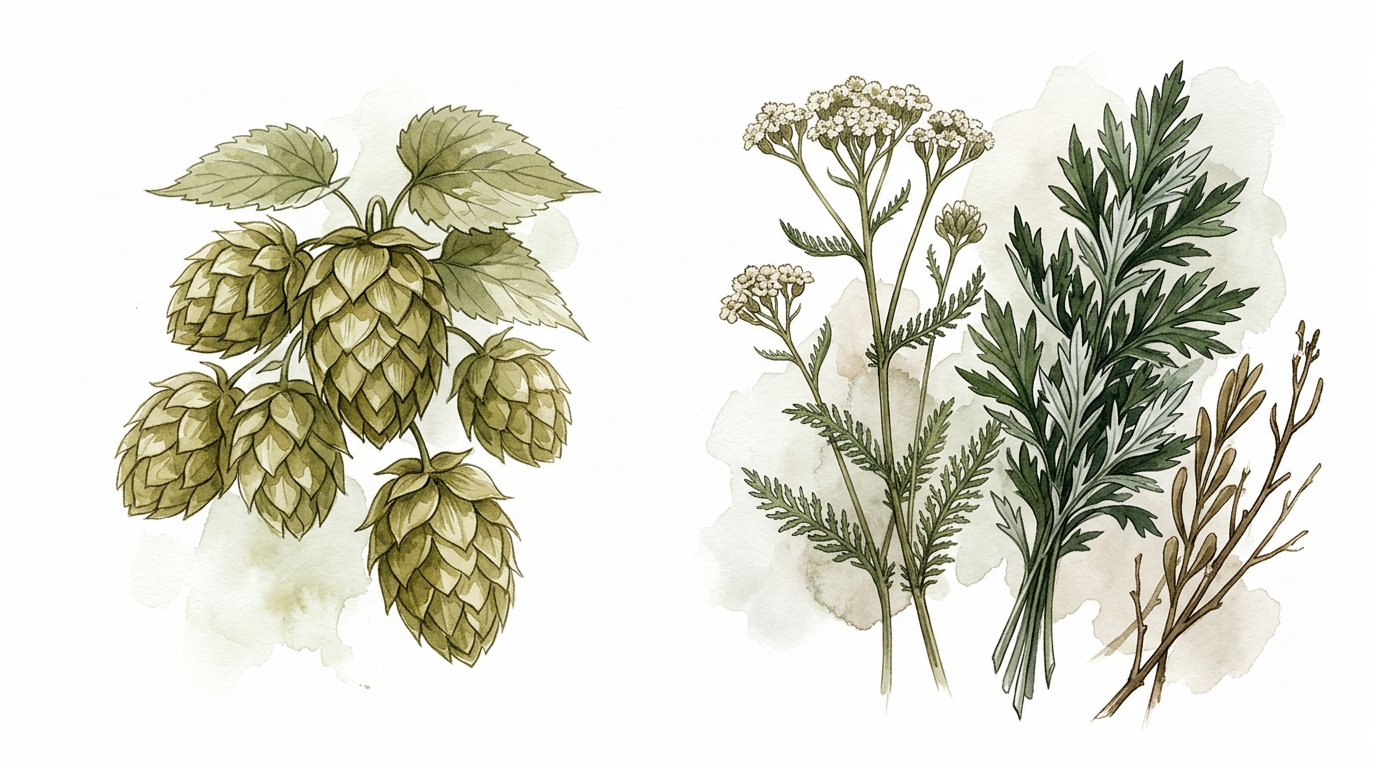
The most common “Holy Trinity” of gruit includes:
- Yarrow (Achillea millefolium): Known as the “pioneer’s hop,” it provides a sharp, medicinal bitterness and floral aromatics.
- Bog Myrtle (Myrica gale): Also called Sweet Gale, it offers a wonderful resinous, peppery scent and serves as a natural antiseptic.
- Marsh Rosemary (Ledum palustre): Used for its potent, almost intoxicating aromatics, though it must be used sparingly.
Benefits of Foraging Your Flavor
Reclaiming the gruit tradition offers practical advantages that go beyond the novelty of a “historical” drink. The most immediate benefit is the cost. Hops have become a massive commodity, with prices fluctuating based on global demand and crop yields. Foraging for your own bittering agents reduces your input costs to zero, requiring only your time and a pair of sturdy boots.
Medicinal value is the second major advantage. Most gruit herbs were selected not just for taste but for their health benefits. Yarrow is a renowned wound-healer and digestive aid; Mugwort is known to stimulate dreams and aid in liver function. When you brew with these plants, you are creating a “tonic” in the truest sense of the word. You are infusing your beverage with the vitamins and antioxidants of the wild landscape.
Local terroir is the third benefit. A beer brewed with herbs from your own hillside will never taste like a beer brewed anywhere else. Hops are now a standardized global product, meaning a West Coast IPA tastes largely the same whether it is brewed in California or Berlin. Gruit restores the concept of place to brewing. It allows the local environment—the soil, the rainfall, and the specific wild cultivars—to dictate the character of the ale.
Challenges and Common Mistakes
The biggest challenge in gruit brewing is the risk of misidentification. The forest is not a supermarket; it contains look-alikes that can be dangerous. For example, Yarrow has feathery leaves that a novice might confuse with Poison Hemlock. While the flowers look different, the penalty for a mistake is high. Always use a reputable field guide and never harvest a plant unless you are 100% certain of its identity.
Over-bittering is a frequent error for first-time herbal brewers. Some plants, like Wormwood (Artemisia absinthium) or Horehound, are intensely bitter—far more so than most hops. Adding a full ounce of dried Wormwood to a 5-gallon batch can result in a “potion” that is nearly undrinkable. Most practitioners recommend starting with small, half-ounce additions and tasting the wort frequently.
Consistency is the final hurdle. Wild plants do not come with an “alpha acid” percentage printed on the side. The bitterness of a plant depends on the time of year it was harvested, the amount of sun it received, and whether it was dried or used fresh. Professional brewers loathe this unpredictability, but for the home-based pioneer, it is part of the craft. Recording your harvest dates and locations is the only way to build a personal database of flavor.
Limitations: When This May Not Be Ideal
Shelf life is the primary limitation of gruit. Hops are superior preservatives; they are the reason we can ship beer across oceans without it turning into vinegar. Herbal ales generally have a shorter peak window. If you are brewing a low-alcohol session ale with foraged herbs, plan to drink it within a few weeks. If you want a gruit to age, you must increase the alcohol content (ABV) to act as the primary preservative.
Legal constraints are another factor for those looking to turn their hobby into a business. Many regions have strict “purity laws” or labeling requirements that make selling hop-free beer difficult. In the United States, for example, the TTB (Tax and Trade Bureau) has specific lists of approved ingredients for beer. While you can brew whatever you want for your own table, taking it to market requires navigating a thicket of red tape.
Flavor expectations can also be a limitation. Most people associate the word “beer” with the specific citrus, pine, or floral notes of modern hops. Gruit is earthy, medicinal, and sometimes “funky.” If you are brewing for a crowd that only drinks light lagers, a Yarrow and Mugwort ale might be a hard sell. It is an acquired taste that requires a palate willing to explore the bitter, savory side of the botanical world.
Optional Comparison: Bought Hops vs. Wild Gruit
| Factor | Bought Hops | Wild Gruit |
|---|---|---|
| Cost | $2–$5 per ounce | Free (Labor only) |
| Preservation | High (Excellent shelf life) | Moderate to Low |
| Flavor Profile | Citrus, Pine, Tropical, Resin | Earth, Spice, Menthol, Musk |
| Primary Effect | Sedative (Cerebral/Sleepy) | Stimulating/Tonic |
| Availability | Global Supply Chain | Hyper-Local |
Practical Tips for the Foraging Brewer
Successful gruit brewing starts with the harvest. Pick your herbs on a dry, sunny morning after the dew has evaporated but before the heat of the afternoon sun begins to dissipate the essential oils. Focus on the flowering tops and the newest leaves, as these contain the highest concentration of bittering resins. If you cannot brew immediately, hang the herbs in small bundles in a cool, dark place with good airflow to dry.
Cleaning your foraged bounty is essential to avoid “off-flavors.” While you don’t need to bleach your plants, a gentle rinse in cold water to remove insects and dust is a good idea. Some brewers prefer to use dried herbs because the drying process often mellows the “green,” grassy flavors that fresh plants can sometimes impart. If using fresh herbs, double the weight called for in a dried-herb recipe to account for the water content.
Use a muslin bag for your herbal additions. Unlike hop pellets that break down and settle at the bottom of the kettle, whole stalks of yarrow or mugwort can be difficult to strain out. Placing them in a weighted bag allows you to remove them easily at the end of the boil, preventing unwanted “vegetal” flavors from leaching into the wort during the cooling process.
Advanced Considerations: Fermentation and Blending
Serious practitioners eventually move beyond single-herb batches and begin crafting “complex” gruit profiles. This often involves blending herbs to balance the four taste categories: Bitter, Pungent, Aromatic, and Sweet. For example, you might use Yarrow for bitterness, Bog Myrtle for aroma, and a touch of Juniper Berries for a resinous finish. Balancing these requires a “chef’s palate” and a willingness to experiment with small 1-gallon test batches.
Wild fermentation is another frontier for the gruit brewer. Before the isolation of yeast strains, all beer was fermented by the microbes present in the air and on the plants themselves. Using foraged herbs that haven’t been boiled—added during the cooling phase—can introduce wild Saccharomyces and Lactobacillus. This creates a sour, complex ale that more closely resembles what a 12th-century farmer would have actually drunk.
Scaling up a gruit recipe is not always linear. Because of the potency of some alkaloids, a fivefold increase in batch size does not always mean a fivefold increase in herbs. When moving to larger volumes, it is safer to scale the “bittering” herb more conservatively while maintaining the ratios for the aromatic additions. This prevents the “medicinal” quality from becoming overwhelming in large volumes.
Example Scenario: The “Fields of Midsummer” Amber Ale
Imagine a 5-gallon batch designed to showcase the best of foraged bittering. You start with a simple malt bill: 10 lbs of 2-Row Pale Malt and 1 lb of Crystal 60L to provide a sweet, bready foundation. Instead of reaching for a bag of East Kent Goldings, you head to the back pasture.
At the 60-minute mark of the boil, you add 1 ounce of dried Yarrow flowering tops. This establishes the baseline bitterness. With 15 minutes left, you toss in 0.5 ounces of Mugwort and 1 ounce of crushed Juniper Berries to add depth and a forest-like spice. At flameout, you add a large handful of fresh Sweet Gale (Bog Myrtle) to capture those volatile, peppery aromatics.
After a week of fermentation with a neutral ale yeast, the result is a deep amber liquid. It doesn’t smell like a grapefruit or a pine tree. It smells like the earth after a rainstorm—spicy, herbal, and ancient. This ale provides a clean, bracing bitterness that clears the palate and leaves you feeling refreshed rather than heavy and lethargic.
Final Thoughts
Brewing without hops is an invitation to look at the world differently. It turns a walk through the woods into a grocery run and transforms a standard kitchen into a laboratory of ancient alchemy. By stepping away from the hop-centric model, you are reclaiming a piece of human history that was nearly taxed and regulated out of existence.
This journey requires patience and a respect for the potency of the wild. Not every batch will be a masterpiece; some will be too bitter, and others will be strange beyond words. However, the satisfaction of drinking a beer made entirely from local grain and foraged plants is a reward that no store-bought six-pack can provide.
Start small, stay safe, and trust your senses. The forest is waiting to provide your next great flavor for the low price of a little effort and a lot of curiosity. Reclaim the gruit, and you reclaim the very soul of traditional brewing.
