How To Become More Self-Sufficient Without Starting a Full-Blown Farm…
Want to start preserving your harvest, making your own soap, or building a backyard root cellar — but not sure where to begin? “Homesteading Advice” gives you instant lifetime access to 35+ practical homesteading books on food preservation, veggie gardening, DIY natural cleaning products (save over $250 per year with this skill alone), brewing, off-grid energy, and a whole lot more…
Click Here To Check It Out Now!
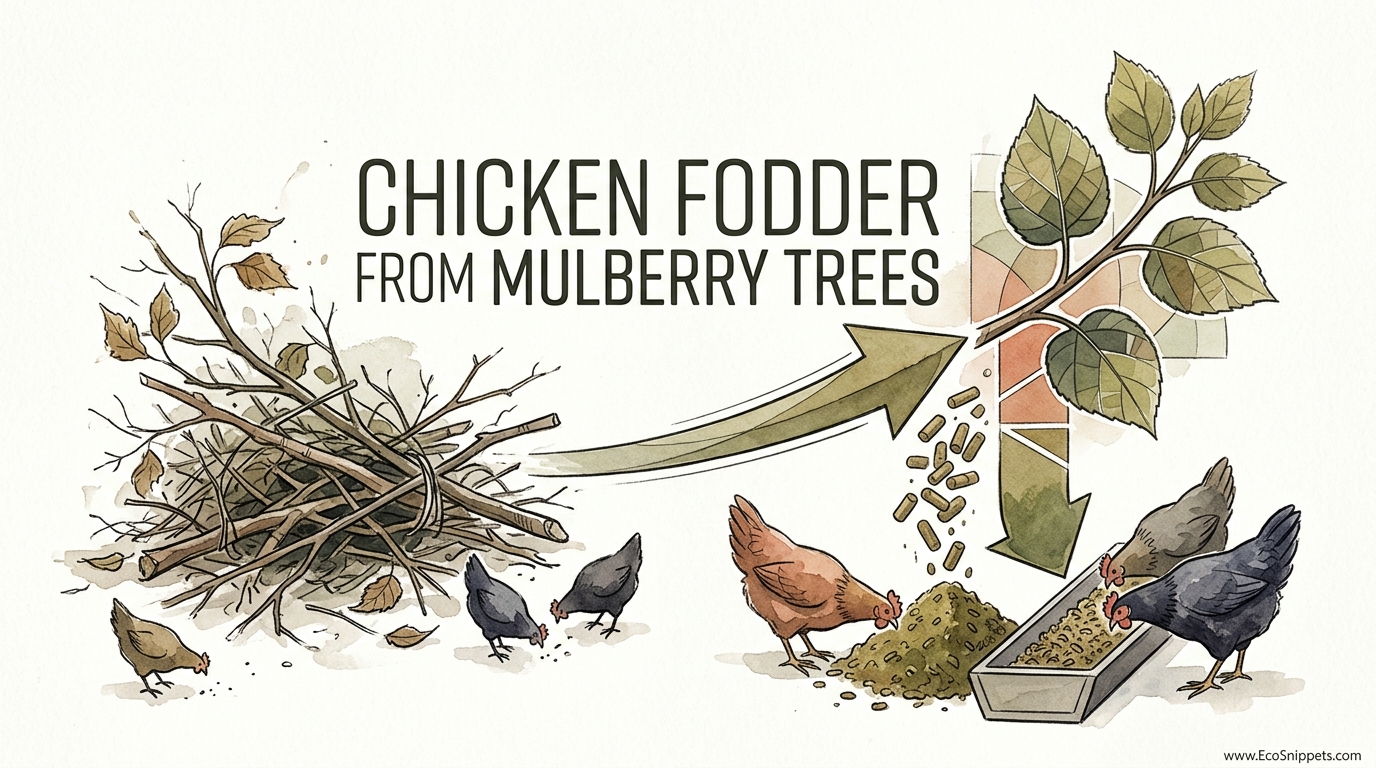
Those ‘annoying’ fast-growing branches are actually the highest quality livestock feed on your property. Most homesteaders hate how fast mulberry trees grow, but that biomass is a goldmine. Feeding the leaves to silkworms create a high-protein supplement for your poultry that outperforms store-bought grain and costs you nothing.
Modern chicken feed often relies on imported soy and processed fishmeal, which are expensive and distance the keeper from the source. Turning to the ancient wisdom of sericulture allows a homesteader to harness the aggressive growth of the mulberry tree and convert it into high-density animal protein. This system functions as a biological engine, turning sunlight and soil nutrients into leaf matter, then into larvae, and finally into eggs and meat.
Pioneer grit is about seeing a ‘weed’ tree and recognizing it as a sustainable fodder bank. Every time you prune a mulberry branch, you are holding the raw materials for a superior flock. Understanding the relationship between the tree, the worm, and the bird is the first step toward true nutritional independence on the farm.
Chicken Fodder From Mulberry Trees
Chicken fodder from mulberry trees is a three-tiered nutritional system that utilizes the *Morus* genus as a primary biomass producer. In this system, the tree provides high-protein foliage that is fed to silkworms (*Bombyx mori*), which are then harvested as a nutrient-dense snack for poultry. This method bypasses the limitations of feeding leaves directly to chickens, as many birds struggle to digest large quantities of raw leaf fiber.
Mulberry leaves are unique in the plant world for their remarkable nutritional profile, often containing 15% to 35% crude protein on a dry weight basis. This makes them more akin to a legume like alfalfa than a standard deciduous tree. However, the true value of the mulberry is unlocked when it is processed through the gut of a silkworm. The worm concentrates the plant’s minerals, vitamins, and amino acids into a soft-bodied package that chickens find irresistible.
In real-world homesteading, this practice serves as a ‘protein engine’ during the peak growing season. While traditional grains provide the energy (carbohydrates) for maintenance, the silkworm supplement provides the building blocks for rapid growth and consistent egg laying. It is a system that thrives on waste, turning the ‘annoying’ pruning chores of spring and summer into a high-value harvest.
Historical precedents for this exist in traditional Asian agricultural systems, where silkworm pupae were a staple byproduct of the silk industry. Homesteaders can adopt this same logic without the need for high-end textile machinery. The focus here is not on the silk, but on the living creature inside the cocoon—a biological concentrate of everything the mulberry tree has to offer.
The Biological Bridge: How the Protein Loop Works
The process begins with the mulberry tree’s ability to produce massive amounts of biomass in a single season. A healthy white mulberry (*Morus alba*) can produce up to 2.5 kilograms of fresh leaves per year in a backyard setting, while intensive plantations can yield 8 to 21 tons of foliage per acre. This aggressive growth is the fuel for the entire cycle.
Silkworms are specialized feeders that have evolved to eat nothing but mulberry leaves. When they hatch from their eggs, they are no larger than a pinhead, but they grow at an exponential rate. Over the course of approximately 25 to 30 days, a silkworm will increase its weight by 10,000 times. This growth represents a massive conversion of plant carbohydrates and proteins into insect lipids and muscle.
Feeding these larvae to chickens creates a direct transfer of high-quality nutrition. Unlike many other insects, silkworms are ‘clean’ feeders. Because they eat only fresh leaves, they do not carry the pathogens or heavy metals sometimes found in insects raised on compost or animal waste. This ensures that the protein entering your chicken’s diet is of the highest possible purity.
The cycle concludes when the chickens consume the larvae or the pupae. This infusion of animal-sourced protein triggers a visible improvement in flock health. Feathers become glossier, eggshells harden, and the yolks take on a deeper, more vibrant color. It is a closed-loop system where the only external input is the sunlight hitting the mulberry leaves.
Benefits of the Silkworm Protein Loop
The primary benefit of this system is the reduction of feed costs. Feed usually accounts for 60% to 80% of the total cost of raising poultry. By replacing a portion of commercial soy-based feed with home-grown silkworms, a homesteader can significantly lower their monthly overhead. Silkworm pupae meal has been shown to contain between 40% and 80% crude protein, making it one of the most concentrated feed sources available on a small scale.
Nutritional quality is another significant advantage. Silkworms are rich in essential amino acids like lysine and methionine, which are often the limiting factors in poultry growth. Commercial feeds often have to supplement these synthetically, but the silkworm provides them in a natural, highly bioavailable form. Additionally, the pupae are rich in omega-3 fatty acids, which translate directly into healthier eggs for human consumption.
Sustainability and waste reduction are inherent to the mulberry engine. Instead of hauling pruning waste to the landfill or burning it, the branches are stripped of their leaves to feed the worms. The leftover ‘frass’ (silkworm droppings) is an exceptional fertilizer, high in nitrogen and beneficial microbes. Returning this frass to the base of the mulberry trees creates a self-fertilizing cycle that improves the soil year after year.
Flock engagement and health also see a boost. Chickens are natural insectivores, and providing live or dried silkworms encourages natural foraging behaviors. This mental stimulation reduces stress and pecking orders within the coop. Furthermore, the bioactive compounds found in mulberry leaves—such as flavonoids and antioxidants—are passed through the worm to the bird, potentially improving immune response and reducing the need for antibiotics.
Setting Up Your Protein Engine: Step-by-Step
Establishing a silkworm-to-chicken system requires a bit of planning but no expensive equipment. The first step is to secure a reliable source of fresh mulberry leaves. If you don’t already have trees, planting white mulberry (*Morus alba*) is the best choice for leaf production. Ensure the trees are grown in well-drained soil with a pH between 6.2 and 6.8 for optimal growth.
Ordering silkworm eggs is the next step. These are usually sold in ‘batches’ and should be kept in the refrigerator until your mulberry trees have leafed out in the spring. Once the leaves are about an inch wide, remove the eggs from the fridge and keep them at a consistent temperature of 75°F to 85°F. They will hatch in about 7 to 10 days.
Raising the larvae involves daily care and fresh fodder. For the first few days, finely chop the youngest, most tender mulberry leaves to help the tiny hatchlings feed. As they grow through their five ‘instars’ (growth stages), you can provide whole leaves and even small twigs. Feeding should happen 2 to 4 times a day, and the trays must be kept clean to prevent disease.
Harvesting the worms can happen at different stages. You can feed the large, juicy caterpillars directly to your chickens once they reach their final instar, or you can allow them to spin cocoons. If you let them cocoon, you can harvest the pupae inside after about three days of spinning. These pupae can be fed fresh, or they can be dried and ground into a meal that can be mixed into the birds’ regular grain ration.
Managing the Trees: Pollarding and Coppicing
To get the most biomass for your silkworms, you must manage your mulberry trees specifically for leaf production. Standard fruit-tree pruning is not enough. To truly maximize yield, homesteaders should use techniques like pollarding or coppicing. These methods involve cutting the tree back severely during its dormant phase to encourage a flush of vigorous, leaf-heavy growth in the spring.
Coppicing is the practice of cutting the tree down to near ground level. This causes the root system to send up multiple ‘suckers’ or long, straight wands. These wands are easy to harvest because they are at eye level and are covered in large, high-protein leaves. This method is ideal for creating a ‘mulberry hedge’ that can be harvested with a simple pair of shears or a sickle.
Pollarding is similar but involves cutting the branches back to a main trunk at about shoulder height. This keeps the new growth out of reach of browsing animals like goats or deer, while still keeping the leaves accessible for the homesteader. Pollarding creates a ‘knuckle’ at the top of the trunk from which dozens of new branches sprout every year.
Regular harvesting of leaves during the growing season actually encourages the tree to produce more. By stripping a branch of its leaves, you signal the tree to redirect its energy into new buds. However, it is vital to stop harvesting at least six weeks before the first frost to allow the tree to store energy for the winter. This ensures the ‘engine’ remains healthy and ready to roar back to life the following spring.
Challenges and Common Mistakes
One of the biggest challenges in raising silkworms is maintaining cleanliness. Silkworms are domesticated creatures and have very little resistance to pathogens. The most common mistake is allowing old, uneaten leaves and droppings (frass) to build up in the rearing trays. This creates a damp environment where mold and bacteria thrive, which can wipe out an entire colony in days. Always use mesh-bottomed trays to allow frass to fall through.
Temperature and humidity fluctuations are another pitfall. If the environment becomes too cold, the silkworms’ metabolism slows down, and they will stop eating. If it becomes too dry, they may struggle to molt properly, leading to ‘stuck’ skins and eventual death. Aim for a steady 78°F and a humidity level of about 70%. A simple spray bottle and a thermometer-hygrometer are essential tools for success.
Leaf quality and availability can also be a bottleneck. Silkworms are gluttonous eaters, especially in their final stage. A common error is starting with too many eggs and running out of mulberry leaves before the worms are ready to harvest. One thousand silkworms can consume over 50 pounds of leaves in their lifetime, with 80% of that consumption happening in the final week. Always match your colony size to the actual biomass your trees can provide.
Lastly, avoid using leaves from trees that have been treated with pesticides. Silkworms are extremely sensitive to chemicals. Even ‘drift’ from a neighbor’s yard can be fatal. Always test a new tree by feeding a few leaves to a small group of worms and waiting 24 hours before committing the entire colony to that food source.
Limitations and Realistic Boundaries
The mulberry silkworm system is a seasonal engine. Because silkworms require fresh green leaves, the production of fresh protein stops when the trees go dormant in the winter. While you can dry the pupae for winter use, the labor and energy required for year-round production of live worms are usually beyond the scope of a standard homestead. This is a system meant to capitalize on the summer bounty.
Labor intensity is a factor that must be weighed. Unlike a bag of store-bought grain, silkworms require daily attention. Harvesting leaves, feeding the larvae, and cleaning trays can take 30 to 60 minutes a day depending on the scale of your operation. For a busy homesteader, this might be a secondary project rather than a primary feed source.
Climate also plays a role in the effectiveness of this system. Mulberry trees are hardy, but they thrive best in zones 5 through 9. In extremely cold regions, the growing season may be too short to support multiple batches of worms. Conversely, in very humid tropical areas, disease pressure on the silkworms can be significantly higher, requiring even more stringent sanitation practices.
Finally, it is important to remember that silkworms are a supplement, not a total diet replacement. While they provide excellent protein and fats, chickens still need carbohydrates for energy and grit for digestion. Overfeeding silkworms can lead to birds that are overweight or have loose stools due to the high fat content of the pupae. Moderation and balance are key to maintaining a healthy flock.
Silkworm vs. Soy: A Nutritional Comparison
To understand why the mulberry engine is superior to commercial options, we must look at the raw numbers. Most commercial poultry feeds use soybean meal as the primary protein source. While soy is effective, it lacks the amino acid density and the natural fats found in insect-based proteins.
| Nutrient | Soybean Meal | Silkworm Pupae (Dried) |
|---|---|---|
| Crude Protein | 44% – 48% | 55% – 75% |
| Crude Fat | 1% – 2% | 20% – 30% |
| Lysine | 2.8% | 4.5% – 6.0% |
| Methionine | 0.6% | 1.5% – 2.5% |
| Digestibility | Moderate | Very High |
As the table shows, silkworms provide significantly more protein and fat than soybean meal. The higher levels of lysine and methionine are particularly important for feather development and egg production. Furthermore, the fats in silkworms are rich in linoleic and alpha-linolenic acids, which are essential for bird health and are often lacking in low-quality commercial grains.
Practical Tips and Best Practices
Maximizing the efficiency of your mulberry engine requires a few ‘pro-tips’ from those who have practiced the old ways. First, stagger your silkworm batches. Instead of hatching 1,000 eggs at once, hatch 250 eggs every week. This creates a steady ‘rolling’ harvest of protein for your chickens and prevents you from being overwhelmed by leaf-demand during the worms’ final growth spurt.
Store your mulberry leaves correctly to keep them fresh. If you harvest a large batch of branches, you can keep them in a bucket of water in a cool, shaded area for up to 48 hours. For longer storage, strip the leaves and place them in a sealed plastic bag in the refrigerator. Cold, crisp leaves are more palatable to the worms and carry higher moisture content, which keeps the larvae hydrated.
Use the ‘sun-dry’ method for surplus pupae. If you have more silkworms than your chickens can eat in a day, don’t let them go to waste. Boil the cocoons briefly to kill the pupae (this is the traditional silk-making step), then spread the pupae out on a screen in the sun. Once they are bone-dry, they can be stored in jars for months. These ‘protein croutons’ are an excellent winter treat when the trees are bare.
Don’t forget the frass. The droppings of the silkworms are a concentrated form of the mulberry tree’s nutrients. Instead of tossing it in the trash, sprinkle it directly onto your garden beds or back around the base of the mulberry trees. It is an ‘active’ fertilizer that breaks down quickly and provides an immediate boost to plant growth. This completes the nutrient cycle of the homestead.
Advanced Considerations: Scaling and Breeding
For the serious practitioner, scaling up the mulberry engine involves moving beyond buying eggs every year. Learning to ‘seed’ your own colony is a skill that ensures long-term self-reliance. To do this, allow a small percentage of your silkworms to complete their metamorphosis into moths. These moths do not fly and only live for a few days, during which they mate and lay hundreds of eggs.
Selective breeding can improve your yields over time. By choosing the largest, healthiest larvae to become your breeding stock, you can develop a strain of silkworms that is perfectly adapted to your local climate and the specific variety of mulberry tree you grow. This ‘landrace’ approach is the hallmark of traditional animal husbandry and leads to a more resilient system.
Scaling the tree side of the equation is equally important. If you find you are running out of leaves, consider ‘high-density’ planting. You can plant mulberry cuttings as close as 18 inches apart to create a ‘fodder forest.’ In this setup, the trees are never allowed to grow tall; they are kept as a continuous hedge that is cut back multiple times a season. This method produces the highest amount of leaf biomass per square foot of land.
Finally, consider the environmental impact. A mature mulberry-silkworm-chicken system acts as a carbon sink. The deep roots of the mulberry tree sequester carbon in the soil, while the rapid turnover of biomass into protein and manure builds topsoil. It is a regenerative practice that goes beyond ‘sustainable’ and actually improves the land it occupies.
Example Scenario: A Flock of Ten Chickens
Imagine a backyard homestead with ten laying hens. To provide a significant protein supplement, you might aim for a harvest of 100 large silkworms per day during the summer months. To support this, you would need approximately three to four mature white mulberry trees managed through pollarding. These trees would provide the 15 to 20 pounds of fresh leaves needed per week to keep your rolling batches of worms fed.
In this scenario, the homesteader spends 15 minutes each morning harvesting leaves and 15 minutes in the evening feeding and cleaning the trays. The chickens, receiving ten worms each per day, show a 15% increase in egg weight within the first month. The deep orange yolks become a signature of the farm, and the owner notices that the birds are significantly more active and alert.
Over a four-month summer season, this system can produce upwards of 12,000 silkworms. If dried, this represents a massive store of high-quality protein that can be used to stretch the winter grain supply. The ‘annoying’ mulberry branches that used to be a chore have now become the most valuable crop on the property, saving the homesteader over $100 in feed costs in a single season.
Final Thoughts
Those ‘annoying’ fast-growing branches are the key to a more resilient and self-sufficient homestead. By embracing the aggressive growth of the mulberry tree and the biological efficiency of the silkworm, you can create a protein engine that feeds your flock for free. It is a return to an ancestral way of thinking where waste does not exist, only untapped potential.
The journey toward nutritional independence starts with the simple act of planting a tree. Whether you are managing a single backyard mulberry or a half-acre fodder forest, the principles of sericulture offer a path away from industrial feed and back toward the rhythms of the earth. It is hard-won knowledge, but it is the kind of grit that builds a truly sustainable home.
Experiment with your trees, start with a small batch of eggs, and watch as your chickens transform. The results will be visible in every egg you crack and every bird that thrives under your stewardship. The mulberry engine is ready; it only needs a homesteader with the vision to start it.
