How To Become More Self-Sufficient Without Starting a Full-Blown Farm…
Want to start preserving your harvest, making your own soap, or building a backyard root cellar — but not sure where to begin? “Homesteading Advice” gives you instant lifetime access to 35+ practical homesteading books on food preservation, veggie gardening, DIY natural cleaning products (save over $250 per year with this skill alone), brewing, off-grid energy, and a whole lot more…
Click Here To Check It Out Now!
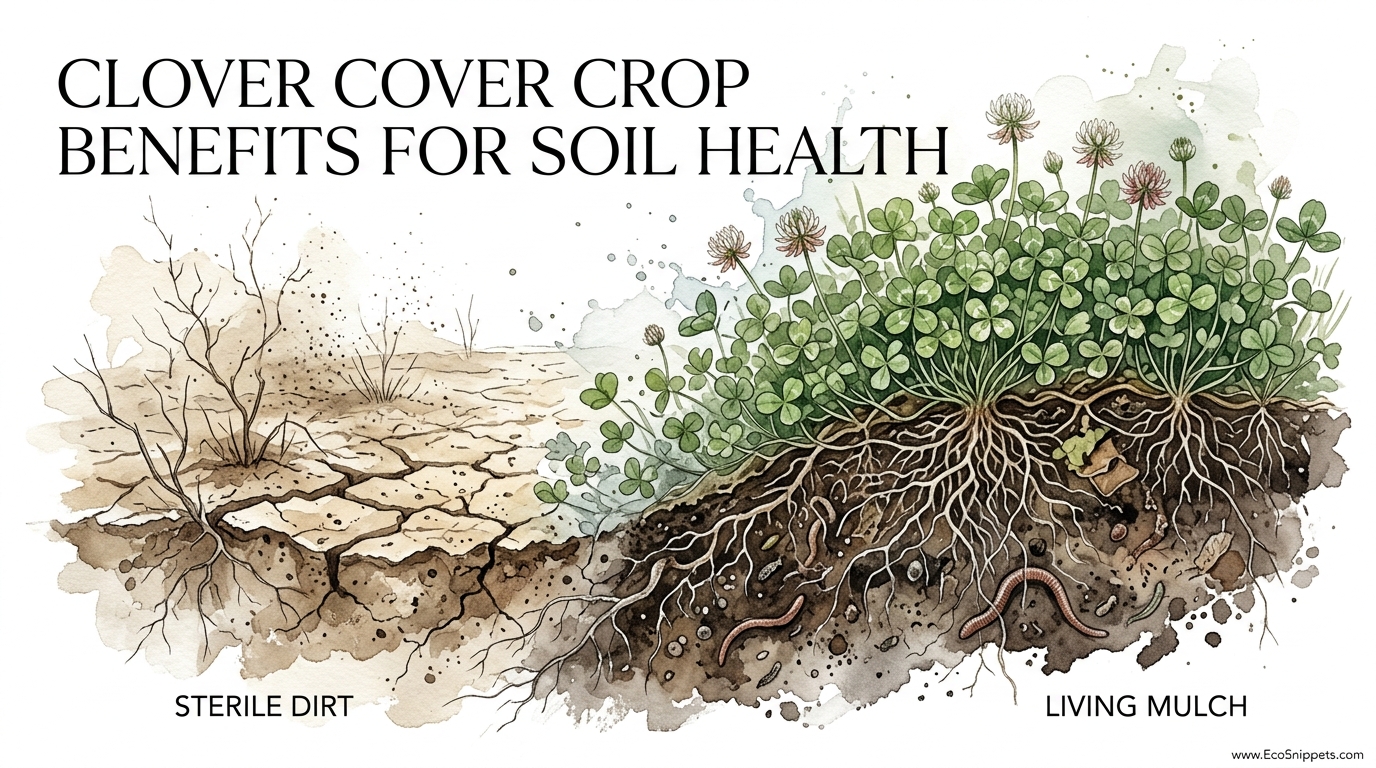
One of these soils requires a laboratory to stay ‘clean,’ while the other builds its own fertility for free. We have been taught that bare soil is tidy, but nature sees bare soil as a wound. When you spray to kill weeds, you kill the biology that feeds your plants. Planting a ‘living mulch’ crowds out the bad plants while fixing nitrogen and keeping your soil cool and moist. Stop killing and start growing.
For generations, the standard for a “good” garden was a sea of brown dirt, perfectly raked and devoid of a single blade of anything but the intended crop. Modern agriculture inherited this aesthetic from the industrial revolution, treating the earth like a sterile factory floor where nutrients are injected via a needle and weeds are treated like invaders to be annihilated. Ancestral wisdom tells a different story. The pioneers and the stewards who came before the age of petrochemicals understood that the earth hates to be naked. If you do not cover it with something useful, nature will cover it with something aggressive.
Embracing a living mulch—specifically clover—is a return to a system of self-reliance. It is the practice of growing your own fertilizer in place, protecting your topsoil from the scorching sun, and fostering a sub-surface livestock of microbes that do the heavy lifting for you. This transition requires a shift in perspective. You are no longer just a vegetable grower; you are a soil shepherd.
Clover Cover Crop Benefits For Soil Health
Clover is not merely a ground cover; it is a biological engine. As a member of the legume family, clover possesses a unique ability to pull nitrogen gas from the atmosphere and “fix” it into a form that plants can actually use. This process occurs through a partnership with Rhizobium bacteria that live in small nodules on the clover’s roots. While your neighbors are buying bags of synthetic nitrogen derived from natural gas, your clover is pulling that same nutrient out of the thin air for the cost of a handful of seeds.
Soil health is more than just a chemical balance; it is a physical and biological state. Clover’s root systems, whether the deep taproots of Red Clover or the dense, creeping mats of White Dutch Clover, act as organic tillers. These roots penetrate compacted layers, opening up channels for water and air to reach deep into the profile. When these roots eventually die back, they leave behind carbon-rich organic matter and “root tunnels” that improve drainage and aeration.
In a real-world setting, a healthy stand of clover acts as a shock absorber for the environment. During heavy rains, the foliage breaks the impact of water droplets, preventing the “crusting” effect that kills soil breathability. In the heat of July, that same green carpet acts as an insulator. Research indicates that bare soil can reach temperatures high enough to bake soil microbes alive, whereas soil under a living mulch remains significantly cooler and more hospitable to the life forms that sustain your crops.
How to Establish a Clover Living Mulch
Establishing a living mulch is a patient man’s game. You cannot simply throw seed onto a weed-choked patch of dirt and expect a lush carpet. The ground must be prepared to give the clover a fighting chance to outpace the local “scout” weeds that have been waiting for their moment.
Start by clearing the area of aggressive perennial weeds. Use a shallow cultivation or a silage tarp to terminate existing growth without flipping the soil and bringing a fresh batch of weed seeds to the surface. Once the bed is relatively clean, broadcast your clover seed. For small-scale gardens, a rate of roughly 1/4 pound of white clover seed per 1,000 square feet is a standard benchmark. Larger operations may look at 2 to 4 pounds per acre for white clover, or up to 15 pounds per acre for a dense stand of red clover.
Inoculation is a critical step that many beginners skip. Unless clover has been grown in that specific patch of earth recently, the necessary Rhizobium bacteria may not be present in high enough numbers. Coating your seeds with a specific legume inoculant ensures that the nitrogen-fixing factory starts up immediately upon germination.
Timing depends on your climate, but many successful growers prefer “frost seeding” in late winter or early spring. This involves broadcasting seed onto the frozen ground. As the soil freezes and thaws, it expands and contracts, naturally pulling the tiny clover seeds into the perfect depth. If you miss the frost window, a spring sowing once the soil hits 60°F works well, provided you can keep the area moist during the ten-day germination period.
Advantages of the Living Carpet
The most immediate benefit of a clover living mulch is the reduction in labor. Once the clover is established, it occupies the ecological niche that would otherwise be filled by pigweed, lamb’s quarters, or crabgrass. While it is true that clover competes with your main crop, it is a “polite” competitor compared to the aggressive, nutrient-sucking weeds that nature sends to fill a vacuum.
Moisture retention is the second pillar of the clover system. Clover reduces surface evaporation by shading the soil. While the clover itself transpires water, the net result in many climates is a more stable moisture profile. In times of moderate drought, the clover mulch keeps the soil surface from cracking, which protects the delicate feeder roots of your tomatoes or peppers.
Pollinator support is an ancestral benefit that modern monocultures have forgotten. A blooming field of clover is a sanctuary for honeybees, bumblebees, and predatory insects. These “good bugs” do more than just make honey; they are your frontline defense against pests. Braconid wasps and ladybugs find refuge in the cool, moist microclimate of the clover, ready to move onto your vegetable plants the moment aphids or hornworms appear.
Challenges and Common Pitfalls
Nothing worth doing is without its difficulties. The primary challenge of a living mulch is “competition management.” If you plant a high-resource crop like corn or heavy-feeding brassicas into a thick, established stand of clover without suppression, the clover can out-compete the crop for water and nutrients, particularly in the early stages of growth.
Slug populations can also increase in a living mulch system. Slugs love the cool, damp environment provided by the clover canopy. If you live in a region with high moisture and a history of slug damage, you must be diligent. Mowing the clover short before transplanting your main crop can help dry out the surface and make the environment less hospitable to these pests.
Another common mistake is treating the clover as a “set it and forget it” solution. Clover requires management. If allowed to grow unchecked, some varieties like Red Clover can reach two feet in height, easily shading out smaller vegetable transplants. You must be willing to mow or “weedsurf” the clover to keep it at a height that serves the soil without strangling the crop.
Limitations: When This May Not Work
Living mulches are not a universal panacea. In extremely arid regions where every drop of water is a precious resource, the water consumption of the clover may outweigh its benefits. If you are farming in a desert with limited irrigation, a “dead mulch” like straw or woodchips might be a more responsible choice for moisture conservation.
Crops that require direct seeding—such as carrots, parsnips, or lettuce—are difficult to grow in a living mulch. The tiny seeds of these vegetables cannot compete with the established root system and canopy of the clover. Living mulch systems are best suited for “transplant-heavy” gardens. Planting a sturdy tomato, pepper, or broccoli start into a small “cleared island” within the clover gives the vegetable the head start it needs to succeed.
Soil pH is another limiting factor. Clover generally prefers a pH between 6.0 and 7.0. In highly acidic soils (below 5.5), the Rhizobium bacteria struggle to survive, and the nitrogen fixation process will stall. Before investing in a large-scale clover transition, a basic soil test is a mandatory piece of pioneer due diligence.
Sterile Dirt vs. Living Mulch: A Comparison
Understanding the trade-offs between the industrial “clean” method and the regenerative “living” method requires looking at long-term costs and soil health markers.
| Factor | Sterile Dirt (Bare Ground) | Living Mulch (Clover) |
|---|---|---|
| Fertility Source | Purchased synthetic/organic fertilizer | On-site Nitrogen fixation (70-150 lbs/acre) |
| Weed Management | Tillage, hoeing, or herbicides | Competitive displacement and mowing |
| Soil Temperature | High fluctuations (can bake microbes) | Stable and insulated |
| Water Usage | High evaporation; requires frequent watering | Moderate transpiration; high retention |
| Labor Pattern | Frequent, repetitive weeding | Initial establishment + periodic mowing |
| Soil Biology | Declines due to UV exposure and tillage | Flourishes with constant root exudates |
Practical Tips for Success
Managing a clover system requires a different toolkit than a traditional garden. Keep these best practices in mind to ensure your living mulch remains an asset rather than a liability:
- Choose the right species: Use White Dutch Clover or Micro-clover for pathways and under-plantings. Their prostrate (creeping) growth habit keeps them low to the ground. Use Red Clover for fallow beds where you want maximum biomass and nitrogen for the following year.
- The “Mow-and-Drop” Technique: Periodically mowing your clover pathways and throwing the clippings onto your vegetable beds provides a “green manure” boost. As the clippings decompose, they release a quick burst of nitrogen to your crops.
- Establishment First: For the best results, let your clover establish for a full season before you try to plant heavy feeders into it. A second-year clover stand has a much more robust root system and provides better weed suppression than a newly seeded patch.
- Suppress before planting: Use a weed whacker or mower to cut the clover down to the soil surface right before you transplant your vegetables. This “stuns” the clover and gives your transplants a two-week window to establish their canopy before the clover regrows.
- Irrigate for two: Remember that you are growing two crops simultaneously. In the height of summer, ensure your irrigation plan accounts for the water needs of both the clover and your vegetables.
Advanced Considerations: The Fungal Network
Serious practitioners eventually look beyond nitrogen and toward the fungal highway beneath the clover. Clover is an excellent host for Mycorrhizal fungi. These fungi form a symbiotic web that connects different plants in the garden. By maintaining a perennial living mulch like clover, you keep these fungal networks alive year-round.
When you till the soil to keep it “clean,” you shatter these delicate fungal strands. In a living mulch system, the fungi remain intact, helping your vegetables scavenge for phosphorus and other micronutrients that are otherwise locked in the soil. This sub-surface infrastructure is the “secret sauce” of high-yielding organic systems. It allows the soil to function as a single, massive organism rather than a collection of isolated plants.
Real-World Scenarios
Consider the case of an orchardist in the Midwest. By replacing a mowed grass alleyway with a mix of White and Crimson clover, they achieve three things. First, the nitrogen fixed by the clover leaches into the root zone of the fruit trees, reducing the need for external fertilizer. Second, the crimson clover blooms early, drawing in pollinators just as the apple trees begin to flower. Third, the clover provides a “soft landing” for dropped fruit, reducing bruising and rot.
In a vegetable context, a grower of Brussels sprouts found that planting into a one-year-old clover stand resulted in zero nitrogen deficiency symptoms without any supplemental feeding. The clover was kept mowed until the sprouts were about 12 inches tall. Once the sprouts developed a large enough canopy to shade the clover, the “competition” ended, and the clover settled into a dormant state, protecting the soil through the winter after the sprouts were harvested.
Final Thoughts
Transitioning from the “sterile dirt” mindset to a living mulch system is a journey of unlearning. It requires trusting the biological processes that have governed the earth for millennia. Clover is not a weed to be conquered; it is a partner to be managed. Through the use of these nitrogen-fixing carpets, you can reduce your dependency on external inputs and build a garden that is resilient to the whims of a changing climate.
The grit of the pioneer was found in their ability to work with the land, not just upon it. Planting clover is an act of stewardship that pays dividends in soil structure, fertility, and peace of mind. As you watch your garden transform from a dusty plot into a vibrant, green ecosystem, you will realize that the “tidy” garden of the past was actually a desert in disguise.
Start small, experiment with different clover varieties, and observe how your soil responds. The earth is ready to heal itself; it just needs you to stop wounding it. Give it the cover it craves, and it will feed you for a lifetime.
