How To Become More Self-Sufficient Without Starting a Full-Blown Farm…
Want to start preserving your harvest, making your own soap, or building a backyard root cellar — but not sure where to begin? “Homesteading Advice” gives you instant lifetime access to 35+ practical homesteading books on food preservation, veggie gardening, DIY natural cleaning products (save over $250 per year with this skill alone), brewing, off-grid energy, and a whole lot more…
Click Here To Check It Out Now!
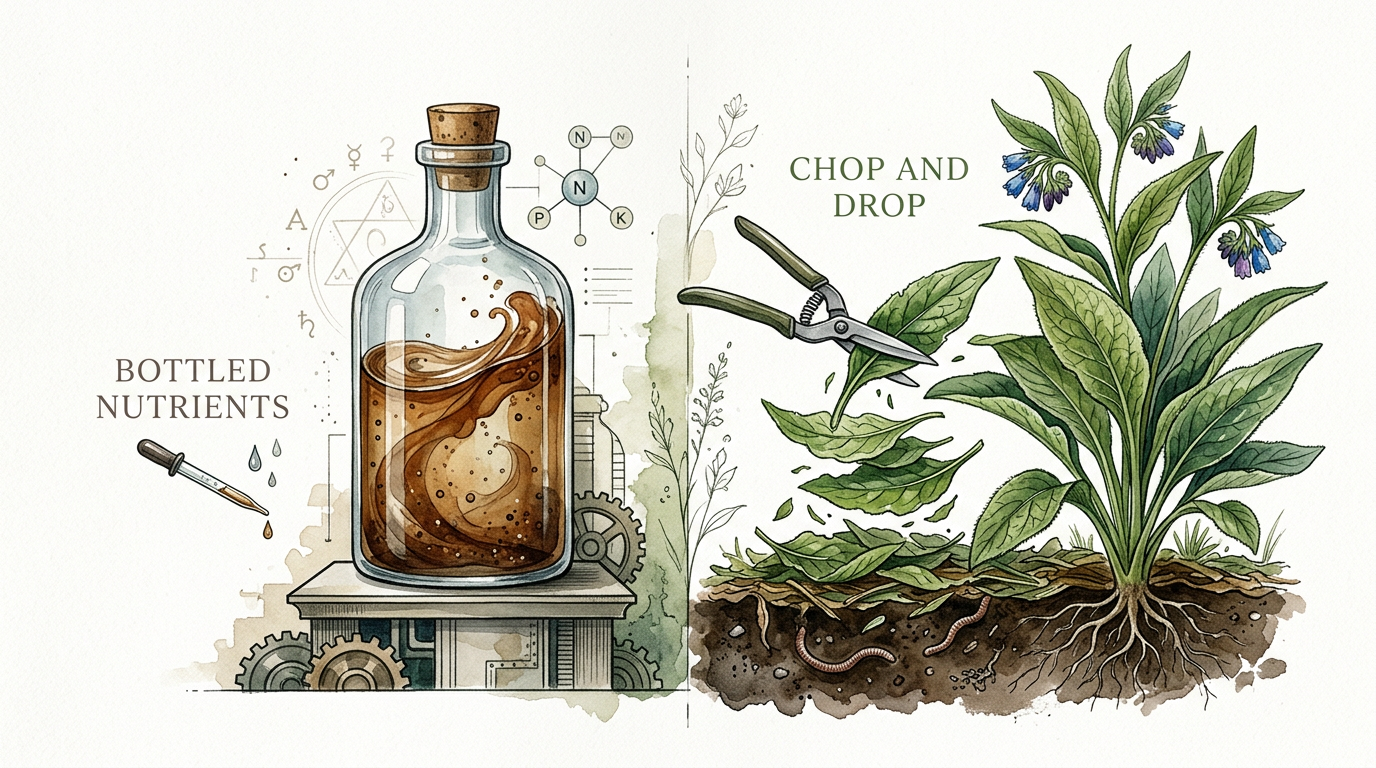
The best fertilizer isn’t made in a factory; it’s grown in your backyard. Plants like Comfrey have deep taproots that mine minerals from the subsoil. When you ‘chop and drop’ them, you unlock free nutrients for your fruit trees. Stop buying bags!
Building a self-reliant homestead requires looking at the land as a living system rather than a series of problems to be solved with a credit card. Every time you purchase a plastic bottle of synthetic nutrients, you ignore the ancient wisdom of the soil. This guide will walk you through the process of harnessing one of the most powerful plants in the permaculture toolkit: Comfrey.
Nature provides everything we need to build topsoil and grow nutrient-dense food. Traditional farmers understood that certain plants act as bridges between the deep earth and the hungry surface. Comfrey is the king of these bridge-builders. It turns deep-earth minerals into lush green leaves that you can use to fuel your entire garden.
Comfrey Chop And Drop Fertilizer
Comfrey is a herbaceous perennial in the borage family, known scientifically as Symphytum. In the world of sustainable agriculture, it is often called a dynamic accumulator. This term describes plants that send roots deep into the earth—sometimes reaching ten feet or more—to extract minerals like potassium, calcium, and magnesium that other plants cannot reach.
These nutrients are transported up through the stems and concentrated in the large, hairy leaves. When the plant is “chopped,” the leaves are laid directly on the soil surface to rot. This “drop” returns those deep-earth minerals to the topsoil where your fruit trees and vegetables can finally use them. It is a biological mining operation that costs nothing but a few minutes of physical labor.
Most gardeners use the Bocking 14 variety of Russian Comfrey. This specific cultivar was developed in the 1950s by Lawrence D. Hills because it is sterile. Unlike common comfrey, it won’t take over your entire property via seeds. It stays where you plant it, growing into a massive clump that can be harvested multiple times every single year.
How to Master the Chop and Drop Process
Using comfrey as a fertilizer is not complicated, but doing it right ensures you get the maximum nutrient release without stressing the plant. You are essentially managing a biomass factory. Each harvest cycle stimulates the plant to grow more, creating a feedback loop of fertility.
Wait until your comfrey plants are about two feet tall or starting to show their first bell-shaped purple flowers. This is the moment when nutrient density is at its peak. Grab a sharp Japanese sickle or a pair of garden shears. You want a tool that makes a clean cut rather than tearing the stems.
Hold a bundle of leaves in one hand and cut the plant about two to six inches above the ground level. Do not scalp the plant to the dirt; leaving a few inches of stem allows the crown to recover quickly. Once you have a pile of green leaves, carry them to your target area. This might be the base of an apple tree, a row of tomatoes, or a heavy-feeding berry bush.
Scatter the leaves in a thick layer around the “drip line” of your fruit trees. This is the area directly under the outer circumference of the branches where the most active feeder roots live. The leaves will wilt within hours and begin to liquefy within days. Microbes and earthworms will immediately begin processing this green “liquid gold” into the soil structure.
Benefits of Growing Your Own Fertility
The most immediate advantage is the massive boost in potassium. Comfrey leaves often contain more potassium than high-quality compost or aged manure. This makes it the ultimate fertilizer for anything that produces fruit or flowers. If your apple trees are dropping fruit early or your tomatoes look stunted, a thick mulch of comfrey is often the cure.
Soil structure also improves significantly. Because comfrey breaks down so fast, it provides an immediate feast for earthworms. As the worms travel from the surface down into the tunnels left by decomposing comfrey roots, they aerate the soil and deposit nutrient-rich castings. This creates a spongy, healthy soil that holds onto water during dry spells.
Using the chop and drop method saves you from the “plastic cycle.” You don’t have to drive to a store, buy a heavy bag of fertilizer, and dispose of the packaging. You are closing the loop on your homestead. The energy used to create the fertilizer comes from the sun and the deep earth, not a chemical processing plant.
Challenges and Common Mistakes
One frequent error is planting common comfrey instead of the Bocking 14 cultivar. Common comfrey (Symphytum officinale) produces viable seeds and can quickly become a weed that is nearly impossible to eradicate. Always verify your source to ensure you are getting a sterile variety.
Another pitfall is trying to move an established plant. Comfrey roots are incredibly resilient. Even a tiny fragment of root left in the soil will grow into a brand-new plant. Once you put comfrey in the ground, consider it a permanent fixture. Choose your planting locations with a twenty-year vision in mind.
Gardeners often forget to wear gloves when handling comfrey. The leaves are covered in tiny, stiff hairs that can cause significant skin irritation for some people. While these hairs are harmless, they can make for an itchy afternoon if you are harvesting a large patch with bare arms.
Limitations of the Method
Comfrey is a heavy feeder itself. While it mines minerals from the subsoil, it still requires adequate water to produce the massive amounts of biomass needed for a large garden. In extremely arid climates, comfrey may go dormant in the summer unless it is planted in a greywater zone or near a pond.
There is also a limit to the nitrogen it provides. While comfrey has a decent nitrogen profile, it is primarily a potassium and mineral source. If your soil is severely nitrogen-deficient, you may need to supplement your comfrey mulch with nitrogen-fixers like clover or alfalfa.
Some researchers point out that the “dynamic accumulator” theory is sometimes overstated. While comfrey definitely has deep roots, the majority of its nutrient uptake still happens in the top foot of soil. It is more accurate to think of comfrey as a highly efficient biomass scavenger that concentrates whatever nutrients are available rather than a magical straw that only pulls from the core of the earth.
Bottled Nutrients vs. Chop and Drop
| Feature | Bottled Nutrients | Comfrey Chop and Drop |
|---|---|---|
| Cost | High (Recurring) | Zero (One-time plant purchase) |
| Soil Health | Can degrade microbial life | Builds humus and feeds worms |
| Labor | Low (Mixing/Pouring) | Medium (Cutting/Spreading) |
| Reliability | Dependent on supply chains | Grows back every spring |
Synthetic fertilizers provide a quick hit of N-P-K but often ignore the trace minerals required for healthy fruit. Comfrey provides a “slow release” full-spectrum mineral buffet. While a bottle is convenient, the chop and drop method builds long-term resilience in the landscape.
Practical Tips for Success
Establish a “comfrey corner” near your compost pile or orchard. Having the plants close to where you will use them reduces the time spent hauling heavy green matter. If you have a large property, plant a comfrey cluster at the base of every third fruit tree to serve as a local “fertility station.”
When mulching, don’t be afraid to pile it high. Comfrey leaves are mostly water and will shrink down to almost nothing within a week. A six-inch layer of fresh leaves will often turn into a half-inch layer of dark, rich organic matter in just a few days.
If you have a surplus of leaves, consider making “comfrey tea.” Stuff a five-gallon bucket with leaves, weigh them down with a brick, and fill it with water. Let it sit for three weeks until it turns into a dark, foul-smelling liquid. Dilute this 1:10 with water and use it as a foliar spray or root drench for your most prized plants.
Advanced Nutrient Management
Serious practitioners often integrate comfrey into a larger “guild” system. A fruit tree guild is a community of plants that support each other. You might plant a nitrogen-fixing tree like Autumn Olive, a pollinator-attractor like Bee Balm, and a nutrient-miner like Comfrey all within the same circle.
This stacking of functions ensures that the soil is being fed from multiple angles. While the nitrogen-fixers pull gas from the air and store it in root nodules, the comfrey mines the deep soil. When you chop both and drop them together, you create a perfectly balanced fertilizer right on the forest floor.
Consider the timing of your chops in relation to the seasons. A heavy chop in early spring provides the nitrogen needed for leaf growth. A second chop in mid-summer, just as fruit is beginning to set, provides the potassium hit needed for sweet, large harvests.
A Real-World Scenario: The Apple Orchard
Imagine a young apple orchard planted in compacted, clay-heavy soil. Most modern advice would suggest tilling the soil and adding bags of lime and chemical fertilizer. Instead, the pioneer-grit approach is to plant four Bocking 14 crowns around each tree.
In the first year, the comfrey focuses on establishing those deep taproots, breaking through the clay layers. By the second year, the gardener performs three major chops. The first chop in May covers the tree’s root zone in a thick green blanket, suppressing weeds and retaining moisture.
By the third year, the soil under the apple tree is dark, crumbly, and full of life. The apple tree, fed by the constant decomposition of the comfrey, shows vigorous growth and deep green leaves. The cost to the gardener has been zero dollars, and the soil is healthier than it was when they started.
Final Thoughts
Relying on your own land for fertility is a revolutionary act in a world of industrial shortcuts. Comfrey is a partner in this mission, acting as a tireless miner that works beneath your feet while you sleep. By mastering the chop and drop method, you move one step closer to true homestead independence.
Start small with a few root cuttings and watch how quickly they respond to your care. The resilience of these plants is a reminder of how nature intended to heal and feed itself. Every leaf you drop is an investment in the future of your soil and the health of your family.
Experiment with different locations and frequencies. Notice which trees respond best to the mulch and how the insect life in your garden changes as the comfrey flowers attract beneficial predators. The wisdom of the backyard is waiting for those willing to pick up a sickle and work with the earth.
