How To Become More Self-Sufficient Without Starting a Full-Blown Farm…
Want to start preserving your harvest, making your own soap, or building a backyard root cellar — but not sure where to begin? “Homesteading Advice” gives you instant lifetime access to 35+ practical homesteading books on food preservation, veggie gardening, DIY natural cleaning products (save over $250 per year with this skill alone), brewing, off-grid energy, and a whole lot more…
Click Here To Check It Out Now!
You are literally throwing away the most powerful degreaser in your kitchen every single morning. Stop paying companies to sell you ‘lemon-scented’ toxins in plastic bottles. That orange peel in your hand is packed with d-limonene, a natural solvent that cuts through grease better than the laboratory stuff. Here is the 2-week infusion trick.
Most modern households are conditioned to believe that cleanliness must come from a brightly colored plastic bottle purchased at a big-box store. We have been taught that a “fresh scent” is something synthesized in a lab and that “industrial strength” requires a warning label from the poison control center. This is a far cry from the sturdy self-reliance of our ancestors, who understood that the most potent tools for a clean home were often found in the pantry and the compost pile.
The pioneer spirit was one of thrift and observation. When a fruit was peeled, nothing was wasted. The zest was for baking, the pith was for pectin, and the oily, fragrant skins were kept for cleaning. They didn’t have a word for d-limonene back then, but they knew that a jar of vinegar steeped with citrus skins could strip the grime off a woodstove or a greasy butter churn better than plain water ever could.
Today, we are rediscovering this ancestral wisdom. By marrying the acidic power of distilled vinegar with the solvent properties of citrus oils, you create a cleaning agent that is both environmentally responsible and remarkably effective. This isn’t just a “green” alternative; it is a superior tool for those who value performance and independence over marketing fluff.
DIY Orange Peel Vinegar Cleaner Recipe
Creating this cleaner is an exercise in patience and precision. It is not something you “whip up” in five minutes; it is a slow-brewed infusion that requires time to reach its full potency. The goal is to extract the essential oils, specifically d-limonene, from the citrus rinds and suspend them in an acetic acid base.
This recipe creates a concentrated cleaning base. Because it is a natural product, the strength can vary slightly based on the thickness of your peels and the temperature of your kitchen, but the fundamental ratio remains the same. You are essentially creating a non-toxic solvent that works on a molecular level to break the bonds of lipids (fats and oils).
To begin, you will need a large glass masonry jar with a non-metallic lid. Vinegar is highly acidic and will corrode metal lids over time, which can ruin your batch. If you only have metal lids, place a piece of parchment paper or plastic wrap between the jar and the lid to act as a barrier.
The Essential Ingredients
- Citrus Peels: You will need enough orange, lemon, or grapefruit peels to fill at least half of your jar. Oranges are preferred for degreasing because they contain the highest concentration of d-limonene.
- Distilled White Vinegar: Standard 5% acidity vinegar is perfect. Avoid using apple cider vinegar or balsamic, as the residual sugars and colors can leave streaks or attract pests.
- Filtered Water: Used for diluting the concentrate once the infusion is complete.
- Glass Jar: A half-gallon or quart-sized jar is ideal for the steeping process.
Step-by-Step Preparation
First, collect your citrus scraps. You do not need to use them all at once; you can keep a jar in the refrigerator and add peels as you eat the fruit. Ensure you remove as much of the fruit flesh as possible, as excess sugar can lead to fermentation or mold. The white pith is fine to include, but the gold is in the zest.
Second, pack the peels into your glass jar. Don’t be afraid to press them down slightly to make room. Once the jar is half to three-quarters full, pour the distilled white vinegar over the peels until they are completely submerged. Any peels sticking out above the liquid line can develop mold, so ensure they stay “under the brine.”
Third, seal the jar tightly and place it in a cool, dark cupboard. Do not leave it on a sunny windowsill, as UV light can degrade the sensitive citrus oils. Let the mixture sit for a minimum of 14 days. During this time, the vinegar will change from clear to a deep, translucent orange, and the sharp scent of acetic acid will be replaced by a bright, punchy citrus aroma.
Fourth, after two weeks, strain the liquid through a fine-mesh sieve or a piece of cheesecloth into a fresh container. Discard the spent peels into your compost. You now have a powerful citrus-vinegar concentrate. To use it as an all-purpose cleaner, dilute it 1:1 with filtered water in a spray bottle. For heavy degreasing, you can use it at full strength.
How It Works: The Chemistry of the Clean
To understand why this cleaner works, we have to look at the chemistry of “like dissolves like.” Most kitchen grime is composed of non-polar molecules—fats, oils, and greases. Distilled water is a polar solvent and struggles to break these down on its own. This is why you need a surfactant or a solvent to do the heavy lifting.
Vinegar itself is a solution of acetic acid. Acetic acid is excellent at dissolving mineral deposits (like hard water stains) and killing certain types of bacteria by disrupting their cell membranes. However, vinegar alone isn’t a great degreaser. That is where the orange peels come in.
The rinds of citrus fruits contain oil sacs packed with d-limonene. In the industrial world, pure d-limonene is used as a heavy-duty degreaser for aircraft engines and printing presses. It is a terpene, a type of hydrocarbon that is exceptionally effective at dissolving oils. When you soak the peels in vinegar, the acid helps to break down the cellular structure of the rind, releasing these oils into the solution.
The result is a two-pronged attack: the acetic acid handles the microbes and minerals, while the d-limonene dissolves the grease. This synergy creates a cleaner that outperforms almost any “natural” store-bought alternative and rivals the performance of synthetic degreasers without the respiratory irritants.
Benefits of Making Your Own Citrus Degreaser
The primary benefit of this method is the total elimination of synthetic “fragrances.” Most commercial cleaners use phthalates to make their products smell like a citrus grove. These chemicals are known endocrine disruptors and can linger in the air of your home for hours after cleaning. With orange peel vinegar, the scent is 100% natural, derived from the essential oils of the fruit.
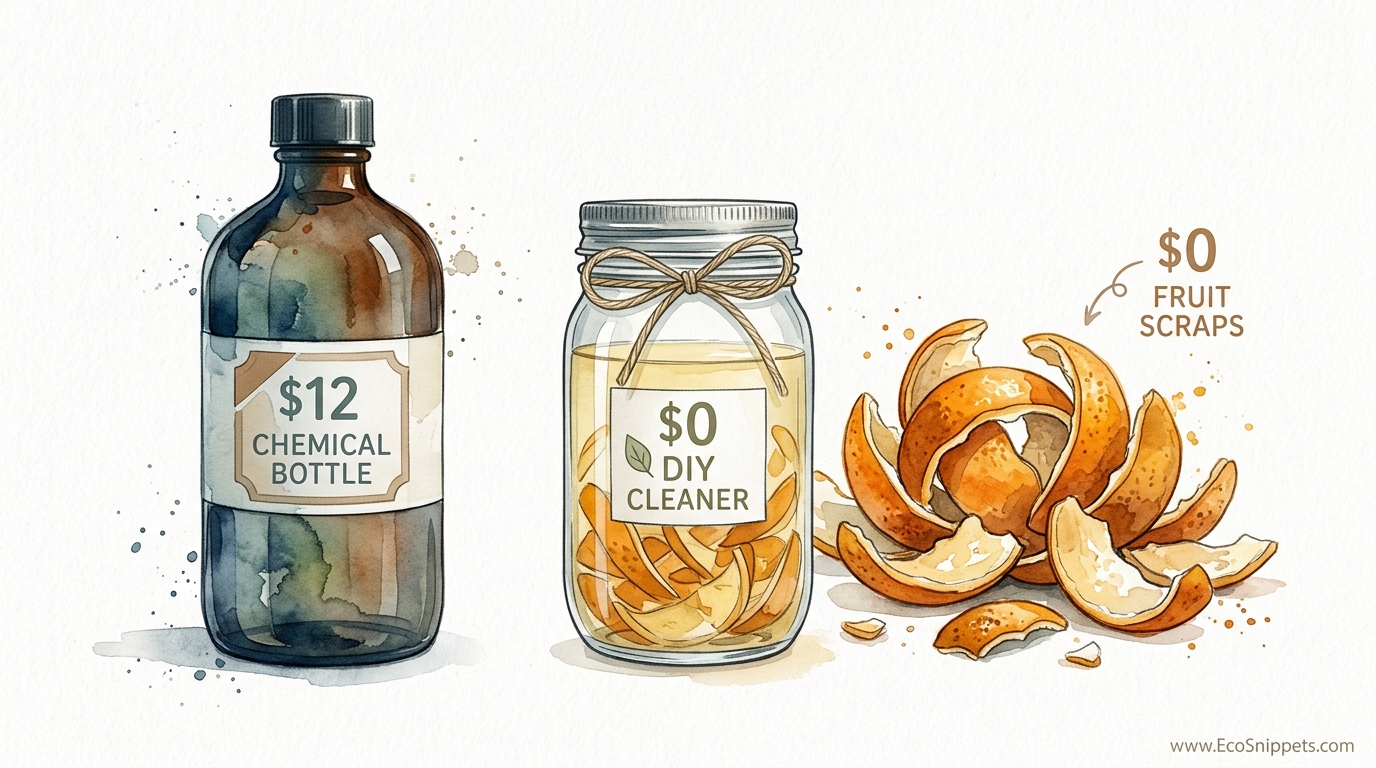
From a financial perspective, the savings are significant. A standard 32-ounce bottle of “natural” citrus cleaner can cost anywhere from $8 to $15. A gallon of distilled vinegar costs about $3. Since you are using fruit scraps that would otherwise be discarded, you are essentially producing a premium cleaning product for pennies on the dollar.
Furthermore, this approach promotes a zero-waste lifestyle. It closes the loop on your kitchen waste, turning a byproduct into a resource. By reusing a glass spray bottle, you also reduce the amount of single-use plastic entering the waste stream. It is a practical application of the old homesteading adage: “Use it up, wear it out, make it do, or do without.”
Challenges and Common Mistakes
The most common mistake beginners make is impatience. If you strain the mixture after only three or four days, you will essentially have orange-scented vinegar, not a citrus degreaser. The d-limonene needs the full two weeks to reach a concentration that can actually tackle tough grease. If the liquid hasn’t turned a deep amber or orange color, it isn’t ready.
Another pitfall is using “dirty” peels. If there is a lot of juice or fruit pulp attached to the rinds, the sugar will interact with the wild yeasts in the air. Instead of a clean infusion, you might end up with a fermenting mess that smells more like rotting fruit than a cleaning agent. Always scrape the peels clean with a spoon before adding them to the jar.
Finally, there is the issue of “cloudiness.” Sometimes the cleaner will look cloudy after you dilute it with water. This is a natural reaction called the “ouzo effect,” where the citrus oils (which are not water-soluble) form a micro-emulsion in the water. It doesn’t mean the cleaner is bad; it just means the oils are present and working. Simply give the bottle a quick shake before each use.
Limitations: When This May Not Be Ideal
While this cleaner is powerful, it is not a “magic bullet” for every surface in your home. The high acidity of the vinegar and the solvent strength of the d-limonene can be damaging to certain materials. Understanding these constraints is vital to maintaining the integrity of your home’s surfaces.
Natural Stone: Never use this cleaner on marble, granite, limestone, or travertine. The acetic acid in the vinegar will react with the calcium carbonate in the stone, causing “etching.” These are permanent dull spots or pits in the surface that cannot be wiped away. For these surfaces, a pH-neutral cleaner is mandatory.
Unsealed Wood: While great for cleaning finished wood floors (when highly diluted), the acid can dry out unsealed or oil-finished wood. It can also strip certain waxes or polishes over time. Always test a small, inconspicuous area first.
Grout: If used at full strength repeatedly, the acid can slowly wear down cement-based grout. It is excellent for a deep clean once in a while, but for daily maintenance, a more diluted version is safer for the longevity of your tile work.
Rubber Gaskets: Highly concentrated d-limonene can sometimes soften or degrade certain types of natural rubber. Avoid using the concentrate on the delicate seals of your dishwasher or washing machine unless it is well-diluted.
Comparison: DIY Citrus Scraps vs. Commercial Cleaners
To truly appreciate the value of this DIY method, one must look at the measurable differences in cost, safety, and efficiency. Below is a comparison of the 2-week infusion trick against a standard premium “Eco-Friendly” store-bought degreaser.
| Feature | DIY Orange Peel Cleaner | Store-Bought “Natural” Cleaner |
|---|---|---|
| Cost per 32oz | Approx. $0.45 | $7.00 – $12.00 |
| Active Ingredient | Natural d-Limonene & Acetic Acid | Synthetic Surfactants & Fragrance |
| Waste Produced | Zero (Uses scraps) | Plastic bottle & shipping carbon |
| Toxicity | Food-grade safe | Variable (often contains phthalates) |
| Dwell Time | 1-2 minutes for heavy grease | 3-5 minutes for similar results |
Practical Tips and Best Practices
If you find that your vinegar cleaner still has a bit too much of a “vinegar punch,” you can add a few drops of organic dish soap to your spray bottle. This acts as an emulsifier, helping the citrus oils and the vinegar blend more smoothly with the water and providing a bit of “sudsing” action that helps lift dirt away.
For those living in areas with very hard water, use distilled or filtered water for the final dilution. The minerals in tap water can react with the vinegar and leave behind a fine white film on glass or stainless steel. Using purified water ensures a streak-free finish every time.
Storage is also key. Because this is a fresh, preservative-free product, it has a shelf life. While the vinegar acts as a natural preservative, the citrus oils can eventually oxidize. Try to make enough for about two or three months of cleaning at a time. Keep your spray bottle in a cool place, away from direct sunlight, to keep the oils active and the scent fresh.
Advanced Considerations for the Serious Practitioner
Once you have mastered the basic orange peel infusion, you can begin to customize your “brew” for specific tasks. Different citrus fruits offer different aromatic and chemical profiles. For example, lemon peels have a higher concentration of citric acid and are slightly better for tackling soap scum in the bathroom. Grapefruit peels have a more complex scent and contain compounds that can help suppress mold growth.
You can also introduce “synergistic herbs” into your infusion jar. Adding a few sprigs of fresh rosemary or thyme doesn’t just make the cleaner smell like a high-end spa; these herbs contain their own antimicrobial oils (like thymol and carvacrol) that boost the disinfecting power of the vinegar. A “Four Thieves” inspired citrus cleaner, using orange peels, cloves, and cinnamon sticks, is particularly effective for deep-cleaning floors during the winter months.
For heavy-duty industrial tasks, such as cleaning a greasy vent hood over a stove, you can create a “Citrus Paste.” Mix your concentrated orange vinegar with baking soda until it forms a thick slurry. The baking soda provides a gentle abrasive action while the vinegar and d-limonene dissolve the grease. Apply the paste, let it sit for ten minutes, and the grime will wipe away with minimal scrubbing.
Examples and Scenarios
Consider the typical “baked-on” grease on the top of a kitchen refrigerator. Usually, this requires heavy scrubbing with a chemical foam. To use your DIY cleaner, spray the area liberally with the 1:1 dilution. Let it “dwell” for at least two minutes. You will actually see the orange-tinted liquid begin to turn cloudy as it emulsifies the grease. A single wipe with a sturdy cloth should be all that is required to reveal the clean surface beneath.
Another scenario is the “cloudy” glass shower door. This is usually a combination of soap scum (fats) and hard water minerals. The acetic acid in the vinegar dissolves the minerals, while the citrus oils break down the soap residue. Spray the door after your shower, leave it for a minute, and squeegee it off. It is a simple habit that prevents the need for harsh “deep cleans” later on.
Final Thoughts
The transition from consumer-grade chemical cleaners to a homemade citrus-vinegar solution is more than just a way to save money. it is a reclaimation of the household as a place of production rather than just consumption. By taking the time to infuse your own cleaners, you are making a conscious choice to understand the materials you bring into your home and the impact they have on your family’s health.
There is a quiet satisfaction in knowing that the spray bottle in your hand started as a morning snack and a bottle of pantry staple. It is effective, honest, and rooted in a tradition of self-reliance that served our ancestors well. Once you see the power of d-limonene in action, you will never look at a discarded orange peel the same way again.
Start your first jar today. In two weeks, you will have a cleaner that is safer for your lungs, kinder to your wallet, and more effective than anything you can find in a plastic bottle. The path to a cleaner home isn’t found in a laboratory—it’s found in your own kitchen.
