How To Become More Self-Sufficient Without Starting a Full-Blown Farm…
Want to start preserving your harvest, making your own soap, or building a backyard root cellar — but not sure where to begin? “Homesteading Advice” gives you instant lifetime access to 35+ practical homesteading books on food preservation, veggie gardening, DIY natural cleaning products (save over $250 per year with this skill alone), brewing, off-grid energy, and a whole lot more…
Click Here To Check It Out Now!
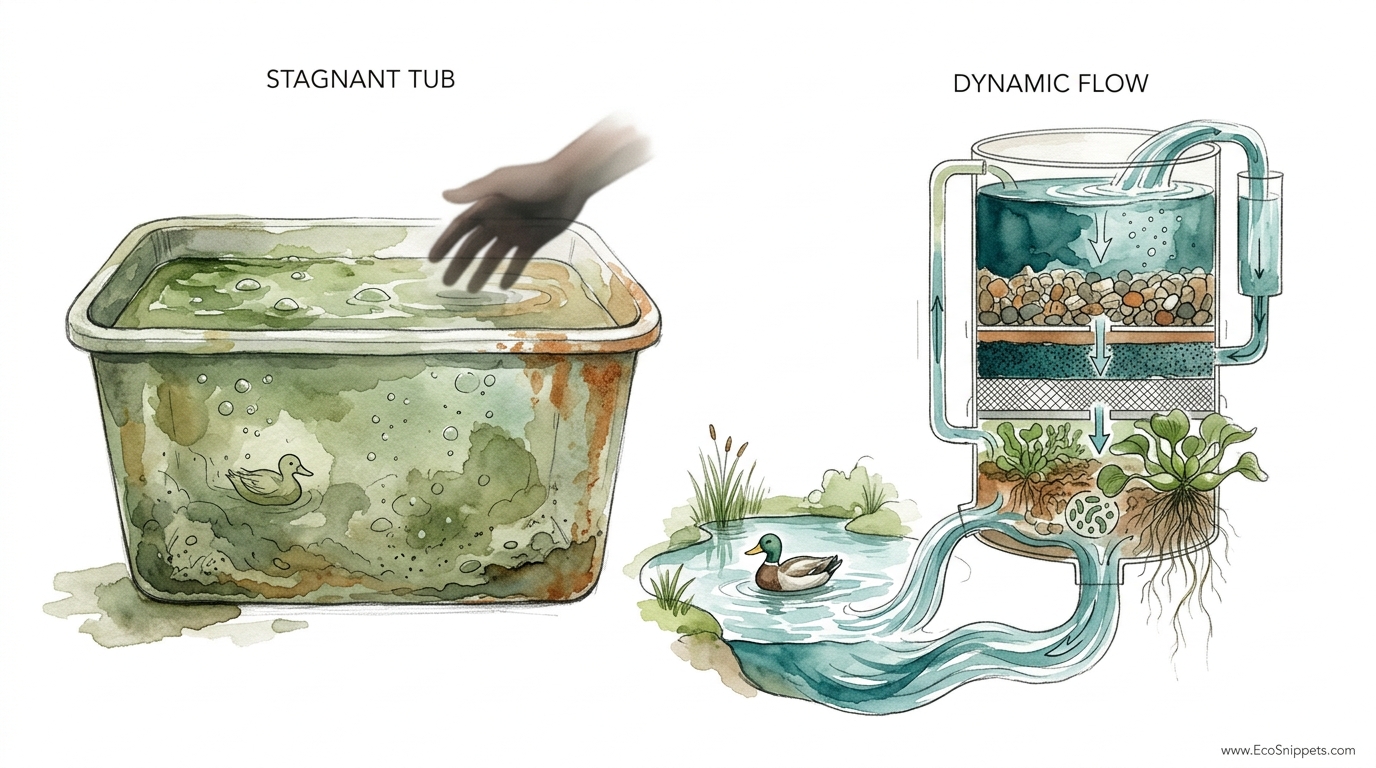
Ducks are messy by nature, but your water system doesn’t have to be a biological hazard. Tired of scrubbing slimy plastic tubs every morning? Move from static water to a dynamic biological filter. Circulating water through a gravel and plant bed turns the waste into fertilizer for the greenery, leaving the water clear for your birds.
This shift from the traditional “dump and scrub” method to a living ecosystem is more than just a convenience. It is an act of stewardship that aligns your homestead with the natural order. Biological filtration mimics the way wetlands purify the earth’s water, using the same ancestral wisdom that has kept wild ponds healthy for millennia.
When you manage ducks, you are essentially managing a high-nitrogen environment. Traditional filters often fail because they are designed for fish, not for birds that deposit ten times the organic load. Building a system with “pioneer grit” means looking at the problem not as a nuisance to be hidden, but as a resource to be cycled.
Duck Pond Biofilter DIY
A duck pond biofilter, often called a constructed wetland or a bog filter, is a designated area where pond water is pumped through a substrate—usually gravel—that houses billions of beneficial bacteria. These bacteria are the invisible laborers of your homestead. They take the toxic ammonia from duck droppings and transform it into harmless nutrients that plants can consume.
In the real world, this system exists in every healthy river and lake. Water moves over rocks and through the roots of reeds, which act as nature’s kidneys. In a backyard setting, we replicate this by creating a separate basin filled with stone and water-loving plants. The water enters at the bottom, rises through the gravel, and spills back into the main pond, purified and oxygenated.
Visualizing this is simple: imagine a garden bed that happens to be flooded. Instead of soil, it uses river rock. Instead of rain, it uses a pump. The result is a self-cleaning loop that reduces the need for water changes and provides a lush, beautiful landscape feature that thrives on the very waste that used to be your biggest headache.
How the Biological Filter Works
Understanding the Nitrogen Cycle is essential for any serious practitioner. When a duck swims, it leaves behind nitrogen in the form of ammonia. In a stagnant tub, this ammonia builds up quickly, burning the ducks’ eyes and creating a breeding ground for pathogens.
The biofilter breaks this cycle through a two-stage bacterial process. First, bacteria known as Nitrosomonas consume the ammonia and turn it into nitrites. While nitrites are still not ideal, a second group of bacteria, Nitrobacter, quickly converts those nitrites into nitrates. Nitrates are relatively harmless to ducks and are the primary food source for the plants growing in your filter.
To build this system, you need four primary components. First is a containment vessel, such as a rubber-lined trench, a stock tank, or a secondary pond. Second is the plumbing, usually PVC pipes with holes drilled in them (a manifold) placed at the bottom of the vessel to distribute water evenly. Third is the media, which is typically 3/4-inch to 1-inch rounded river gravel. Finally, you need aquatic plants with aggressive root systems to soak up the finished nitrates.
Water must be moved constantly. Nitrifying bacteria are aerobic, meaning they require oxygen to survive. If the pump stops, the oxygen in the water is quickly depleted, and the beneficial bacteria will die off, often replaced by anaerobic bacteria that produce foul-smelling hydrogen sulfide gas. Keeping the water in motion ensures a healthy, living filter.
Benefits of a Living Filtration System
Choosing a biological approach offers measurable advantages over mechanical filters or static water. The most immediate benefit is water clarity. While ducks will always stir up a bit of mud, a well-sized biofilter can keep the water clear enough to see the bottom of the pond, which is nearly impossible with standard tub setups.
Reduced labor is another significant gain. Instead of hauling heavy hoses and scrubbing slime every 48 hours, your maintenance schedule shifts to a monthly check of the pump and a seasonal thinning of the plants. This frees up your time for other honest work on the farm.
The system also creates a closed-loop nutrient cycle. The “waste” produced by your ducks becomes the “fuel” for your landscape. Many homesteaders use the plants harvested from their biofilters as high-nitrogen compost or even as supplemental fodder for other livestock. This is the essence of self-reliance: turning a liability into an asset.
Finally, the health of your birds improves. Clean, oxygenated water reduces the risk of bumblefoot, respiratory issues, and botulism. Ducks are waterfowl; their feathers, eyes, and bills are designed for clean water. Providing them with a dynamic ecosystem is simply the right way to care for the creatures under your protection.
Challenges and Common Mistakes
The most frequent error in duck pond design is undersizing the filter. Ducks are “high-load” animals. A filter sized for a goldish pond will be overwhelmed by three Mallards in a matter of days. As a rule of thumb, your biofilter should be at least 20% to 30% of the surface area of your main pond to handle the nitrogen load effectively.
Clogging is another significant hurdle. Duck feathers and large bits of mud can quickly choke the spaces between the gravel. To avoid this, always implement a mechanical pre-filter or a “settlement chamber.” This can be as simple as a bucket with a coarse sponge or a radial flow settler that traps the heavy solids before they ever reach the delicate bacterial colonies in the gravel bed.
Many beginners also make the mistake of over-cleaning. If you see “gunk” on the rocks, your first instinct might be to power-wash it. This is a mistake. That “gunk” is often the biofilm where your bacteria live. If you must clean the media, rinse it gently with pond water—never chlorinated tap water, which will kill the bacterial colony instantly.
Finally, avoid turning the pump off at night to save electricity. The bacteria need constant flow. Interrupting the oxygen supply for even a few hours can set your biological balance back by weeks. If you are concerned about energy, invest in a high-efficiency DC pump or a solar-powered backup.
Limitations of the Biofilter Method
While powerful, a biofilter is not a magic wand. It has realistic constraints, particularly regarding stocking density. If you try to keep twenty ducks in a 50-gallon pond, no amount of gravel will keep that water clean. The system must be balanced; the number of birds must not exceed the capacity of the bacteria and plants to process their waste.
Climate also plays a role. In extreme northern winters, the biological activity of the bacteria slows down significantly. While the water may still look clear because the cold inhibits algae, the actual processing of ammonia drops. You may need to reduce feeding or increase water changes during the frozen months if your biofilter is not deep enough to stay active.
Space is the final trade-off. A proper biofilter takes up room. If you have a very small backyard, dedicating a third of your available space to a gravel bed might feel like a high price. However, the alternative is the constant smell and labor of a stagnant tub, making the space investment well worth it for most.
Stagnant Tub vs. Dynamic Flow Comparison
| Feature | Stagnant Tub | Dynamic Biofilter |
|---|---|---|
| Maintenance Frequency | Daily or Every 2 Days | Monthly Check / Seasonal Pruning |
| Water Quality | Poor (Ammonia Spikes) | Excellent (Stable Ecosystem) |
| Operational Cost | High Water Waste | Low Electricity (Pump) |
| Odor Control | Frequent “Duck Smell” | Earthy and Fresh |
| Bird Health | Risk of Infection | Optimal Conditions |
Practical Tips and Best Practices
Selecting the right pump is the foundation of your success. You should aim for a turnover rate of at least 2 to 4 times the total pond volume per hour for ducks. For example, if you have a 500-gallon pond, your pump should move between 1,000 and 2,000 gallons per hour (GPH). This ensures that the water doesn’t have time to stagnate before it hits the filter.
When choosing gravel, look for 3/4-inch rounded river stone. Avoid “crushed” limestone or sharp gravel, as these can have very high surface area but tend to pack down too tightly, creating “dead zones” where water cannot flow. The roundness of river stone allows for small gaps that facilitate better water movement and bacterial colonization.
Positioning your plants is also a strategic move. Place the tallest, most aggressive feeders—like Cattails or Iris—near the water inlet where the nutrient concentration is highest. Lower-growing plants like Water Mint can be placed near the outlet. This “stair-step” approach ensures that different plants are targeting different nutrient levels as the water moves through the bed.
Add a “clean-out” port to your design. This is simply a vertical 4-inch PVC pipe that goes all the way to the bottom of the filter bed. If the bottom ever becomes clogged with silt, you can drop a sump pump or a vacuum hose down this pipe to suck out the muck without having to dig up all your gravel and plants.
Advanced Considerations for the Homestead
Serious practitioners may want to look into up-flow vs. down-flow designs. An up-flow bog filter, where water is pumped into the bottom and rises to the top, is generally superior for duck ponds. This design allows heavy solids to settle at the very bottom of the tank (below the gravel) where they can be flushed out easily through a bottom drain or clean-out port.
Incorporating a waterfall at the return point is more than just an aesthetic choice. As water tumbles over rocks back into the pond, it picks up atmospheric oxygen. This further fuels the nitrifying bacteria and keeps the water “sweet.” If you have the space, a cascading return with multiple small drops provides significantly more aeration than a single large fall.
Solar integration is the next frontier for the self-reliant homesteader. While a 24/7 pump is required, modern brushless DC pumps can run directly off a small solar array during the day, with a battery bank taking over at night. This eliminates the need to run expensive outdoor wiring and makes your water system immune to grid failures.
Lastly, consider the concept of “seasonal exporting.” In the autumn, as your filter plants begin to die back, you must harvest the foliage. If you leave the dead plants to rot in the filter, all the nitrogen they soaked up over the summer will leak back into the water. By cutting them back and composting them elsewhere, you are physically removing the nitrogen from the pond’s ecosystem.
The 500-Gallon Duck Oasis Example
Imagine a homestead with six Khaki Campbell ducks. A 500-gallon main pond is dug, lined with a durable 45-mil EPDM liner. To keep this clean, the owner builds a 150-gallon biofilter in a raised stock tank situated slightly above the pond level.
The owner uses a 2,500 GPH solids-handling pump placed in a “skimmer” box to keep feathers out of the impeller. Water is pumped into a PVC manifold at the bottom of the stock tank. The tank is filled with 12 inches of river stone and planted heavily with Yellow Flag Iris and Pickerel Rush.
As the water rises through the stone, the ammonia is converted. By the time it spills over a stone weir and back into the pond, the water is clear and odorless. The ducks spend their days diving and grooming in water that remains stable week after week. Once a month, the owner opens a ball valve at the bottom of the stock tank to flush out five gallons of “duck tea”—a nutrient-rich sludge that goes directly onto the vegetable garden.
Final Thoughts
Building a DIY duck pond biofilter is an investment in both your time and the health of your land. It moves you away from the endless cycle of waste and toward a system that values the natural processes of biology and flow. This is the “pioneer way”—finding the most efficient, enduring path through a deep understanding of the environment.
The transition from a stagnant tub to a living filter is one of the most rewarding upgrades a poultry keeper can make. It transforms a chore into a hobby and a hazard into a sanctuary. When you see your ducks diving through crystal-clear water, you’ll know the grit and labor spent on the build was worth every drop.
Embrace the complexity of the living world. Experiment with different plant varieties, monitor your flow rates, and watch as your backyard ecosystem finds its balance. The wisdom of the ancients taught us that water is life; keeping it moving and clean is the highest form of respect we can show to the animals we keep.
