How To Become More Self-Sufficient Without Starting a Full-Blown Farm…
Want to start preserving your harvest, making your own soap, or building a backyard root cellar — but not sure where to begin? “Homesteading Advice” gives you instant lifetime access to 35+ practical homesteading books on food preservation, veggie gardening, DIY natural cleaning products (save over $250 per year with this skill alone), brewing, off-grid energy, and a whole lot more…
Click Here To Check It Out Now!
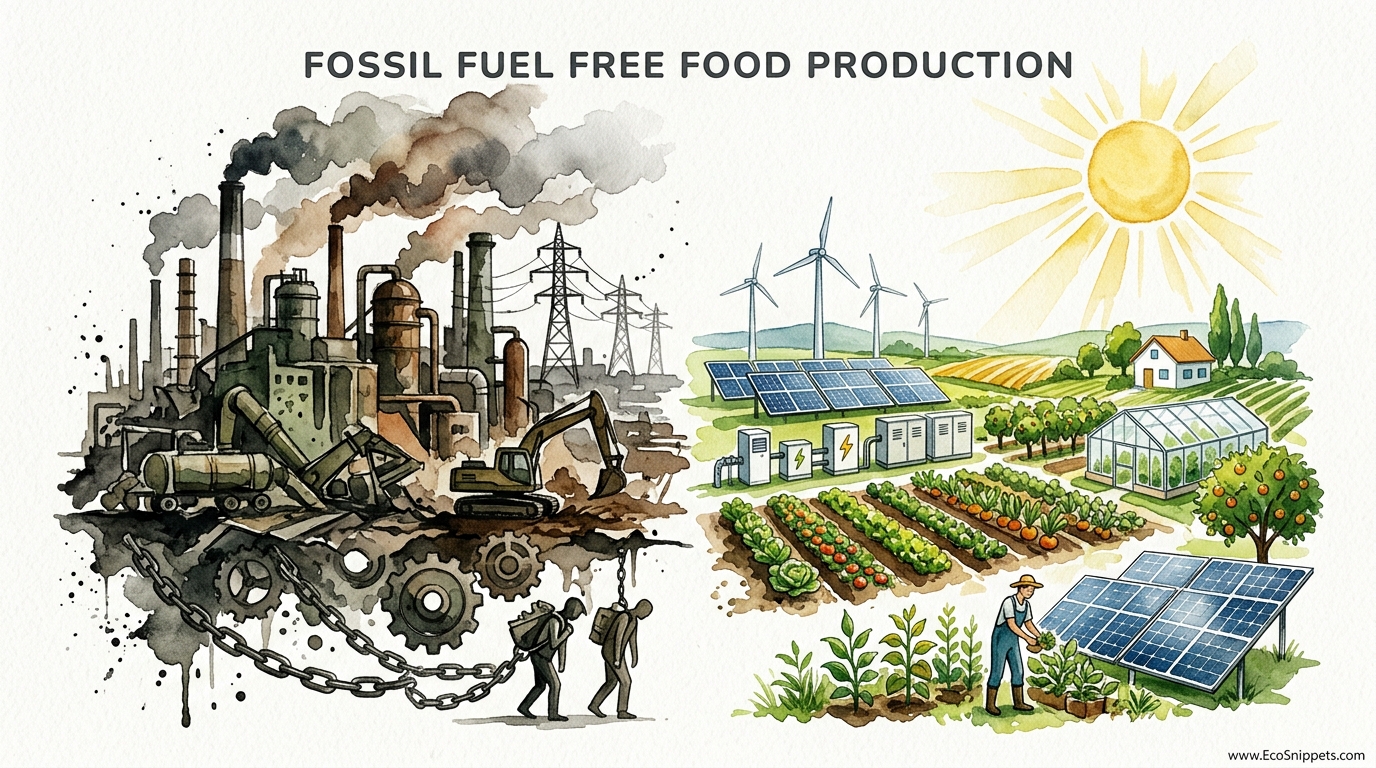
Every bite of store-bought food is actually a bite of petroleum – until you change the system. Most people don’t realize it takes 10 calories of fossil fuel to produce just 1 calorie of supermarket food. As oil prices climb, that ‘cheap’ grocery bill is becoming a luxury. Here is how we reclaimed our food security by switching from a petroleum-based diet to a solar-based one.
Fossil Fuel Free Food Production
Fossil fuel free food production is a method of growing nourishment that relies entirely on contemporary sunlight rather than the ancient, buried sunlight we know as oil and gas. In the current industrial model, almost every stage of the process—from the nitrogen synthesized via the natural gas-heavy Haber-Bosch process to the diesel-chugging tractors and the refrigerated trucks crossing continents—depends on a finite pool of petroleum. This creates a state of industrial debt where our ability to eat is tied to global energy markets and supply chain stability.
True food security exists when the energy inputs for your garden or farm are generated on-site. This means replacing synthetic fertilizers with compost and cover crops, substituting gasoline-powered tillers with manual broadforks or draft animals, and choosing heirloom seeds over hybrid varieties that require specific chemical “cocktails” to thrive. It is a return to biological common sense, where the sun powers the plants, the plants feed the soil, and the soil feeds the people in a closed loop.
Modern supermarket produce often travels over 1,500 miles before reaching a plate, accumulating a massive carbon footprint along the way. In contrast, a solar-based system uses local ecological knowledge to bypass these requirements. This isn’t just about “organic” gardening; it is about decoupling your survival from the volatility of the oil barrel. When you grow food without fossil fuels, you are essentially harvesting the sun’s energy directly and storing it in your pantry.
Transitioning to a Solar-Based System
Moving away from the petroleum diet requires a fundamental shift in how we view soil fertility. In the industrial system, soil is often treated as a dead substrate used to hold plants upright while they are fed liquid chemicals. To break free, you must see the soil as a living organism. Building soil health is the first and most critical step in fossil fuel free production. This involves the heavy use of organic matter, such as aged manure, leaf mold, and kitchen scraps, to foster a thriving microbiome of fungi and bacteria.
Nitrogen fixation is the second pillar of this transition. Instead of buying bags of urea or ammonium nitrate, which are products of the natural gas industry, you can plant legumes like peas, beans, and clover. These plants have a symbiotic relationship with rhizobia bacteria in their root nodules, which pull nitrogen from the air and “fix” it into the soil for future crops. Using the “Three Sisters” method—corn, beans, and squash—is a classic example of this in action, where the beans provide the nitrogen needed by the heavy-feeding corn.
Water management must also be decarbonized. Many modern farms rely on high-pressure electric or diesel pumps to move water from deep aquifers. A solar-based approach utilizes gravity-fed systems, rainwater harvesting from roof surfaces, and swales—level trenches dug along the contour of the land—to catch and sink water into the earth. This reduces the need for active irrigation and ensures the garden remains resilient even during dry spells without requiring a drop of fuel.
Tools and Techniques for the Modern Pioneer
The choice of tools dictates how much “human horsepower” you need to expend. While a gas-powered rototiller can prep a bed in minutes, it destroys the delicate fungal networks in the soil and creates a hardpan layer that prevents root penetration. A broadfork, however, allows you to aerate the soil deeply without turning it over. This preserves the soil structure and keeps carbon sequestered in the ground rather than releasing it into the atmosphere.
Manual tools like the scythe and sickle are often dismissed as relics, but they are incredibly efficient for small-scale grain or hay production. A sharp scythe can clear an acre of grass in a day with zero emissions and provide a great physical workout. For larger homesteads, draft animals like horses or oxen offer a middle ground between manual labor and heavy machinery. Unlike a tractor, a horse runs on “homegrown fuel” like pasture and hay, and its “exhaust” is high-quality fertilizer that closes the nutrient loop.
Season extension is another area where solar design shines. Instead of using propane-heated greenhouses, you can build a passive solar greenhouse. These structures feature a heavily insulated north wall and a south-facing glass or polycarbonate slope. Thermal mass, such as black-painted water barrels or stone walls, absorbs heat during the day and releases it slowly at night. This setup can keep temperatures well above freezing even in the dead of winter, allowing for year-round production without a utility bill.
Essential Low-Tech Tools List
- Broadfork: For deep aeration without destroying soil biology.
- Scythe: For harvesting grains and managing meadow grass for mulch.
- Wheel Hoe: A highly efficient manual tool for weeding and furrowing large rows.
- Hand Seed Drill: Ensures precise planting without the waste of broadcast seeding.
- Solar Dehydrator: Uses natural convection and sunlight to preserve the harvest for winter.
The Benefits of Fossil Fuel Free Food
The most immediate benefit is financial independence. When you stop buying synthetic fertilizers, pesticides, and fuel, your cost of production drops toward zero. Industrial farming is often a race to the bottom where farmers take on massive debt to buy the inputs required to produce high yields. Fossil fuel free methods prioritize profit margins over raw volume, allowing the small-scale producer to remain viable even as commodity prices fluctuate.
Nutritional density is another significant advantage. Studies have shown that crops grown in biologically active, mineral-rich soil often contain higher levels of vitamins and phytonutrients compared to those grown in industrial monocultures. Because you aren’t selecting varieties based on their ability to withstand thousands of miles of shipping, you can grow heirloom varieties prized for their flavor and health benefits. You are eating food that was meant to be eaten, not food that was meant to be “handled.”
Resilience against systemic collapse is the ultimate “insurance policy.” In a world where a fuel shortage or a cyberattack on a logistics network can empty grocery store shelves in 48 hours, the person with a solar-powered garden remains fed. This autonomy creates a sense of peace that no bank account can provide. You are no longer a passive consumer at the end of a fragile chain; you are a primary producer at the center of a local one.
Challenges and Common Pitfalls
The primary challenge is the labor requirement. Petroleum is incredibly energy-dense; a single gallon of gasoline provides the equivalent of roughly 300 to 500 hours of human labor. When you remove that “magic fluid” from the equation, you must work smarter. Many beginners make the mistake of trying to manage too much land at once without the necessary tools or soil health to support it. Starting small and focusing on high-calorie, low-effort crops like potatoes and squash is a better strategy.
Soil transition periods can also be discouraging. If a piece of land has been treated with chemical fertilizers for years, the natural biology is likely dormant or dead. It may take two to three seasons of heavy composting and cover cropping before the soil “wakes up” and begins producing at high levels again. During this time, yields may be lower, and pest pressure may be higher as the ecosystem finds its balance. Patience and a long-term perspective are required.
Pest management without synthetic chemicals requires a move from “eradication” to “balance.” If you see aphids, your first instinct shouldn’t be to reach for a spray—it should be to wonder where the ladybugs are. Creating habitats for beneficial insects, such as flowering hedgerows and beetle banks, is essential. Relying on “bug juice” or neem oil should be a last resort, as even organic sprays can disrupt the delicate predator-prey balance in your garden.
Limitations and Realistic Boundaries
Fossil fuel free food production is highly effective for vegetables, fruits, and small-scale grains, but it faces hurdles with certain global commodities. Tropical fruits in temperate climates will always require significant energy for transport or heated environments. Similarly, producing large quantities of meat without any fossil fuel inputs requires vast amounts of pasture and careful rotational grazing to ensure the land isn’t overtaxed. It is a system that favors local and seasonal eating over global variety.
Climate is the great arbiter of what you can grow. Without the ability to “import” fertility or climate control, you are limited to what your local ecology supports. This means a gardener in the desert must master dryland techniques and drought-resistant crops, while someone in the north must focus on storage crops and passive solar heating. You cannot force the land to be something it is not when you aren’t using industrial inputs to “bully” the environment.
Comparing Energy Systems
A clear understanding of the differences between industrial and solar-based systems helps highlight why the transition is necessary. The table below compares the two approaches across key metrics of efficiency and sustainability.
| Factor | Industrial (Petroleum) | Regenerative (Solar) |
|---|---|---|
| Energy Ratio | 10:1 (Input to Output) | 1:10 (Human effort to Solar gain) |
| Fertility Source | Natural Gas (Synthetic NPK) | Photosynthesis (Compost/Legumes) |
| Primary Tools | Internal Combustion Engines | Manual/Draft Animal/Solar-Electric |
| Seed Source | Patented Hybrids/GMOs | Open-Pollinated Heirloom Seeds |
| Water Usage | Deep Well Pumping (High Energy) | Rainwater/Gravity/Swales |
Practical Tips for Immediate Application
Stop tilling your soil immediately. Every time you turn the earth, you oxidize organic matter and kill the beneficial fungi that help plants absorb nutrients. Instead, use a “no-dig” approach by layering cardboard and thick mulch over existing weeds. This smothers the unwanted growth while providing a feast for earthworms, who will do the heavy tilling for you for free. Within a few months, you will have rich, friable soil ready for planting.
Start a “living fence” of nitrogen-fixing shrubs and trees. Species like Siberian Pea Shrub or Alder can be pruned regularly, with the clippings dropped directly onto your garden beds as a “green manure.” This technique, known as “chop and drop,” is a low-effort way to cycle nutrients from the deep subsoil to the surface where your vegetables can reach them. It essentially turns your perimeter into a fertilizer factory.
Master the art of seed saving. Commercial seeds are often bred for uniformity and response to chemical fertilizers. By saving the seeds from the strongest, most pest-resistant plants in your own garden, you are breeding a custom “landrace” variety that is perfectly adapted to your specific microclimate. This removes one of the final dependencies on the industrial system and ensures your food supply is truly your own.
Homemade Natural Pest Control Recipes
- Garlic & Pepper Spray: Blend 2 bulbs of garlic and 2 hot peppers with 1 liter of water. Steep for 24 hours, strain, and spray to repel aphids and beetles.
- Milk Mildew Control: Mix 1 part raw milk with 9 parts water. Spray on squash and cucumber leaves to prevent powdery mildew via natural enzymatic action.
- Nettle Tea Fertilizer: Soak stinging nettles in a bucket of water for two weeks. Dilute 1:10 with water for a high-nitrogen liquid feed.
Advanced Considerations for the Serious Practitioner
Integrating livestock is the next level of fossil fuel free production. Chickens can be used as “biological tractors” by placing them in a mobile coop over a finished garden bed. They will scratch out weeds, eat pest larvae, and deposit high-quality manure, preparing the spot for the next crop with zero mechanical input. Pigs can be used similarly to clear heavy brush or “plow” up tubers in a forested paddock.
Agrivoltaics is another emerging field for those with a bit of modern tech. This involves placing solar panels above crops that benefit from partial shade. The panels generate electricity to power small-scale tools or electric fences, while the shade reduces water evaporation from the plants below. It is a literal way to harvest the sun twice on the same piece of land, maximizing the energy efficiency of your footprint.
Example Scenario: The Quarter-Acre Solar Homestead
Imagine a typical suburban lot of 10,000 square feet. In a petroleum-based model, this lot is likely a grass lawn maintained by a gas mower and synthetic “weed and feed” products. It produces zero calories. To transition this to a solar system, the owner starts by replacing 2,000 square feet of lawn with no-till beds. They use a broadfork to prep the soil and plant a mix of potatoes, beans, and kale—crops that offer high caloric density and easy storage.
A 200-gallon rain barrel system is installed on the garage to provide gravity-fed water to the beds. On the north side of the garden, a small passive solar greenhouse is built using reclaimed windows, allowing for tomato starts in the spring and lettuce throughout the winter. Instead of a lawnmower, the remaining grass is managed by a pair of heritage-breed rabbits in a “tractor” (a mobile cage), who provide meat and cold-compost manure for the garden.
Within two years, this system produces roughly 40% of the household’s caloric needs with almost zero external inputs. The “industrial debt” of the lot has been replaced with “solar autonomy.” The family no longer fears a 20% spike in grocery prices because their primary food costs are now tied to their own labor and the reliable rising of the sun.
Final Thoughts
Reclaiming your food security is a journey of a thousand small steps, each one leading away from the fragile complexity of the petroleum age. By focusing on soil health, manual tools, and passive solar design, you are building a lifestyle that is not only more sustainable but also more deeply satisfying. There is a profound sense of “pioneer grit” that comes from knowing you can feed your family without a credit card or a gas station.
The transition from a petroleum-based diet to a solar-based one is the most important skill of the 21st century. It requires a humble return to the wisdom of our ancestors, combined with the best of modern ecological science. Start today by planting a single bed of heirloom seeds and building a compost pile. Every calorie you grow for yourself is a vote for a more resilient and independent future.
