How To Become More Self-Sufficient Without Starting a Full-Blown Farm…
Want to start preserving your harvest, making your own soap, or building a backyard root cellar — but not sure where to begin? “Homesteading Advice” gives you instant lifetime access to 35+ practical homesteading books on food preservation, veggie gardening, DIY natural cleaning products (save over $250 per year with this skill alone), brewing, off-grid energy, and a whole lot more…
Click Here To Check It Out Now!
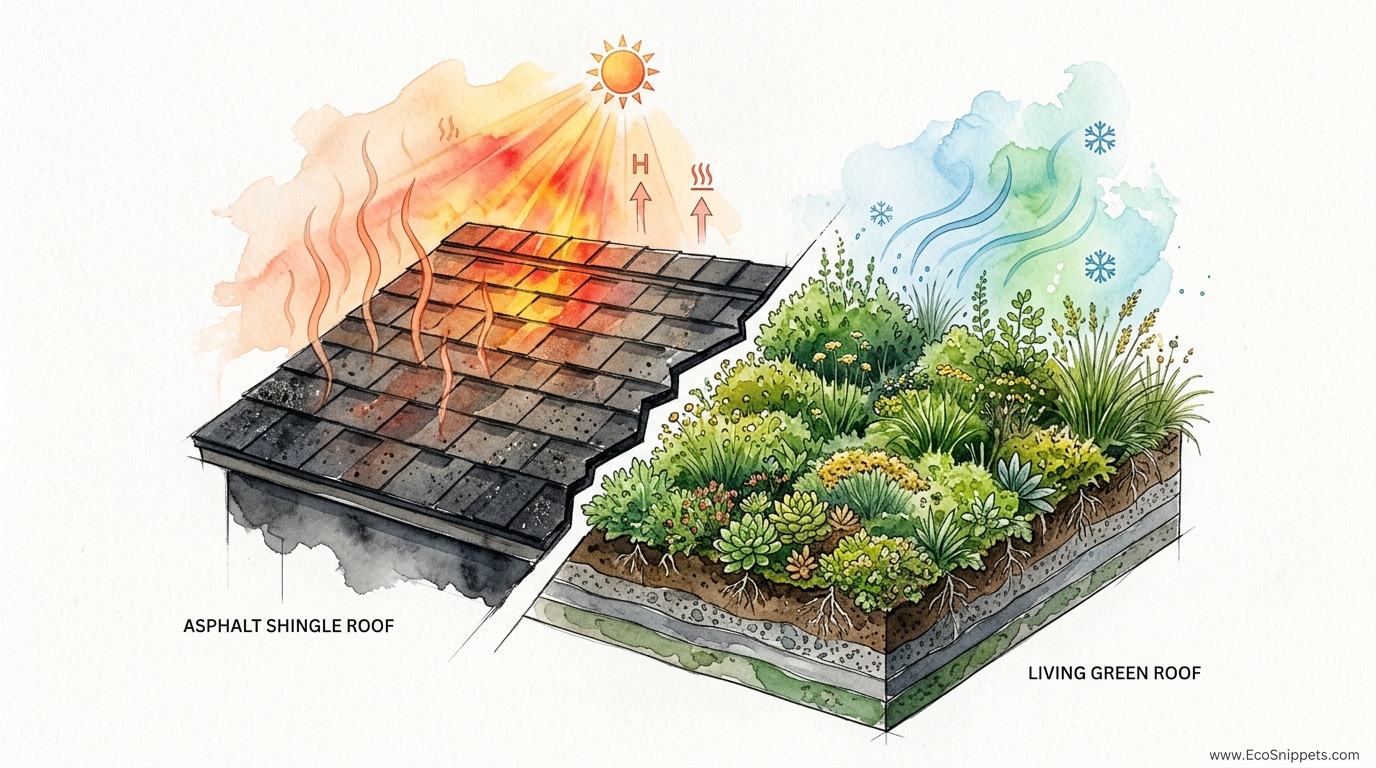
Your roof is either a heat-trapping desert or a self-cooling oasis – can you guess which one saves you $200 a month? Most modern homes are topped with a petroleum-based heat sponge that forces your air conditioner to work overtime. Sheltering your home with a living green roof doesn’t just create a pollinator habitat; you create a massive thermal buffer that keeps your home naturally cool even in the peak of summer.
Living roofs aren’t just for modern skyscrapers or eco-resorts. This technology is a return to an older way of building. Ancestral sod houses and turf roofs protected families for centuries before we started covering our homes in processed oil products. Today, we are rediscovering that a layer of earth and life is the most efficient insulation ever designed.
The choice between traditional asphalt and a living system is more than an aesthetic one. It is a decision about how much you want to rely on the power grid. A green roof works with the sun rather than fighting it. Instead of absorbing heat and radiating it into your attic, the plants use that energy to grow and release moisture through transpiration.
Understanding the mechanics of these systems allows you to take control of your home’s microclimate. This guide will walk you through the structural requirements, the potential for massive energy savings, and the grit required to maintain a living ecosystem over your head.
Green Roof Vs Asphalt Cooling Costs
Traditional asphalt shingles are designed to be cheap and easy to install, but they come with a hidden tax. On a bright summer day, dark shingles can reach temperatures exceeding 150°F. This heat doesn’t stay on the surface; it migrates through your roof deck and into your living spaces. Your air conditioner then has to fight a constant battle against this thermal intrusion.
Research from the Argonne National Laboratory indicates that green roofs can reduce air conditioning energy demand by approximately 14% to 16% compared to standard roofs. In specific scenarios where a building is poorly insulated, those savings can skyrocket to over 50% for the rooms directly beneath the garden. While asphalt shingles reflect some light, they lack the cooling power of biological processes.
Green roofs use a phenomenon known as evapotranspiration. This is the process where plants “sweat” water vapor into the air. This active cooling can keep the surface of your roof at or even below the ambient air temperature. While your neighbor’s asphalt roof is cooking at 160°F, your living roof might stay a comfortable 80°F.
The financial savings manifest in two ways. First, you see an immediate drop in your monthly utility bills. Second, you extend the life of your mechanical cooling equipment. When your AC unit doesn’t have to cycle as often, it lasts years longer before needing a costly replacement. You are essentially using nature to provide the first stage of refrigeration for your home.
The Anatomy of a Living Roof
Building a green roof is not as simple as dumping dirt on your shingles. It requires a specialized layering system that protects your home while providing for the plants. Every layer has a specific job to do, and skipping one can lead to structural failure or water damage.
The foundation is your roof deck. This must be reinforced to handle the weight of saturated soil and plant matter. Above the deck sits the waterproofing membrane, which is the most critical component. This is often a thick, high-quality material like EPDM or PVC that prevents any moisture from reaching the wood or steel below.
Next comes the root barrier. Plants are aggressive, and their roots will seek out any tiny crack in your waterproofing. A dedicated root barrier ensures that the vegetation stays in its designated zone without compromising the building’s integrity. Above this is the drainage layer, often a plastic dimpled mat that allows excess water to flow toward your gutters.
The final two layers are the filter fabric and the growing medium. The filter fabric prevents fine soil particles from washing into and clogging your drainage system. The growing medium isn’t just “dirt” from the backyard; it is usually a lightweight blend of expanded clay, shale, and a small amount of organic compost. This creates a porous environment that holds enough water for the plants but remains light enough for the roof to support.
Benefits of Shifting to a Green Canopy
The most obvious benefit of a green roof is the reduction in heat, but the advantages go much deeper. One of the most significant long-term wins is the increased longevity of your roof structure. Asphalt shingles are destroyed by UV radiation and the constant expansion and contraction caused by temperature swings. A green roof shields the underlying structure from these stresses.
A well-maintained living roof can last 40 to 50 years, whereas asphalt shingles typically need replacement every 15 to 20 years. You are essentially paying for three or four standard roofs over the lifespan of a single green installation. This long-term durability offsets the higher initial cost of the vegetation and soil.
Stormwater management is another massive advantage. In many urban areas, heavy rain can overwhelm sewer systems. A green roof acts like a giant sponge, soaking up 50% to 80% of the rainfall that hits it. This water is then released slowly through evaporation or used by the plants, rather than gushing into your gutters and potentially flooding your basement.
Furthermore, you are creating a habitat in a space that was previously a biological wasteland. Native bees, butterflies, and birds find refuge in these elevated gardens. This isn’t just about “saving the planet”; it’s about building a resilient homestead that contributes to the local ecosystem while lowering your cost of living.
Common Pitfalls and Implementation Mistakes
The biggest mistake homeowners make is underestimating the weight of water. Soil is heavy when dry, but it is incredibly dense when saturated by a spring storm. Installing a green roof on a structure designed for shingles without reinforcement is a recipe for a catastrophic collapse. Always consult a structural engineer before you start hauling soil to the roof.
Another frequent error is the use of standard garden soil. This soil is far too heavy and tends to compact over time, which kills the plants and prevents drainage. Professional green roof substrates are engineered to be lightweight and to maintain air pockets even when wet. Using the wrong media will lead to a muddy, failing mess within a few seasons.
Neglecting the root barrier is a shortcut that many DIY enthusiasts take, and it almost always results in a leak. Roots are surprisingly strong; they can exert enough pressure to pierce through thin plastic and even some types of rubber. If a root finds a way into your structure, the repairs will cost far more than the original roof.
Finally, many people assume a green roof is “set it and forget it.” While an extensive sedum roof is low-maintenance, it still requires periodic weeding and an occasional check of the drainage outlets. If your drains get clogged with leaves or debris, water will pool on the roof, creating a massive weight load that your building was never meant to handle.
When to Stick with Traditional Shingles
Living roofs are incredible, but they aren’t the right choice for every situation. Environmental limitations and structural realities must be respected. If you live in a region with extreme, prolonged droughts and no access to a backup water source, your green roof will likely turn into a brown fire hazard during the peak of summer.
Small, older buildings with fragile foundations may not be able to support even the lightest “extensive” green roof system. In these cases, the cost of retrofitting the entire structure might outweigh the energy savings. If your budget is tight and you need a quick fix for a leaking roof, asphalt or metal shingles are still the most practical path forward.
Roof pitch is another constraint. While you can install green systems on sloped roofs, anything steeper than a 10-degree angle requires specialized baffles or grids to prevent the soil from sliding off. This adds significantly to the complexity and cost of the installation. For very steep roofs, traditional materials are usually the safer bet.
Lastly, if you plan on moving in a year or two, you likely won’t see the return on your investment. The financial benefits of a green roof accumulate over decades, not months. These systems are designed for the long-term homesteader who plans to stay on their land and reap the rewards of their labor over a lifetime.
Comparison Table: Green Roof vs. Asphalt Shingles
| Feature | Asphalt Shingles | Living Green Roof |
|---|---|---|
| Average Lifespan | 15 – 20 Years | 40 – 60 Years |
| Peak Surface Temp | 150°F – 180°F | 75°F – 90°F |
| Summer Cooling Savings | 0% (Baseline) | 15% – 50% Reduction |
| Stormwater Retention | Approx. 24% | Up to 80% |
| Maintenance Needs | Very Low | Moderate (Weeding/Watering) |
| Weight per Sq. Ft. | 2 – 4 lbs | 15 – 150 lbs (Saturated) |
Practical Tips for Success
Selecting the right plants is half the battle. For most residential projects, “Extensive” roofs are the way to go. These use shallow soil (about 3-4 inches) and are planted with hardy succulents like Sedums. These plants are built for high-wind, high-heat, and low-water environments. They store water in their leaves and can survive weeks without rain.
If you are aiming for a more lush look, you might consider an “Intensive” system. This allows for grasses, shrubs, and even small trees, but it requires much deeper soil and significant structural reinforcement. For a beginner, starting with a modular tray system is often the safest path. These pre-planted units can be set directly onto your root barrier, making installation much faster.
Pay close attention to your drainage outlets. Ensure that you have a “vegetation-free zone” of about 12 inches around the perimeter of the roof and all drains. This is usually a path of river stones or gravel. It prevents roots from clogging the pipes and provides a safe walking path for maintenance without crushing your plants.
Consider the orientation of your roof. South-facing sections will get the most sun and will dry out the fastest. You may need to choose extra drought-tolerant species for these areas. North-facing sections will stay cooler and wetter, which might support a different variety of plants, such as mosses or shade-tolerant wildflowers.
Advanced Considerations
Retrofitting an existing home for a green roof is a complex undertaking that requires careful planning. You aren’t just adding weight; you are changing the thermal dynamics of the building. In some cases, adding a living roof can shift the dew point within your attic, which could lead to moisture issues if your ventilation isn’t properly adjusted.
Irrigation is another advanced topic to consider. Even if you plant drought-tolerant species, a newly installed roof needs consistent water for the first two years to establish a healthy root system. Installing a low-flow drip system connected to a rain barrel is a smart way to keep your garden alive without increasing your water bill.
Think about the “Albedo effect” of your surrounding materials. If you have large glass windows or white siding reflecting extra sunlight onto your roof, you could inadvertently create “hot spots” that burn the vegetation. Using strategic stone placements or different plant varieties in these high-reflection zones can save your ecosystem from wilting.
Finally, look into local tax credits and grants. Many cities offer significant rebates for green roof installations because of their ability to reduce the “Urban Heat Island” effect. In some jurisdictions, you can even get credits on your utility bill for the amount of stormwater your roof manages. This can drastically shorten the financial payback period for your investment.
A Real-World Scenario: The Cooling Oasis
Imagine a standard 2,000-square-foot home in a climate like Missouri, where summers are humid and scorching. With a dark asphalt roof, the attic space can easily reach 140°F. This heat conducts through the ceiling insulation and forces the AC to run almost 18 hours a day to keep the living room at a manageable 72°F.
By swapping that asphalt for a 4-inch extensive sedum roof, the homeowner creates a literal shield. On a 95°F day, the temperature at the base of the soil layer stays near 85°F. The attic temperature drops from 140°F to 90°F. The air conditioner, no longer fighting a furnace in the attic, only needs to run for 8 hours a day.
Over a three-month summer season, this reduced run-time can save the homeowner upwards of $600 in electricity. When you factor in the extended life of the roof itself—avoiding a $15,000 shingle replacement every 15 years—the math begins to shift heavily in favor of the living system. You aren’t just saving pennies; you are building a more durable, self-sufficient asset.
Final Thoughts
Shifting from a petroleum-based roof to a living ecosystem is a bold move toward self-reliance. It requires more than just an interest in gardening; it requires a willingness to understand the structural and biological needs of your home. The transition from a heat-trapping desert to a cooling oasis is one of the most effective ways to lower your long-term cost of living.
While the initial investment in a green roof is higher than traditional shingles, the benefits are measured in decades. You gain a roof that lasts a lifetime, a home that stays naturally cooler, and a property that gives back to the local environment. It is a return to a more permanent, ancestral way of building that values durability over cheap convenience.
If you are ready to stop paying the “heat tax” every summer, start by evaluating your roof’s structure. Consult with experts, choose the right hardy plants, and take the first step toward a more resilient home. The grit you put into building a living roof today will pay dividends in comfort and savings for the next forty years.
