How To Become More Self-Sufficient Without Starting a Full-Blown Farm…
Want to start preserving your harvest, making your own soap, or building a backyard root cellar — but not sure where to begin? “Homesteading Advice” gives you instant lifetime access to 35+ practical homesteading books on food preservation, veggie gardening, DIY natural cleaning products (save over $250 per year with this skill alone), brewing, off-grid energy, and a whole lot more…
Click Here To Check It Out Now!
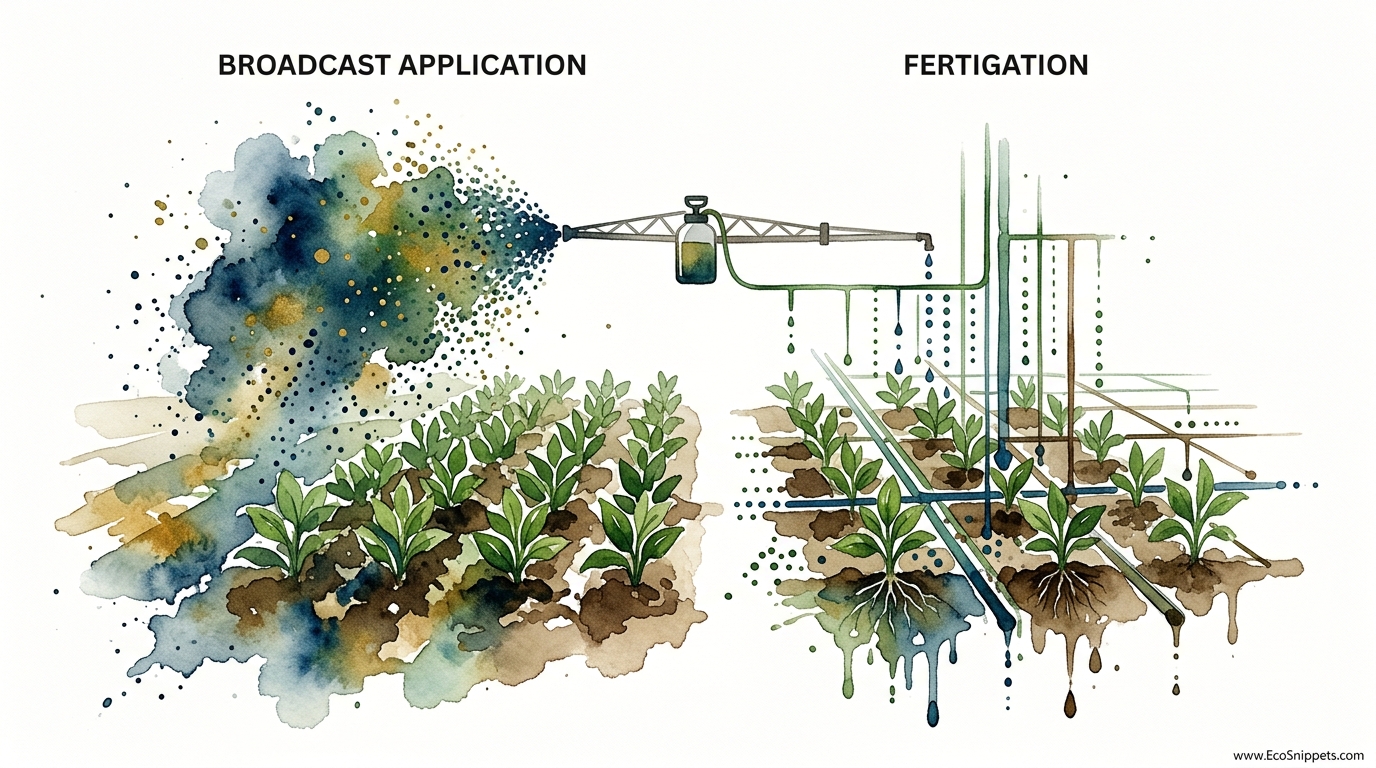
Most gardeners are literally growing their own weed problem by feeding the entire soil surface instead of the plant. When you broadcast fertilizer, you aren’t just feeding your tomatoes; you’re feeding every weed seed in the neighborhood. Precision application means your crops get 100% of the fuel and your weeds get zero. It’s the difference between a garden that thrives and one that’s a constant battle.
Feeding a garden shouldn’t be a mindless chore where you toss handfuls of pellets and hope for the best. Our ancestors understood that the land requires a targeted hand. They didn’t have the luxury of wasting resources, so they focused their labor where it mattered most: the root and the leaf. This approach, often called precision liquid feeding or fertigation, is about stewardship and efficiency. It is the practice of delivering a concentrated, water-soluble nutrient solution directly to the plant’s strike zone.
Liquid fertilizer is a powerful tool for anyone looking to reclaim their time and maximize their harvest. Instead of waiting weeks for granular pellets to break down in the soil, liquid nutrients are immediately available. This means your plants can react to a feeding within hours, not days. Whether you are building a self-reliant homestead or a backyard vegetable patch, mastering the art of the liquid drench is a vital skill.
How To Apply Liquid Fertilizer For Max Yield
Precision liquid fertilization is the process of applying water-soluble nutrients directly to the root zone or the foliage of a plant. Unlike traditional broadcasting, which spreads nutrients across a wide area, this method ensures that every drop of nourishment is positioned where the plant can actually use it. It is widely used in commercial high-yield agriculture, but the principles are perfectly suited for the home grower who wants professional-grade results.
Think of liquid fertilizer like a high-octane fuel for your garden. In real-world situations, this method is used when plants are entering high-demand stages, such as flowering or fruit set, or when the soil environment is compromised by pH imbalances or drought. When the ground is dry, granular fertilizer often sits uselessly on the surface. Liquid feeding bypasses this limitation by delivering the nutrients in a solution that the plant can drink up immediately.
Visualizing this is simple. Imagine you are trying to give water to a thirsty traveler. You could spray a garden hose over the entire crowd (broadcasting), or you could hand the traveler a glass of water (precision feeding). The latter ensures the person who needs the resource gets it without waste. This is exactly what happens in your garden beds when you switch from scattering pellets to applying a targeted liquid drench.
How It Works: The Science of Targeted Nutrition
Understanding the mechanics of plant feeding helps you become a better steward of the land. Plants absorb nutrients through two primary pathways: the root system and the leaf surface. Liquid fertilizers are designed to exploit both, providing a dual-threat approach to plant health.
Soil drenching works through mass flow and diffusion. When you pour a nutrient solution around the base of a plant, the water carries dissolved ions directly to the root hairs. Because the nutrients are already in a soluble state, the plant doesn’t have to wait for microbial activity or rainfall to break down solid matter. The roots take up the water, and the nutrients come along for the ride, moving through the xylem to the rest of the plant.
Foliar feeding is a more specialized technique where you spray a diluted solution directly onto the leaves. Leaves have tiny openings called stomata, which primarily handle gas exchange but can also absorb liquid nutrients. This method is incredibly fast, often correcting a nutrient deficiency within a day or two. It is most effective during the early morning or late evening when the stomata are fully open and the sun isn’t strong enough to evaporate the solution before it can be absorbed.
Benefits of Precision Liquid Feeding
Efficiency is the hallmark of the precision approach. When you target the individual plant, you significantly reduce the volume of fertilizer required. This saves money and protects the surrounding environment from nutrient runoff, which can contaminate local waterways.
Weed suppression is perhaps the most immediate benefit. Most weeds are opportunistic scavengers. If you broadcast nitrogen across an entire bed, you are inviting every dormant pigweed and crabgrass seed to germinate. By applying liquid fertilizer only to the root zone of your crops, you leave the “in-between” spaces lean and hungry. This makes your weeding chores much easier over the course of the season.
Uniformity is another major advantage. Every drop of a well-mixed liquid solution contains the exact same ratio of nutrients. Granular blends can sometimes separate or “clump,” leading to hot spots where a plant gets too much or cold spots where it gets too little. Liquids ensure that every plant in the row receives a consistent, balanced meal.
Challenges and Common Mistakes
Nutrient burn is the most frequent error made by eager gardeners. Because liquid fertilizers are highly concentrated and readily available, it is easy to overdo it. High levels of nitrogen or potassium can “pull” water out of the plant through osmosis, leading to dehydrated roots and scorched leaf edges. Always follow the golden rule of liquid feeding: it is better to be a little too weak than a little too strong.
Salt buildup is another concern, particularly with synthetic liquid fertilizers. Many of these products are made of mineral salts. If you apply them repeatedly without adequate watering, these salts can accumulate in the soil, eventually making it difficult for the plant to take up water at all. This is why testing your soil’s electrical conductivity (EC) or simply ensuring deep, regular watering with plain water is crucial for long-term soil health.
Mixing errors often lead to poor results. Some gardeners fail to agitate their solution properly, leaving the heavy nutrients settled at the bottom of the bucket. Others might mix incompatible products—like certain forms of calcium and phosphorus—which can react and “fall out” of the solution as a solid sediment that the plant cannot use. Always stir thoroughly and check for any cloudiness or grit in your mixing tank.
Limitations: When Liquid Might Not Be Best
Weather is the greatest enemy of the liquid feeder. A heavy rainstorm immediately after a soil drench can wash your expensive nutrients deep into the subsoil, far beyond the reach of the roots. Similarly, high winds make foliar spraying nearly impossible, as the fine mist will drift onto the neighbor’s lawn or evaporate before it hits the leaf.
Labor and equipment maintenance represent a practical boundary. While broadcasting a bag of granular fertilizer might take ten minutes, precisely drenching a large garden can take an hour or more. Furthermore, liquid application equipment, such as pump sprayers or fertigation injectors, requires regular cleaning. Clogged nozzles and corroded seals are a common headache for those who don’t maintain their gear.
Longevity is also a factor. Liquid fertilizers are “fast-food” for plants; they provide a quick burst of energy but don’t stay in the soil for long. For heavy-feeding crops that need a steady supply of nutrients over several months, a liquid-only program can be taxing. In these cases, a combination of a slow-release organic base and supplemental liquid “boosts” is often the most sensible path.
Precision Liquid vs. Surface Broadcasting
Choosing between these two methods depends on your goals, your scale, and your tolerance for weeds.
| Feature | Precision Liquid Drench | Surface Broadcasting |
|---|---|---|
| Nutrient Availability | Immediate (Hours) | Slow (Days to Weeks) |
| Weed Growth | Minimal (Targeted) | High (Feeds everything) |
| Waste/Runoff | Very Low | Moderate to High |
| Labor Level | Higher (Individual attention) | Lower (Fast application) |
| Risk of Burn | Moderate (If not diluted) | Low to Moderate |
Practical Tips and Best Practices
Timing is everything in the garden. For the best results, apply your liquid fertilizer in the early morning while the dew is still on the ground. This allows the plant to absorb the nutrients during the peak of its photosynthetic activity throughout the day. Avoid fertilizing in the heat of the afternoon, as the sun can cause the solution to burn the foliage or roots.
The “Little and Often” rule is a secret of many master gardeners. Instead of giving your plants one massive dose of fertilizer once a month, try giving them a quarter-strength dose every week. This provides a steady, consistent supply of nutrients and prevents the “boom and bust” cycle that can stress sensitive crops like peppers or lettuce.
Pre-watering is a simple but effective insurance policy against root burn. Never apply liquid fertilizer to bone-dry soil. The parched roots will gulp down the concentrated solution too quickly, which can lead to damage. Always water your plants lightly with plain water about an hour before you apply your fertilizer to ensure the root zone is moist and receptive.
DIY Liquid Fertilizer Recipes
You don’t always need to buy a bottle from the store. Our ancestors made their own “liquid gold” using what they had on hand.
- Compost Tea: Steep a shovel-full of finished compost in a 5-gallon bucket of water for 48 hours. Strain and use as a gentle, biology-rich soil drench.
- Wood Ash Tea: Mix two cups of clean wood ash into a gallon of water to create a potassium-rich boost for flowering plants. Let it sit for a day, then use only the clear liquid at the top.
- Fish Emulsion: If you live near the coast, fermented fish remains provide a nitrogen powerhouse. It smells terrible, but the plants love it.
Advanced Considerations for Serious Growers
Serious practitioners often move beyond simple dilution and start looking at the chemistry of their solution. Monitoring the pH of your liquid fertilizer is vital because nutrients are only available to the plant within specific pH ranges (usually 6.0 to 7.0 for most vegetables). If your solution is too acidic or too alkaline, the nutrients can “lock up,” and the plant will starve despite being surrounded by food.
Chelation is another advanced concept to understand. Some micronutrients, like iron and zinc, are easily tied up by soil particles. Chelated fertilizers use a special molecule to “wrap” the nutrient, protecting it until the plant can absorb it. If you are dealing with tough, alkaline soils, look for liquid fertilizers that feature chelated minerals to ensure your plants aren’t suffering from hidden deficiencies.
Electrical Conductivity (EC) meters are the ultimate tool for precision. An EC meter measures the amount of dissolved salts in your solution. This allows you to know exactly how “strong” your fertilizer is, removing the guesswork of measuring spoons and jugs. This level of control is how professional greenhouse growers achieve such massive, consistent yields.
Scenario: The Mid-Summer Tomato Boost
Let’s look at how this works in a real garden. Imagine it is mid-July, and your heirloom tomatoes are loaded with green fruit. The plants are looking a little pale, and you know they need a boost to finish the season strong.
First, you check the weather and see a clear, calm morning ahead. You mix a balanced organic liquid fertilizer—perhaps a 5-5-5 NPK blend—diluted to half-strength. After giving the plants a light drink of plain water, you walk through the row with a watering can, applying roughly one quart of the solution directly to the base of each plant. You take care not to splash the leaves to avoid fungal issues.
Three days later, you notice the leaves have turned a deep, vibrant green. The plants have the energy they need to pump sugars into those ripening fruits. Because you didn’t broadcast the fertilizer, the paths between your rows remain dry and weed-free. This is the power of precision.
Final Thoughts
Mastering liquid fertilizer is a journey toward greater self-reliance and better results. It requires a bit more thought than just tossing granules onto the dirt, but the rewards are found in the health of your soil and the weight of your harvest. By focusing your efforts directly on the plant, you are working with nature rather than against it.
This method is about more than just yield; it’s about the grit and wisdom of the pioneer spirit. It is the realization that a garden is a living system that responds best to a careful, targeted hand. When you stop feeding the weeds and start feeding the crop, you reclaim control of your land.
Experiment with different dilutions and timing. Pay attention to how your plants talk to you through the color of their leaves and the vigor of their growth. In time, the “little and often” approach will become second nature, and your garden will reflect the care and precision you put into it.
