How To Become More Self-Sufficient Without Starting a Full-Blown Farm…
Want to start preserving your harvest, making your own soap, or building a backyard root cellar — but not sure where to begin? “Homesteading Advice” gives you instant lifetime access to 35+ practical homesteading books on food preservation, veggie gardening, DIY natural cleaning products (save over $250 per year with this skill alone), brewing, off-grid energy, and a whole lot more…
Click Here To Check It Out Now!
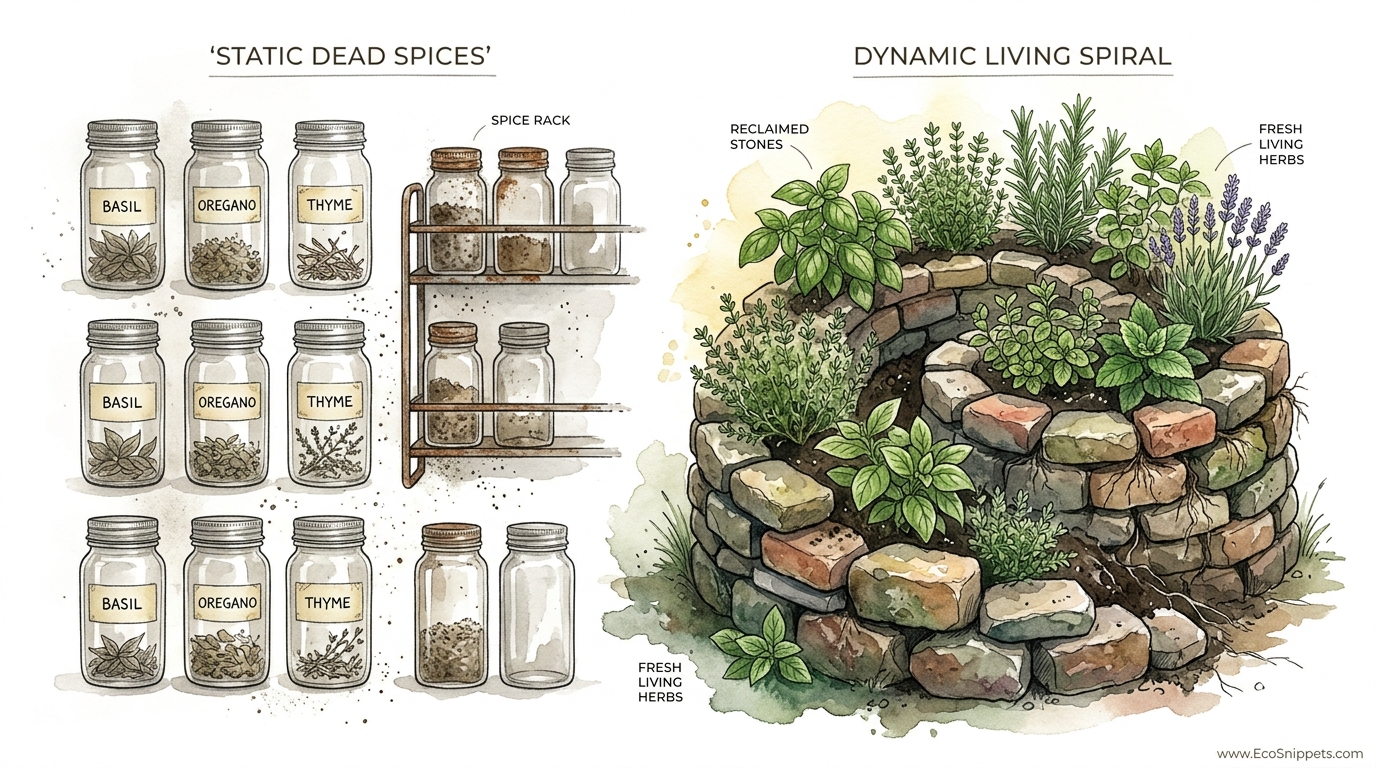
You are paying a 2,000% markup for dried-out dust when a single stone spiral can provide fresh flavor for a lifetime. If you’re still buying $8 jars of oregano, you’re losing the cost-of-living battle. Herbs are the highest-profit crop per square inch. Building a ‘Dynamic’ herb spiral allows you to use the flow of water and thermal mass of stones to grow a perpetual spice bank. Stop buying the plastic; start growing the flavor.
This ancient design isn’t just a garden bed. It is a vertical machine built to mimic the efficiency of a mountain. It stacks plants both horizontally and vertically to squeeze a massive harvest out of a tiny footprint. This guide will show you how to build one using grit and standard materials so you never have to walk down the spice aisle again.
Every kitchen should have a spice bank within a few steps of the back door. Most modern gardens waste space in flat rows that require constant bending and excessive watering. The spiral solves these problems through physics and observation. You can create a self-sustaining ecosystem that thrives on the very laws of nature that most gardeners fight against.
How To Build An Herb Spiral For Zero Cost Spices
An herb spiral is a three-dimensional garden structure that winds upward like a snail shell. It is a staple of permaculture design because it creates multiple microclimates in a single, compact space. One small structure provides the parched, sun-scorched heights needed for rosemary and the cool, damp valleys required for mint.
You typically build these spirals about five to six feet in diameter and roughly three feet high at the peak. This specific size ensures you can reach every single plant from the perimeter without ever stepping on the soil. Stepping on soil compacts it, which chokes the roots of your herbs. Keeping the soil loose and airy is the first secret to a high-yield spice bank.
Think of the spiral as a concentrated version of a diverse landscape. In the real world, you would have to walk across different fields to find herbs that like sand, clay, sun, or shade. This structure brings all those conditions into one reachable circle. It is the ultimate expression of homesteading efficiency.
Most people use local stones, salvaged bricks, or even old concrete chunks to build the walls. These materials aren’t just for decoration. They act as a battery for the sun’s energy. Stones absorb heat during the scorching afternoon and slowly release it into the soil at night. This thermal mass protects your sensitive herbs from sudden frost and keeps the root systems active longer into the winter.
The Mechanics of Microclimates and Gravity
Understanding the physics of the spiral is essential before you lay the first stone. Gravity is your primary irrigation system. When you water the top of the spiral, the moisture naturally trickles down through the soil and settles at the base. This creates a moisture gradient where the top is dry and the bottom is a bog.
Sun exposure is the second half of the equation. Because the structure is vertical, one side will always be in full sun while the other is cast in shadow. This allows you to grow shade-loving cilantro just inches away from sun-baked lavender. The height of the walls also provides protection from the wind for smaller, more delicate seedlings.
Building the foundation correctly prevents the structure from sinking over time. Laying down a thick layer of wet cardboard or newspaper on the ground first smothers any existing grass or weeds. This creates a clean slate for your new soil. Covering this base with a layer of coarse gravel ensures that the bottom of the spiral doesn’t become a stagnant mud pit.
Once the base is set, you start laying your stones in a circular pattern, gradually winding them inward and upward. Filling the center with a mix of high-quality topsoil and aged compost provides the nutrients your herbs crave. Using a 50/50 mix of soil and compost is usually best for a balance of drainage and fertility.
Benefits of the Dynamic Living Spiral
The most immediate benefit is the massive reduction in your grocery bill. Fresh herbs are expensive because they are fragile and have a short shelf life. When you grow them in a living spiral, they stay alive and productive for years. You harvest only what you need for a single meal, which eliminates waste entirely.
Space efficiency is another significant advantage for those with small yards. A standard 6-foot spiral provides roughly 30 linear feet of planting space. You are essentially turning a flat circle into a mountain range. This vertical gain allows you to grow enough herbs for a family of four in a space that would normally only hold a few tomato plants.
Water management is built directly into the design. Traditional flat gardens lose a lot of water to evaporation and runoff. The spiral captures water and directs it exactly where it is needed most. Drought-tolerant herbs stay high and dry, while moisture-loving plants soak up the drainage at the base. This design can reduce your garden water usage by up to 20% compared to flat beds.
Maintenance becomes a simple task of picking and pruning. Because the herbs are elevated, you don’t have to spend hours on your knees weeding or harvesting. The density of the planting also naturally shades out most weeds once the herbs are established. A well-built spiral looks more like a piece of living art than a chore.
Challenges and Common Mistakes
One of the biggest mistakes beginners make is planting mint directly into the spiral. Mint is an aggressive, invasive plant that spreads through underground runners. If you plant it in the soil of the spiral, it will eventually choke out every other herb. You should always plant mint in a buried pot or keep it in a separate container at the base to prevent a “mint takeover.”
Incorrect orientation can also ruin your microclimates. In the Northern Hemisphere, the lowest part of the spiral should ideally face north or northeast to create the best shade zones. If you face it the wrong way, you might end up with too much sun in the areas meant for cool-weather plants. Always observe the sun’s path across your yard for a few days before you start building.
Soil settling is a natural process that can catch you off guard. Fresh soil contains a lot of air and organic matter that will compress over the first few months. If you don’t pack the soil firmly during the build, you might see your plants sink several inches below the rim of the stones. Topping off the soil with fresh compost every spring helps maintain the height.
Using the wrong building materials can also cause issues. Avoid using treated lumber or railroad ties, as the chemicals used to preserve them can leach into the soil and your food. Natural stone, clay bricks, or untreated wood are the only safe options for a culinary garden. Stability is also key; make sure your stones are wide enough at the base to support the weight of the soil above.
Limitations and Practical Constraints
A herb spiral is perfect for home kitchens but is not designed for industrial production. If you plan on selling large quantities of dried herbs at a farmer’s market, you will likely need more space than a single spiral can provide. It is a tool for self-reliance and daily cooking rather than a commercial farming solution.
Sunlight is a non-negotiable requirement for this project. Most culinary herbs require at least six hours of direct sun to develop the essential oils that give them flavor. If your yard is entirely shaded by large trees or buildings, the spiral will struggle to produce high-quality yields. You must find the sunniest spot on your property, preferably close to the kitchen door.
Physical labor is required for the initial setup. Moving several hundred pounds of stone and soil is a workout that requires grit. If you have mobility issues, you may need assistance during the construction phase. Once it is built, the garden is very easy to manage, but the “breaking ground” part is a heavy lift.
Winter climate also dictates which herbs will survive as perennials. In colder zones, Mediterranean herbs like rosemary may need to be brought indoors or heavily mulched to survive the frost. The thermal mass of the stones helps, but it cannot overcome a deep, prolonged freeze in northern latitudes. Know your hardiness zone before selecting your permanent plants.
Static Dead Spices vs. Dynamic Living Spiral
| Feature | Store-Bought (Static) | Herb Spiral (Dynamic) |
|---|---|---|
| Cost per Ounce | High ($3 – $8) | Near Zero |
| Flavor Potency | Low (Aged/Oxidized) | Maximum (Fresh Picked) |
| Maintenance | None | Minimal Pruning |
| Environmental Impact | High (Plastic/Shipping) | Positive (Biodiversity) |
| Lifespan | 6-12 Months (Stored) | Perpetual Growth |
Practical Tips for a Thriving Spiral
Watering should always start at the very top of the spiral. Letting the water naturally flow downward ensures that every zone gets the appropriate amount of moisture. If you notice the bottom becoming too soggy, you can add more sand or gravel to the soil mix in that area to improve drainage.
Mulching is your best friend for moisture retention. Adding a layer of straw or wood chips between the herbs prevents the sun from baking the soil too hard. This is especially important at the top of the spiral where the sun is most intense. Mulch also breaks down over time, adding organic matter back into the system.
Harvesting should be done frequently to encourage bushier growth. Pinching off the tips of herbs like basil and oregano forces the plant to grow sideways instead of getting tall and leggy. This creates a denser “carpet” of herbs that looks better and produces more leaves. Always use sharp shears to make clean cuts that heal quickly.
Spring is the time for a heavy prune. Many perennial herbs like sage and lavender become woody over time if they aren’t cut back. Removing about a third of the previous year’s growth in early spring keeps the plants vigorous and prevents them from becoming sparse. This is also a good time to add a fresh layer of compost to the entire structure.
Advanced Considerations: Pond Integration and Companion Planting
If you want to take your spiral to the next level, consider adding a small pond at the very bottom. You can use a simple pond liner or even a buried bucket. This water feature attracts frogs and toads, which act as a natural pest control system by eating slugs and insects. It also creates a highly humid microclimate for herbs like watercress.
Companion planting within the spiral can further increase your success. Some herbs actually help each other grow better when planted together. For example, planting marigolds at the base can help deter harmful nematodes in the soil. Borage is another great addition as it attracts pollinators like bees that will help your entire garden thrive.
Adjusting the soil composition for different zones is a pro move. At the top of the spiral, mix in more sand or perlite with your soil to simulate the rocky, well-draining environment that Mediterranean herbs love. At the bottom, add more peat moss or vermiculite to help hold onto the moisture for your chives and parsley.
Seasonal rotation is also possible for annual herbs. While rosemary and sage are perennials, you’ll need to replant things like basil and cilantro every year. Rotating where you plant these annuals each season can help prevent soil-borne diseases from building up in one specific spot. This keeps the entire system healthy and productive for decades.
Example Scenario: The 5-Foot Kitchen Spiral
Imagine a 5-foot diameter spiral located just ten feet from your kitchen door. At the very top, in the driest and sunniest spot, you have a massive rosemary bush and several varieties of thyme. These plants thrive in the heat radiating off the stones and require very little water. Just below them, you’ve planted sage and oregano, which enjoy the full sun but prefer a bit more soil depth.
Moving around the sunnier side of the middle tier, you have lush bushes of sweet basil and lavender. On the cooler, eastern side of that same tier, you’ve tucked in chives and parsley, which appreciate the morning sun but stay protected from the harsh afternoon heat. The soil here stays moderately moist due to the drainage from the top.
At the very bottom, on the shaded north side, you have a carpet of cilantro and a small patch of mint contained in a pot. The base of the spiral is slightly damp, providing a perfect environment for these soft-leaved herbs to stay green and succulent even in mid-summer. One single watering at the top every three days keeps this entire system thriving.
By the end of the first season, you are harvesting armfuls of herbs every week. You dry the excess in the sun or a dehydrator to fill your jars for the winter. You no longer look at the spice section in the store because your backyard provides everything you need. This is the transition from a consumer to a producer.
Final Thoughts
Building an herb spiral is one of the most rewarding projects a self-reliant gardener can undertake. It is a bridge between the ancient wisdom of ancestral farming and the practical needs of a modern home. You aren’t just growing food; you are building a resilient system that works with nature instead of against it.
The initial investment of time and labor pays off for years to come. Once the structure is built and the perennials are established, the spiral requires very little input from you. It sits there, soaking up the sun and rain, quietly producing the most expensive crops in the grocery store for the price of some local stone and compost.
Do not be afraid to experiment with your design and plant choices. Every yard is different, and your spiral will eventually develop its own unique rhythm. Start small if you have to, but start today. The sooner you lay those stones, the sooner you can stop paying for dust and start tasting the true power of living spices.
