How To Become More Self-Sufficient Without Starting a Full-Blown Farm…
Want to start preserving your harvest, making your own soap, or building a backyard root cellar — but not sure where to begin? “Homesteading Advice” gives you instant lifetime access to 35+ practical homesteading books on food preservation, veggie gardening, DIY natural cleaning products (save over $250 per year with this skill alone), brewing, off-grid energy, and a whole lot more…
Click Here To Check It Out Now!
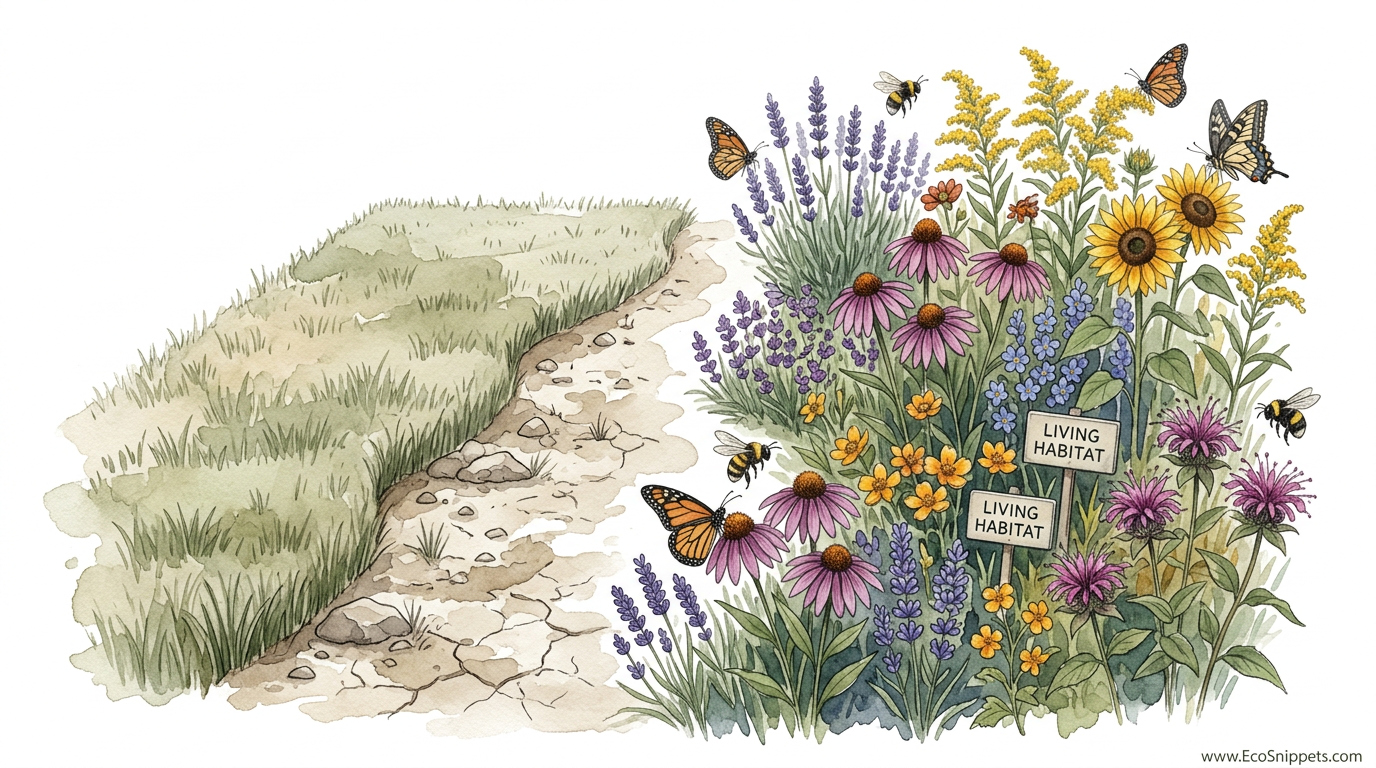
We call it a yard, but nature calls it a desert. The ‘American Dream’ lawn is a biological dead zone that requires constant chemicals and noise to maintain. By letting the wild back in, we create a sanctuary for the creatures that keep our ecosystems alive. Which side of the fence are you on?
In the days of our ancestors, land was not a carpet to be groomed but a partner to be tended. A homestead meant a place of production, where every square inch served a purpose for the family and the local life that sustained them. Today, we have traded that wisdom for the sterile uniformity of turfgrass—a monoculture that sips our water, drains our wallets, and offers nothing to the bees and butterflies that underpin our food supply. Transitioning from a sterile desert to a living habitat is not just a gardening project; it is an act of reclamation. It is about restoring the grit and self-reliance that once defined our relationship with the earth.
This guide will show you how to break the cycle of mowing and blowing. We will look at how to strip away the vanity of the modern lawn and replace it with a resilient, native landscape that thrives on its own terms. You do not need a tractor or a degree in biology to begin. You only need the willingness to work with the seasons and a deep respect for the ancestral patterns of the land.
How To Convert Your Lawn Into A Pollinator Paradise
A pollinator paradise is a landscape designed to provide food, water, and shelter for the insects and animals that move pollen from one plant to another. In practical terms, this means replacing thirsty, non-native grasses with a diverse mix of flowering plants, shrubs, and trees that evolved in your specific region. These “native” plants have a genetic history with local pollinators that spans thousands of years. They speak the same biological language.
The modern lawn exists as a status symbol, but in the real world, it is an ecological void. Most turfgrasses are imported species that provide no nectar for bees and no host leaves for caterpillars. Converting this space into a habitat matters because over 85% of all flowering plants—and roughly 35% of our food crops—depend on animal pollinators to reproduce. When we lose these creatures to habitat fragmentation and pesticide use, we jeopardize the very foundation of our self-sufficiency.
Imagine your yard as a patch in a larger quilt of survival. In a world of concrete and chemical-soaked grass, your pollinator garden becomes an oasis. It is a place where a weary Monarch butterfly can find milkweed to lay its eggs, and where native bumblebees can find the high-quality forage they need to survive the winter. Creating this habitat is the ultimate expression of stewardship. It is a way to prove that humans can be a restorative force rather than a destructive one.
How It Works: Methods of Lawn Eradication
Turning a lawn into a meadow requires a clean slate. You cannot simply throw wildflower seeds onto existing grass and expect success; the turf will choke out the newcomers before they can take root. There are several ways to clear the land without resorting to harsh chemicals that poison the soil.
Sheet Mulching (The Lasagna Method)
Sheet mulching is a passive, soil-building technique that mimics the natural forest floor. It involves layering organic materials to smother existing grass while simultaneously feeding the worms and microbes beneath. You begin by mowing your lawn as short as possible and leaving the clippings in place to rot. Next, you cover the entire area with overlapping layers of plain brown cardboard or thick newspaper. Ensure there are no gaps where grass can peek through.
Soak the cardboard thoroughly with water. Cover it with 3 to 4 inches of organic matter—a mix of compost, aged manure, and wood chips works best. Over the course of a few months, the cardboard will decompose, the grass will die from lack of light, and you will be left with a rich, friable planting bed. This method is ideal for those who want to build “black gold” soil without tilling, which preserves the delicate fungal networks in the earth.
Solarization and Smothering
Solarization uses the power of the sun to “cook” the lawn and any weed seeds lurking in the top layer of soil. This process requires clear plastic sheeting, which traps heat more effectively than black plastic. After mowing the grass short and soaking the ground, you pull the plastic tight across the area and weigh down the edges with rocks or bricks. You must leave this in place for 6 to 8 weeks during the hottest part of the summer.
Smothering is a similar but slower alternative. Instead of plastic, you can use old carpet, plywood, or heavy tarps to block all light. This method is less disruptive to soil microbiology than the high heat of solarization but may take a full growing season to ensure the toughest perennial grasses are truly dead. Both techniques allow you to start with a “stale seed bed,” which significantly reduces the amount of weeding you will have to do in the future.
The Practical Benefits of Rewilding
The most immediate benefit of a pollinator paradise is the restoration of biodiversity. Research shows that landscapes dominated by native plants contain significantly more insect biomass than those with introduced species. For instance, native oaks support hundreds of species of caterpillars, which in turn feed the local bird populations. A single pair of chickadees may need up to 9,000 caterpillars to raise one clutch of chicks. By planting native, you are literally fueling the food chain.
Financial savings are another major advantage. While there is an initial investment in seeds or plugs, a native landscape is 80% to 90% less expensive to maintain than a traditional lawn over a ten-year period. You no longer have to pay for fertilizers, pesticides, or the gasoline required for weekly mowing. Once established, native plants are adapted to your local climate and rainfall patterns, meaning they can survive droughts that would turn a standard lawn into a brown crisp.
Water conservation is perhaps the most critical practical benefit in our changing climate. Turfgrass has incredibly shallow roots—often only an inch or two deep. In contrast, native prairie plants like Big Bluestem or Leadplant can send roots 10 to 15 feet into the earth. These deep systems act as “living sponges,” allowing rainwater to infiltrate deep into the soil rather than running off into gutters. This prevents erosion, recharges groundwater, and keeps your landscape resilient during the dry months.
Challenges and Common Mistakes
The greatest challenge in lawn conversion is the “messy” phase. During the first year or two, a budding meadow can look like a patch of weeds to the untrained eye. Many native perennials spend their first season putting all their energy into their root systems rather than their flowers. This is the “pioneer patience” required of a true land steward. You must resist the urge to tidy up or pull plants that you don’t recognize.
One frequent error is failing to manage the “seed bank” in the soil. Every lawn contains thousands of dormant seeds from aggressive weeds like crabgrass or thistle. If you disturb the soil too much during planting—such as by deep rototilling—you will bring these seeds to the surface and trigger a massive weed bloom. It is better to use “no-dig” methods that keep the soil layers intact.
Neighbor and HOA relations can also present a hurdle. Most municipal codes were written with 1950s aesthetics in mind. To avoid conflict, it is wise to create “cues to care.” This involves adding intentional design elements like a mowed border around the meadow, a split-rail fence, or a “Pollinator Habitat” sign. These small touches signal to your neighbors that the wildness is purposeful and managed, not a sign of neglect.
Limitations and Environmental Constraints
Rewilding is not a one-size-fits-all solution, and there are realistic boundaries to consider. In very small urban lots, a full-scale meadow might be impractical due to space or drainage constraints. If your yard sits in a depression that collects heavy runoff from neighboring properties, certain prairie species might rot. In these cases, you should look toward a “rain garden” approach, using native plants that specifically thrive in wet, heavy soils.
Local ordinances sometimes dictate the height of vegetation near sidewalks or intersections. You must be aware of sightline requirements to ensure your taller grasses don’t become a safety hazard for drivers. Additionally, if your land has been heavily compacted by construction equipment or contaminated by decades of industrial chemical use, the soil may need significant remediation before it can support a healthy ecosystem.
Lawn vs. Living Habitat: A Comparison
| Feature | Traditional Turfgrass | Native Pollinator Meadow |
|---|---|---|
| Maintenance | Weekly mowing, trimming, and blowing. | One annual mow/cut in late winter. |
| Water Needs | High; often requires supplemental irrigation. | Very low; relies on natural rainfall. |
| Chemical Inputs | Requires fertilizers and herbicides. | None; builds its own soil health. |
| Biodiversity | Biological dead zone; zero habitat value. | High; supports bees, birds, and insects. |
| Root Depth | 1–3 inches. | 5–15 feet (depending on species). |
Practical Tips for the Modern Pioneer
Success in rewilding comes from working with the land’s natural rhythms rather than fighting them. Start by identifying the “keystone” species for your ecoregion. These are the heavy lifters of the ecosystem—plants like Goldenrods, Asters, and Sunflowers that support a disproportionate number of specialist bees. Every region has its own “Pollinator Recipe Card” provided by organizations like the Pollinator Partnership or the Xerces Society.
When planting, group the same species together in “drifts.” Pollinators are more likely to find and utilize flowers when they are clustered in groups of three to five plants rather than scattered individually. This increases foraging efficiency for the insects. Ensure you have a “succession of bloom” from early spring through late fall. Many gardeners focus on summer flowers but forget that queens need nectar when they emerge in April and migratory butterflies need fuel in October.
Do not be too quick to “clean up” in the fall. Native bees often overwinter in the hollow stems of perennials or in the leaf litter on the ground. Leave your dead stalks standing until temperatures are consistently above 50 degrees Fahrenheit in the spring. This ancestral wisdom ensures that you aren’t accidentally throwing away the next generation of pollinators with your yard waste.
Advanced Considerations: Scaling and Soil Ecology
Serious practitioners of rewilding eventually move beyond the “garden” mindset and into the “ecosystem” mindset. This involves considering the soil food web. A healthy meadow relies on a partnership with mycorrhizal fungi, which extend the reach of plant roots and help them swap nutrients. Avoid any fertilizers, even organic ones, that might disrupt this balance. Wildflowers actually prefer low-fertility soils; high nitrogen levels often favor aggressive weeds and “floppy” growth in natives.
Think about “vertical layering” as you scale your project. A true habitat includes more than just wildflowers. It includes a ground layer of mosses and sedges, an understory of shrubs like Elderberry or Serviceberry, and a canopy of native trees. Each layer provides a different niche for wildlife. If you have the space, consider “passive water harvesting” by creating swales or small berms that direct runoff into your deep-rooted planting beds, further increasing the self-sufficiency of your land.
Example: The Suburban 1/4 Acre Transition
Take the case of a standard quarter-acre lot in the Midwest. The owner decides to convert half of their backyard into a prairie pocket. They begin by sheet mulching a 500-square-foot area in the fall using free cardboard from a local appliance store and wood chips from an arborist. By May, the grass is dead and the soil is damp and dark.
Instead of buying expensive large plants, they purchase 150 “plugs”—small, deeply rooted seedlings—of Little Bluestem, Purple Coneflower, and Swamp Milkweed. They plant these into the mulch, 12 inches apart. For the first two months, they water the plugs once a week to help them establish. By the second year, the meadow is three feet tall and humming with life. The owner no longer needs a mower for this half of the yard, and the cost of the entire project was less than two seasons of professional lawn care.
Final Thoughts
The choice to convert your lawn into a pollinator paradise is an act of defiance against a culture of sterile convenience. It is a return to a more honest way of living, where we take responsibility for the health of the ground beneath our boots. By trading a biological desert for a living habitat, you are not just saving the bees; you are reconnecting with the ancestral grit that once made the human-land partnership so powerful.
Start small, stay patient, and observe the changes. You will find that as the wild returns, so does a sense of peace that no manicured lawn could ever provide. The humming of the bees and the flash of butterfly wings are the rewards of a job well done. Experiment with the native seeds of your region, and let the land tell you what it wants to become. The world needs fewer lawns and more sanctuaries. It is time to choose your side of the fence.
