How To Become More Self-Sufficient Without Starting a Full-Blown Farm…
Want to start preserving your harvest, making your own soap, or building a backyard root cellar — but not sure where to begin? “Homesteading Advice” gives you instant lifetime access to 35+ practical homesteading books on food preservation, veggie gardening, DIY natural cleaning products (save over $250 per year with this skill alone), brewing, off-grid energy, and a whole lot more…
Click Here To Check It Out Now!
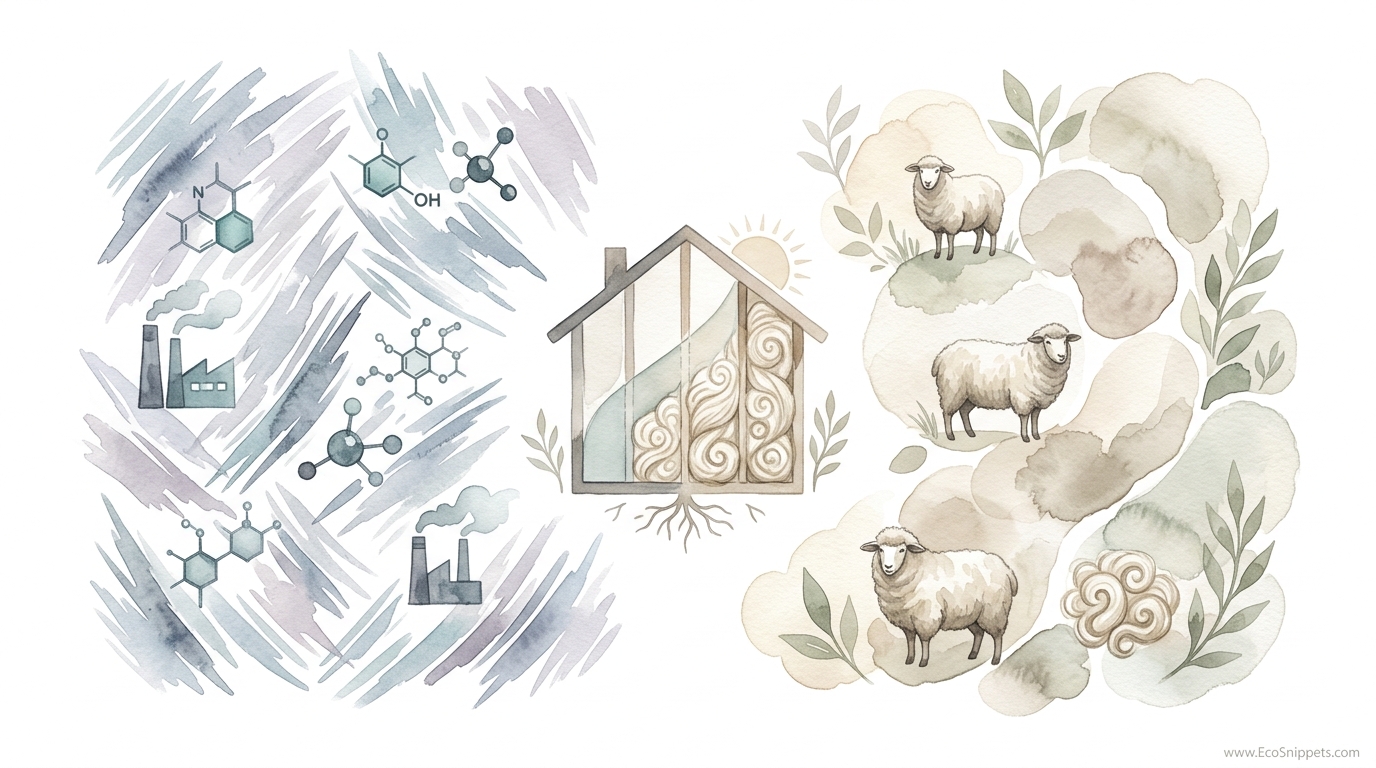
One of these requires a hazmat suit to install, while the other is so safe you could sleep on it—which one is protecting your family’s air? We’ve been told that pink itchy stuff is the only way to stay warm, but our ancestors used a material that actually manages moisture, filters indoor toxins, and doesn’t require a respirator to touch. It’s time to look at sheep’s wool insulation.
Building a home that lasts requires more than just modern engineering; it demands a return to materials that have stood the test of time. For thousands of years, humans relied on the natural intelligence of the fleece to survive the harshest environments on Earth. Today, we often trade health for convenience, filling our walls with synthetic fibers that off-gas chemicals and fail at the first sign of moisture. Sheep’s wool insulation represents a bridge between ancestral wisdom and high-performance building science, offering a self-reliant solution for those who want their homes to breathe as naturally as they do.
How To Insulate Homes Without Chemicals (Sheep Wool)
Sheep wool insulation is a high-performance thermal and acoustic barrier made from the processed fleece of sheep. While modern society often views wool primarily as a textile for sweaters or blankets, its application in the building industry is a reclamation of a practice that dates back to ancient Mesopotamia and Egypt. In those early days, felted or woven wool was used to line nomadic dwellings like yurts, providing a barrier that kept heat in during the winter and out during the summer.
Today, this material is available in easy-to-use batts, rolls, and loose-fill “knops” designed to fit standard wall studs and attic joists. Unlike fiberglass or mineral wool, which are manufactured through energy-intensive industrial processes involving glass or stone, sheep’s wool is grown naturally by livestock. It is a renewable resource that can be shorn from the animal year after year without harm.
This insulation is used in everything from high-end custom homes to off-grid tiny houses and historical renovations. It is particularly valued in “vapor-open” assemblies where the goal is to allow a building to manage humidity naturally rather than trapping it behind plastic sheets. When you choose wool, you are choosing a material that is biologically programmed to handle the challenges of a living environment.
The Science of the Fleece: How It Works
Understanding why wool outperforms synthetic alternatives requires a look at the molecular level. Every single wool fiber is a masterpiece of evolutionary engineering, composed primarily of a protein called keratin. This is the same protein found in human hair and fingernails, but in sheep, it has evolved specific characteristics to protect the animal from extreme wet and cold.
Hygroscopic Moisture Management
Wool is naturally hygroscopic, meaning it has a unique relationship with water vapor. The structure of a wool fiber consists of a water-repellent (hydrophobic) outer layer, known as the epicuticle, and a water-attracting (hydrophilic) inner core. This allows the material to draw moisture vapor into its core without the surface ever feeling damp to the touch.
Research shows that sheep’s wool can absorb up to 33% to 40% of its own weight in moisture without losing its insulating properties or structural integrity. This is a dramatic contrast to fiberglass, which loses its R-value significantly if it becomes even slightly damp. As the wool absorbs moisture, it undergoes an exothermic reaction, releasing a small amount of heat that can actually help stabilize the temperature of the wall cavity. When the air becomes dry, the wool releases that moisture back into the environment, acting as a natural humidity buffer for your living space.
Chemosorption and Air Purification
Perhaps the most “pioneer-grit” feature of wool is its ability to clean the air. Our modern homes are often filled with Volatile Organic Compounds (VOCs) like formaldehyde, which are emitted by furniture, glues, and flooring. Wool contains 18 different amino acids, including lysine and arginine, which have reactive side chains.
These amino acids perform a process called chemosorption, where they chemically bind with harmful gases and permanently neutralize them. Studies from the National Institutes of Health (NIH) and other research bodies have confirmed that wool can absorb nearly 100% of formaldehyde in its immediate vicinity. It doesn’t just trap these toxins; it breaks them down so they are never re-released into your home. This makes wool a “passive” air filter that works 24 hours a day without needing electricity or a filter change.
The Benefits of Natural Insulation
Choosing sheep’s wool offers a list of advantages that go far beyond simple R-value. While the upfront cost may be higher, the long-term benefits to both the structure of the house and the health of the inhabitants are measurable.
Superior Fire Resistance
Safety is a primary concern for any homeowner. Wool is naturally fire-resistant due to its high nitrogen and moisture content. It has a high ignition temperature (around 560°C to 600°C) and requires a high concentration of oxygen to burn. If a flame is applied to wool, it will char and eventually self-extinguish rather than melting or spreading the fire. Unlike many synthetic foams or treated cellulose, wool does not release toxic cyanide gases when exposed to high heat, providing precious extra minutes for a family to evacuate during an emergency.
Acoustic Dampening
Peace and quiet are essential for a home to feel like a sanctuary. The natural crimp and elasticity of wool fibers create millions of tiny air pockets that excel at absorbing sound waves. Wool has Sound Transmission Class (STC) ratings that often surpass mineral wool and far exceed standard fiberglass. It is particularly effective at dampening the mid-to-high frequency noises that are common in residential environments, such as voices, television audio, or the hum of appliances.
Sustainability and Low Embodied Energy
Self-reliance means looking at the full lifecycle of a product. Wool is entirely biodegradable and can be composted at the end of its life, returning nutrients to the soil. The energy required to produce wool insulation—known as embodied energy—is significantly lower than that of fiberglass, which must be melted in furnaces at over 1,000°C. By choosing wool, you are supporting a circular economy that benefits farmers and reduces the carbon footprint of your construction project.
Challenges and Common Mistakes
Even the best materials can fail if the person installing them doesn’t respect the rules of the trade. While wool is forgiving, there are specific pitfalls to avoid to ensure your home stays warm and dry.
The Threat of Pests
Mother Nature loves wool as much as we do, and moths or carpet beetles see untreated wool as a food source. A common mistake is using raw, untreated wool from a local farm without proper scouring and pest-proofing. Professional wool insulation manufacturers treat their products with boric acid or proprietary solutions like Ionic Protect®. This makes the fibers unpalatable to insects and also adds an extra layer of fire and mold resistance. If you are sourcing your own wool, you must ensure it is thoroughly cleaned of lanolin (the natural sheep grease) and treated, or you may find your insulation disappearing over a decade.
Improper Density and Slumping
Thermal performance depends on the air trapped within the fibers. If you pack the wool too tightly, you remove the air pockets and lower the R-value. Conversely, if you install it too loosely in a wall cavity, the wool may slump over time, leaving uninsulated gaps at the top of the wall. Always follow the manufacturer’s guidelines for “loft” and use mechanical fasteners like staples to secure batts every 12 inches to prevent any movement.
Limitations: When the Flock Isn’t Ideal
Honesty is part of the pioneer spirit, and it’s important to acknowledge where wool might not be the right choice. It is a premium material, and its use requires a specific understanding of building physics.
The High Upfront Cost
Budget is a reality for every builder. Sheep’s wool generally costs between $1.50 and $4.00 per square foot, which can be two to three times the price of fiberglass batts. If you are insulating a massive warehouse or a budget-restricted rental property, the initial investment may be difficult to justify despite the health benefits. Wool is an investment in the “forever home,” where the long-term durability and air quality provide a return on investment that goes beyond the utility bill.
Vapor Barrier Misunderstandings
Wool thrives in assemblies that can breathe. If you install sheep’s wool and then seal it behind a non-breathable plastic vapor barrier, you are preventing the material from doing its job of regulating humidity. In extremely humid climates or in buildings with poor ventilation, even the incredible moisture-holding capacity of wool has a limit. It needs to be part of a “vapor-open” wall system that allows moisture to move through the wall and exit the building safely.
Comparison: Chemical Fibers vs. Natural Wool
To see the value clearly, we must look at how the common “pink itchy stuff” stacks up against the ancestral fleece across key categories.
| Feature | Fiberglass (Chemical) | Sheep’s Wool (Natural) |
|---|---|---|
| R-Value per Inch | 2.2 – 2.9 | 3.5 – 3.8 |
| Installation PPE | Respirator, gloves, suit required | None (Safe to handle) |
| Moisture Reaction | Loses R-value, supports mold | Manages moisture, inhibits mold |
| Air Purification | None (May emit VOCs) | Permanently binds formaldehyde |
| Pest Resistance | Naturally resistant | Requires treatment (Boric acid) |
| Fire Safety | Non-combustible, can melt | Self-extinguishing, Class A |
Practical Tips for the Modern Shepherd’s Home
Installing wool is a straightforward process, but a few professional tricks will make the job cleaner and more efficient. Since you don’t need a hazmat suit, you can involve the whole family, making it a true homesteading project.
- Use the Right Tools: Wool is incredibly strong and will dull standard utility blades in minutes. Use a serrated bread knife or a specialized insulation knife. A “fence”—a straight piece of timber used to compress the wool while you cut—will ensure a straight, clean edge.
- Measure for a Friction Fit: Most wool batts are manufactured to be slightly wider than standard 16-inch or 24-inch stud bays. This “oversize” design allows for a friction fit. Aim for about half an inch of compression on the sides to ensure there are no air gaps.
- Mind the Wiring: Place the wool behind electrical wires rather than tucking the wires into the center of the batt. This prevents the wire from being compressed and keeps the thermal envelope consistent.
- Clean the Space First: Before laying wool in an attic or wall, vacuum out any old dust or debris. This is your chance to inspect the structure for any signs of rot or pests before the “clean” material goes in.
Advanced Considerations for Serious Builders
For those looking to push the boundaries of energy efficiency, sheep’s wool can be part of a sophisticated building envelope. Serious practitioners often look at the “Global Warming Potential” (GWP) of their materials. Wool is one of the few insulation types with a negative GWP because the sheep sequester carbon in their fleece as they grow it.
Consider using wool in a “double-stud” wall or an “I-joist” roof assembly. Because wool manages moisture so effectively, it can be used in thicker depths without the same risk of condensation that plagues thicker layers of foam or fiberglass. Additionally, if you are building in a high-wind area, the density of wool (usually around 1.0 to 1.5 lbs per cubic foot) provides better resistance to “thermal looping” or wind-washing, where cold air bypasses the insulation through tiny gaps.
Scenario: The Attic Retrofit
Imagine an old farmhouse with an uninsulated attic floor. The owners find that in the summer, the upstairs bedrooms are stifling, and in the winter, the heater never stops running. By choosing sheep’s wool, they can transform the space without hiring a specialized crew.
First, they clear out the old, dusty insulation and seal any air leaks around plumbing stacks or light fixtures. Next, they unroll 10-inch thick sheep’s wool batts between the joists. They don’t need to wear masks, so they can talk and listen to music as they work. Within hours, the house feels different. The wool begins absorbing the excess humidity that used to make the upstairs feel “heavy,” and the silence of the thick fleece makes the attic feel like a vault. The family has not just insulated their home; they have installed a biological filter that will protect their air quality for the next fifty years.
Final Thoughts
Relying on sheep’s wool is not just a choice about R-value; it is a choice about the kind of environment you want to provide for your family. We have spent decades sealing ourselves into boxes filled with plastic and glass fibers, only to wonder why indoor air quality is often worse than the air on a busy city street. Sheep’s wool offers a different path—one that respects the complexity of nature and the resilience of traditional materials.
Every roll of wool installed is a step toward a more self-reliant and healthy home. It manages the invisible threats of moisture and toxins with a grace that no laboratory-created chemical can match. Whether you are building a new homestead from the ground up or retrofitting a drafty old cottage, the fleece of the sheep provides a level of comfort that is truly second to none.
Start small if you must, perhaps by insulating a single nursery or a home office. Once you feel the difference in the air and hear the quiet that wool brings, you will understand why our ancestors never looked for anything else. The wisdom of the past is often the most advanced technology we have for the future.
