How To Become More Self-Sufficient Without Starting a Full-Blown Farm…
Want to start preserving your harvest, making your own soap, or building a backyard root cellar — but not sure where to begin? “Homesteading Advice” gives you instant lifetime access to 35+ practical homesteading books on food preservation, veggie gardening, DIY natural cleaning products (save over $250 per year with this skill alone), brewing, off-grid energy, and a whole lot more…
Click Here To Check It Out Now!
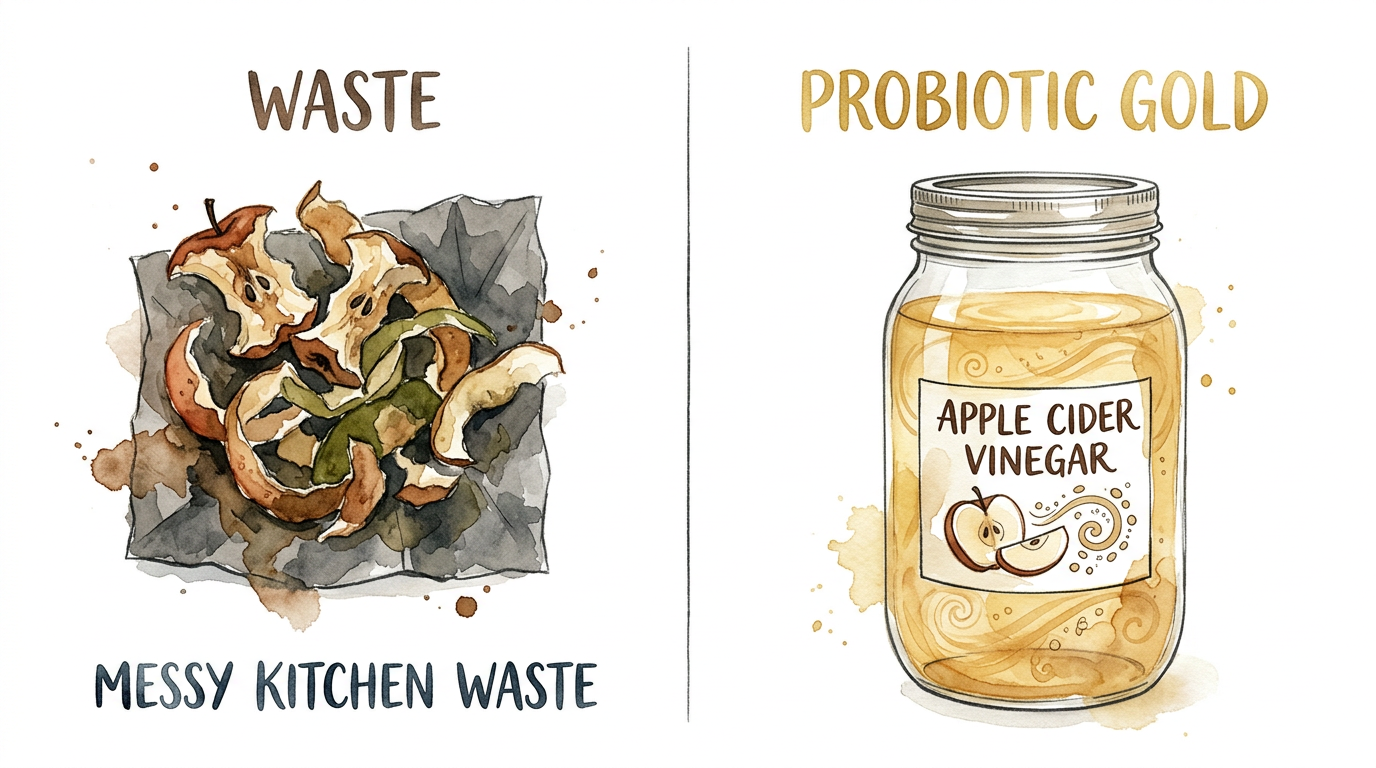
The very thing you’re tossing in the bin is the secret ingredient for the most powerful tonic in your pantry. Every time you peel an apple and toss the skin, you’re throwing away money and health. Learn how to turn those ‘scraps’ into raw, unfiltered vinegar that rivals the most expensive bottles at the health store. It’s not waste—it’s the fuel for your family’s gut health.
Making your own vinegar is an act of defiance against a disposable culture. It is the art of capturing wild yeasts and beneficial bacteria that have lived on our fruit since the dawn of time. When you transform a pile of cores into a bottle of “probiotic gold,” you aren’t just saving a few dollars; you’re reclaiming a skill that our ancestors relied on for survival and strength.
The process is slow, quiet, and deeply satisfying. It requires no expensive machinery, only patience and a bit of grit. By understanding the rhythm of fermentation, you can turn your kitchen into a small-scale apothecary where waste becomes a life-giving elixir. Let’s look at how to master this ancient craft.
How To Make Apple Cider Vinegar From Scraps
Apple cider vinegar from scraps is the process of using leftover peels, cores, and bruised bits to create an acetic acid solution through two distinct stages of fermentation. While commercial vinegar is often mass-produced using distilled alcohol and rapid-oxygenation tanks, the scrap method relies on the natural sugars left in the fruit and the wild microorganisms in your environment. It is a slow, living process that results in a complex, flavorful vinegar filled with the “mother.”
In the real world, this is the ultimate zero-waste kitchen hack. If you are making apple pie, applesauce, or just packing lunches for the kids, you have the raw materials ready. Instead of the compost pile being the final destination, those scraps act as the substrate for a thriving colony of Acetobacter.
Think of it as building a miniature ecosystem in a jar. You are providing the housing (the jar), the food (sugar and apple scraps), and the environment (room temperature and oxygen). In return, the microbes perform a chemical miracle, turning simple sugar into alcohol and then into the pungent, tangy vinegar that has been a staple of human health for over 5,000 years.
You’ll need a few basic supplies to get started. A clean half-gallon or gallon glass jar is best. Avoid metal, as the acid produced during fermentation will eventually corrode the container. You’ll also need filtered water—chlorine in tap water can sometimes inhibit the growth of the very bacteria you’re trying to cultivate. Finally, a small amount of sugar acts as the “starter fuel” to ensure the wild yeasts have enough energy to begin their work.
The Two-Stage Fermentation Process
Creating vinegar isn’t a single step; it’s a relay race between two different types of microorganisms. Understanding this helps you troubleshoot the process and know exactly what is happening inside your jar at any given moment.
Stage 1: The Alcoholic Ferment
First, the wild yeasts present on the apple skins (and in your air) begin to consume the sugars in the water and the fruit. This process is called alcoholic fermentation. During this phase, you will see bubbles rising to the top. This is carbon dioxide being released as the yeast converts sugar into ethanol. At this point, you are essentially making a very weak, wild apple cider or “apple wine.”
Stage 2: The Acetic Ferment
Once the yeast has done its job and the alcohol levels have risen, a second group of players enters the field: Acetic Acid Bacteria (AAB). These bacteria, primarily from the Acetobacter genus, consume the ethanol and, in the presence of oxygen, convert it into acetic acid. This is the stage where the liquid loses its boozy smell and takes on that signature sharp, vinegary tang. This second stage is also when the “mother” begins to form—a cellulose biofilm that houses the bacterial colony.
Benefits of Making Your Own Vinegar
The advantages of DIY apple cider vinegar go far beyond the kitchen sink. When you make it yourself, you are in control of the quality, the source, and the potency of your final product.
- Unmatched Probiotic Density: Most store-bought vinegars are pasteurized, which kills the living enzymes and beneficial bacteria. Your homemade version is raw and unfiltered, maintaining the “mother” which is a concentrated source of probiotics that support a healthy gut microbiome.
- Cost Efficiency: A high-quality bottle of raw ACV can cost upwards of $6 to $10. By using scraps that you would otherwise throw away, your only real cost is a few tablespoons of sugar and a bit of water. It turns your “trash” into a valuable asset.
- Ancestral Wisdom and Resilience: Learning to ferment is a step toward self-reliance. In a world where supply chains can be fragile, knowing how to preserve food and create your own health tonics is a skill that provides peace of mind and builds “pioneer grit.”
- Zero-Waste Impact: Reducing food waste is a major environmental win. By extracting every last bit of value from your apples, you are closing the loop in your kitchen and respecting the resources provided by the earth.
Common Challenges and Mistakes
Fermentation is a living process, and like any garden, it can occasionally grow something you didn’t intend. Most failures in vinegar making come down to a few common errors that are easily avoided once you know what to look for.
The “Gnat Hotel” Effect: Fruit flies are obsessed with the smell of fermenting fruit. If your jar isn’t covered with a tightly woven cloth (like a flour sack towel or a coffee filter), you will quickly find a colony of gnats living in your vinegar. A loose cheesecloth is often not enough; the weave is too wide, allowing tiny flies to crawl through and lay eggs. Always use a tight weave and a strong rubber band.
Mold vs. Kahm Yeast: This is the biggest fear for new fermenters. If you see something “fuzzy,” “hairy,” or “black/blue/green” on the surface, that is mold. Mold is a dealbreaker; if it appears, you must toss the batch and start over. However, if you see a flat, white, wavy film on the surface, that is likely Kahm yeast. While it looks strange, it is harmless. You can simply skim it off and continue. To prevent both, make sure you stir your jar daily during the first stage to keep the fruit scraps submerged and oxygenated.
Direct Sunlight: Light is the enemy of many ferments. Keeping your jar on a sunny windowsill might seem poetic, but the UV rays can kill the delicate bacteria you are trying to grow. Keep your jars in a dark pantry or a shaded corner of the counter to ensure the colony stays healthy.
Limitations and Realistic Expectations
While scrap vinegar is incredible for many uses, it’s important to understand its limitations compared to commercial products. The primary difference is the acetic acid concentration.
Commercial vinegar is standardized to at least 5% acidity, which is the safety threshold required for home canning and long-term shelf-stable preservation. Scrap vinegar is often less acidic—usually ranging between 3% and 4.5%—because the sugar content in scraps is lower than in pure apple juice. Therefore, you should never use homemade scrap vinegar for canning. It may not be acidic enough to prevent the growth of dangerous pathogens like botulism in your preserves.
Another limitation is flavor consistency. Because you are using wild yeasts, every batch will taste slightly different. One might be bright and floral, while another is deep and earthy. This is part of the beauty of the craft, but it can be frustrating if you are looking for a perfectly uniform product for a specific recipe.
Comparison: Scrap Vinegar vs. Juice-Based ACV
While both are excellent, they serve slightly different purposes in a self-reliant kitchen. Here is a breakdown of how they compare.
| Feature | Apple Scrap Vinegar | Apple Juice (Cider) Vinegar |
|---|---|---|
| Primary Ingredient | Cores, Peels, Water, Sugar | 100% Raw Apple Juice |
| Cost | Near zero (Uses waste) | Moderate (Price of juice) |
| Acidity Level | Typically 3%–4% | Typically 5%–6% |
| Flavor Profile | Mild, light, slightly earthy | Robust, sharp, deeply fruity |
| Best Use | Health tonics, hair rinses, cleaning | Canning, marinades, heavy dressings |
Practical Tips for Success
To get the best possible results from your fermentation, follow these best practices that have been passed down through generations of home makers.
Stir, Stir, Stir: During the first two weeks, you must stir the jar once or twice a day. This introduces oxygen and prevents the fruit scraps from sitting at the surface where they can develop mold. A wooden spoon or a glass rod is the best tool for this. Think of it as “waking up” the microbes.
Use Organic if Possible: Conventional apples are often sprayed with pesticides that are designed to kill “pests”—unfortunately, these chemicals can also inhibit the growth of the beneficial yeasts you want. If you can’t get organic apples, wash your scraps thoroughly in a vinegar-water soak before starting your batch.
Temperature Matters: Fermentation thrives in a “Goldilocks” zone—between 65°F and 80°F. If your house is too cold, the process will stall and might take months. If it’s too hot, the bacteria may work too fast, resulting in a “plastic-y” or off-flavor. A consistent, room-temperature spot is ideal.
The “Kickstarter” Method: If you have a bottle of raw vinegar with the mother already (either from a previous batch or a store-bought brand like Bragg’s), add two tablespoons to your new jar. This acts as an “inoculant,” introducing a massive colony of Acetobacter immediately and significantly reducing the risk of a failed batch.
Advanced Considerations: Scaling and Maturation
Once you’ve mastered the basic quart jar, you might find yourself wanting to produce enough vinegar to last the whole year. Scaling up requires a bit more attention to surface area.
The Acetobacter bacteria need oxygen to convert alcohol into acid. This means that a tall, narrow jar is less efficient than a wide-mouthed crock or a bowl. The more surface area you have exposed to the air (under your cloth cover), the faster and more efficiently your bacteria will work. If you are making a five-gallon batch, consider using a wide ceramic crock or a food-grade bucket rather than a narrow carboy.
Another advanced technique is aging. Just like wine, vinegar improves with time. Once you have strained the solids and your vinegar has reached your desired acidity, bottle it and let it sit in a cool, dark place for another three to six months. The sharp edges of the acid will mellow, and the complex esters of the apple will become more pronounced. Professional vinegar makers often age their products in oak barrels to add even more depth of flavor.
Real-World Example: The “Pie Season” Batch
Imagine it’s October and you’ve just spent the afternoon peeling six pounds of Honeycrisp apples for a family gathering. Instead of dumping those peels into the trash, you take a gallon glass jar and follow this simple ratio:
Fill the jar 3/4 full with the peels and cores. Dissolve 1/2 cup of organic cane sugar into 1 quart of filtered water. Pour the sugar water over the apples, adding more water until the scraps are completely covered. You secure a piece of cotton cloth over the top and set it in the back corner of your counter.
For the next ten days, you stir it every morning while the coffee brews. You watch the bubbles rise and smell the transformation from sweet juice to bubbly cider. After two weeks, the bubbles stop, and the apples begin to sink. You strain the liquid into a fresh jar, discarding the mushy scraps to the chickens. You leave that liquid for another four weeks. By Thanksgiving, you have a quart of bright, zingy, homemade vinegar ready for the salad dressing, having spent nothing but five minutes a day and a few scraps of fruit.
Final Thoughts
Making apple cider vinegar from scraps is more than just a kitchen project; it is an exercise in mindfulness and resourcefulness. It teaches us that nature is always working, even in the “waste” we so often ignore. By stepping into the role of a fermenter, you are participating in a biological partnership that has sustained humanity for millennia.
Don’t be discouraged if your first batch isn’t perfect. Fermentation is a conversation with your environment, and it takes time to learn the language. Whether you use your vinegar as a morning health tonic, a hair rinse, or a natural cleaner for your home, you can take pride in the fact that it came from your own hands and your own kitchen.
Start small, stay curious, and keep stirring. Once you see that first “mother” forming in your jar, you’ll never look at an apple peel the same way again. It isn’t waste—it’s the beginning of something extraordinary.
