How To Become More Self-Sufficient Without Starting a Full-Blown Farm…
Want to start preserving your harvest, making your own soap, or building a backyard root cellar — but not sure where to begin? “Homesteading Advice” gives you instant lifetime access to 35+ practical homesteading books on food preservation, veggie gardening, DIY natural cleaning products (save over $250 per year with this skill alone), brewing, off-grid energy, and a whole lot more…
Click Here To Check It Out Now!
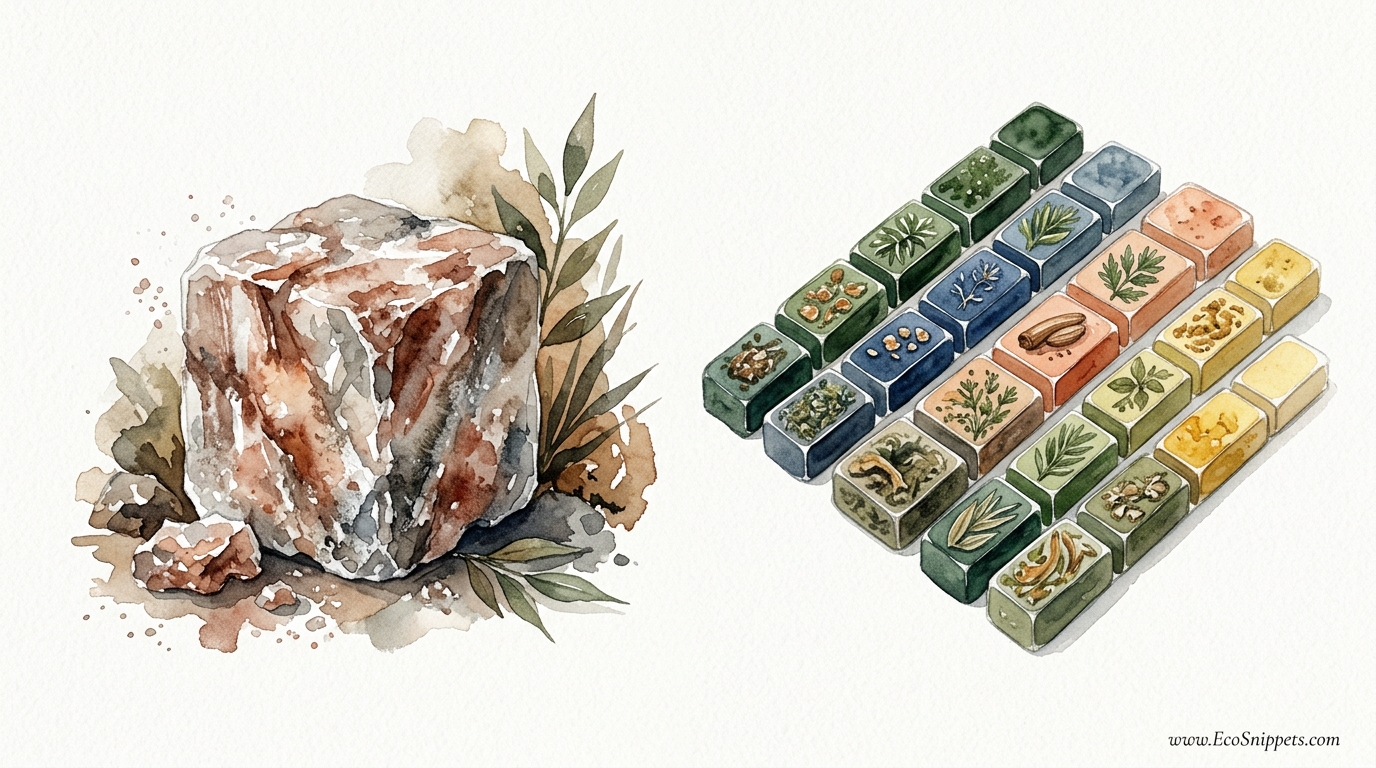
Most homesteaders buy their minerals in a box, but the pros grow them in the soil. We’ve been told that a $20 salt block is all our animals need. But those synthetic blocks are often missing the bioavailable trace elements found in deep-rooted ‘weeds.’ Transitioning from static supplements to medicinal forage strips doesn’t just save you money—it builds an immune system that no laboratory can replicate. Here is how to plant your own livestock pharmacy.
Building a resilient homestead requires looking at your pasture not just as calories, but as a complex chemical laboratory. When you rely solely on a pressed block of salt and cobalt, you are essentially feeding your livestock a processed diet. In contrast, a medicinal forage strip—often called a herbal ley or multispecies sward—harnesses the deep taproots of specific plants to mine minerals from the subsoil. These plants then present those nutrients in a chelated, highly absorbable form that animals are evolutionarily programmed to seek out.
Natural Livestock Mineral Supplements Guide
Natural livestock mineral supplements are the practice of using high-tillage, deep-rooted, and bio-diverse plant species to provide essential micronutrients to grazing animals. Unlike synthetic blocks, which are often made of inorganic rock forms of minerals, these “living supplements” are part of the plant’s cellular structure. This makes them significantly more bioavailable, meaning the animal’s gut can actually absorb and utilize them rather than passing them through as waste.
In the real world, this looks like a dedicated 10-foot-wide strip along a fence line or a diverse “herbal ley” mixed into your existing pasture. It exists to bridge the gap left by modern monoculture grasses like Orchardgrass or Kentucky Bluegrass, which are “shallow feeders” and often fail to provide trace elements like zinc, copper, and selenium. Think of your standard pasture as the main course and the medicinal strip as the concentrated vitamin and mineral bar.
How to Plant Your Own Livestock Pharmacy
Establishing a medicinal strip requires more than just throwing seed into the wind. These plants are often slower to start than aggressive grasses, so they need a clear runway to take flight.
To start, you must select a site with warm, well-drained soil. Most medicinal herbs like Chicory and Plantain require a soil temperature of at least 46 to 50 degrees Fahrenheit to germinate. If you are over-sowing into an existing pasture, you must first graze that area down to the “golf green” level or use a harrow to expose at least 50% to 70% of the bare ground. Without this exposure, the existing grass will simply choke out your expensive herbal seeds.
The sowing process is delicate because the seeds are remarkably small. You should never bury them deeper than 1 centimeter. If you drill them too deep, they will exhaust their energy before reaching the surface. After broadcasting the seed, you must roll the area—ideally twice—to ensure perfect seed-to-soil contact. This “treading in” mimics the natural action of animal hooves and is the single most important factor in germination success.
Once the plants are in the ground, patience is your primary tool. You should protect the new seedlings from grazing for at least 6 to 8 weeks. After this period, a very light, quick “flash graze” can encourage the plants to tiller and bush out, but you must move the animals off before they can damage the tender crowns of the herbs.
Benefits of Living Mineral Strips
The advantages of medicinal forage go far beyond simple nutrition. When animals graze a diverse sward, they participate in a behavior called zoopharmacognosy—the innate ability of animals to self-medicate.
Bioavailable Micronutrients: Plants like Ribwort Plantain and Chicory are mineral powerhouses. Chicory is particularly high in potassium, phosphorus, and zinc, while Plantain provides significant levels of calcium and magnesium. Because these minerals are bound to organic molecules in the leaf, they enter the animal’s bloodstream more efficiently than the crushed rock found in salt blocks.
Natural Parasite Control: Some of these plants contain secondary metabolites that act as natural anthelmintics. Chicory, for instance, is rich in sesquiterpene lactones, which have been shown to reduce internal parasite burdens in sheep and cattle. Sainfoin and Birdsfoot Trefoil contain condensed tannins that not only combat worms but also prevent “bloat,” a common and deadly issue in clover-heavy pastures.
Drought Resilience: Because many of these “medicinal weeds” have massive taproots that can reach several feet into the earth, they stay green when the surrounding grass turns brown and dormant in the summer heat. This ensures your livestock have access to high-quality protein and minerals even during a dry spell.
Challenges and Common Mistakes
The most frequent mistake homesteaders make is treating a medicinal strip like a regular grass pasture. Herbs do not have the same “growing point” as grass. If you graze them too short—below 3 inches—you can permanently kill the plant.
Another common pitfall is the failure to control competition. Many people try to “interseed” herbs into a thick, lush lawn of clover and rye without first setting back the existing plants. The herbs will germinate, find themselves in the shade of the grass, and die within weeks. You must create “scars” in the earth to give these medicinal plants a fighting chance.
Finally, do not forget about soil pH. While many weeds are hardy, clover and most high-value herbs prefer a pH between 6.0 and 7.0. If your soil is too acidic, the roots will struggle to uptake the very minerals you are trying to provide to your animals. A simple lime application can be the difference between a thriving pharmacy and a patch of stunted stalks.
Limitations of the Living Pharmacy
While medicinal strips are powerful, they are not a total replacement for all inputs in every environment. One major limitation is soil depletion. A plant cannot mine minerals that aren’t there. If your soil is fundamentally devoid of selenium or cobalt, the “mineral pump” of the plants will eventually run dry. In these cases, you may need to apply the missing minerals to the soil directly so the plants can then “digest” them for the livestock.
Environmental constraints also play a role. Some species, like Sainfoin, hate “wet feet” and will rot in heavy clay or boggy areas. Others, like Chicory, go completely dormant in the winter, leaving a gap in your mineral supply during the coldest months. You must plan for a year-round strategy that might include dried herbal hay or fermented silage to carry these nutrients through the frost.
Salt Blocks vs. Medicinal Forage Strips
Understanding the difference between these two approaches helps you decide where to invest your time and money.
| Feature | Synthetic Salt Blocks | Medicinal Forage Strips |
|---|---|---|
| Mineral Form | Inorganic (Rock-based) | Organic (Chelated in leaves) |
| Absorption Rate | Lower (20-40%) | Higher (70-90%) |
| Parasite Control | None | Natural Anthelmintics |
| Soil Impact | Neutral/Negative (Salt buildup) | Positive (Aeration & Cycling) |
| Initial Cost | Low ($15-$30) | Moderate (Seed & Labor) |
Practical Tips for Success
Managing a medicinal strip is about observation. Watch which plants your animals go for first. If your sheep are ignoring the grass and devouring the Yarrow, it’s a sign they are deficient in the specific minerals Yarrow provides, such as copper or potassium.
Use Rotational Grazing: This is non-negotiable. If you leave animals in a paddock for too long, they will selectively graze the tasty herbs down to the roots while leaving the grass untouched. This leads to the “death by a thousand bites” for your medicinal plants. Aim for a 30 to 40-day rest period between grazings.
Diversify the Mix: Do not just plant one thing. A good mix should include at least six species: Chicory, Ribwort Plantain, Yarrow, Red Clover, Birdsfoot Trefoil, and Sheep’s Parsley. Each of these plants mines different depths and different minerals, creating a “safety net” for your herd.
Soil Test First: Before you spend a dime on seed, know what you are working with. A total nutrient soil test will tell you if you have “locked up” minerals that these plants can help release, or if you have a true deficiency that needs a one-time amendment.
Advanced Considerations: Nutrient Cycling
For the serious practitioner, the goal is to create a closed-loop system. When an animal grazes a medicinal strip, it isn’t just taking minerals; it is redistributing them. The deep taproots pull minerals like calcium and magnesium from the subsoil into the leaves. When the animal eats the leaf and then defecates, it deposits those minerals onto the topsoil in a highly plant-available form.
Over several years, this process actually improves the fertility of your shallow-rooted grasses. You are essentially using your livestock as mobile compost spreaders, taking “dead” minerals from deep underground and putting them into the “living” topsoil layer. This is how ancestral pastures remained productive for centuries without bags of synthetic fertilizer.
Furthermore, consider the “Brix” level of your forage. Brix is a measure of the dissolved solids (sugars, minerals, and proteins) in the plant sap. Using a refractometer to check the Brix levels of your medicinal herbs can tell you if they are actually performing their job as mineral accumulators. A high Brix reading indicates a plant that is pumping massive amounts of nutrients, which translates directly to higher weight gains and better milk quality in your livestock.
Example Scenarios
Consider a flock of sheep suffering from chronic foot rot and high parasite loads. In a conventional system, the homesteader spends hundreds on chemical dewormers and hoof trimmings. However, a homesteader who has established a medicinal strip containing Chicory and Birdsfoot Trefoil notices a change. The tannins in the Trefoil reduce the larvae’s ability to survive in the gut, and the increased zinc from the Plantain strengthens the hoof tissue from the inside out.
In another scenario, a dairy goat owner notices their goats have dull coats and low milk production in mid-August when the pasture is dry. By opening up a “medicinal alley” filled with deep-rooted Chicory and Alfalfa, the owner provides a flush of green, mineral-dense forage during the summer slump. Within two weeks, the goats’ coats begin to shine—a clear sign that their copper and zinc needs are finally being met.
Final Thoughts
The transition from a box-based mineral program to a soil-based one is a journey back to ancestral wisdom. Nature doesn’t present health in a pressed cube; she weaves it into the diversity of the meadow. By planting medicinal forage strips, you are doing more than just feeding animals; you are restoring a biological dialogue between the earth and the creature.
It takes more effort to establish a living pharmacy than it does to drop a salt block in the mud, but the rewards are measured in vigorous health and long-term self-reliance. Your animals possess the “wild wisdom” to know what they need—your job is simply to provide the menu.
Experiment with small strips first. Observe your livestock, learn the language of your soil, and watch as your pasture transforms from a simple green carpet into a powerhouse of healing. The resilience of your homestead begins beneath the hooves.
