How To Become More Self-Sufficient Without Starting a Full-Blown Farm…
Want to start preserving your harvest, making your own soap, or building a backyard root cellar — but not sure where to begin? “Homesteading Advice” gives you instant lifetime access to 35+ practical homesteading books on food preservation, veggie gardening, DIY natural cleaning products (save over $250 per year with this skill alone), brewing, off-grid energy, and a whole lot more…
Click Here To Check It Out Now!
The secret to crystal clear water isn’t chemicals—it’s the rhythm of the mountain stream. Nature never stores water in a static box; it keeps it moving, swirling, and oxygenating. Most homesteaders struggle with algae because their reservoirs are ‘dead.’ Introducing a Flow-Form allows you to mimic the vortex energy of a natural stream. This dynamic movement pulls oxygen into the water, breaks down toxins, and creates a living resource that keeps your livestock and garden healthier than any stagnant tank ever could.
Living water is a cornerstone of self-reliance. When you look at a mountain brook, you see water that is vibrant, sparkling, and full of life. It isn’t just H2O; it is an oxygen-rich environment that supports a complex web of beneficial biology. Stagnant ponds, on the other hand, quickly become breeding grounds for anaerobic bacteria and blanket weed.
Flowforms offer a way to bridge the gap between human engineering and ancestral wisdom. These sculpted vessels use geometry to breathe life back into water that has been trapped in pipes or tanks. Understanding this process is the first step toward a pond that cleans itself without the need for expensive filters or harsh additives.
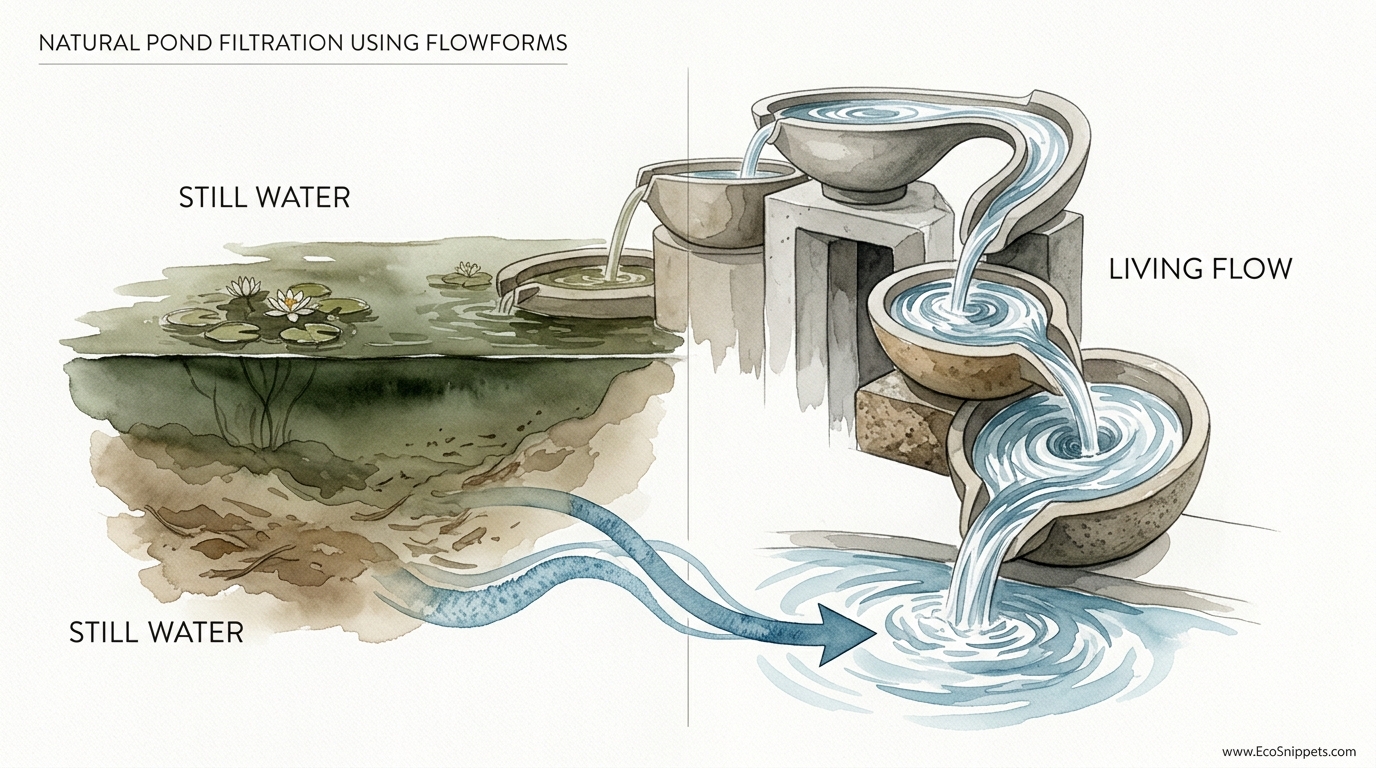
Natural Pond Filtration Using Flowforms
Flowform technology is a method of water treatment that uses specifically shaped vessels to induce a rhythmic, figure-eight movement known as a lemniscate. Pioneered by sculptor John Wilkes in the 1970s, this approach was born from a deep study of how water behaves in its most pristine natural states. Wilkes observed that water rarely moves in a straight line; it prefers to meander, swirl, and pulse.
In the real world, these systems act as “biological lungs” for a pond. They are used everywhere from small-scale homesteads to large-scale agricultural operations in over 50 countries. Whether you are treating livestock effluent or simply keeping a backyard swimming pond clear, the goal is the same: to maximize the surface area of the water exposed to the air.
Think of a Flowform as a musical instrument for water. Just as a flute shapes air to create a specific note, a Flowform vessel shapes the flow of water to create a specific pulse. This pulsing action is more than just aesthetic; it is a highly efficient way to fold oxygen into the liquid, supporting the aerobic bacteria that eat algae-causing nutrients.
How the Lemniscate Movement Revitalizes Water
The heart of the Flowform system is the lemniscate, or figure-eight, pattern. As water enters the top of a vessel, the internal curves force it into a clockwise vortex on one side and an anticlockwise vortex on the other. These two opposing energies meet in the center, creating a rhythmic pulse that looks like a heartbeat.
This constant folding action creates a massive amount of internal surface area. Every time the water folds over itself, it captures atmospheric oxygen and releases trapped gases like carbon dioxide or methane. Oxygenated water is the enemy of algae and the best friend of beneficial microbes.
Setting up a system requires a few basic components. You need a source of water (usually a pond or tank), a pump to move that water to the top of the cascade, and the Flowform vessels themselves. Gravity does the rest of the work as the water dances down the sculpted bowls and back into the main body of water.
The Biological Benefits of Living Flow
Oxygenation is the most immediate benefit of a Flowform, but the effects go much deeper. Research suggests that water treated this way can improve plant growth by up to 30% compared to standard tap water. This happens because the water is “enlivened,” making nutrients more bioavailable to the roots of your garden crops.
Livestock also benefit significantly from drinking moving water. Animals are instinctively drawn to “living” water sources, and many farmers report better digestion and overall health in herds provided with Flowform-aerated troughs. The rhythmic movement helps stabilize water temperature, keeping it cooler in the summer and more resistant to freezing in the depth of winter.
For pond owners, the reduction in organic pollution is the primary draw. The vortex action helps break down suspended solids and lowers the Biological Oxygen Demand (BOD). This means the water is less likely to go “sour” or develop the foul odors associated with stagnant muck.
Common Mistakes and Pitfalls to Avoid
Choosing the wrong pump size is the most frequent error homesteaders make. If the flow is too fast, the water will simply “sheet” over the vessels, missing the chance to form the critical figure-eight rhythm. If the flow is too slow, the pulse never starts, and the water just trickles down the center.
Leveling the vessels is another critical step that many skip. Each bowl must be perfectly level from side to side to ensure the vortices are balanced. An off-center vessel will favor one side, causing the water to spill out unevenly and breaking the rhythmic pulse that makes the system effective.
Neglecting the pre-filter can lead to clogging within the Flowform bowls. While the vessels are great at oxygenating, they are not designed to handle large clumps of pond weed or debris. Using a simple mesh screen at the pump intake will prevent your beautiful water sculpture from turning into a collection point for leaves and sticks.
Limitations of Flowform Systems
Flowforms are powerful, but they are not a “magic bullet” for every situation. They require a constant supply of electricity to run the pump, which may be a hurdle for completely off-grid setups without a robust solar array. While they reduce the need for filters, they do not replace the need for a balanced ecosystem with plenty of aquatic plants.
Space is another consideration. A proper cascade requires a certain amount of vertical drop and horizontal room. If your pond is in a completely flat area with no room for a raised bed or mound, you may find it difficult to install a cascade that provides enough “travel time” for the water to be fully revitalized.
Mechanical filtration may still be necessary for ponds with very high fish loads, such as dedicated Koi ponds. While the Flowform handles the biological and gas exchange aspects beautifully, it doesn’t “trap” physical waste like a pressurized sand or bead filter does. Combining a Flowform with a simple mechanical filter often provides the best of both worlds.
Still Water vs. Living Flow
Understanding the difference between a standard pond and a Flowform-driven system helps in making the right choice for your land.
| Feature | Still Water (Traditional) | Living Flow (Flowform) |
|---|---|---|
| Oxygen Levels | Low (often anaerobic) | High (aerobic saturation) |
| Algae Growth | High (frequent blooms) | Low (nutrient competition) |
| Maintenance | High (chemical/manual cleaning) | Low (biological balance) |
| Biological Impact | Static/Stagnant | Revitalized/Enlivened |
| Aesthetic Value | Flat surface | Dynamic, rhythmic sculpture |
Practical Tips for System Optimization
Tuning your system is an art form. Start by adjusting the flow rate of your pump until you see the figure-eight pattern clearly established in every bowl. You want a vigorous pulse that stays within the confines of the vessel. Small adjustments to the tilt of a bowl can sometimes improve the rhythm if the water seems to “stick” to one side.
Positioning the cascade where it can receive maximum sunlight is beneficial. Shallow Flowforms allow UV rays to penetrate the moving water, providing a natural sterilization effect that kills pathogens and floating algae. This “solar-vortex” combination is nature’s most powerful purification tool.
Placing the return flow at the opposite end of the pond from the pump intake ensures the entire body of water is circulated. This prevents “dead zones” where water stays still and oxygen-depleted. A well-placed return creates a gentle current that keeps the entire pond healthy and clear.
Advanced Considerations for Practitioners
Serious practitioners often look toward “dynamizing” water for specific agricultural uses. Using a Flowform to mix biodynamic preparations allows for a level of integration that manual stirring cannot match. The rhythmic pulse mimics the biological rhythms found in soil and living organisms, potentially enhancing the efficacy of compost teas and fertilizers.
Scaling the system for larger bodies of water involves using multiple cascades in parallel. Instead of one giant Flowform, three or four smaller cascades around the perimeter of a lake can provide more points of oxygenation. This distributed approach is often more effective at preventing eutrophication in large reservoirs.
Material choice matters for longevity. While ceramic Flowforms are beautiful, high-quality cast stone or reinforced concrete is usually better for outdoor homestead use. These materials can withstand the freeze-thaw cycles of harsh winters and are resistant to the buildup of mineral scale over time.
Example: The Orchard Pond Scenario
Imagine a homestead with a one-acre orchard and a central irrigation pond. In a traditional setup, this pond might become choked with algae by mid-July, making it difficult for the irrigation pump to draw clean water. The water would be warm, stagnant, and low in nutrients.
Installing a three-tier Flowform cascade changes the entire dynamic. By moving just 2,000 gallons per hour through the vessels, the entire pond is “breathed” every few hours. The water temperature drops due to evaporative cooling, and the oxygen levels rise.
When this revitalized water is pumped out to the fruit trees, it carries that extra oxygen directly to the root zones. The trees show increased vigor, and the farmer notices fewer pests, as healthy plants have stronger natural defenses. The pond remains clear throughout the summer, providing a beautiful focal point and a clean source of water for the farm’s honeybees and livestock.
Final Thoughts
Embracing the rhythm of nature is a journey away from the “static box” mentality of modern plumbing. Flowforms represent a marriage of artistic beauty and functional biology, offering a way to treat water with respect rather than just chemicals. By mimicking the mountain stream, you invite a level of vitality onto your land that pays dividends in plant health, animal wellness, and personal peace.
Success with these systems comes down to observation and patience. Taking the time to level your vessels and tune your flow rate transforms a simple pump into a life-giving organ for your homestead. This approach isn’t just about clear water; it’s about building a resilient, living ecosystem that mirrors the wisdom of the natural world.
Starting small is often the best way to learn the language of water. Whether you begin with a single bowl or a grand cascade, the sound of the rhythmic pulse will tell you everything you need to know. Water wants to move, and when you give it the right form to move through, it will reward you with a clarity and energy that no chemical treatment can ever replicate.
