How To Become More Self-Sufficient Without Starting a Full-Blown Farm…
Want to start preserving your harvest, making your own soap, or building a backyard root cellar — but not sure where to begin? “Homesteading Advice” gives you instant lifetime access to 35+ practical homesteading books on food preservation, veggie gardening, DIY natural cleaning products (save over $250 per year with this skill alone), brewing, off-grid energy, and a whole lot more…
Click Here To Check It Out Now!
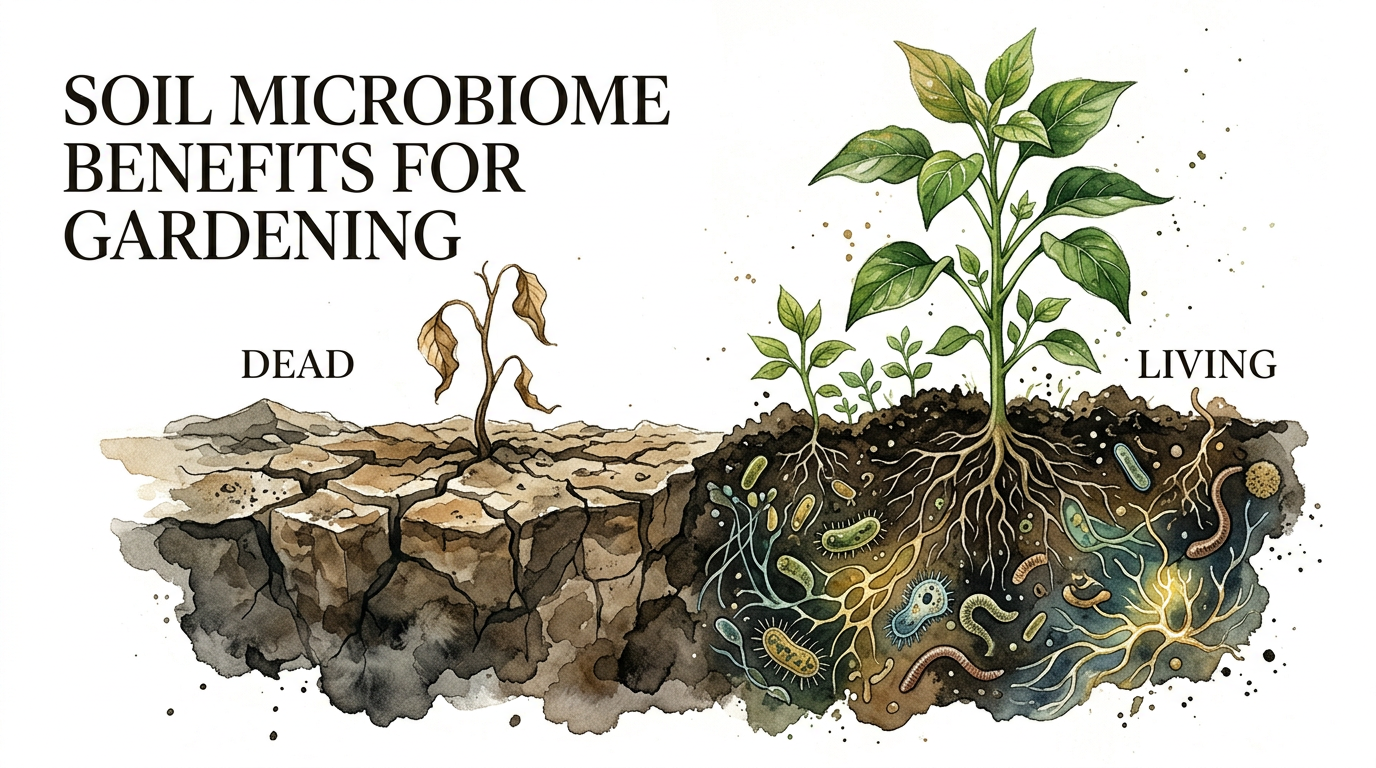
If your soil is just ‘dirt,’ your plants are living on a chemical IV drip. Backyard farming isn’t about feeding plants; it’s about feeding the soil. When you transition from sterile dust to a living biological system, the microbes do the work of fertilizing and pest control for you. This shift marks the difference between a garden that struggles for every breath and one that thrives with the resilient spirit of a virgin forest.
Modern gardening often treats the earth like a sterile sponge—a mere substrate meant to hold a plant upright while we pump in synthetic salts. This approach ignores thousands of years of ancestral wisdom that viewed the land as a living, breathing legacy. To truly steward a piece of ground, you must look past the visible leaves and focus on the unseen billions laboring in the dark.
Soil Microbiome Benefits For Gardening
The soil microbiome is the collective community of bacteria, fungi, protozoa, and other microscopic organisms that transform a handful of dust into a powerhouse of life. It acts as the external digestive system and immune system for your plants, bridging the gap between raw minerals and biological health. In a single teaspoon of healthy soil, there are more organisms than there are humans on the planet, each with a specific duty to perform.
These hidden workers exist in a complex network often called the soil food web. At the foundational level, bacteria and fungi decompose organic matter, locking nutrients into their own bodies to prevent them from leaching away. When these microbes are consumed by larger predators like protozoa and nematodes, those nutrients are released in a form the plant can actually drink. This cycle is the heartbeat of any self-reliant garden.
Understanding the microbiome means recognizing that a garden is a biological system, not a chemical equation. When the soil is alive, it manages its own pH, builds its own structure, and defends itself against pathogens. This biological labor force reduces the need for expensive inputs and creates a level of resilience that no bag of synthetic NPK can ever replicate.
The Silent Workforce: Bacteria and Fungi
Bacteria are the primary decomposers, specialized in breaking down simple sugars and fresh green material. They produce “biological glues” that stick soil particles together into tiny clumps, creating the initial structure of high-quality tilth. These micro-aggregates are essential for holding onto moisture and preventing your garden from turning into a hard-packed brick during the summer heat.
Fungi, particularly mycorrhizal varieties, are the master builders of the underground world. They extend long, thread-like structures called hyphae into the soil, effectively increasing a plant’s root surface area by hundreds of times. These fungal networks can reach into tiny crevices where roots cannot go, mining for phosphorus and water to trade with the plant in exchange for carbon.
The Regulators: Protozoa and Nematodes
If bacteria and fungi are the miners, protozoa and nematodes are the managers. They hunt and consume the primary decomposers, ensuring that microbial populations stay in check. This “grazing” action is what actually fertilizes the plant; as the predators digest their prey, they excrete nitrogen-rich waste directly into the root zone.
Without these regulators, the nutrients gathered by bacteria would remain locked away, inaccessible to your crops. A garden without a balanced soil food web is like a warehouse full of food with no keys to the doors. Building this community is the first step toward true self-sufficiency and high-performance harvests.
The Liquid Carbon Pathway: How Soil Life Works
Plants are not just passive recipients of nutrients; they are the primary drivers of soil biology. Through a process known as the liquid carbon pathway, plants pump up to 40% of the sugars they create through photosynthesis down into their roots and out into the soil. These sugary “exudates” act as a dinner bell for beneficial microbes.
This exchange is the oldest trade agreement on Earth. The plant provides the “currency” of liquid carbon (sugar), and in return, the microbes provide services like mineral mining, water transport, and disease protection. This relationship occurs in a specialized zone called the rhizosphere, which is the few millimeters of soil immediately surrounding the plant roots.
In a healthy system, the rhizosphere is a bustling marketplace. When a plant needs more phosphorus to produce fruit, it sends out specific chemical signals in its exudates to attract the right fungi. When it is under attack by a pathogen, it can recruit “bodyguard” bacteria like Bacillus subtilis to create a protective biofilm around the roots. This level of sophisticated communication is why a living soil outperforms a dead one every time.
Benefits of a Thriving Soil Microbiome
Building a robust microbial community offers practical, measurable advantages that every gardener can see and feel. The most immediate benefit is a dramatic increase in nutrient bioavailability. In dead soil, minerals are often “locked” in chemical forms that plants cannot use. Microbes secrete organic acids and enzymes that dissolve these minerals, making them accessible even in poor or rocky ground.
Another massive advantage is drought resilience. Fungal mycelium and bacterial glues create a spongy soil structure that can hold onto water far longer than compacted, tilled earth. This means you spend less time hauling hoses and more time observing your garden’s growth. Furthermore, glomalin—a sticky protein produced by mycorrhizal fungi—acts as a long-term carbon storage tank, stabilizing the soil and improving its air-to-water ratio.
Natural Pest and Disease Suppression
A diverse soil microbiome acts as a biological shield. When every niche in the soil is occupied by beneficial organisms, there is no room for pathogens like Fusarium or Pythium to take hold. This is known as “competitive exclusion.” Some microbes even produce natural antibiotics or engage in direct predation of harmful pests, effectively acting as an organic pesticide that never needs to be reapplied.
Improved Nutritional Density
Self-reliance is also about the quality of the food you grow. Research suggests that crops grown in microbially rich soil have higher levels of vitamins, minerals, and antioxidants. Because the microbes are mining a full spectrum of trace elements from the deep earth, the vegetables they support are far more nourishing than those grown with just three or four synthetic elements.
Common Mistakes That Destroy Soil Biology
The fastest way to turn living soil back into sterile dust is through mechanical tillage. While tilling might make the ground look soft and ready for planting, it acts like an earthquake to the soil microbiome. It physically rips apart the delicate fungal networks that took months to build and exposes the underground dwellers to lethal doses of UV light and oxygen.
Using synthetic, salt-based fertilizers is another frequent error. These chemicals provide a quick “green-up” but effectively act as a desiccant, sucking the moisture out of microbial cells. Over time, the plants become addicted to the chemical IV drip because the natural systems that used to provide nutrients have been killed off. This creates a cycle of dependency that is expensive for the gardener and exhausting for the land.
Leaving the soil bare is a final pitfall. Bare earth is a crime in the eyes of nature. Without a living root to provide exudates or a layer of mulch to provide protection, the microbes quickly starve or die from temperature extremes. Keeping the ground “clothed” with mulch or cover crops is essential for maintaining the moisture and food source that life requires.
Limitations and Realistic Expectations
Restoring a degraded microbiome is not an overnight process. If a piece of land has been subjected to years of chemical use and heavy tilling, it may take several seasons for the full fungal and bacterial communities to return. Patience is a virtue of the pioneer spirit, and you must be prepared to observe the slow, steady progress of nature as it heals.
Climate also plays a role in how quickly soil life moves. In very cold or extremely arid regions, microbial activity naturally slows down. While you can optimize the environment with mulch and irrigation, you cannot force biology to move faster than the local ecology allows. Additionally, if the soil is contaminated with heavy metals or persistent herbicides, certain microbes may struggle to establish until those toxins are remediated.
Living Soil vs. Dead Soil: A Practical Comparison
Understanding the choice between a biological system and a chemical one helps clarify the long-term goals of your homestead.
| Feature | Living (Biological) Soil | Dead (Chemical) Soil |
|---|---|---|
| Nutrient Source | Microbial cycling and organic matter | Synthetic salt-based fertilizers |
| Water Retention | High (spongy, aggregated structure) | Low (compacted or hydrophobic) |
| Pest Resistance | Systemic immunity via microbiome | Dependent on external pesticides |
| Long-term Cost | Decreases as system matures | Increases as soil degrades |
| Plant Resilience | High drought and heat tolerance | Prone to stress and wilting |
Practical Tips for Building Your Soil Microbiome
The first step in any soil restoration project is to stop the damage. Adopt a no-till or low-till approach immediately. Use a broadfork if you must loosen the soil, as this allows air to enter without flipping the soil layers and destroying the microbial horizons. Keeping the existing structure intact is the most respectful thing you can do for the life beneath your feet.
Feeding the soil is the next priority. Add high-quality compost that hasn’t been sterilized. Compost is not just a fertilizer; it is a microbial inoculant. When you spread a layer of compost, you are introducing a diverse army of “starter” organisms that will colonize your garden. Combining this with a thick layer of organic mulch like straw, wood chips, or shredded leaves provides the “carbon buffet” that keeps these organisms alive.
Implementing Cover Crops
Cover crops are the ultimate tool for a self-reliant gardener. Instead of letting your beds sit empty during the winter, plant rye, clover, or vetch. These plants keep the “liquid carbon pump” running year-round, ensuring your microbes don’t starve during the off-season. Nitrogen-fixing legumes like clover even have a special partnership with Rhizobium bacteria to pull nitrogen from the air and store it in the soil for your next crop.
Using Microbial Teas
For those who want to jumpstart the process, aerated compost tea or liquid humates can provide a concentrated dose of biology. By “brewing” a small amount of compost in water with a bit of molasses or kelp, you can multiply the microbial populations exponentially. Spraying this on your soil and plant leaves (foliar feeding) helps establish beneficial biofilms that protect against pathogens and boost growth.
Advanced Considerations for the Serious Practitioner
As you become more attuned to the needs of your soil, you may want to look into more precise measurements. Standard soil tests often only look at NPK levels, which is like measuring a person’s health by how many calories they ate. Advanced tests like the Haney Test or PLFA (Phospholipid Fatty Acid) analysis measure the actual biological activity and microbial biomass in your soil. These can tell you the fungal-to-bacterial ratio, which is a key indicator of soil maturity.
Serious practitioners also explore the world of Indigenous Microorganisms (IMO). This technique involves capturing the local microbes from a healthy, nearby forest or old-growth area and culturing them to use in your own garden. Since these organisms are already adapted to your specific climate and geology, they are often much more effective than store-bought inoculants. It is the ultimate form of local self-reliance.
Biochar is another advanced tool that offers permanent benefits. Think of biochar as a “microbial apartment complex.” Because it is extremely porous and does not break down, it provides a stable habitat where microbes can hide from predators and survive periods of drought. Once “charged” with nutrients and biology, biochar becomes a permanent battery for your soil’s health.
Scenario: Restoring a Neglected Plot
Imagine a small backyard plot that has been used for conventional lawn care for a decade. The soil is light gray, hard as a rock, and nothing grows but a few spindly weeds. A practitioner of living soil would not start by rototilling. Instead, they would begin by “smothering” the weeds with layers of cardboard and six inches of wood chips—a method often called sheet mulching or “Lasagna Gardening.”
Over the first six months, the moisture trapped under the cardboard attracts earthworms and fungi. The worms begin to tunnel, creating the aeration that no machine could ever achieve. By the second season, the cardboard has decomposed, and the soil has turned dark and crumbly. The gardener then plants a diverse mix of vegetables, inoculating each hole with a handful of worm castings.
By the third year, the transformation is complete. The soil no longer needs frequent watering, the plants show no signs of pest damage, and the yield per square foot has tripled. This isn’t magic; it is simply the result of stepping out of the way and letting the biological system take the lead. It is proof that when you feed the soil, the soil feeds you.
Final Thoughts
If your goal is a garden that stands the test of time, you must stop viewing the earth as a chemistry set. The soil microbiome is a complex, beautiful, and ancient system that knows how to grow food far better than we do. Our role is not to dominate the land, but to steward it by providing the food, water, and protection that its microscopic inhabitants need to flourish.
True self-reliance comes from building systems that are regenerative rather than extractive. When you invest in your soil’s biology, you are creating a legacy of fertility that will serve you and your family for generations. It is a slow path, requiring the grit of a pioneer and the patience of a forest, but the rewards are a resilience and abundance that no modern chemical can provide.
Start small, keep the ground covered, and trust the process. Observe the way the earth changes as the life returns. Every worm you see and every mushroom that pops up is a sign that your invisible workforce is back on the job. Once you see the power of living soil, you will never look at a bag of synthetic fertilizer the same way again.
