How To Become More Self-Sufficient Without Starting a Full-Blown Farm…
Want to start preserving your harvest, making your own soap, or building a backyard root cellar — but not sure where to begin? “Homesteading Advice” gives you instant lifetime access to 35+ practical homesteading books on food preservation, veggie gardening, DIY natural cleaning products (save over $250 per year with this skill alone), brewing, off-grid energy, and a whole lot more…
Click Here To Check It Out Now!
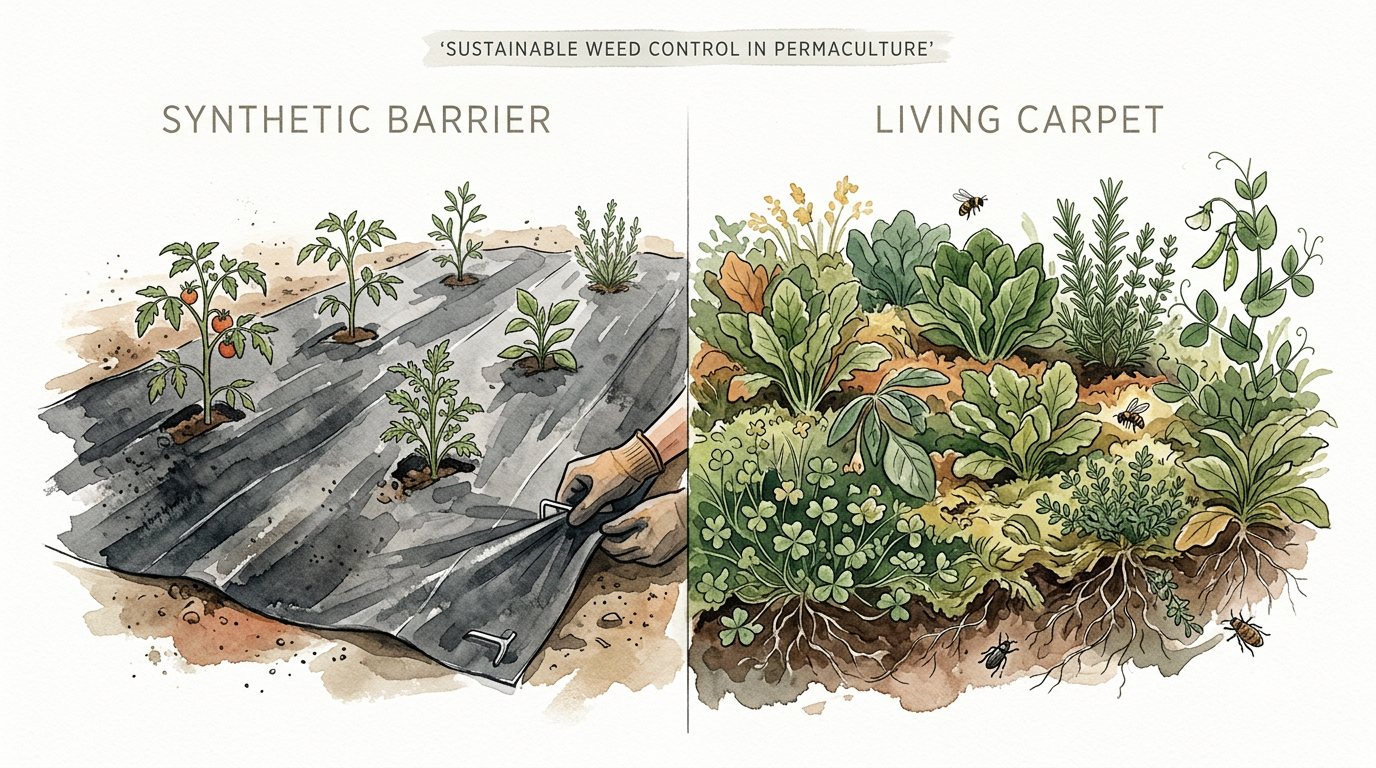
Nature hates a vacuum, so why use plastic when you can use life? Plastic barriers eventually break down into microplastics and cook your soil. Living mulches like clover fix nitrogen, cool the earth, and feed the bees. It’s time to upgrade.
Modern gardening often relies on synthetic shortcuts that promise convenience but deliver ecological debt. When we roll out rolls of black plastic or landscape fabric, we are essentially placing a suffocating mask over the face of the earth. The soil beneath these barriers becomes compacted, hot, and devoid of the microbial life that sustains healthy plants.
True self-reliance requires us to look back at ancestral wisdom while embracing biological solutions. Instead of fighting nature with petrochemicals, we can partner with it by using a living carpet. This approach turns “weed control” into an active process of soil building and resource management.
Stepping away from the “buy and apply” mentality of industrial agriculture is a hallmark of the pioneer spirit. This guide explores how to reclaim your soil health and master the art of living mulch in your permaculture system.
Sustainable Weed Control In Permaculture
Sustainable weed control is the practice of managing unwanted vegetation through biological and ecological means rather than chemical or synthetic ones. In a permaculture system, we stop viewing weeds as enemies to be eradicated and start seeing them as indicators of soil health or ecological niches waiting to be filled.
Every patch of bare earth is an invitation for a pioneer species to take root. If we do not choose the plants that occupy that space, nature will choose them for us. These opportunistic “weeds” often arrive to repair the soil, stabilize erosion, or pull up nutrients from the deep.
Instead of leaving the ground naked and vulnerable to invasive species, we purposefully establish a living mulch. This is a low-growing plant community that lives in tandem with your main crops. It serves the same purpose as traditional mulch—suppressing weeds and regulating temperature—but adds the benefit of being a living, breathing part of the ecosystem.
Practitioners use these living carpets in orchards, market gardens, and small-scale homesteads to reduce labor and external inputs. It is a shift from a defensive stance of “killing weeds” to a proactive stance of “occupying the niche.”
How Living Mulch Works
Establishing a living mulch system requires understanding the mechanisms that keep unwanted plants at bay. It isn’t magic; it is a strategic use of plant biology to claim and hold territory.
The primary weapon of a living mulch is shading. Most common weeds need direct sunlight and warm soil to germinate. A dense mat of clover or thyme acts as a biological shield, keeping the soil surface in perpetual shadow. Without light, the weed seeds remain dormant or wither shortly after sprouting.
Competition is the second mechanism. Plants are constantly vying for water, nutrients, and space. By selecting a vigorous but non-aggressive groundcover, you ensure that any “invader” has to fight for every drop of moisture and every speck of nitrogen. A well-established living mulch simply out-competes the weaker weeds.
Some species take it a step further through allelopathy. These plants release natural chemicals from their roots that inhibit the germination of other seeds. While this requires careful selection to ensure your main crop isn’t affected, it provides a powerful, natural herbicide effect.
To implement this on your land, follow these steps:
- Prepare the site by removing aggressive perennial weeds manually or through light sheet mulching.
- Select a low-growing species that fits your climate and the needs of your primary crop.
- Sow seeds or plant plugs at a high density to ensure quick coverage before weeds can take hold.
- Maintain the mulch through occasional mowing or “chopping and dropping” to manage its height and return nutrients to the soil.
Benefits of the Living Carpet Approach
The advantages of using life over plastic are measurable and profound. Beyond just stopping weeds, a living mulch serves as a multi-functional tool for any serious land steward.
Soil health is the most significant winner. Living roots exude sugars and carbohydrates that feed the soil food web, including beneficial fungi and bacteria. Plastic barriers, conversely, starve these organisms by cutting off the cycle of organic matter.
Nitrogen fixation is a “free” benefit when you choose leguminous mulches like white clover. These plants form a symbiotic relationship with bacteria in their roots to pull nitrogen from the atmosphere and store it in the soil. This reduces your need for external fertilizers and builds long-term fertility.
Temperature regulation is another critical factor. Bare soil or soil under black plastic can reach temperatures that literally cook beneficial microbes and stress plant roots. A living carpet transpires moisture, creating a cool microclimate that keeps the soil consistently temperate even in the height of summer.
Pollinator support is often overlooked but essential for a productive homestead. Flowering mulches provide a constant source of nectar for bees, butterflies, and predatory insects that help manage pests. You are essentially building a permanent “bug hotel” right under your crops.
Challenges and Common Mistakes
Partnership with nature requires more nuance than rolling out a plastic sheet. One common pitfall is choosing a species that is too aggressive for your main crop. If your mulch grows faster and taller than your vegetables, it will steal the light and nutrients they need to thrive.
Establishment timing is another hurdle. If you sow your living mulch too late, the weeds will already have a head start. You must ensure the mulch is established during the “window of opportunity” when the soil is warm enough for germination but before the heavy weed pressure of late spring arrives.
Water competition can be an issue during periods of extreme drought. While a living mulch helps retain soil moisture through shading, it still needs water to survive. In arid regions, a living mulch might compete too fiercely with shallow-rooted vegetables for limited water resources.
Neglecting maintenance is a recipe for failure. A living mulch is not a “set it and forget it” solution. It requires observation and occasional intervention—such as mowing—to keep it at the desired height and ensure it doesn’t become a “weed” itself.
Limitations of Living Mulch
There are situations where a living carpet may not be the ideal tool. For instance, in very small, intensive seedling beds, the competition from a living mulch can overwhelm delicate young plants. In these cases, a temporary mulch like straw or even cardboard might be more appropriate.
Environmental constraints also play a role. In areas with extremely low rainfall, the metabolic cost of maintaining a living groundcover may outweigh its benefits. The water used by the mulch could be better utilized by the primary food crop in a survival or high-production scenario.
Heavily shaded areas present another challenge. Most traditional living mulches, like clover, prefer at least partial sun. While there are shade-tolerant options like sweet woodruff or wild ginger, they grow much more slowly and may not provide the rapid weed suppression needed for a garden environment.
Finally, the transition period can be difficult. Moving from a bare-soil or plastic-based system to a living mulch takes time and a change in management style. It requires a willingness to accept a slightly “messier” aesthetic in exchange for a more resilient ecosystem.
Synthetic Barriers vs. Living Carpets
The following table compares the long-term impact of plastic landscape fabric against the biological alternative of living mulch.
| Feature | Synthetic Plastic Barrier | Living Carpet (Mulch) |
|---|---|---|
| Cost | High upfront cost; requires replacement every 2–5 years. | Low seed cost; becomes a self-sustaining asset. |
| Soil Health | Leads to compaction and microbial death; may release microplastics. | Builds organic matter and feeds soil microbiology. |
| Fertility | Zero contribution; often hinders nutrient cycling. | Fixes nitrogen (if legumes used) and cycles minerals. |
| Maintenance | Low initially, but very high when weeds begin growing on top. | Regular “mow and drop” maintenance required. |
| Sustainability | Ends up in a landfill; petrochemical-based. | Carbon-sequestering; biodegradable and regenerative. |
Practical Tips and Best Practices
Success with living mulches comes down to the details of management. Start small. Test a single bed or a row in your orchard before converting your entire property.
Use the “mow and blow” or “chop and drop” technique. When the living mulch reaches 4 to 6 inches, cut it back. This sends a signal to the plant’s roots to release some of their stored nitrogen into the soil, directly feeding your main crop while keeping the mulch at a manageable height.
Strategic species selection is vital. For sunny garden paths and vegetable rows, white clover is the gold standard because it handles foot traffic and fixes nitrogen. For shaded areas under fruit trees, consider creeping herbs like oregano or mint, which provide a harvest and confuse pests with their strong scents.
Seeding rates should be higher than standard pasture recommendations. You want a dense, carpet-like cover as quickly as possible. Aim for 1.5 to 2 times the recommended seeding rate to ensure no gaps are left for opportunistic weeds to exploit.
Advanced Considerations for Practitioners
Serious practitioners often move beyond single-species mulches into living polycultures. Mixing clover with low-growing grasses or aromatic herbs creates a more resilient carpet that can survive varying weather conditions. If one species struggles in a dry spell, another will step up to fill the gap.
Animal integration is a powerful way to manage living mulches. Geese or chickens can be rotated through orchard alleys to “mow” the living mulch. This turns the biomass of the mulch into high-quality manure and protein (eggs or meat), creating a closed-loop system of fertility and production.
Succession planting with mulches is another advanced technique. You might start a bed with a fast-growing annual living mulch like buckwheat to suppress weeds in the spring, then under-sow a perennial clover that takes over as the buckwheat is harvested or frost-killed.
Consider the “rhizosphere niche.” Choose groundcovers that have different root structures than your main crop. If you are growing deep-rooted tomatoes, a shallow-rooted mulch like creeping thyme will occupy the top few inches of soil without competing for the deeper moisture and nutrients the tomatoes require.
Scenario: The Orchard Guild
Imagine an apple orchard where the ground is currently bare or mowed grass. Grass is a “heavy feeder” and a fierce competitor for nutrients. By replacing that grass with a living guild of clover, comfrey, and nasturtiums, you transform the floor of the orchard into a fertility factory.
The clover fixates nitrogen, providing a steady supply of nutrients to the apple trees. The comfrey, with its deep taproots, mines minerals from the subsoil and brings them to the surface. When you chop the comfrey leaves and drop them on the ground, they decompose into a nutrient-rich tea for the trees.
The nasturtiums act as a “trap crop,” drawing aphids away from the fruit trees while providing an edible harvest of flowers and leaves for the kitchen. This system requires no synthetic fertilizers, no herbicides, and far less irrigation than a traditional monoculture orchard.
In this scenario, we have moved from a system that requires constant energy to “keep the grass down” to one that generates its own resources. This is the essence of permaculture—designing systems that work for us rather than against us.
Final Thoughts
The transition from synthetic barriers to living mulches is a journey back to the fundamental principles of life. It requires us to trade the illusion of “maintenance-free” plastic for the reality of “management-light” biology. While it takes more observation and a bit of pioneer grit to establish, the rewards are found in the health of the soil and the resilience of the harvest.
Embracing living carpets means accepting that our gardens are vibrant, changing ecosystems. It means recognizing that every plant, even those we might once have called weeds, has a role to play in the stewardship of the land. By choosing life over plastic, we are not just growing food; we are repairing the earth one square foot at a time.
Start your journey by looking at your soil. If it is bare, cover it. If it is covered in plastic, liberate it. Experiment with different species, observe the results, and let nature be your guide. The wisdom of the ancestors and the grit of the pioneer are both found in the simple act of planting a seed and watching it become a carpet of life.
