How To Become More Self-Sufficient Without Starting a Full-Blown Farm…
Want to start preserving your harvest, making your own soap, or building a backyard root cellar — but not sure where to begin? “Homesteading Advice” gives you instant lifetime access to 35+ practical homesteading books on food preservation, veggie gardening, DIY natural cleaning products (save over $250 per year with this skill alone), brewing, off-grid energy, and a whole lot more…
Click Here To Check It Out Now!
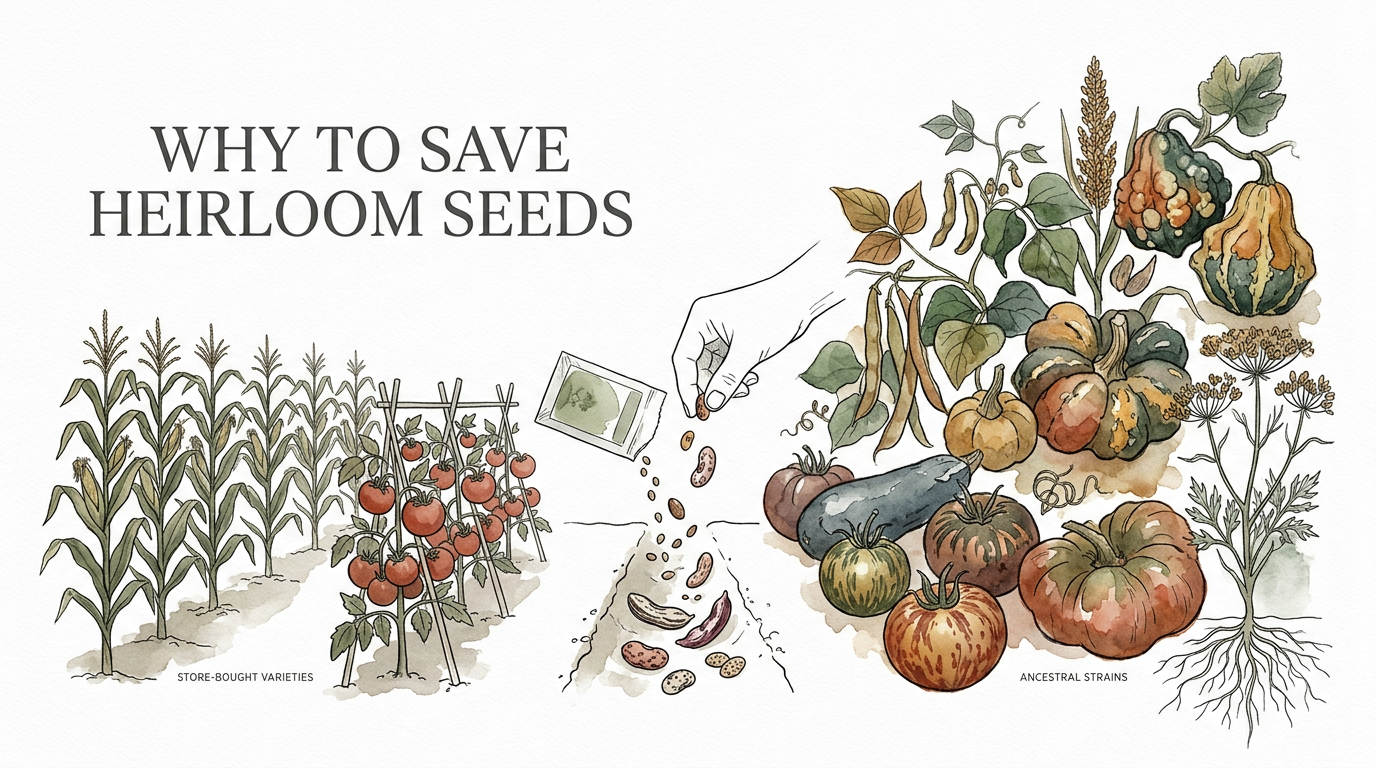
Why buy what your ancestors got for free every single year? Stop renting your garden from a corporation. Heirloom seeds are a one-time investment that offers a lifetime of food security and genetic diversity.
For thousands of years, every farmer was a seed saver. People kept the best seeds from their strongest plants to ensure the next year’s harvest was even better. This ancient practice created the incredible variety of food we see today, from deep purple carrots to tomatoes that actually taste like sunshine.
Today, most gardeners have outsourced this vital skill to massive agro-chemical companies. We buy packets of “hybrid” seeds every spring, effectively paying a subscription fee to grow our own food. Reclaiming the art of seed saving is a quiet act of rebellion. It puts the power back in your hands and ensures your family’s table is never dependent on a supply chain or a corporate patent.
Why To Save Heirloom Seeds
Heirloom seeds are varieties that have been passed down through generations, often for 50 years or more. These seeds are “open-pollinated,” meaning they are pollinated by natural means like wind, insects, or birds. Unlike modern hybrids, heirlooms produce offspring that are “true to type,” which means the fruit you grow next year will look and taste exactly like the fruit you grew this year.
In the modern world, a handful of transnational corporations control over 50% of the global seed market. These companies often focus on “F1 hybrids,” which are bred for traits that benefit industrial agriculture, such as uniform ripening for machine harvesting and thick skins for long-distance shipping. While these traits help supermarkets, they often sacrifice flavor and nutrition.
When you save your own seeds, you are engaging in a form of regional adaptation. Each year you save seeds from the plants that survived your specific local pests, your specific soil, and your specific weather patterns. Over time, you create a “landrace” or a localized strain that is far more resilient in your backyard than any generic seed you can buy from a catalog.
Genetic diversity is the ultimate insurance policy for your food supply. If a new blight or pest wipes out a common commercial variety, having a diverse collection of heirloom genetics ensures that some plants will likely carry the traits needed to survive. Saving these seeds preserves the history and the hard work of the pioneers and indigenous farmers who came before us.
How To Save Your Own Seeds
The process of saving seeds depends on whether the plant produces “dry” seeds or “wet” seeds. Understanding these two categories is the first step toward mastering the harvest.
Dry Seed Processing
Dry seeds are those that reach maturity in a pod or a husk. This group includes beans, peas, corn, lettuce, and most herbs. The key to success here is patience. You must allow the seeds to fully mature and dry on the living plant whenever possible.
For beans and peas, wait until the pods turn brown, feel papery, and the seeds rattle inside when shaken. If a heavy rain or frost is coming, you can pull the entire plant and hang it upside down in a barn or garage to finish drying. Once the pods are brittle, you can “thresh” them by crushing the pods and “winnowing” the light husks away using a fan or a gentle breeze.
Wet Seed Processing
Wet seeds are found inside the moist flesh of fruits like tomatoes, cucumbers, and melons. These require a bit more effort because many of them have a protective gel coating that prevents the seed from sprouting inside the fruit.
Tomatoes are the classic example of wet processing. You must harvest a fully ripe—or even slightly overripe—tomato. Scoop the seeds and the surrounding gel into a glass jar with a little bit of water. Let this mixture sit for two to five days. A layer of white mold will likely form on top, which is a good sign; this fermentation process breaks down the germination inhibitors and kills many seed-borne diseases.
After a few days, the viable seeds will sink to the bottom. Pour off the moldy liquid and pulp, rinse the good seeds in a fine-mesh strainer, and spread them out on a ceramic plate or coffee filter to dry. Never use paper towels, as the seeds will stick to the fibers and become impossible to remove.
Benefits of Saving Your Own Seeds
The most immediate benefit is the cost. A single high-quality heirloom tomato can provide enough seeds to plant an entire acre the following year. Once you have a stable collection of your favorite varieties, your annual gardening budget for seeds drops to zero.
Flavor is the next major advantage. Many heirloom varieties were selected over decades purely because they tasted the best. When you grow an heirloom “Brandywine” tomato or a “Moon and Stars” watermelon, you are eating fruit that has been refined for the palate, not for a cardboard box. Studies have also shown that heirloom varieties often contain higher levels of certain vitamins and minerals compared to commercial hybrids bred for high water content and rapid growth.
Self-reliance is the deeper, more profound benefit. In a world where global logistics can be fragile, knowing how to produce your own seed is a foundational survival skill. It ensures that even if the stores are empty or the mail stops running, you still have the means to start your garden next spring.
Challenges and Common Mistakes
The biggest challenge for a beginner is cross-pollination. If you grow two different varieties of squash near each other, insects will carry pollen from one to the other. The fruit you eat this year will look fine, but the seeds inside will be a “mystery” hybrid. Next year, you might end up with a “squumpkin” that is neither a good squash nor a good pumpkin.
To avoid this, you must understand isolation distances. Some plants, like lettuce and peas, are “self-pollinating,” meaning they rarely cross-breed and can be grown close together. Others, like corn or squash, need hundreds of yards—or even miles—of distance to stay pure. If you have a small garden, you can use “blossom bags” or cages to physically prevent insects from crossing your plants.
Selection is another area where mistakes happen. Many people make the error of saving seeds from the last, scrawniest fruits of the season. You should always save seeds from your absolute best, healthiest, and most productive plants. This process is called “rogueing”—removing the weak or “off-type” plants before they have a chance to spread their pollen.
Limitations of Seed Saving
Not every plant is easy to save. Biennial crops, such as carrots, onions, and beets, do not produce seeds in their first year. They require a period of “vernalization,” or winter cold, before they will flower in their second year. In many climates, this means you have to dig up the roots, store them in a root cellar over the winter, and replant them in the spring just to get seeds.
Space is also a limiting factor. To maintain the genetic health of certain crops like corn, you need to save seeds from a large population—at least 50 to 100 plants—to prevent “inbreeding depression.” If you only save seeds from three or four corn stalks, the variety will eventually lose its vigor and produce small, sickly ears.
Environmental factors can also ruin a seed harvest. High humidity during the drying phase can cause seeds to mold, while an unexpected early frost can kill the embryos of seeds that haven’t fully matured. You must always have a backup plan, such as keeping a portion of the previous year’s seeds in long-term storage.
Heirloom vs. Hybrid Comparison
Understanding the technical differences between these two types of seeds will help you make better decisions for your homestead.
| Feature | Heirloom Seeds | Hybrid (F1) Seeds |
|---|---|---|
| Seed Saving | Can be saved and replanted; breeds true. | Cannot be saved; offspring are unpredictable. |
| Flavor | Generally superior; bred for taste. | Often mild; bred for shelf-life and shipping. |
| Disease Resistance | Varies; often regionally adapted. | High; often bred for specific resistances. |
| Uniformity | Natural variation in size and ripening time. | Highly uniform; ripens all at once. |
| Ownership | Public domain; no patents. | Proprietary; often patented by corporations. |
Practical Tips for Best Results
Maintaining a healthy seed bank requires organization and attention to detail. Follow these best practices to ensure your seeds remain viable for years to come.
- The 40/40 Rule: For ideal storage, the sum of the temperature (Fahrenheit) and the relative humidity should be less than 100. Ideally, aim for 40°F and 40% humidity.
- Air-Tight Containers: Glass mason jars are the gold standard for seed storage. They protect against moisture, pests, and air. Plastic bags are permeable and should only be used for short-term storage.
- Desiccants: Use silica gel packets or even a small pouch of powdered milk wrapped in tissue to absorb any remaining moisture inside your storage jars.
- Label Everything: Include the variety name, the date of harvest, and any notes about the plant’s performance. Memory fades faster than ink.
- Darkness is Key: Light can trigger a seed’s metabolism, causing it to burn through its stored energy. Store your jars in a dark cupboard or an opaque box.
Advanced Considerations for Serious Practitioners
Once you have mastered the basics, you may want to look into “landrace gardening.” This involves intentionally allowing a variety of similar heirloom plants to cross-pollinate and then selecting only the survivors over several years. This creates a hyper-localized variety that is perfectly tuned to your specific micro-climate.
Understanding population genetics is also vital for those looking to preserve rare varieties. For out-crossing plants like brassicas (broccoli, cabbage, kale), you need to grow a minimum of 20 to 80 plants to maintain enough genetic diversity to prevent the variety from “bottlenecking.” This requires more space but is essential for true preservation work.
Serious practitioners should also consider “seed swapping.” Joining a community seed exchange allows you to diversify your genetics and find varieties that have been proven to work in your region. It also creates a backup system; if your crop fails, a neighbor might have the seeds you gave them three years ago.
A Practical Example: Saving Tomato Seeds
Let’s look at the step-by-step process for saving seeds from a “Cherokee Purple” tomato, a classic heirloom.
1. **Selection:** Choose the most beautiful, perfectly shaped tomato from a plant that didn’t get blight or wilt.
2. **Harvest:** Pick the tomato when it is so ripe it’s almost soft to the touch.
3. **Extraction:** Slice the tomato in half and squeeze the seeds and gel into a clean jelly jar.
4. **Fermentation:** Add a splash of water, cover the jar with a paper towel and a rubber band, and set it on the counter for 3 days.
5. **Rinsing:** Once a film forms, fill the jar with water. The “good” seeds will sink. Pour off the floating pulp and debris. Repeat until the water is clear.
6. **Drying:** Spread the clean seeds onto a ceramic plate. Stir them daily to ensure they don’t clump.
7. **Storage:** Once they are brittle and snap when bent, place them in a labeled glass vial and store in a cool, dark place.
Final Thoughts
Saving heirloom seeds is more than just a gardening hobby; it is a fundamental act of stewardship. By keeping these genetics alive, you are honoring the generations of farmers who carefully selected these plants for their flavor, beauty, and resilience. You are also ensuring that future generations will have access to real food that isn’t owned by a corporation.
The learning curve can be steep, but the rewards are tangible. There is a profound sense of peace that comes from looking at a shelf full of seeds that you grew, harvested, and cleaned yourself. It is the ultimate security in an uncertain world.
Start small. This year, just try saving your beans or your favorite tomato. Once you see those saved seeds sprout next spring, you will never want to go back to buying packets again. You aren’t just growing a garden; you are growing a legacy.
