How To Become More Self-Sufficient Without Starting a Full-Blown Farm…
Want to start preserving your harvest, making your own soap, or building a backyard root cellar — but not sure where to begin? “Homesteading Advice” gives you instant lifetime access to 35+ practical homesteading books on food preservation, veggie gardening, DIY natural cleaning products (save over $250 per year with this skill alone), brewing, off-grid energy, and a whole lot more…
Click Here To Check It Out Now!
How many trees are you throwing in the trash every single month just to wipe your counters? The ‘disposable’ culture is a marketing trick designed to keep you buying the same product forever. One single roll of high-quality bamboo ‘un-paper’ towels can be washed and reused over 100 times. It is more absorbent, more durable, and it deletes a lifetime of waste with one simple change.
Stepping away from the grocery store aisle and back toward the wisdom of our ancestors is more than an environmental choice. It is an act of self-reliance. For generations, the household “rag bag” was a staple of every kitchen, a collection of worn-out linens and flour sacks that saw more work than any modern disposable ever could. Today, we are reclaiming that grit, trading flimsy wood-pulp sheets for textiles that actually stand up to a hard day’s work.
This guide will walk you through the transition from a throwaway habit to a durable system. Whether you are looking to save a few hundred dollars a year or simply want to stop contributing to the 13 billion pounds of paper towel waste Americans produce annually, the path to a zero-waste kitchen is paved with cloth.
Zero Waste Paper Towel Alternatives
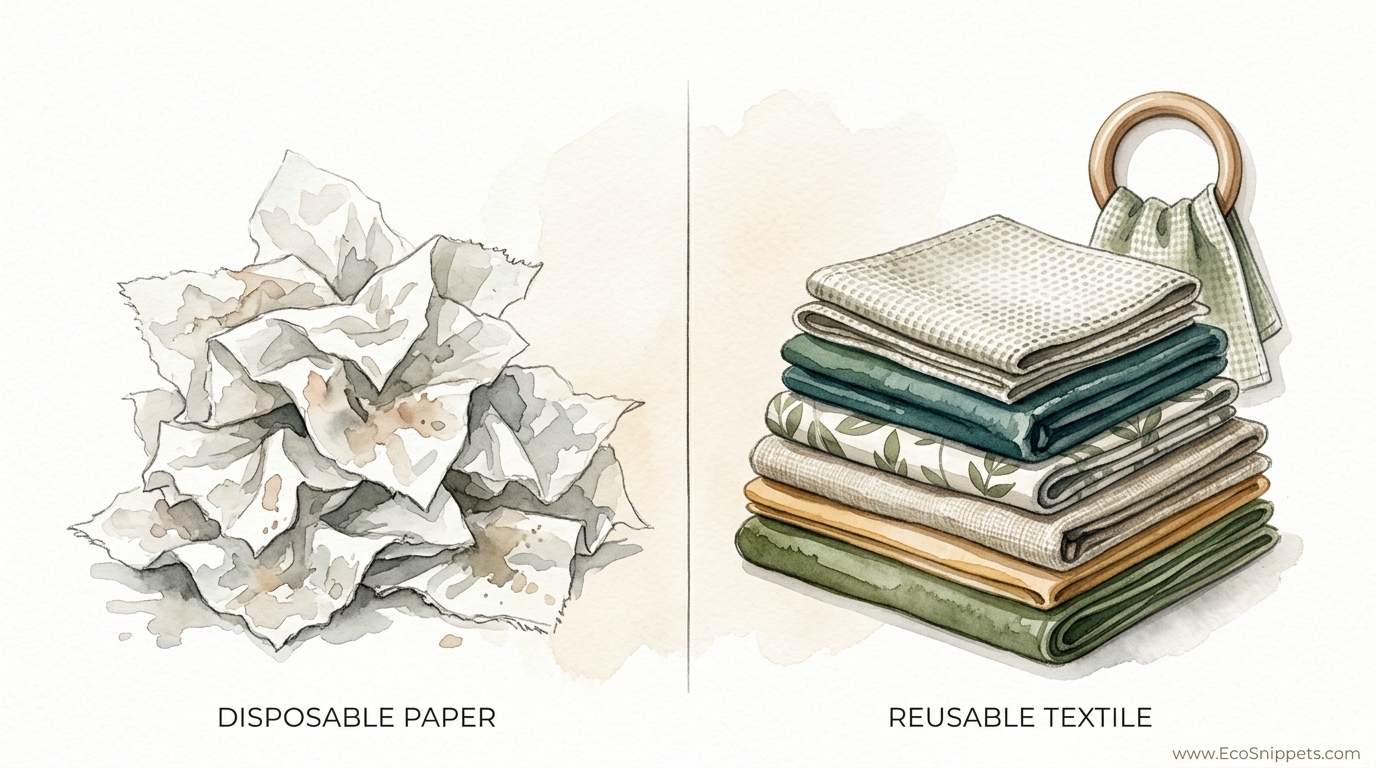
Zero waste paper towel alternatives, often called “un-paper towels,” are reusable cloths designed to mimic the size and function of traditional paper towels without the environmental cost. While a standard paper towel is used for roughly six seconds before being discarded, these textile alternatives are built to survive years of spills, scrubs, and wash cycles.
In the early 1900s, brothers Clarence and Irvin Scott transformed a surplus of thick medical tissue into the first “Sani-Towel” to help stop the spread of germs in public restrooms. They used aggressive marketing to convince the public that shared cloth towels were a hygiene hazard. By 1931, they moved into the kitchen, and a new “disposable” category was born. Before this marketing shift, the world ran on repurposed fabric.
Modern alternatives vary by material, but the most common include:
- Cotton Flannel: The most popular choice for “un-paper” rolls because the fibers naturally cling to one another, allowing them to stay on a standard paper towel holder without snaps.
- Bamboo Linen: Known for its “bamboo kun,” a natural bio-agent that makes the fabric resistant to bacteria and odors.
- Hemp: A powerhouse of durability that becomes more absorbent with every wash and requires significantly less water to produce than cotton.
- Swedish Sponge Cloths: A blend of cellulose and cotton that can absorb 20 times its weight in liquid, replacing up to 17 rolls of paper towels.
These tools exist because the modern supply chain is fragile and expensive. Relying on a constant stream of wood-pulp products from a store is a vulnerability. Reusable textiles represent a return to the “pioneer-grit” mindset: use what you have, make it last, and never pay for what you can provide for yourself.
How the Transition Works: Setting Up Your System
Switching to reusable towels is not just about buying new cloths; it is about building a system that makes the “lazy” choice the sustainable one. If your clean rags are buried in a back cabinet while a roll of paper towels sits on the counter, you will reach for the paper every time.
Step 1: The Initial Prep
New fabrics, especially cotton and hemp, are coated in natural waxes and oils that actually repel water. To reach maximum absorbency, you must wash and dry your new towels 2 to 3 times before their first “real” use. This breaks down the fibers and opens up the capillary structure of the weave.
Step 2: Storage and Access
Most people prefer the “roll” method. You simply lay your clean flannel sheets flat, stack them, and roll them onto a cardboard or wooden tube. The natural “cling” of the flannel keeps them in place. Alternatively, many practitioners keep a dedicated basket or a “pop-up” box on the counter where clean cloths are folded and ready for a quick grab.
Step 3: Managing the “Dirty” Bin
You need a place for the used towels to go. A small, ventilated wet bag or a designated basket under the sink works best. For wet or greasy towels, let them air dry over the side of the basket before tossing them in with the rest. This prevents mildew and ensures your laundry room doesn’t start smelling like an old cafeteria.
Benefits of the Reusable Approach
The advantages of ditching disposables are measurable in both your bank account and the health of your home environment.
Financial Independence
The average American household spends between $120 and $250 annually on paper towels. Over a decade, that is a $2,500 “convenience tax.” A high-quality set of 24 reusable towels might cost $40 and last five years or more. Even factoring in the negligible cost of water and electricity for laundry, the savings are undeniable.
Superior Performance
Wood pulp has a breaking point. When you are scrubbing dried-on grease or cleaning a cast-iron skillet, paper towels shred and leave behind lint. Textiles like hemp and bamboo have higher tensile strength. They allow you to put some muscle into your cleaning without the tool disintegrating in your hands.
Environmental Stewardship
To produce just one ton of paper towels, it takes 17 trees and 20,000 gallons of water. Because paper towels are often bleached with chlorine, the manufacturing process also releases dioxins into local waterways. Switching to cloth stops this cycle. Furthermore, natural fibers like cotton, hemp, and bamboo are biodegradable at the end of their long life, unlike the plastic-wrapped “recycled” paper towels that still end up in landfills.
Challenges and Common Mistakes
The biggest hurdle for most people is the “ick” factor, but most problems arise from poor maintenance rather than the cloths themselves.
The Fabric Softener Trap
The most frequent error is using fabric softener or dryer sheets. These products coat fibers in a thin layer of wax or silicone to make them feel soft. While this is fine for a t-shirt, it is a death sentence for a cleaning towel. It seals the fibers, causing water to bead up and roll off rather than being absorbed. If you’ve made this mistake, you’ll need to “strip” the towels by washing them with a cup of white vinegar and no detergent.
The Lint Issue
New cotton flannel will shed. During the first few washes, you might find your dryer lint trap is overflowing. This is normal and will taper off. However, if you are cleaning glass or mirrors, avoid using high-pile flannel, which can leave tiny fibers behind. For streak-free windows, a tight-weave huck towel or a Swedish sponge cloth is a better choice.
Laundry Fatigue
If you don’t have enough towels, you will find yourself running the wash every two days just to keep up. Aim for a “buffer” of at least 24 to 36 towels for a standard family. This allows you to go a full week between “towel loads,” making the system much more manageable.
Limitations: When to Reach for a Backup
Even a seasoned pioneer knows when to use a different tool. Reusable cloths are workhorses, but they are not universal.
Hazardous Spills
If you are cleaning up motor oil, heavy wood stains, or toxic chemicals in the garage, do not use your kitchen reusables. These substances can contaminate your washing machine or ruin the absorbency of the fabric permanently. In these cases, use “true” rags made from old, discarded clothing that you intend to throw away after one use.
Biohazards and Pet Messes
While hot water and vinegar can sanitize most things, some people prefer not to put towels used for pet vomit or heavy bathroom messes into the family laundry. If you find yourself in this situation, keep a small stash of compostable, 100% recycled paper towels in the back of the pantry for “emergencies only.”
Raw Meat Preparation
Wiping down a counter after prepping raw chicken requires immediate sanitization. While a bamboo towel with “bamboo kun” properties is more resistant to bacteria than cotton, many families prefer using a dedicated set of color-coded cloths or a biodegradable disinfectant wipe for these specific high-risk tasks.
Comparison: Disposable vs. Reusable Materials
Knowing which material fits your lifestyle requires a look at the data. Use the table below to compare the most common options.
| Feature | Disposable Paper | Bamboo Fiber | Cotton Flannel | Hemp Textile |
|---|---|---|---|---|
| Lifespan | Single Use | 100+ Washes | 200+ Washes | 500+ Washes |
| Absorbency | Low to Moderate | Very High | High | Maximum |
| Cost (Yearly) | $120 – $250 | $15 – $30 | $10 – $25 | $20 – $40 |
| Wet Strength | Poor | Excellent | Excellent | Indestructible |
Practical Tips and Best Practices
If you want your investment to last, you must treat your textiles with the respect they deserve.
- Vinegar is Your Best Friend: Add a half-cup of white vinegar to the rinse cycle. It acts as a natural disinfectant, breaks down soap residue, and keeps the towels soft without sacrificing absorbency.
- Sunshine Sanitization: Whenever possible, hang your towels on a line in the sun. The UV rays are a powerful, free bleaching agent that kills bacteria and freshens the fabric better than any chemical dryer sheet.
- The “Washing Bag” Method: If you are using small cloths or facial rounds as part of your system, wash them in a mesh laundry bag. This prevents them from getting stuck in the washing machine seal or the dryer vent.
- Don’t Over-Dry: High heat can make natural fibers brittle over time. Dry on a low setting or pull them out while they are still slightly damp to let them air-finish.
Advanced Considerations: The DIY Route
For those who want to truly embrace ancestral wisdom, you don’t need to buy a pre-made roll. Making your own “un-paper” towels is a gateway skill for homesteading and self-sufficiency.
Material Sourcing
Look for 100% cotton flannel or “Birdseye” cotton. Birdseye is the weave traditionally used for cloth diapers because of its incredible durability and surface area. If you can find vintage flour sacks or linen tablecloths at a thrift store, these are often higher quality than new “big box” fabrics.
The Stitching Secrets
If you have a sewing machine, a simple “overlock” or serged edge is best to prevent fraying. If you don’t have a serger, a tight zigzag stitch around the perimeter will do the job. For a no-sew option, you can use pinking shears (the scissors with the jagged edges), which slow down the fraying process of cotton fabrics.
GSM and Weight
When buying fabric by the yard, look for the GSM (grams per square meter). For a kitchen towel, you want something in the 200 to 300 GSM range. Anything lighter will feel like a napkin; anything heavier will be difficult to roll onto a tube and will take too long to dry.
Scenario: The Red Wine Test
Imagine a glass of red wine tips over on your white laminate counter.
With paper towels, you would likely grab five or six sheets, watch the liquid soak through to your hand, and end up with a pinkish smudge that requires a chemical spray to fully remove. The wet paper would shred as you tried to scrub the stain.
With a single bamboo or hemp towel, the story changes. You lay the dry cloth over the spill. The capillary action of the natural fibers pulls the liquid up instantly. Because the cloth has “heft,” you can apply pressure to the counter, lifting the pigment out of the microscopic pores of the surface. You then take that single cloth to the sink, rinse it with cold water, and toss it in the bin. The counter is clean, your hands are dry, and your trash can is empty.
Final Thoughts
The transition to zero waste paper towel alternatives is a quiet rebellion against a culture of convenience that serves no one but the manufacturer. It is a return to a time when household goods were chosen for their quality and kept for their utility.
By making this one change, you are removing yourself from a wasteful cycle that consumes millions of trees and billions of gallons of water every year. You are also putting money back into your pocket and building a home that relies on skills rather than subscriptions.
Start small. Dedicate one drawer to rags and see how often you actually need that paper roll. You’ll likely find that once you’ve experienced the strength and reliability of real cloth, you’ll never want to go back to paper again. Experiment with different materials, find the system that fits your kitchen, and take pride in the grit it takes to live a little more simply.
