How To Become More Self-Sufficient Without Starting a Full-Blown Farm…
Want to start preserving your harvest, making your own soap, or building a backyard root cellar — but not sure where to begin? “Homesteading Advice” gives you instant lifetime access to 35+ practical homesteading books on food preservation, veggie gardening, DIY natural cleaning products (save over $250 per year with this skill alone), brewing, off-grid energy, and a whole lot more…
Click Here To Check It Out Now!
Most people buy a panel and hope for the best; the pros build a loop where every BTU is used three times. Stop thinking about energy in units and start thinking in systems. While the standard approach is to buy a single gadget to offset a massive oil bill, the pro-level strategy integrates heat, fuel, and power into one unbreakable cycle. Here is how to turn your landscape into a high-output energy plant.
Reliance on a single, volatile fuel source is a vulnerability that few modern households can afford. For decades, the oil truck has been a symbol of external dependency, a tether to global markets and supply chain whims. Breaking that tether requires a shift in perspective. You are not just looking for a new box to sit in the basement; you are looking to architect a thermal ecosystem that captures, stores, and distributes warmth with the efficiency of an old-growth forest.
Transitioning away from oil is about more than just carbon footprints or monthly bills. It is about reclaiming the hearth as the center of the home’s resilience. Whether you are tapping into the steady pulse of the earth or the concentrated energy of a woodlot, the goal remains the same: a system that works for you, rather than you working to pay for it.
Best Alternatives To Oil Heating For Homes
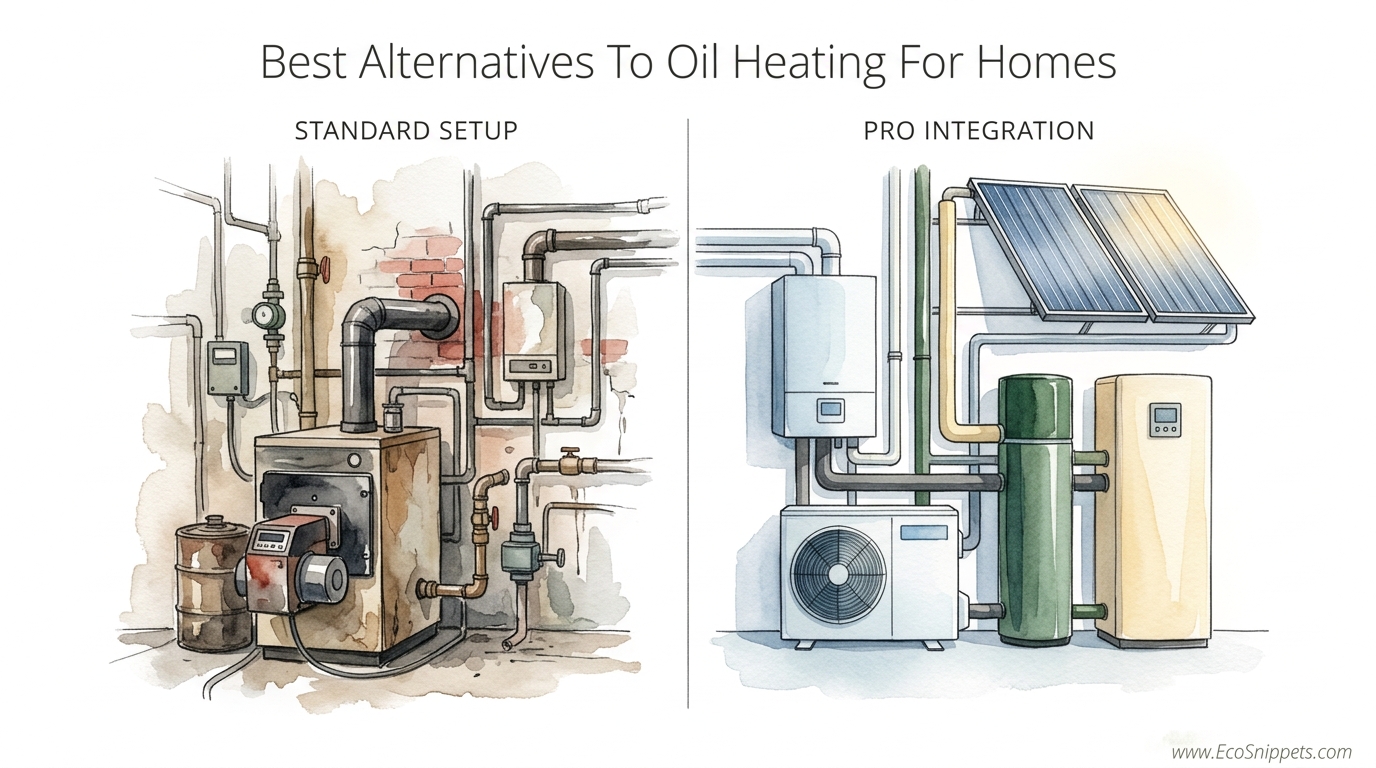
Finding the best alternatives to oil heating for homes starts with understanding that heat is not a commodity to be bought, but a resource to be managed. The standard setup involves a furnace or boiler burning a refined petroleum product to produce a quick, intense flame. This is high-entropy energy—effective but wasteful and increasingly expensive.
In the real world, “alternatives” fall into three primary categories: electrical transfer (heat pumps), biomass combustion (wood and pellets), and direct solar harvesting. Each has its place depending on your geography and the grit you are willing to apply to your infrastructure. For those in rural areas with acreage, biomass offers a level of self-sufficiency that no utility company can match. For suburban pioneers, the air source heat pump provides a clean, low-maintenance transition that integrates perfectly with solar arrays.
Modern alternatives seek to solve the three great failures of oil: price volatility, environmental degradation, and the lack of systemic integration. Instead of a “dumb” system that only knows how to turn a burner on and off, these alternatives allow for the creation of a “thermal battery.” This might look like a 500-gallon insulated buffer tank that stores heat from multiple sources, ensuring that not a single BTU is wasted.
How the New Heat Circuit Works
The mechanics of modern heating systems are a blend of ancestral wisdom and refined physics. To move away from oil, you must understand how these systems generate, transfer, and store energy.
The Heat Pump Cycle
Air source and ground source heat pumps do not “create” heat in the traditional sense. Instead, they act as thermal explorers, seeking out ambient energy in the air or soil and concentrating it. This is achieved through a refrigeration cycle. A refrigerant fluid with an extremely low boiling point circulates through outdoor coils, absorbing heat even in sub-zero temperatures. A compressor then squeezes this fluid, raising its temperature significantly before it passes through a heat exchanger to warm your home’s water or air.
Ground source systems, often called geothermal, take this a step further by utilizing the stable 50°F to 55°F temperature of the earth. By burying “loops” of pipe deep underground, the system has a consistent thermal baseline, regardless of how hard the winter wind blows. This stability makes them far more efficient than air-source units in extreme climates.
High-Efficiency Biomass
Biomass boilers have come a long way from the smoky wood stoves of the past. Modern wood gasification boilers operate by burning logs in two stages. The first stage chars the wood, releasing gases. Those gases are then forced into a secondary combustion chamber where they are mixed with pre-heated air and burned at temperatures exceeding 2,000°F. This process is so complete that it leaves behind almost no smoke and very little ash, capturing nearly 90% of the energy contained in the wood.
Pellet boilers offer a more automated approach. They use a motorized auger to feed small, compressed wood cylinders into a burner based on the thermostat’s demand. This gives the homeowner the “set-and-forget” convenience of an oil boiler but with a fuel source that is renewable and often cheaper per unit of energy.
The Role of the Buffer Tank
The “pro-level” secret to all these systems is the buffer tank, also known as a thermal store. This is a large, heavily insulated vessel of water that acts as the system’s heart. Rather than having a heat pump or biomass boiler cycle on and off constantly—which causes wear and reduces efficiency—the heat source runs at its most efficient peak until the buffer tank is fully charged. Your radiators or underfloor heating then draw from this “thermal battery” as needed.
Benefits of Stepping Away from the Oil Tank
Choosing an alternative to oil is an investment in both your property and your peace of mind. The practical, measurable benefits often manifest in three key areas: cost, comfort, and control.
Economic Stability
Oil prices are tied to global geopolitical events, meaning your heating bill can double overnight. Alternatives like heat pumps or biomass decouple your home from these fluctuations. While electricity prices can also rise, the efficiency of a heat pump—often producing three to four units of heat for every unit of electricity consumed—provides a massive buffer against price hikes. For those burning wood, the fuel cost is as low as the effort required to harvest it.
Superior Thermal Comfort
Oil systems often produce “peaky” heat—a blast of hot air followed by a cold period as the furnace waits for the house to cool down enough to trigger the next cycle. Modern alternatives, especially when paired with underfloor heating and buffer tanks, provide a steady, gentle warmth. This consistency eliminates cold spots and creates a more comfortable living environment throughout the winter months.
System Longevity and Safety
Oil boilers are complex machines that involve high-pressure combustion and corrosive fuel. They require annual cleanings and are prone to soot buildup and leaks. Electric heat pumps and thermal stores have fewer moving parts and no combustion occurring inside the home, which eliminates the risk of carbon monoxide poisoning from a cracked heat exchanger. Ground loops for geothermal systems can last over 50 years, providing a multi-generational heating solution.
Challenges and Common Pitfalls
The path to energy independence is rarely a straight line. Many homeowners make the mistake of swapping the boiler without looking at the rest of the house.
The “Leaky Bucket” Problem
The most frequent error is installing a high-efficiency heat pump in an uninsulated home. If your house is drafty, the heat pump will struggle to keep up, leading to high electricity bills and a cold living room. You must treat the building envelope first. Think of your home as a bucket; there is no point in buying a more efficient faucet if the bucket is full of holes.
Improper Sizing
In the oil world, installers often “oversize” the boiler just to be safe. In the world of heat pumps and biomass, oversizing is a death sentence for efficiency. A system that is too large will “short-cycle,” turning on and off rapidly, which kills the compressor and prevents the system from reaching its optimal operating temperature.
Ignoring the Water Temperature
Oil boilers usually run at high temperatures (around 160°F to 180°F). Many alternatives, particularly air source heat pumps, are most efficient at lower temperatures (around 105°F to 120°F). If you try to run a heat pump through small, old-fashioned radiators designed for high-temp oil, they won’t have enough surface area to heat the room. You may need to upgrade to larger radiators or install underfloor heating to make the system viable.
Limitations and Realistic Constraints
While the transition is rewarding, it is not always the right move for every property. Understanding the boundaries of these technologies is part of the pioneer mindset.
Geographic and Geological Barriers
Ground source heat pumps require significant land area for horizontal loops or deep, expensive boreholes for vertical ones. If you live on a small urban lot with rocky soil, geothermal may be cost-prohibitive or physically impossible. Similarly, air source heat pumps, while much improved, still see a drop in efficiency when temperatures plummet below -15°F, necessitating a backup heat source in truly arctic climates.
The “Grit” Requirement
Log-burning biomass systems require a lifestyle shift. You become the fuel delivery system. If you are not prepared to stack wood, clean out ash, and light a fire every morning, a manual log boiler will become a burden rather than a blessing. Pellet systems solve much of this, but they still require more interaction than a standard oil system.
Upfront Capital
The primary barrier for most is the initial cost. An oil boiler replacement might cost $6,000, while a full geothermal installation could exceed $25,000. While the long-term savings and tax incentives eventually bridge this gap, the “pioneer” must be prepared for a longer payback period.
Comparing the Contenders
To help visualize the landscape, consider how the most common oil alternatives stack up against each other across key metrics.
| Heating System | Primary Fuel | Efficiency (COP) | Maintenance | Self-Reliance |
|---|---|---|---|---|
| Standard Oil Boiler | Heating Oil | 85% – 95% | High (Annual) | Low |
| Air Source Heat Pump | Electricity | 300% – 400% | Low | Medium (if paired with Solar) |
| Biomass (Log/Pellet) | Wood | 85% – 92% | Medium to High | High |
| Ground Source Heat Pump | Electricity/Earth | 400% – 500% | Very Low | Medium-High |
Practical Tips for a Successful Transition
If you are ready to cut the line to the oil truck, start with these actionable steps to ensure your new system thrives.
- Audit the Envelope: Before touching the heating system, hire a professional for a blower door test. Seal air leaks in the attic and around windows. Modern heat works best in a tight house.
- Think “Low and Slow”: Design your distribution system for low-temperature water. Underfloor heating is the gold standard, but “low-temperature radiators” are a great alternative that doesn’t require ripping up floors.
- Integrate Solar Early: If you choose an electric-based system like a heat pump, plan for a solar PV array. Even a small 4kW system can offset a significant portion of your winter heating costs.
- Size the Buffer Tank Generously: A larger thermal store gives you more flexibility. It allows you to “bank” heat when the sun is shining (via solar thermal) or when your wood boiler is at peak burn, using that energy hours or even days later.
Advanced Considerations: The Seasonal Cycle
For those who want to move beyond the basics, the next level involves “seasonal thermal energy storage” (STES). This is the ultimate expression of the “system” mindset.
Serious practitioners in extreme climates sometimes utilize massive, buried, insulated water tanks that are 10 to 20 times the size of a standard buffer tank. During the summer, solar thermal panels on the roof work overtime, pumping heat into this giant underground reservoir. By the time October rolls around, the water in the tank is near boiling. As winter sets in, the home draws heat directly from this stored summer sun, only engaging the heat pump or biomass boiler when the reservoir finally cools down in late January.
Another advanced strategy is wood gasification combined with Stirling engines. These specialized boilers not only heat your water but use the excess heat to drive a small piston that generates electricity. It turns your heating system into a micro-power plant, providing both warmth and light from a single pile of logs.
A Real-World Scenario: The Integrated Homestead
Consider a typical 2,000-square-foot home in a cold climate. In a standard setup, this house might burn 800 gallons of oil a year, costing $3,200 at current prices. The homeowner is at the mercy of the market.
Instead, the homeowner installs a 15kW air-source heat pump and a 300-gallon buffer tank. They also add three solar thermal collectors on a south-facing roof. During a sunny February day, the solar collectors heat the water in the buffer tank to 140°F for free. The heat pump remains idle. At night, the house draws from that tank. When the tank temperature drops, the heat pump kicks in, but because it only needs to “top off” the tank rather than heating it from scratch, it runs with a much higher efficiency.
The result is a system where the “units” of energy are irrelevant. The homeowner isn’t buying 800 gallons of oil; they are managing a cycle of solar gain and electrical efficiency. Their total out-of-pocket cost for the year drops to under $900, and they have the infrastructure to add a wood stove or more solar panels in the future to drive that number even lower.
Final Thoughts
The transition away from oil heating is a journey from being a consumer to being a producer. Most people look at a heating bill as an inevitable tax on living; the pro looks at a landscape and sees untapped potential in the air, the earth, and the sun. By building a loop where energy is captured and stored, you create a home that is resilient, quiet, and profoundly efficient.
Stop buying energy in units and start building a system that serves your family for decades. The technology exists to make the oil truck a relic of the past. Whether you choose the silent efficiency of a ground-source loop or the crackling heat of a gasification boiler, the goal is the same: self-reliance.
Take the first step today by looking at your home as a whole system. Seal the leaks, size the storage, and choose the source that fits your land. The peace of mind that comes with a warm home and a small bill is the ultimate reward for the modern pioneer. Over time, you will find that the best alternative to oil isn’t just another fuel—it’s the wisdom to use what is already around you.
