How To Become More Self-Sufficient Without Starting a Full-Blown Farm…
Want to start preserving your harvest, making your own soap, or building a backyard root cellar — but not sure where to begin? “Homesteading Advice” gives you instant lifetime access to 35+ practical homesteading books on food preservation, veggie gardening, DIY natural cleaning products (save over $250 per year with this skill alone), brewing, off-grid energy, and a whole lot more…
Click Here To Check It Out Now!
True food security means understanding that the best milk doesn’t come from a store—it comes from a seasonal rhythm. We’ve been trained to expect milk 365 days a year, but the self-sufficient life follows the ‘freshening’ cycle. Planning your breeding for a spring calving means your peak milk production hits exactly when the lush green grass arrives. It’s the difference between a grocery receipt and a biological partnership.
The industrial food system has spent decades flattening the seasons into a sterile, constant availability that ignores the biological reality of the animal. On a homestead, you quickly learn that a cow is not a vending machine. She is a living system that requires a period of rest, a period of intense production, and a period of preparation. Embracing this cycle is how you move from being a mere consumer to a true producer, one who works in tandem with the land rather than in spite of it.
Understanding The Dairy Cow Cycle
The dairy cow cycle, often referred to as the lactation cycle, is a roughly 12-month rotation that governs the life of a productive milk cow. This rhythm is centered around the event of “freshening,” which is the old-fashioned term for a cow giving birth and beginning her milk production. When a cow “freshens,” her udder fills with colostrum and then transitions into the fresh, white milk we use for butter, cheese, and drinking.
This biological clock exists because milk is, first and foremost, sustenance for a calf. A cow must have a calf to produce milk, and her body is hard-wired to provide peak nutrition during the first few months of that calf’s life. In a natural, seasonal system, this cycle follows a predictable path: freshening in the spring, peak production through the summer, a gradual tapering in the fall, and a “dry period” or rest phase during the winter months.
Real-world self-reliance requires matching this cycle to your local environment. If you live in a climate with harsh winters, asking a cow to produce fifty pounds of milk a day in January is an uphill battle that requires immense amounts of expensive, stored grain and hay. If you align her peak production with the “spring flush”—the first rapid growth of nutrient-dense grass—you are letting the sun and the soil do the heavy lifting for you.
The Mechanics of the 12-Month Rotation
Managing a family milk cow effectively requires a deep understanding of the four distinct phases of her year. Each phase has its own nutritional requirements and management priorities. Failing to respect these phases often leads to metabolic disease, poor milk quality, or a cow that fails to breed back, ending your dairy supply prematurely.
Phase 1: Early Lactation (Days 1 to 100)
The first 100 days after calving are the most intense. This is when the cow reaches her “peak milk,” usually between 40 and 60 days post-freshening. During this time, her drive to produce milk is so strong that she will often “milk off her back,” meaning she burns her own body fat to maintain production because she cannot physically eat enough to keep up with the demand. This is the most dangerous time for metabolic issues like ketosis or milk fever.
Phase 2: Mid-Lactation (Days 100 to 200)
During mid-lactation, production begins to level off and slowly decline. The goal here is to keep the “persistency” high—meaning you want that decline to be as slow as possible. This is also the critical window for breeding. To keep a cow on a yearly cycle, she must be pregnant again by day 85 or 90. If she doesn’t conceive during this window, your “milk gap” the following year will grow longer, or she may eventually “dry up” before you have a replacement calf on the ground.
Phase 3: Late Lactation (Days 200 to 305)
In late lactation, the cow is well into her pregnancy. Her milk volume drops significantly as her body begins to divert nutrients to the growing fetus. This is the time to focus on “body condition scoring.” You want her to regain any weight she lost during the peak, but you must be careful not to let her get “fat,” which causes its own set of problems during the next calving.
Phase 4: The Dry Period (Days 305 to 365)
The dry period is a mandatory 60-day rest before she calves again. Milking is stopped entirely. This allows the milk-secreting tissues in the udder to repair and rejuvenate. It also allows the rumen, the cow’s primary stomach, to adjust to a lower-energy diet before the “freshening” storm begins again. A cow that is not given a dry period will produce significantly less milk in her next lactation and is more prone to mastitis.
The Magic of the Spring Flush
Planning for a spring calving is the gold standard for the grass-based homesteader. The “spring flush” refers to the period when pasture grasses are growing most rapidly, packed with high levels of protein and fermentable sugars. This grass is the highest-quality feed a cow will ever eat, and it arrives exactly when she needs it most.
When a cow freshens in April or May, her peak demand for energy aligns with this surge in forage quality. The high sugar content in young grass provides the glucose needed for milk lactose, while the protein supports the repair of her reproductive tract. This natural synchronization reduces the need for expensive “lead feeding” of grain, which is often required to sustain high-producing cows in a winter-calving system.
Sunlight also plays a critical role during a spring freshening. Increased day length stimulates the cow’s endocrine system, making it easier to detect “heat” (estrus) when it comes time to breed her back. Calves born in the spring also benefit from the warmer weather and the high Vitamin D levels in their mother’s milk, leading to faster growth and fewer respiratory issues compared to calves born in the damp, cold months of late autumn.
Benefits of Seasonal Dairy Management
Choosing a seasonal rhythm over a year-round industrial model offers several practical and measurable advantages for the small-scale producer.
- Lower Input Costs: Utilizing the spring flush means you spend less on high-protein alfalfa or supplemental grain. The pasture does the work that a diesel-powered feed mill would otherwise do.
- Improved Animal Health: Cows that follow a seasonal rhythm and have a proper dry period during the winter generally live longer. They experience fewer metabolic “crashes” because their production isn’t being forced during the most stressful environmental months.
- Concentrated Labor: Seasonal calving allows you to focus your “high-intensity” chores—such as monitoring births and training calves—into a single 60-day window. Once the herd is established and milking, the daily routine becomes predictable and streamlined.
- Calf Vitality: Calves born onto fresh green grass have access to better nutrition through their mother’s milk and start nibbling on high-quality forage earlier, which aids in rumen development.
Challenges and Common Mistakes
The biggest hurdle in a seasonal system is the “breeding window.” If a cow fails to get pregnant within 80 to 90 days of calving, she will not calve at the same time the following year. Over time, your “spring cow” can slowly migrate into a “summer cow” and eventually a “fall cow,” losing the benefits of the spring flush.
Another common pitfall is the failure to manage the “Transition Period”—the three weeks before and after calving. This is when 80% of all dairy cow health problems occur. Many beginners fail to monitor calcium and magnesium levels during this time. A cow that is deficient in calcium at freshening may develop “Milk Fever,” a state of paralysis that can be fatal if not treated immediately with intravenous or oral calcium.
Neglecting the dry period is a mistake often born of a consumer mindset. A homesteader might be tempted to keep milking as long as possible because they don’t want to buy milk at the store. However, milking a cow right up until she calves “steals” nutrients from the unborn calf and prevents the udder from resting. The result is almost always a “crash” in production during the subsequent year, which ends up costing more in the long run.
Limitations and Environmental Constraints
A seasonal rhythm is not a one-size-fits-all solution. In regions with extreme heat and humidity during the summer, a spring calving might actually be detrimental. Heat stress can significantly lower conception rates, making it nearly impossible to breed the cow back during the summer months. In these environments, many producers opt for a “fall calving” to avoid the mid-summer peak and take advantage of cool-season winter forages.
The “Milk Gap” is the most practical limitation. For 60 days of the year, your family will have no fresh milk. This requires planning. You must learn to preserve dairy through hard cheeses, frozen butter, or even “canning” milk if you are so inclined. If you absolutely cannot have a gap in production, you must keep at least two cows and stagger their breeding by six months, which doubles your labor and forage requirements.
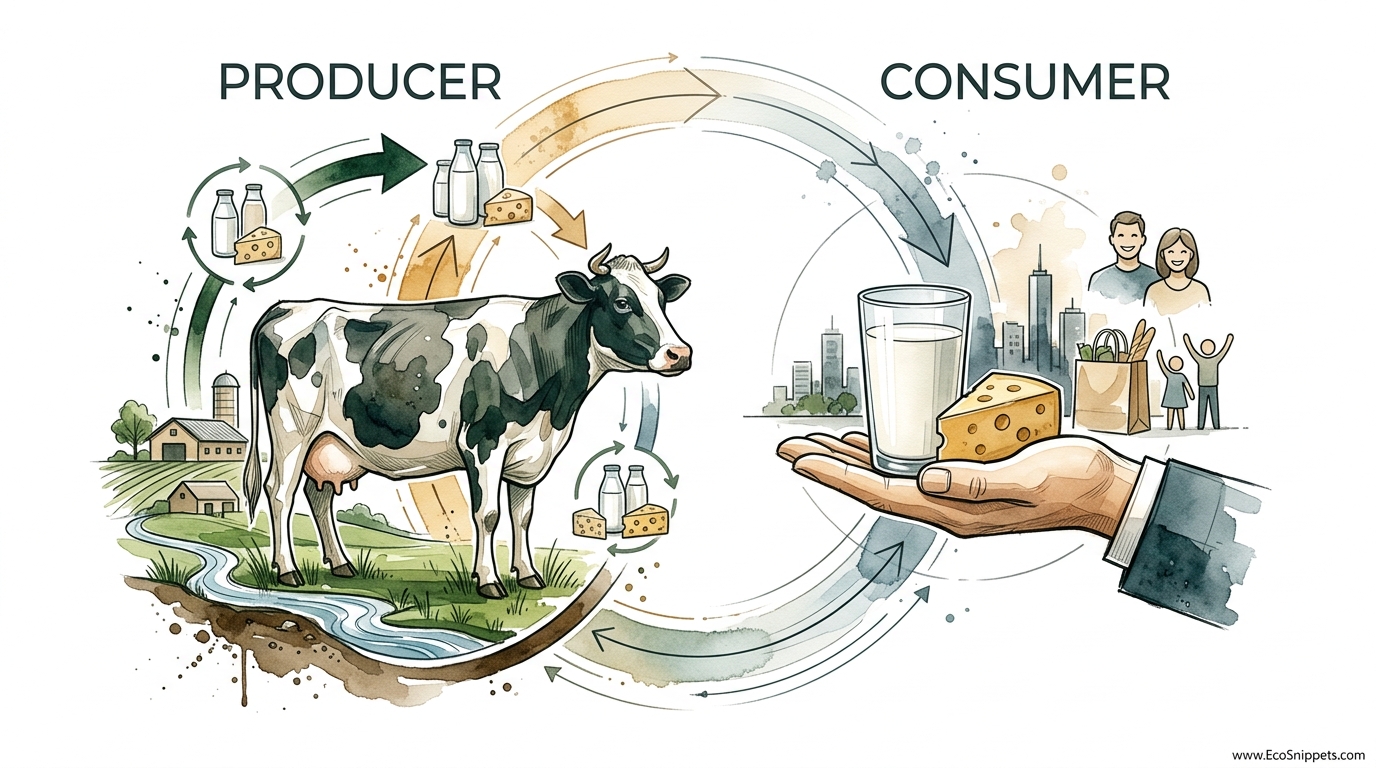
Producer vs. Consumer: The Dairy Reality
The difference between buying milk and producing it is a shift in your relationship with time and biology. The following table illustrates the trade-offs between the industrial model we are used to and the seasonal homestead model.
| Feature | Industrial Consumer Model | Homestead Producer Model |
|---|---|---|
| Availability | 365 days a year | Approx. 300 days (with a 60-day rest) |
| Nutritional Profile | Standardized, often low in Omega-3s | Fluctuates with seasons; high in CLA and Vitamins A/D |
| Feed Source | Stored silage and heavy grain concentrates | Primarily fresh pasture and high-quality hay |
| Animal Lifespan | Often 3–5 years due to high-stress production | 10–15 years with seasonal rest and grazing |
Practical Tips for Managing the Cycle
Successful management is about observation and record-keeping. You cannot manage what you do not measure.
Master the Body Condition Score (BCS): Learn to feel for the fat cover over the cow’s ribs, spine, and “pins” (pelvic bones). A cow that is too thin at calving will not breed back. A cow that is too fat will have difficulty calving and is at high risk for ketosis. Aim for a moderate, healthy cover where the ribs are felt but not prominently seen.
Observe “Heat” Cycles Religiously: A cow comes into heat every 21 days. Start recording these cycles as soon as she is 30 days post-calving, even if you aren’t ready to breed her yet. Knowing her pattern makes it much easier to schedule the artificial insemination (AI) technician or the bull when the time is right.
Mineral Supplementation is Non-Negotiable: Even on the best pasture, a milking cow needs a high-quality loose mineral. Pay close attention to the Calcium-to-Phosphorus ratio. During the dry period, you actually want to *limit* calcium slightly to “train” her body to mobilize its own calcium from her bones, which prevents milk fever when she freshens.
Provide Clean, Dry Bedding: Mastitis is the enemy of the dairy cow. The “freshening” period is when the udder is most vulnerable to environmental pathogens. Ensure her calving area is a clean, grass paddock or a deep-bedded stall with fresh straw.
Advanced Considerations: Calf Sharing
For many homesteaders, the volume of milk produced by a fresh cow is overwhelming. A high-producing Jersey might give four to six gallons a day—far more than a single family can consume. This is where “calf sharing” becomes an advanced management strategy.
Instead of weaning the calf immediately, you allow the calf to stay with the mother during the day and separate them at night. In the morning, you milk the “share” that the calf didn’t take. This allows you to harvest only the milk you need while the calf does the work of “milking” the cow the rest of the day. This reduces the labor of twice-a-day milking and ensures the cow’s udder is kept empty, which helps prevent mastitis.
Calf sharing also provides a safety net. If you have to leave the homestead for a day, the calf can handle the milking for you. However, you must monitor the cow’s udder to ensure the calf is nursing from all four quarters. Sometimes a calf will pick a favorite side, leaving the other quarters to become engorged and prone to infection.
Example Scenario: The Yearly Timeline
To visualize how this works in practice, let’s look at a typical year for a homestead cow in a temperate climate.
April 1st: The cow freshens. She produces colostrum for the first few days, which is fed to the calf. By Day 5, the milk is “clean” and ready for the house.
May 15th: The “Spring Flush” is in full effect. The cow is at peak production, giving 5 gallons a day. The homesteader is busy making butter and hard cheeses for winter storage.
June 20th: The cow is observed in standing heat. She is bred (via AI or bull). The homesteader records this date and calculates the next year’s calving date (approx. 283 days later).
September 1st: The summer heat wanes. Grass growth slows. Milk production naturally begins to taper to 3 gallons a day.
December 1st: The cow is now six months pregnant. Production is down to 1.5 gallons a day. The milk is exceptionally creamy and high in butterfat.
February 1st: The homesteader stops milking. The cow is “dried off.” She spends the next 60 days resting and growing her calf while eating high-quality hay.
April 1st: The cycle begins again.
Final Thoughts
Embracing the dairy cow cycle is an exercise in humility and stewardship. It forces us to step away from the “on-demand” mindset of the modern world and re-align ourselves with the biological needs of our animals and the seasonal capabilities of our land. When you pour that first glass of cold, cream-topped milk in the spring, you aren’t just drinking a beverage; you are participating in a ancient partnership that has sustained humanity for millennia.
This rhythm requires discipline and a willingness to learn the subtle language of the herd. You will have to face the challenges of metabolic health, the stress of the breeding window, and the quiet patience of the dry period. But the reward is a level of food security that a grocery store can never provide—a self-replenishing source of the world’s most perfect food, harvested in harmony with the rising sun and the growing grass.
Take the time to plan your cycle. Watch your pastures. Listen to your cow. The deeper you move into this seasonal rhythm, the more you will realize that true independence is found not in isolation from nature, but in a deep, informed reliance upon it.
