How To Become More Self-Sufficient Without Starting a Full-Blown Farm…
Want to start preserving your harvest, making your own soap, or building a backyard root cellar — but not sure where to begin? “Homesteading Advice” gives you instant lifetime access to 35+ practical homesteading books on food preservation, veggie gardening, DIY natural cleaning products (save over $250 per year with this skill alone), brewing, off-grid energy, and a whole lot more…
Click Here To Check It Out Now!
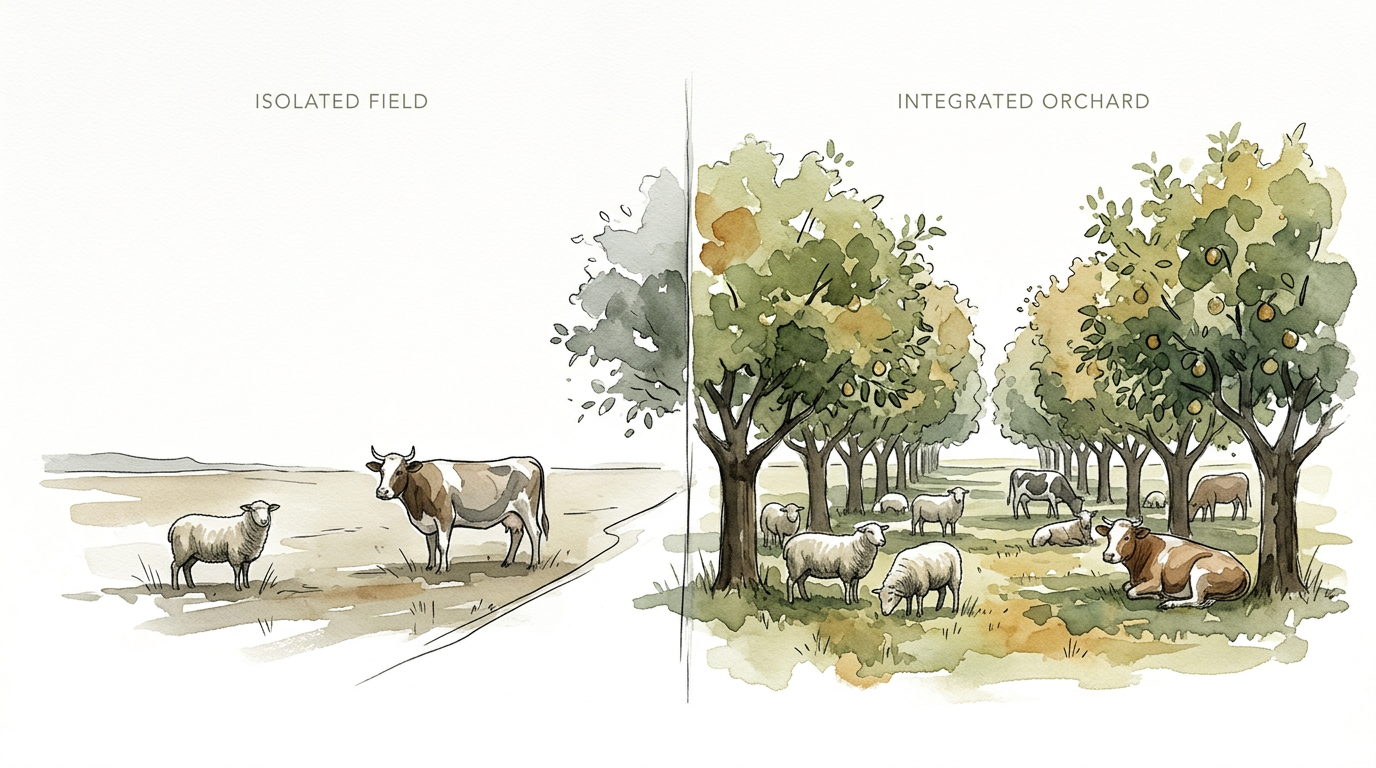
Why manage a pasture and an orchard separately when they can feed and protect each other in one self-sustaining system? Traditional farming separates animals and crops, creating twice the work. Silvopasture integrates livestock into fruit or nut orchards, providing the animals with shade and diverse forage while they naturally prune the trees and manage pests. Stop managing silos and start managing a system.
Ancestral wisdom once dictated that every square inch of land should serve multiple purposes. The modern push toward specialized, isolated fields has robbed the soil of its natural complexity and the farmer of their resilience. Reclaiming the practice of silvopasture isn’t just a nod to the past; it is a hard-nosed strategy for a more productive future.
This guide will walk you through the grit and the glory of building a system where trees, grass, and animals thrive as a single unit. It is about understanding the delicate dance between livestock and timber, ensuring that neither overwhelms the other.
Silvopasture Benefits For Livestock And Orchards
Silvopasture is the intentional and intensive management of trees, forage, and livestock on the same piece of ground [1.1, 1.6]. It is not simply “turning the cows into the woods.” True silvopasture requires a deliberate design that balances the needs of all three components: the tree crop, the pasture plants, and the grazing animals [1.3].
In a real-world setting, this often looks like an orchard of pecans or walnuts with cattle grazing between the rows, or a high-density apple orchard where sheep keep the grass low and eat the fallen fruit [1.3, 1.9]. This system exists to maximize the output of the land. Instead of harvesting only nuts, you harvest nuts, meat, and perhaps even wool or eggs from the same acre [1.6].
The livestock benefit immensely from the microclimate created by the trees. On a scorching summer day, the temperature under a leafy canopy can be 10 to 15 degrees cooler than in an open field [1.5, 1.15]. This reduction in heat stress means animals spend less energy trying to stay cool and more energy gaining weight or producing milk [1.1, 1.5]. In the winter, those same trees act as windbreaks, protecting the herd from the biting chill that drains their reserves [1.4, 1.5].
From the perspective of the orchard, the animals act as a biological labor force. They “mow” the grass, reducing the need for diesel-chugging machinery and chemical herbicides [1.1, 1.9]. As they graze, they deposit manure, which recycles nutrients back into the soil in a form that is easily absorbed by the tree roots [1.8, 1.15]. This creates a closed-loop system where waste becomes wealth.
How It Works: Designing Your Integrated System
Building a silvopasture orchard starts with a clear-eyed assessment of your land. You can either plant trees into an existing pasture or thin a woodland to allow enough light for forage to grow [1.1, 1.16]. For most orchardists, the path involves planting high-value fruit or nut trees into established grazing ground [1.7].
The first principle of silvopasture is light management. Forage needs sunlight to grow, and trees need sunlight to produce fruit. Successful systems often aim for a tree density that allows about 50% to 70% of the sunlight to reach the ground [1.1, 1.12]. This is usually achieved by spacing trees in wide rows, often 30 to 60 feet apart, depending on the species and the equipment you need to move through the rows [1.10, 1.15].
Matching the animal to the tree is the next critical step. Sheep and poultry are often the easiest to integrate because they are less likely to cause catastrophic damage to the trees [1.9]. Cattle are excellent for mature nut groves where the branches are high, but their sheer weight can compact the soil around tree roots if they aren’t moved frequently [1.13]. Pigs are the ultimate cleaners for fallen fruit, but their rooting behavior can destroy a pasture if left in one place too long [1.10, 1.13].
Management intensive rotational grazing (MIRG) is the glue that holds the system together [1.4, 1.8]. You cannot leave animals in an orchard indefinitely. They must be moved through a series of paddocks, allowing the forage and the trees time to recover [1.6, 1.13]. This movement mimics the natural migration of wild herds and prevents the soil compaction and bark stripping that occurs with “set-stock” grazing [1.13].
The Measurable Benefits of the Integrated Orchard
The advantages of this approach are both biological and financial. One of the most significant wins is the diversification of income. While you wait 5 to 10 years for a pecan or walnut tree to reach commercial production, the livestock provide an annual “cash flow” that keeps the farm solvent [1.6, 1.20]. You aren’t just a nut farmer; you’re a livestock producer with a long-term timber or fruit investment maturing in the background.
Productivity per acre often increases in a silvopasture system compared to monocultures. This is known as the “Land Equivalent Ratio.” Because the trees and the grass utilize different layers of the soil and different levels of the atmosphere, the total biomass produced on one acre of silvopasture is often higher than if you grew the trees and the livestock on separate acres [1.7, 1.15].
Pest and disease cycles are often broken by the presence of animals. In many fruit orchards, “mummy fruit” that stays on the ground through winter harbors pests like the codling moth or navel orangeworm [1.9]. Livestock, particularly pigs and poultry, will scavenge this fallen fruit, effectively sanitizing the orchard floor and reducing the need for pesticides the following spring [1.9, 1.16].
Animal health is another measurable benefit. Browse—the leaves and twigs of trees—is often higher in minerals and secondary compounds like tannins than traditional pasture grasses [1.5, 1.17]. For example, willow browse has been shown to have anti-parasitic properties in sheep, reducing the reliance on chemical dewormers [1.1].
Challenges and Common Pitfalls to Avoid
The greatest mistake a farmer can make is treating silvopasture as a “low-maintenance” option. It is actually a higher-management system. The primary challenge is tree protection. Young trees are essentially “candy” to livestock [1.7, 1.13]. Without robust physical barriers—like heavy-duty tree tubes, wire cages, or electric fencing—goats will strip the bark, sheep will nibble the terminal buds, and cattle will simply rub the saplings into the dirt [1.4, 1.7].
Soil compaction is another silent killer. In wet weather, the heavy hooves of cattle can “puddle” the soil, squeezing out the air pockets that tree roots need to breathe [1.13]. Over time, this stress can lead to reduced tree growth and lower fruit yields. Success requires the discipline to pull the animals off the land when conditions are too saturated [1.13].
Food safety regulations are a modern hurdle that our ancestors didn’t have to navigate. If you are selling fruit for human consumption, you must adhere to strict “pre-harvest intervals” regarding manure application [1.2]. Most standards require livestock to be removed from the orchard 90 to 120 days before the fruit is harvested to prevent the risk of pathogens like E. coli [1.10].
Water access is frequently overlooked. In a wide-open pasture, one water trough might suffice. In an integrated orchard, the trees and the fencing often dictate movement. Animals should never have to travel more than 600 feet for water, or they will begin to create “cow paths” that erode the soil and damage tree roots [1.4].
Limitations: When This System May Not Work
Silvopasture is not a universal solution. It requires a specific set of environmental conditions and a high level of managerial skill. If your land is extremely steep or the soil is prone to severe erosion, the constant traffic of livestock around trees might do more harm than good [1.2].
The complexity of the system is itself a limitation. A farmer must understand tree physiology, forage agronomy, and animal husbandry simultaneously [1.13, 1.20]. If you are already struggling to manage a simple pasture, adding the layer of a commercial orchard may be a recipe for burnout. It requires a long-term mindset; the payoff for the tree component is measured in decades, not seasons [1.20].
Equipment compatibility is a practical boundary. Modern orchard equipment—like harvesters and sprayers—is often designed for clean, flat rows. The presence of livestock fencing or the uneven ground caused by hoof impact can interfere with these machines [1.8, 1.18]. You must design your row spacing and fencing layout around the specific dimensions of the machinery you plan to use [1.10].
Finally, certain tree species are naturally incompatible with certain livestock. For example, black walnut trees produce a chemical called juglone which can be toxic to some plants and potentially irritating to horses [1.15, 1.17]. Always verify the toxicity of your tree species before introducing sensitive animals.
Comparison: Isolated Field vs. Integrated Orchard
Understanding the shift from traditional to integrated management requires looking at the measurable differences in inputs and outputs.
| Factor | Isolated Field (Pasture Only) | Integrated Orchard (Silvopasture) |
|---|---|---|
| Revenue Streams | Single (Meat/Dairy) | Multiple (Meat, Nuts, Fruit, Timber) |
| Labor Requirements | Moderate (Fencing, Haying) | High (Pruning, Protection, Rotation) |
| Summer Weight Gain | Standard (Limited by Heat Stress) | Increased (Shade-Induced Comfort) |
| Nutrient Input | External (Fertilizers) | Internal (Manure Cycling) |
| Drought Resilience | Low (Grass stops growing) | Higher (Trees buffer microclimate) |
Practical Tips and Best Practices
Success in the orchard-pasture system is built on attention to detail. Use these battle-tested strategies to keep your system productive and your stress levels low.
- Protect the Lead: Use physical guards for the first 3 to 5 years of a tree’s life [1.7]. For cattle, this usually means a sturdy wooden or metal cage. For sheep, a simple mesh guard may suffice [1.4, 1.9].
- Choose Shade-Tolerant Forage: As the orchard canopy closes, standard pasture grasses will fail. Incorporate species like orchardgrass, tall fescue, or certain clovers that can maintain high nutritional value in partial shade [1.4, 1.12].
- Optimize Row Orientation: Plant your tree rows in a North-South orientation. This allows the sun to move over the rows, ensuring that the forage on both sides of the trees gets an equal amount of light throughout the day [1.7, 1.10].
- Use “Flash” Grazing: When introducing animals to a new orchard section, use high stocking densities for very short periods (1-3 days). This ensures they graze the area evenly without having time to get “bored” and start sampling the tree bark [1.6, 1.13].
- Monitor Tree Health: Regularly check for signs of “paddling” or bark damage. If you see the inner cambium of a tree, you have left the animals in too long. Remove them immediately and adjust your rotation schedule.
Advanced Considerations: Tuning the System
For those who have mastered the basics, silvopasture offers opportunities for even deeper integration. Carbon sequestration is a major advantage that serious practitioners are beginning to quantify. Trees in a silvopasture system store carbon in their wood and roots, while the managed grazing builds organic matter in the soil [1.3, 1.17]. This can potentially open up new revenue streams through carbon credit markets.
Consider the “verticality” of your system. In a mature nut orchard, you can have a “three-story” farm: the nut crop at the top, the livestock in the middle, and perhaps a specialized shade-grown crop like mushrooms or medicinal herbs on the orchard floor [1.6, 1.15]. This is the ultimate expression of stacking yields.
Genetic selection of your livestock can also be a game-changer. Some breeds of sheep, like the Shropshire, have a historical reputation for being “orchard-friendly” because they are less prone to browsing trees compared to other breeds [1.9]. Similarly, choosing “easy-keeping” cattle breeds that don’t require massive amounts of supplemental grain will help you maximize the value of the diverse forage provided by the orchard [1.2].
Real-World Examples of Orchard Silvopasture
Consider the “Pecan-Cattle” system common in the southern United States. Farmers plant native or improved pecan varieties in wide rows. During the summer, cattle graze the lush forage beneath the trees, benefiting from the intense shade [1.3, 1.8]. In the fall, before the pecans drop, the cattle are moved to a different pasture. This allows the orchard floor to be “vacuumed” clean by the cattle, making the mechanical nut harvest much more efficient [1.3].
Another example is the “Poultry-Apple” integration. In smaller-scale organic orchards, mobile chicken coops (often called chicken tractors) are moved between the rows of apple trees [1.9, 1.10]. The chickens scratch the soil, eating larvae of the plum curculio and other pests that threaten the fruit crop. At the same time, their high-nitrogen manure provides an immediate boost to the trees’ growth without the need for synthetic fertilizer [1.9, 1.15].
In the United Kingdom, sheep are frequently grazed in cider apple orchards. The sheep manage the grass height, reducing the need for mowing, and they eat the “windfall” apples that would otherwise rot and attract wasps or spread disease [1.5, 1.7]. This historical model is being revived by modern growers looking to reduce their carbon footprint and increase their profit margins.
Final Thoughts
Silvopasture is more than a farming technique; it is a philosophy of stewardship that recognizes the inherent value of diversity. By bringing animals back into the orchard, you are not just producing food; you are building a resilient ecosystem that can withstand the vagaries of weather and market fluctuations. It is a return to a more integrated, sensible way of living with the land.
Success requires patience and a willingness to learn from the animals and the trees themselves. Start small, perhaps with a single acre or a small flock of poultry, and observe how the system responds. The lessons you learn on that first acre will be the foundation for a more self-reliant and productive future.
As you look across your land, stop seeing separate fields and start seeing the potential for a unified, thriving system. The tools of our ancestors—the shade of the tree and the movement of the herd—are still the most powerful tools we have for building a farm that lasts.
